


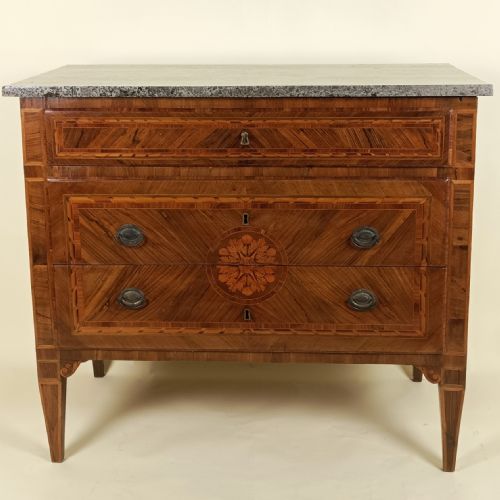


Walnut Italian Chest Drawers
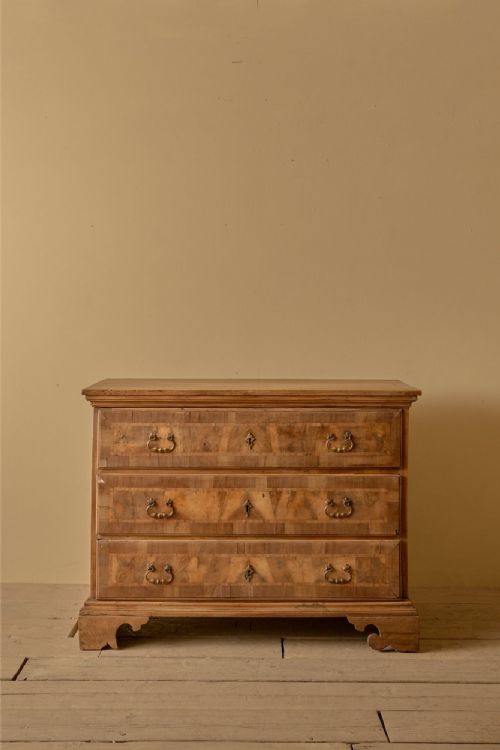
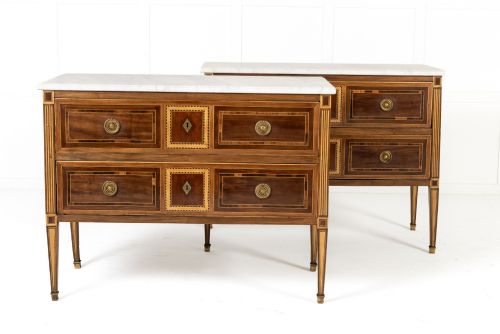
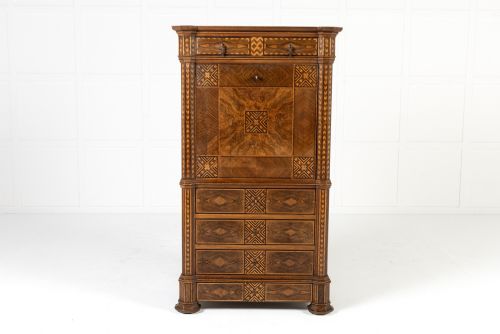
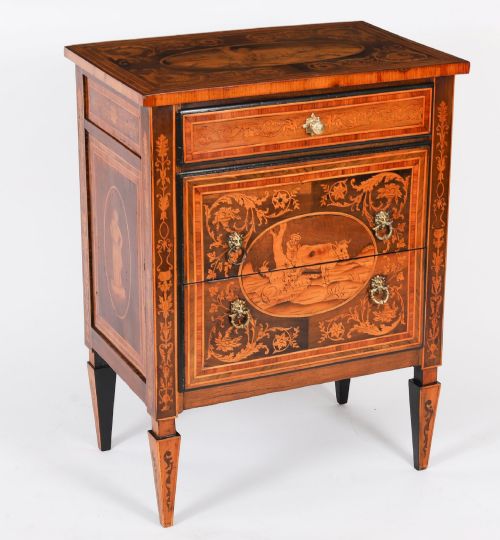
These walnut italian chest drawers bring grand continental presence to a room, offering rich timber figuring and practical storage in equal measure.

Walnut Italian Chest Drawers
A walnut italian chest drawers encompasses substantial commodes, serpentine bedside chests, and low table cabinets shaped by centuries of regional craftsmanship. Pieces span from the seventeenth century through the nineteenth century, including notable Baroque, Rococo, and Neoclassical examples.
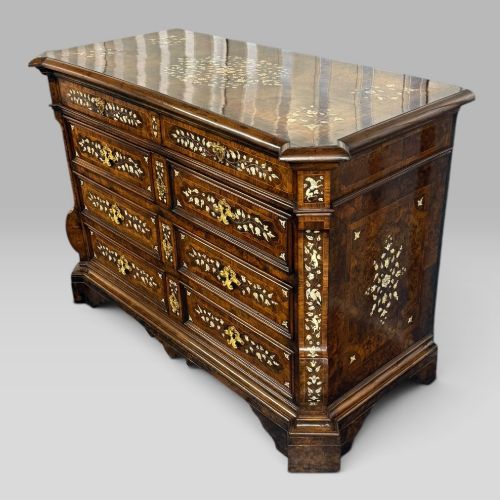
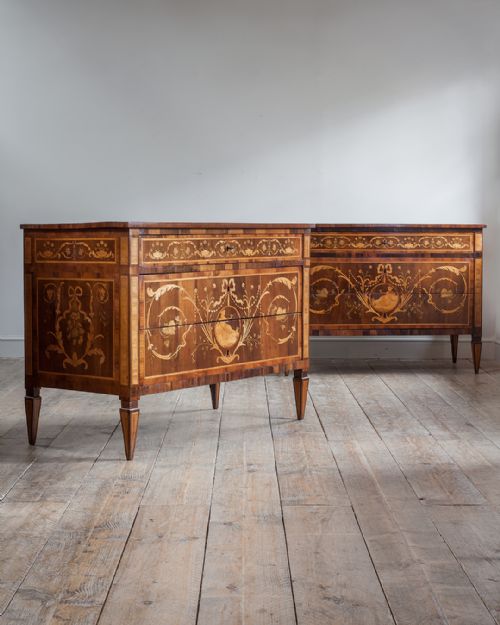
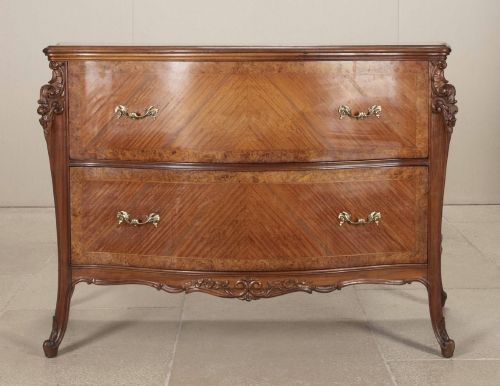
The buyer most frequently encounters eighteenth-century and nineteenth-century commodes displaying rich burr and burl figuring across shaped fronts. Smaller bedside pairs and marquetry-inlaid chests from Lombardy and Venice also appear regularly alongside grander seventeenth-century workshop pieces.
Materials and technique
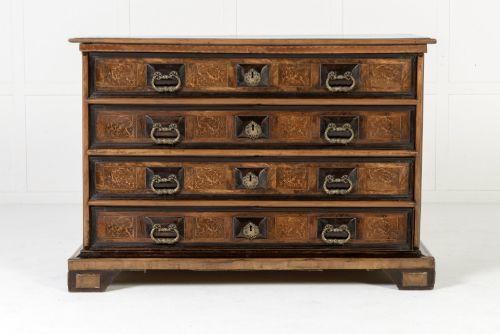
Cabinet makers utilised solid walnut, burr walnut, and kingwood veneers laid over secondary timbers, often accentuating the grain with intricate fruitwood, satinwood, and bone inlay. Brass handles and mounts punctuate the timber surfaces while marble tops provide durable utility.
Structural forms rely on serpentine and bombe shaping that demands advanced timber bending and joinery skills. Ebonised wood details and giltwood carving further define regional decorative traditions across northern Italy.
Walnut Italian Chest Drawers Retail Price Guide 2026
Typical asking prices for walnut italian chest drawers among the pieces listed under this phrase on Sellingantiques today, from the lower quarter to the upper quarter. They describe what is for sale here now, not the wider market.
Some seventeenth-century table cabinets hide tiny secret compartments behind miniature walnut architectural facades.
Judging quality
Quality rests upon the selection and matching of burr walnut veneers, where symmetrical grain alignment creates depth across the drawer fronts. The crispness of marquetry and the fluidity of serpentine or bombe contours separate master cabinet work from simpler output.
The integrity of original brass hardware, the precision of inlaid bone details, and the weight of fitted marble tops distinguish higher tier commissions. Construction depth, particularly the dovetailing of drawer carcasses and timber selection for secondary woods, reveals the underlying standard of the workshop.
The Walnut Italian Chest Drawers Glossary
- Commode
- A low chest of drawers, typically decorative and standing on short legs, originating in France but heavily adopted by Italian cabinet makers.
- Serpentine
- A furniture front or top shaped with a central convex curve flanked by two concave curves, creating a gentle undulating outline.
- Bombe
- A swelling, outward-curving chest profile that expands towards the base, requiring complex joinery and shaped veneer work.
- Marquetry
- Decorative patterns formed by inserting thin veneers of different coloured woods, ivories, or bone into a prepared wooden surface.
- Burr walnut
- Timber taken from a tree growth or burl, yielding swirling, highly figured grain patterns prized for decorative veneering.
Walnut Italian Chest Drawers: Frequently Asked Questions
How do I date an Italian walnut commode?
Dating relies on stylistic markers such as Baroque carving, Rococo serpentine lines, or Neoclassical marquetry, combined with construction methods visible inside the drawers. Timber choice and secondary woods also provide clues to the period of origin.
Cabinet hardware and surface treatments further assist in establishing whether a piece originates from the seventeenth, eighteenth, or nineteenth century.
Where were these chests made in Italy?
Production centres varied across the peninsula, with notable works emerging from Lombardy, Venice, and northern regional workshops. Grand Ducal and specialised urban ateliers produced highly ornamented pieces using local and imported timbers.
Regional preferences dictated whether a commode featured heavy Baroque moulding or lighter Neoclassical inlaid geometric panels.
How should I care for a burr walnut surface?
Burr walnut veneer requires stable room humidity and protection from direct sunlight to prevent timber drying and veneer lifting. Gentle dusting with a soft, dry cloth preserves the polished finish without introducing moisture.
Periodic application of appropriate wax maintains the lustre of the timber grain without building up heavy residue.
What is the difference between a commode and a standard chest?
A commode generally refers to a lower, more ornamental chest of drawers designed for reception rooms rather than bedrooms. Italian examples often feature more elaborate serpentine or bombe shaping than typical British chests of the same eras.
Many commodes also incorporate specialised surfaces such as fitted marble tops or intricate marquetry scenes on the top and sides.