

Gilt Mounted Commode
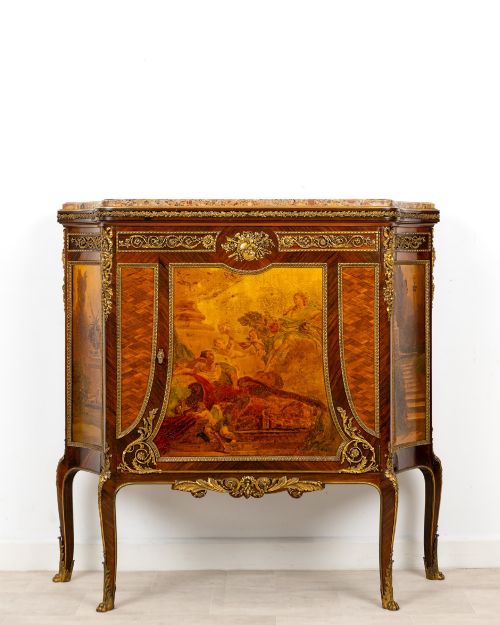
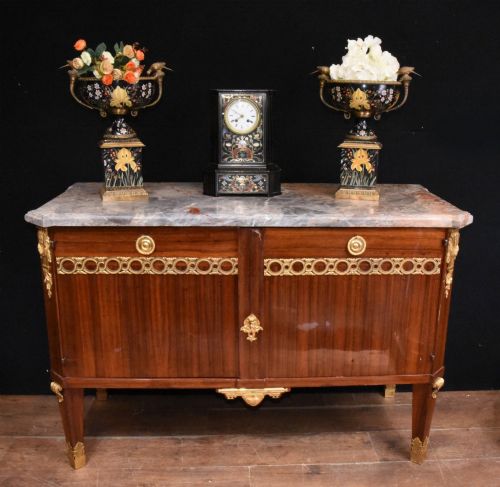
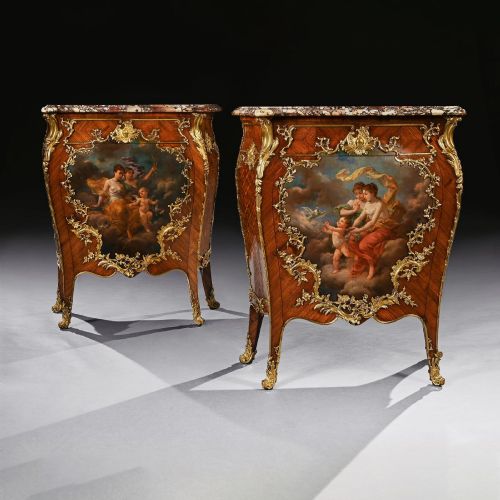
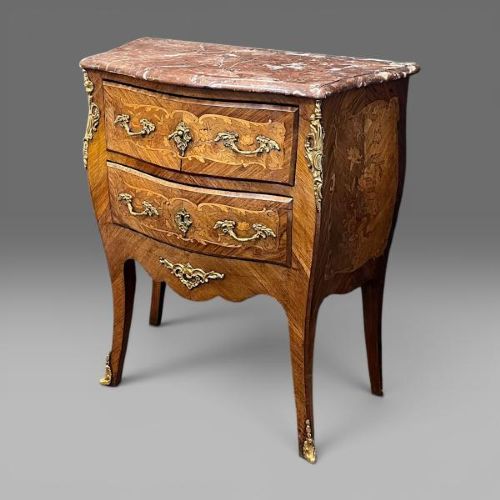
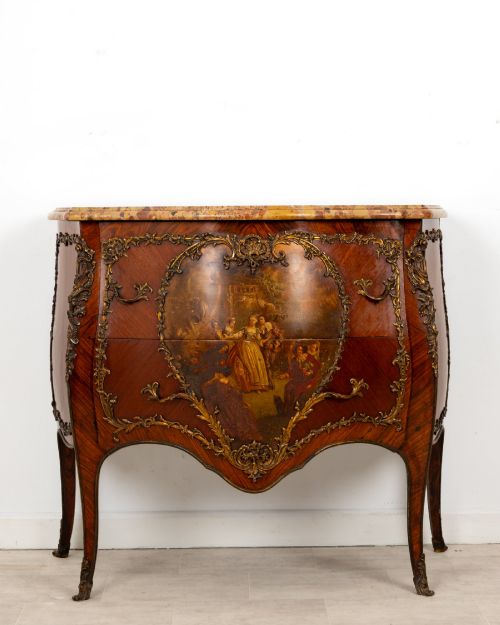
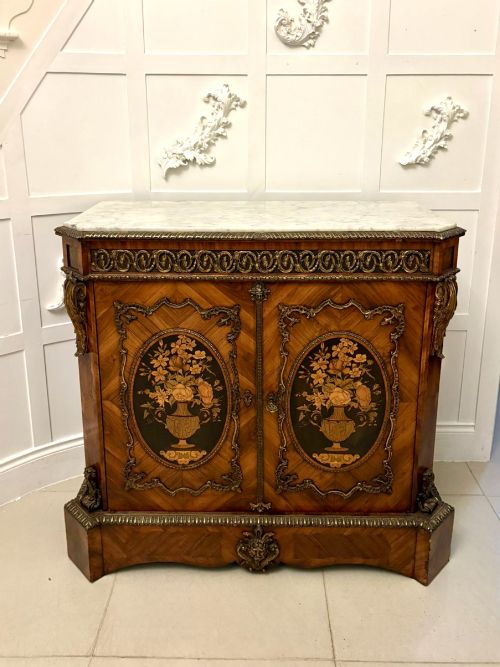
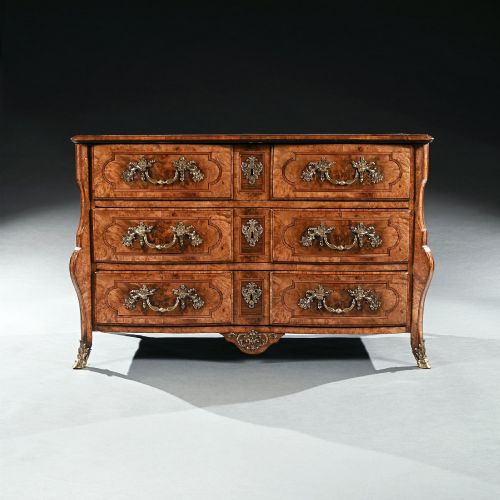
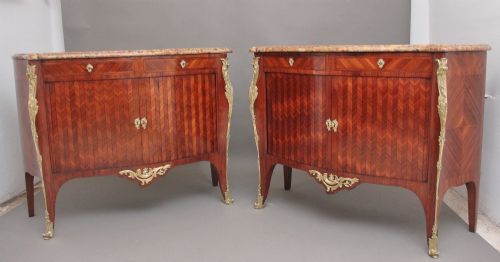
A gilt mounted antique commode brings sculptural metalwork and rich timber together in a single statement piece for a grand interior.

Gilt Mounted Commode
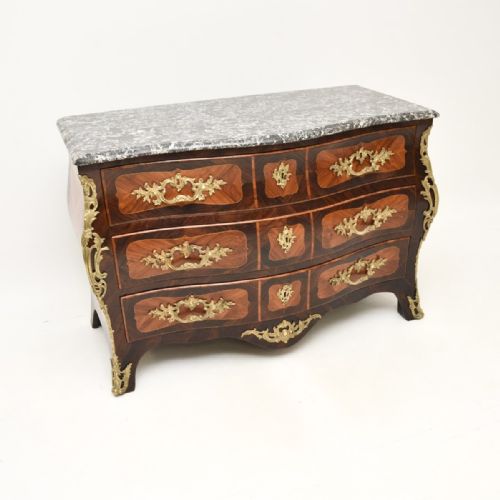
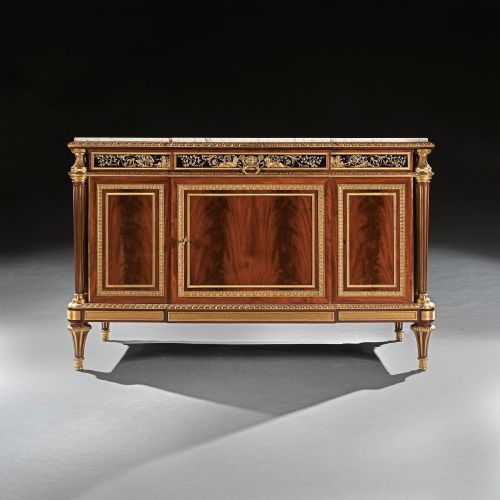
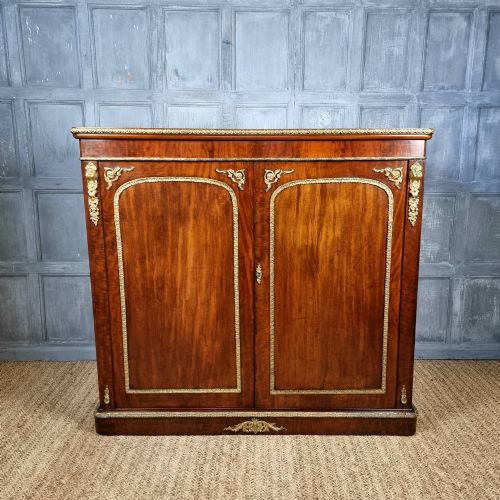
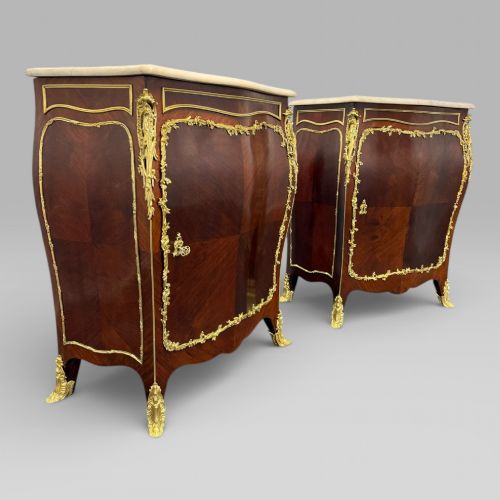
When searching for a gilt mounted antique commode, buyers encounter low storage chests and side cabinets designed with decorative bronze or ormolu mounts. These pieces emerge predominantly from French workshops spanning the eighteenth, nineteenth, and early twentieth centuries.
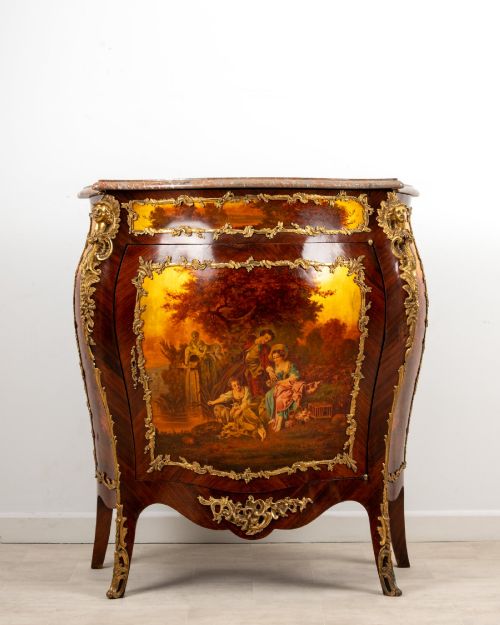
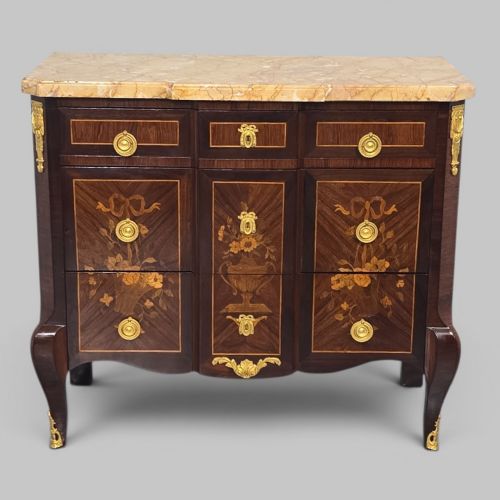
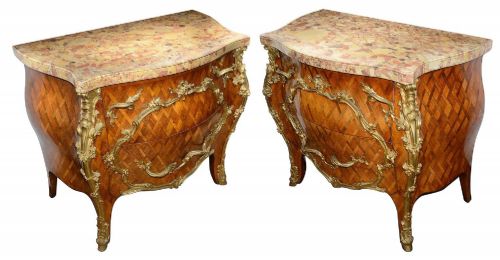
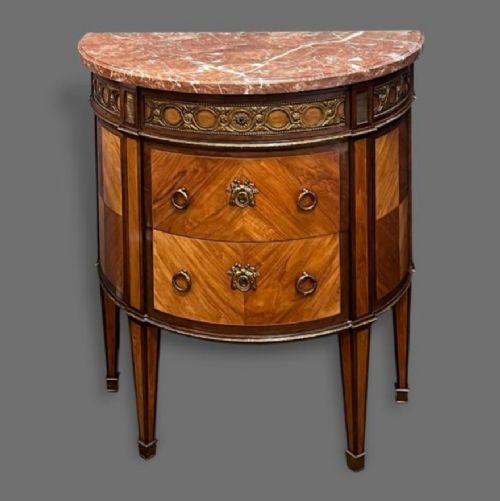
The forms vary from serpentine chests of drawers and bombé cabinets to demi-lune commodes topped with marble slabs. Most examples adhere to Louis XV and Louis XVI revival aesthetics, incorporating distinct regional variations from Paris and Grenoble.
Makers working within these styles utilise rich veneers like kingwood, walnut, and mahogany, often enhanced by marquetry inlay or painted panels. The resulting furniture balances practical storage with ornamental presence.
What Varies in Quality
The refinement of the cast bronze ormolu mounts dictates much of the visual success, separating sharply chased metalwork from softer, more generic casting. Artisans who spent hours refining details by hand created depth that mechanical production lacks.
Timber selection and veneer matching reveal the original maker's ambition, particularly in how grain patterns align across drawer fronts and curved surfaces. Superior marquetry integrates diverse woods without visible gaps or excessive filler.
Gilt Mounted Commode Retail Price Guide 2026
Typical asking prices for gilt mounted commode among the pieces listed under this phrase on Sellingantiques today, from the lower quarter to the upper quarter. They describe what is for sale here now, not the wider market.
Several commodes conceal secret drawers behind moulded friezes, designed to keep family heirlooms out of reach from curious guests.
Jacques Bircklé·Henry Dasson·Gillows·E. Kahn·Thomas Hache·Jean-Henri Riesener·Paul Sormani·Charles Cressant
The Gilt Mounted Commode Glossary
- Ormolu
- Gilded bronze used for decorative mounts and ornamentation on furniture. This technique involves applying a finely ground gold-mercury amalgam to bronze before heating.
- Bombe
- A bulging, outward-curving shape characteristic of certain cabinet designs. This swollen profile requires advanced woodworking skill to construct from straight timbers.
- Vernis Martin
- A type of simulated Japanese lacquer developed in France during the eighteenth century. Artisans applied multiple layers of varnish to create translucent painted panels.
- Marquetry
- The art of applying small pieces of veneer to a structure to form decorative patterns. Craftsmen cut contrasting woods to fit together like a puzzle.
- Demi-lune
- A half-moon shape applied to the plan of tables and cabinets. This curved profile allows the furniture to sit flush against a wall while offering display space.
Gilt Mounted Commode: Frequently Asked Questions
How do I distinguish Louis XV from Louis XVI commodes?
Louis XV pieces rely on asymmetrical curves, serpentine fronts, and flamboyant rococo bronze mounts. The overall silhouette feels organic and fluid.
Louis XVI commodes introduce strict symmetry, straight fluted legs, and neoclassical geometric lines. The mounts turn toward ribbons, urns, and classical motifs.
What is a marble top commode used for?
The stone surface provided a durable, stain-resistant workspace for serving drinks, arranging flowers, or placing lighting in grand reception rooms.
In modern interiors, the stone top offers a resilient surface for lamps and decorative objects while maintaining period character.
How do I live with a antique commode?
These cabinets function effectively as hallway focal points, living room storage chests, or bedroom dressers. Their decorative mounts require careful placement away from direct heat sources.
Maintain the timber with appropriate wax and protect the stone top from acidic liquids to preserve the original finish.
What does ormolu mean on furniture?
Ormolu refers to gilded bronze mounts fixed to the exterior corners, legs, and aprons of fine cabinets. These metal elements accentuate the architectural lines of the piece.
On higher-quality items, the bronze is mercury-gilded and hand-chased to create contrasting matte and polished highlights.