




Italian Baroque Chest Drawers
These italian baroque chest drawers bring serious presence to a room, combining rich walnut surfaces with bold architectural forms from past centuries.

Italian Baroque Chest Drawers
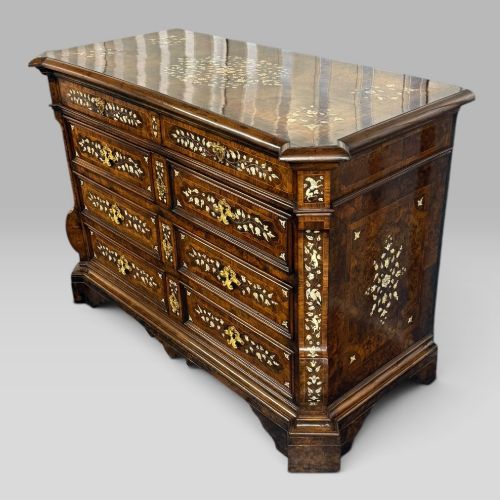
The dominant forms include classic commodes with bombe profiles, complemented by painted surfaces and intricate bone inlay. These works originate from Italian workshops, ranging from grand institutional commissions down to provincial domestic pieces.
How They Were Made
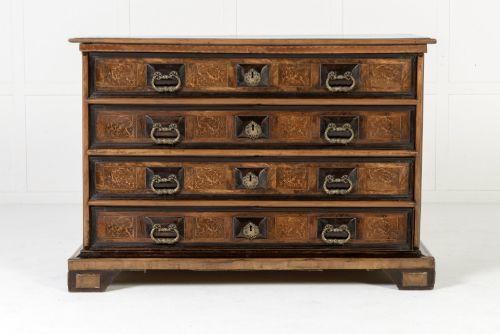
Craftsmen built these carcases primarily using solid walnut and figured burr walnut veneers, often enhanced with contrasting fruitwood or ebony details. Surfaces frequently received decorative bone inlay and paintwork to heighten the visual drama.
Metal mounts in brass and ormolu were cast and fitted to protect corners and frame the drawers. The construction relies on traditional joinery methods suited to shaped fronts and heavy timber carcases.
Italian Baroque Chest Drawers Retail Price Guide 2026
Typical asking prices for italian baroque chest drawers among the pieces listed under this phrase on Sellingantiques today, from the lower quarter to the upper quarter. They describe what is for sale here now, not the wider market.
Listings span three distinct centuries, with walnut emerging as the dominant material alongside decorative bone inlay and ormolu mounts.
What Varies in Quality
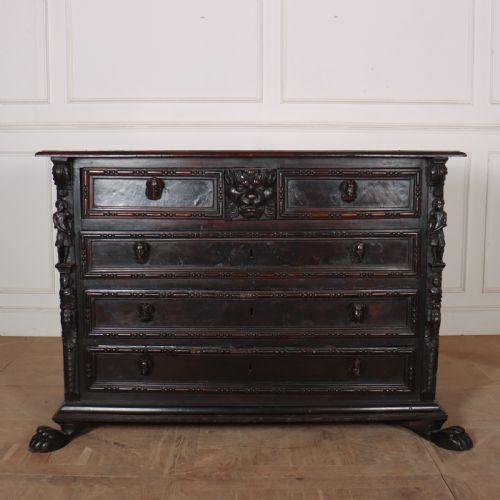
Quality rests heavily on the ambition of the original design, distinguishing grand workshop commissions from simpler provincial joinery. The crispness of the carving and the complexity of the bombe shaping set finer examples apart.
The preservation of original walnut surfaces and decorative veneers dictates the visual standing of each piece. Finer items retain their patinated timber and integrated brass or ormolu mounts without clumsy later alterations.
Grand Ducal Workshops
The Italian Baroque Chest Drawers Glossary
- Commode
- A low chest of drawers, typically featuring multiple tiers and prominent decorative hardware. This term frequently replaces standard chest of drawers in continental pieces.
- Bombe
- A swelling, convex contour on the front and sides of a cabinet or chest. This curved profile requires advanced woodworking skill to execute properly.
- Serpentine
- A furniture front or top shaped with a central concave curve flanked by two convex sweeps. The line mimics natural waves and adds movement to heavy timber.
- Burr walnut
- Timber taken from a tree growth or knot, yielding dense, swirling grain patterns. Cabinetmakers used these sections as choice veneers on principal surfaces.
Italian Baroque Chest Drawers: Frequently Asked Questions
How do I spot a genuine eighteenth-century piece?
Examine the timber construction beneath the drawers and at the back for signs of old hand tools and period joinery methods. Authentic examples show consistent patination and wear appropriate to their age.
Compare the carcass timber and veneer thickness against known pieces from the same region and era. Genuine works display structural integrity paired with natural material ageing.
Where should I place a commode at home?
These substantial chests suit principal reception rooms, large hallways, or spacious bedrooms where their architectural fronts can command the space. Ensure the floor can support heavy solid wood furniture.
Keep them away from direct heat sources and strong sunlight to protect the walnut veneers and delicate bone inlay. Generous surface tops also allow for displaying lamps or decorative objects.
What is the difference between a commode and a table cabinet?
A commode stands on the floor as a major storage unit with deep drawers for clothing or household linens. They provide large surface areas and dominate the wall space they occupy.
Table cabinets are much smaller and designed to sit upon another surface, containing multiple tiny internal drawers for valuables or documents. These portable pieces reflect more intimate, specialised storage needs.
How do I care for antique walnut surfaces?
Dust the timber regularly with a soft, dry cloth to prevent grit accumulation in the carved details and veneer joints. Avoid modern silicone sprays or heavy liquid polishes that damage old finishes.
Apply a traditional beeswax sparingly when the wood appears dry to nourish the grain. Professional conservation is recommended for any loose veneer or damaged brass mounts.