



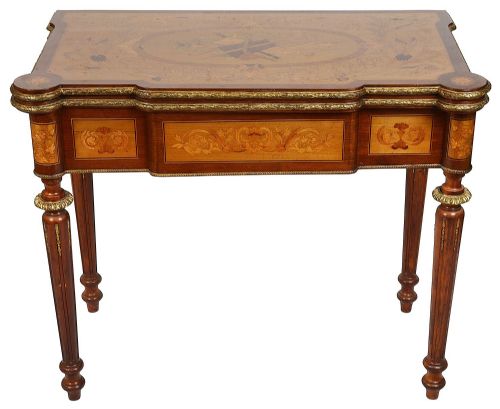


Walnut Foldover Table
A walnut foldover table is a clever piece of domestic engineering designed to serve as a compact console before opening to reveal a card or games surface.
Walnut Foldover Table
When you search for a walnut foldover table, you encounter a specialised piece of furniture intended for parlour gaming and social gatherings. The selection ranges from eighteenth-century Dutch and English examples to nineteenth-century Victorian pieces and later revivals.
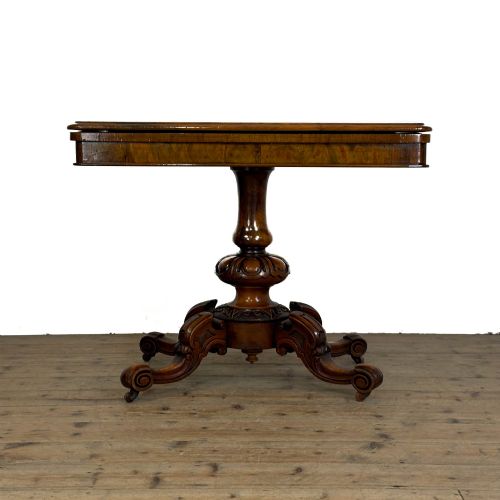
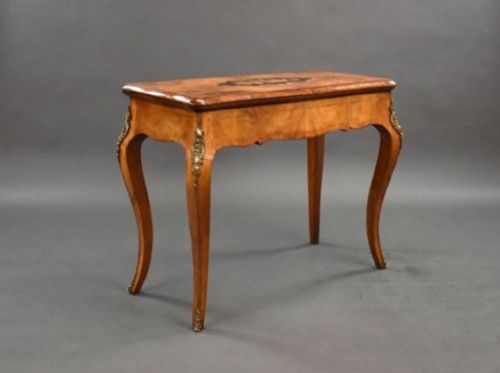
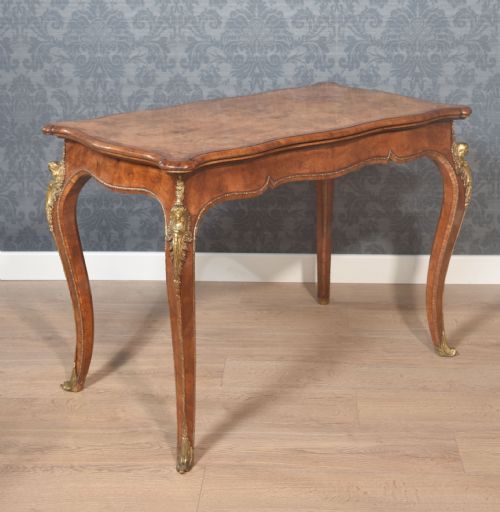
The most common version met on this page is the Victorian burr walnut card table, frequently featuring serpentine fronts, marquetry inlay, and rotating or folding tops. These tables bridge the gap between ornamental display surfaces and functional furniture for chess, draughts, and cards.
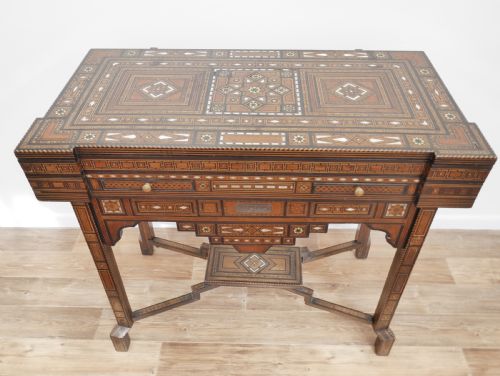
Alongside standard card tables, the records show games tables configured for multiple pastimes, alongside demi-lune shapes and butterfly forms. Origins span English workshops, continental European makers, and occasionally more distant traditions such as Damascus or Ottoman styles.
Distinctions in craftsmanship
The distinction between standard production and top-tier work rests on the selection of the veneer and the precision of the joinery. Highly figured burr walnut and complex, hand-cut marquetry inlay indicate a workshop of superior ambition.
Mechanism design also separates the grades, as finer tables operate with a smooth, stable swivel action that supports the folded top securely without sagging. Stamped signatures from established makers add further weight to an evaluation of quality.
Listings feature walnut foldover tables spanning the eighteenth, nineteenth, and early twentieth centuries, incorporating styles from Queen Anne and Dutch Baroque to Victorian Rococo Revival.
Edwards & Roberts·S&H Jewell
The Walnut Foldover Table Glossary
- Burr walnut
- A veneer sliced from the knotty growths of walnut trees, prized for its swirling, highly figured grain patterns. It forms the primary decorative surface on many nineteenth-century card tables.
- Demi-lune
- A half-moon shape with a curved front and a straight back edge against the wall. These tables fold out to form a full circle or semi-circle for play.
- Marquetry
- The art of applying pieces of veneer to a structure to form decorative patterns and pictures. It frequently incorporates boxwood and other contrasting timbers.
- Serpentine
- A curved line of furniture fronts that bends outward in the centre and inward at the sides. This contour adds visual movement to Victorian card tables.
- Ormolu
- Gilded bronze ornamentation applied to furniture mounts and details. It appears on selected continental and revival pieces.
Walnut Foldover Table: Frequently Asked Questions
What is a walnut foldover table used for?
These tables were designed primarily for domestic entertainment, functioning as side or console tables when closed. Opening the top reveals a baize-lined surface intended for card games, chess, or draughts.
In period homes, they allowed hosts to transition a room swiftly from formal presentation to social gaming without cluttering the floor space permanently.
How do I identify a Victorian walnut games table?
Victorian examples frequently display rich burr walnut veneers, serpentine skirts, and carved pedestal bases or pillar supports. Many incorporate intricate marquetry or boxwood stringing across the foldover top.
Looking underneath reveals the pivot or swing-leg mechanism that supports the leaf when opened, distinguishing these nineteenth-century forms from earlier eighteenth-century precedents.
Can I use these tables for dining?
Most foldover tables are built specifically for cards and games rather than heavy dining. The folding mechanisms and internal pivot structures are engineered to support leaning elbows and light board games rather than substantial dishware.
While some tea tables exist in the broader record, card tables generally feature shallower depths and specialised wells beneath the top for storing gaming pieces.
What maintenance do walnut veneer surfaces need?
Walnut veneer benefits from stable indoor humidity and protection from direct sunlight, which can bleach the warm brown tones. Occasional dusting with a soft, dry cloth keeps the surface clean.
Avoid liquid polishes containing silicone, relying instead on traditional wax formulations sparingly applied to nourish the historic timber.