




Stamped Victorian Furniture
Stamped victorian furniture carries the makers' marks of the workshops that built them, offering proof of origin across tables, chairs, and cabinets.
Stamped Victorian Furniture
Stamped victorian furniture comprises nineteenth century seating, tables, and cabinetry bearing the physical mark of the maker. These pieces date from the broader nineteenth century and the Victorian era, spanning specific decades like the eighteen fifties, eighties, and nineties.
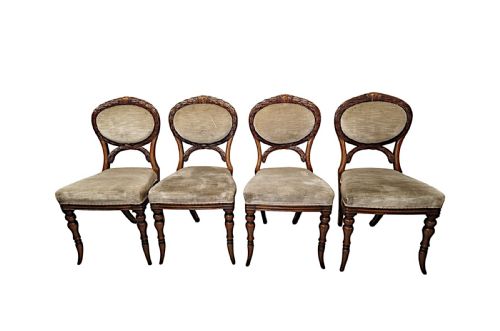
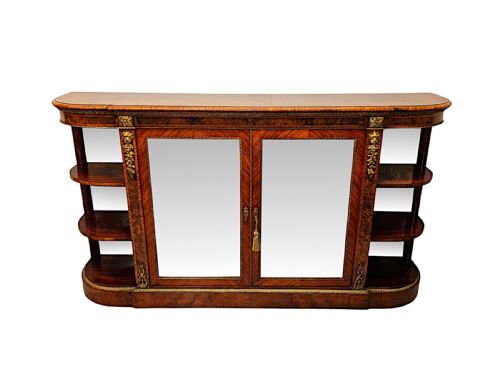
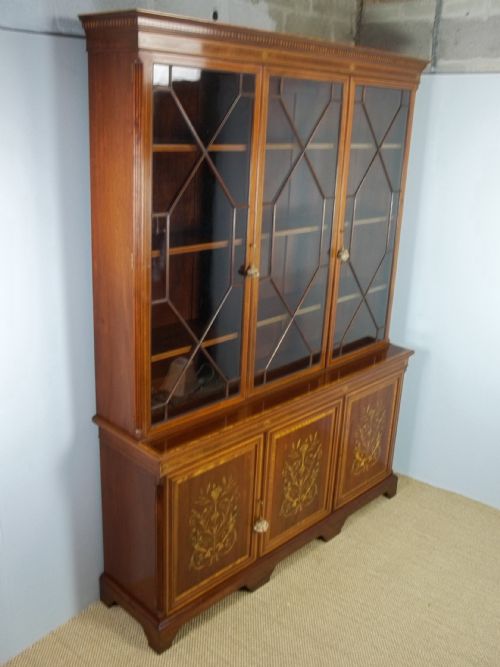
The selections available here range from dining chairs and card tables to large credenzas, bookcases, and wardrobes. Buyers encounter formal reception room pieces alongside bedroom furniture and office seating.
Origin varies from London workshops to provincial makers in Dublin, Manchester, and Lancaster. Makers marked their output on drawers, rails, and feet, leaving documentary evidence directly on the wood.
Quality variations
Quality rests upon the crispness of the maker's stamp, the selection of figured timbers like burr walnut and Cuban mahogany, and the precision of the marquetry inlay. Pieces produced by prominent London and regional firms exhibit superior timber selection and structural refinement.
The integration of secondary materials such as ormolu mounts, bronze feet, and fitted leather writing surfaces separates standard functional items from high status cabinetwork. Finer examples maintain original hardware and clear, legible maker stamps.
Listings feature nineteenth century pieces incorporating brass, glass, oak, mahogany, and burr walnut across multiple revival styles.
Strahan of Dublin·Gillows·Heals·S&H Jewell·Jas Shoolbred·Holland & Son·Lamb of Manchester·Howard & Son's·Edwards and Roberts·James Winter & Sons
The Stamped Victorian Furniture Glossary
- Maker's stamp
- An impressed or branded mark applied by a cabinetmaker or retailer to identify the firm responsible for production. These stamps provide direct provenance on the piece.
- Burr walnut
- Timber taken from the growth deformity of a walnut tree, yielding swirling grain patterns prized for decorative veneer. It appears on high status Victorian credenzas and tables.
- Ormolu
- Gilded bronze mounts applied to furniture for decorative effect during the nineteenth century. These metal details complement mahogany and walnut surfaces.
- Refectory table
- A large dining table of elongated proportions, originally designed for communal dining. The Victorian examples incorporate specific trade or institutional stamps.
Stamped Victorian Furniture: Frequently Asked Questions
Where do makers place stamps on furniture?
Maker marks usually appear on structural wooden elements that experience less wear during daily use. Cabinetmakers often stamped drawer edges, table rails, or the undersides of chair frames.
Searching these hidden surfaces reveals the identity of the workshop without disrupting the decorative exterior of the piece.
How do I identify a Victorian Gothic Revival piece?
Victorian Gothic Revival furniture draws inspiration from medieval architecture, displaying pointed arches, heavy mouldings, and structural verticality. These designs contrast with the lighter Sheraton Revival styles found in the same period.
Examining the carved details and overall silhouette clarifies which stylistic movement influenced the maker.
What is the difference between a credenza and a bookcase?
A credenza is a low cabinet traditionally used for display and storage in reception rooms, frequently featuring glass doors and ormolu mounts. Bookcases focus primarily on open or shelved storage for volumes.
Both forms utilise fine veneers like burr walnut and mahogany, but their internal layouts serve distinct domestic functions.
Can I use an antique desk for daily work?
Nineteenth century pedestal desks and writing tables provide sturdy working surfaces equipped with drawers for stationery storage. Many feature leather or fabric writing inserts suitable for contemporary use.
Placing protective pads on the writing surface preserves the historic leather and wood while accommodating modern equipment.