



Walnut Floral Credenza
A walnut floral credenza brings together rich timbers and botanical inlay to anchor a formal room.
Walnut Floral Credenza
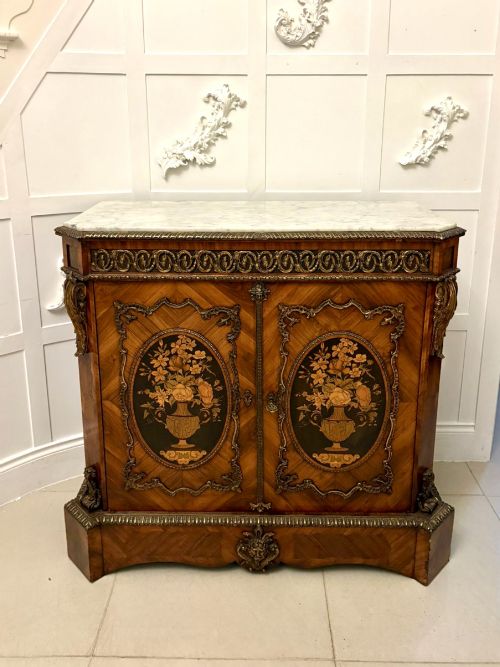
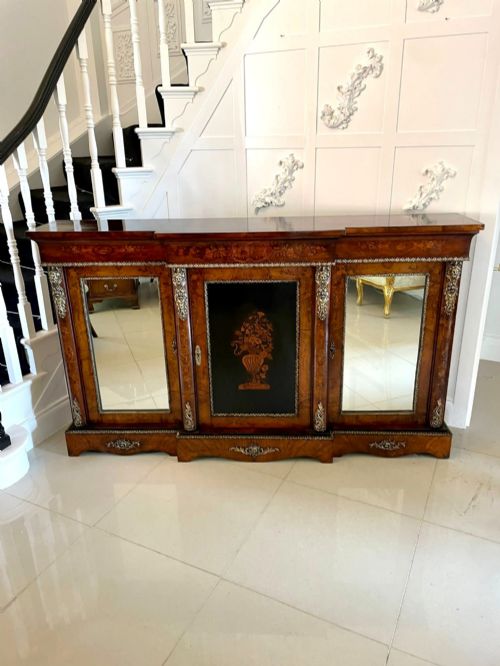
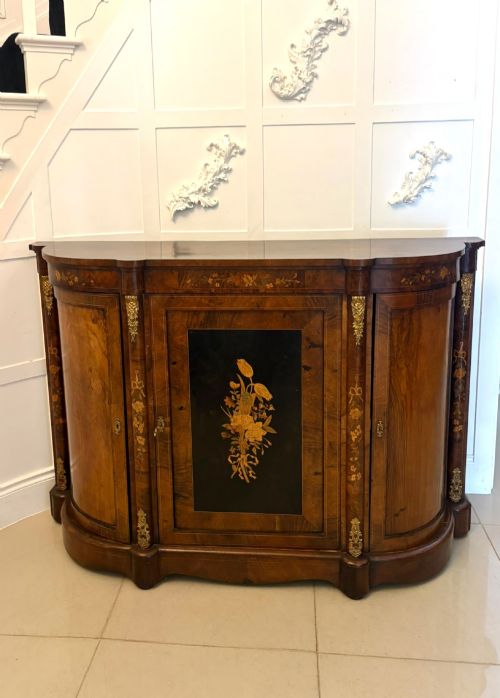
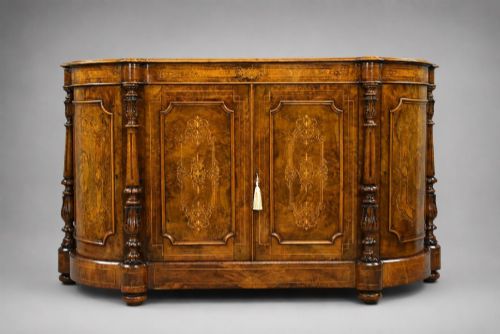
A walnut floral credenza is a low, substantial cabinet designed for display and storage, commonly found in Victorian and nineteenth-century forms. The version a buyer most frequently meets on this page pairs figured burr timber with intricate botanical marquetry.
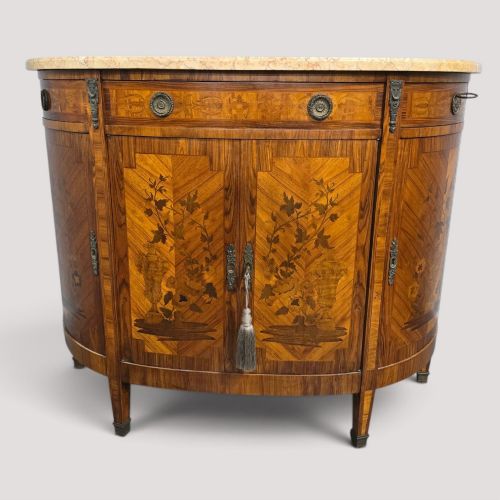
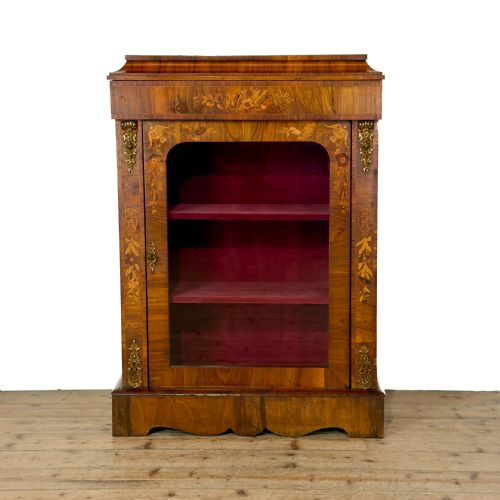
Makers shaped these low cabinets with breakfront, serpentine, or bow-end profiles, often enclosing shelves behind glazed or panelled doors. Alongside traditional credenzas, the selection includes side cabinets, pier cabinets, and bookcases sharing the same decorative vocabulary.
How they were made
Cabinet makers utilised figured walnut and burr timber veneers laid over secondary woods to create complex grain patterns. They integrated floral marquetry using contrasting lighter and darker woods to form detailed botanical sprays across the doors and panels.
Mounts of ormolu, gilt bronze, and brass accent the carcases, framing the timber surfaces. Marble tops in white and Carrara varieties frequently cap the pieces, while glass panels define the display cabinets and pier cabinets.
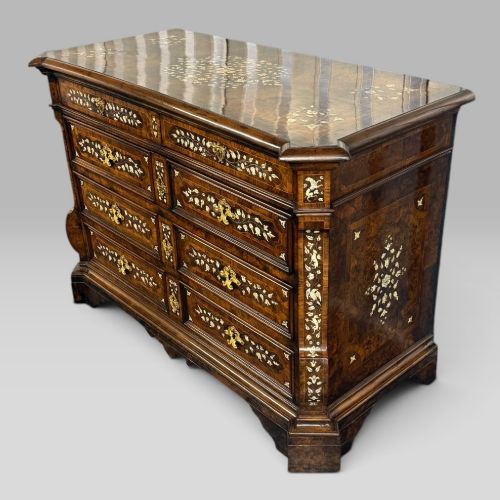
The listings on this site combine nineteenth-century Victorian pieces with French Louis XVI style cabinets and Italian Baroque commodes.
What varies in quality
The sophistication of the marquetry sets the standard, separating simple geometric borders from naturalistic floral panels composed of numerous shaded wood species. The choice of walnut timber also defines the tier, with highly figured burr surfaces commanding greater visual presence than plain grain.
Integration of cast ormolu mounts and heavy marble tops indicates a higher grade of production. The refinement of the curved serpentine or breakfront outlines determines the ambition of the original workshop.
The Walnut Floral Credenza Glossary
- Marquetry
- Inlay work using pieces of wood veneer fitted together to form pictorial or decorative motifs. Floral patterns appear across Victorian and French pieces.
- Burr walnut
- Wood taken from a tree growth that produces complex, swirling grain patterns. It provides a highly decorative surface for cabinet doors.
- Ormolu
- Gilt bronze mounts applied to furniture for decoration and edge protection. They add metallic contrast to the dark timber.
- Credenza
- A low dining room or parlour cabinet used for storage and display. Victorian examples often feature central doors flanked by curved glass cabinets.
- Pier cabinet
- A narrow display cabinet designed to fit wall spaces between windows. They share the walnut and marquetry construction of larger sideboards.
Walnut Floral Credenza: Frequently Asked Questions
What rooms suit a walnut floral credenza?
These cabinets work well in dining rooms, living spaces, and long hallways where low furniture provides surface space without blocking sightlines.
Their polished timber surfaces and floral details complement period interiors and traditional rooms.
How do I care for burr walnut?
Keep the timber away from direct sunlight and heat sources to prevent the wood veneers from drying out or cracking.
Dust regularly with a soft dry cloth and apply occasional wax appropriate for antique polished finishes.
What is the difference between a credenza and a pier cabinet?
A credenza is a wide, low cabinet with multiple doors, often featuring curved ends and substantial marquetry decoration.
A pier cabinet is narrower and taller, designed specifically to sit against wall piers between architectural openings.
Are marble tops original to these cabinets?
Many nineteenth-century French and English side cabinets and credenzas were manufactured with fitted marble tops, including Carrara varieties.
These stone surfaces provided durable tops for serving or display alongside the wooden marquetry carcase.
How do I identify Victorian walnut pieces?
Victorian walnut furniture relies on dark figured timbers combined with intricate botanical marquetry and brass or ormolu mounts.
Many examples incorporate serpentine shaping and bow ends typical of mid-nineteenth-century British and continental workshops.