




Walnut Double Chest
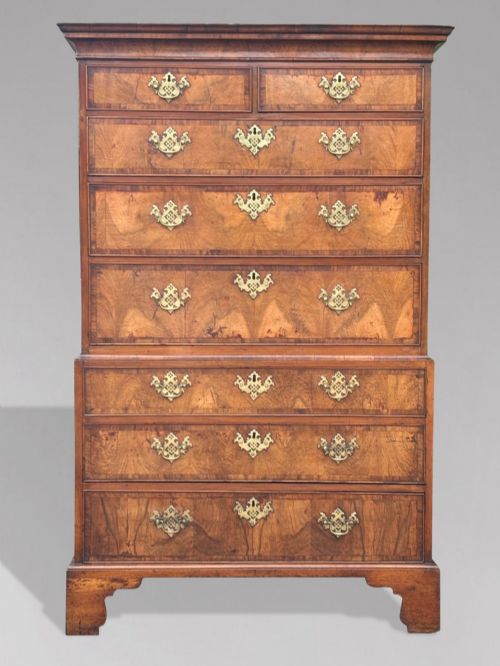
A walnut double chest brings together tall storage and rich timber, offering two stacked sections of drawers built for serious clothes storage.

Walnut Double Chest
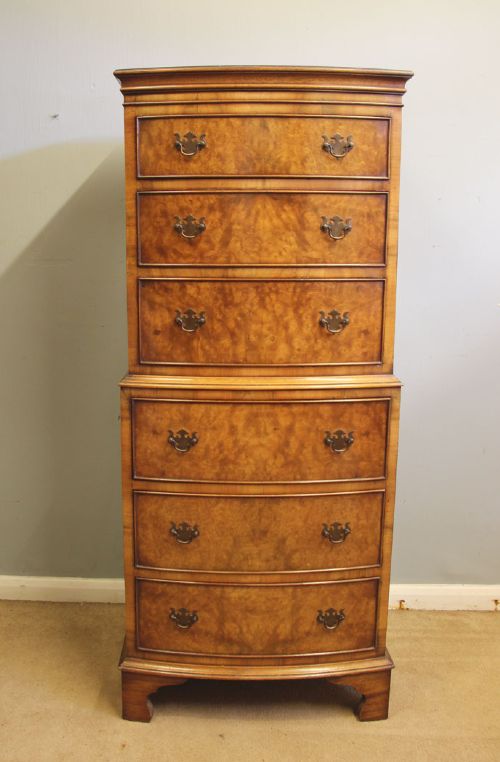
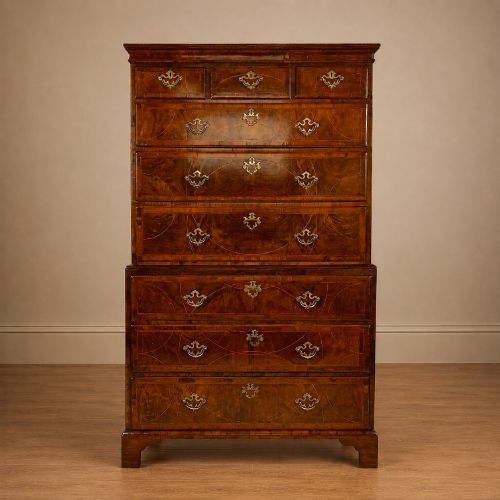
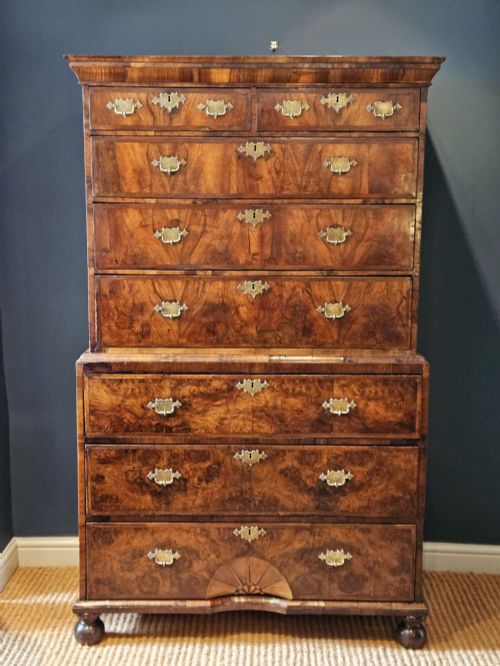
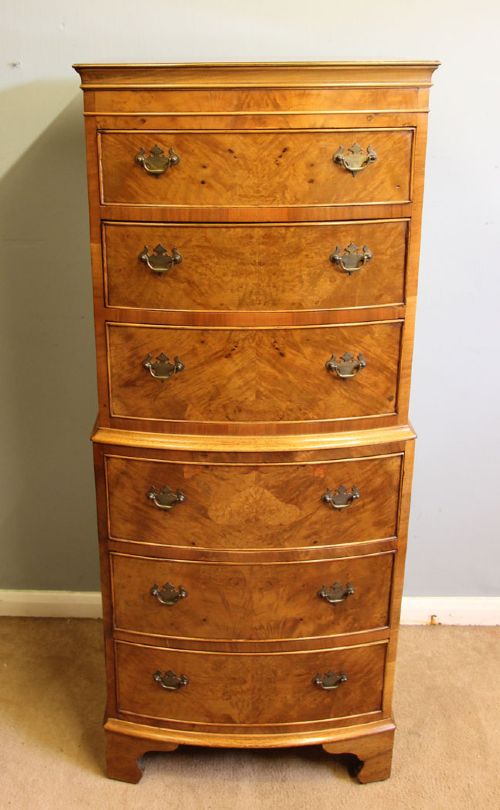
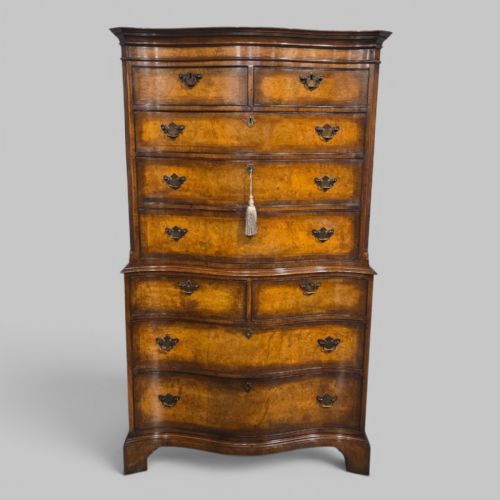
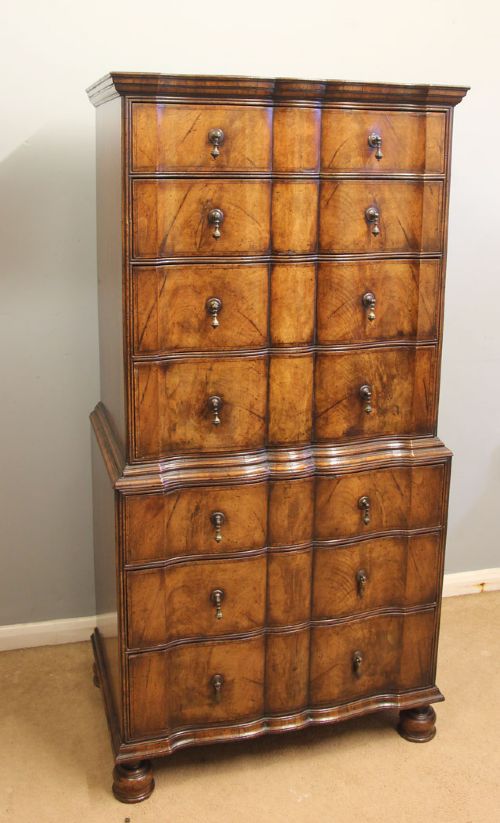
When buyers search for a walnut double chest, they encounter tall stacked forms known variously as chest on chest, tallboy, or cabinet on chest. These pieces combine a lower chest of drawers with a slightly smaller upper chest, creating substantial vertical presence.
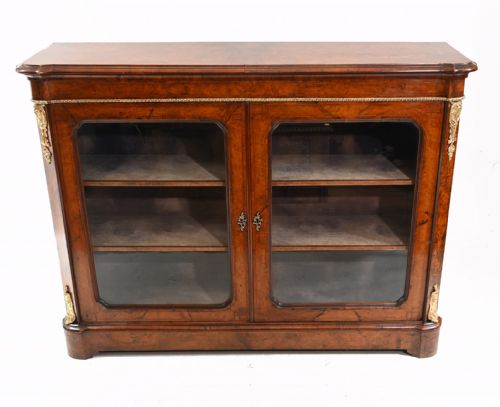
The selections available here span from early eighteenth century Georgian originals through Queen Anne and George II periods to later revivals from the 1900s to 1930s. Alongside traditional chest on chest designs, the form appears as bureau bookcases, linen presses, and cabinet pieces.
Earlier eighteenth century examples often feature figured timbers and clean proportions, while later twentieth century interpretations bring burr veneers and serpentine fronts to the same tall format.
Materials and Construction
Makers utilised solid walnut and decorative burr walnut veneers applied over secondary woods such as oak and pine. Timber selection defined the primary visual impact, often enhanced by fruitwood marquetry and line inlay.
Hardware played a functional and decorative role, with brass handles and escutcheons securing the drawers. Interior compartments utilised secondary timbers, while specialised details like dished sunbursts and secretaire drawers required precise cabinetmaking techniques.
The selection includes walnut double chests from the Georgian period alongside twentieth-century revivals utilising burr walnut veneer and brass hardware.
Judging Quality and Execution
The calibre of a walnut double chest rests on the choice and matching of timber veneers, particularly the grain pattern of burr walnut across the drawer fronts. Superior execution shows in the continuity of grain from top to bottom and the crispness of inlay work.
Proportion and structural integrity distinguish finer examples, where the upper and lower sections balance harmoniously without sagging or clumsy joins. The subtlety of drawer linings, dovetailed joints, and original brasses further separate standard production from exceptional cabinet work.
The Walnut Double Chest Glossary
- Chest on chest
- A tall storage piece formed by stacking one smaller chest of drawers directly on top of a larger base chest.
- Tallboy
- An alternative term for a tall chest on chest or high chest of drawers used primarily for linen and apparel.
- Burr walnut
- A prized wood veneer harvested from the knotty growths of walnut trees, displaying highly figured and swirling grain patterns.
- Secretaire
- A drawer fitted with a drop-front writing surface and internal pigeonholes, often concealed within the upper section of a chest.
- Line inlay
- Thin strips of contrasting wood or light-coloured material set flush into the walnut surface to create geometric borders.
Walnut Double Chest: Frequently Asked Questions
How do I use a walnut double chest today?
These tall pieces provide exceptional vertical storage space for bedrooms and dressing rooms without occupying a large floor area. The stacked configuration accommodates folded garments, linens, and accessories while serving as a commanding focal point in a traditional or contemporary room.
Upper drawers suit smaller items while deeper lower drawers hold bulkier clothing. Placing the piece away from direct sunlight and heat sources preserves the walnut veneer and keeps the wood stable over time.
How do I tell an 18th-century chest from a later revival?
Eighteenth-century examples display hand-cut dovetails, older secondary woods like oak, and signs of age in the timber shrinkage and patina. Revivals from the early twentieth century often show machine-sawn elements, standardised drawer construction, and different backing timbers.
Looking closely at the internal drawer construction and the character of the walnut grain provides clear clues to the manufacturing era. Hardware fixings and lock mechanisms also reflect the period of original assembly.
Where should I place a heavy walnut double chest?
Because these pieces are tall and carry considerable weight, they require stable, level flooring and secure positioning against a solid wall. Using appropriate wall brackets ensures safety, particularly with antique pieces that top two metres in height.
Keeping the furniture away from radiators prevents the walnut and burr veneers from drying out and cracking. Adequate clearance allows the upper and lower drawers to slide smoothly without binding.