
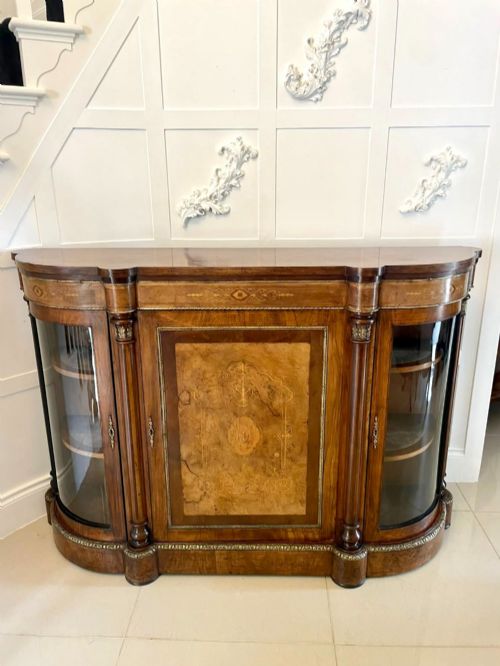
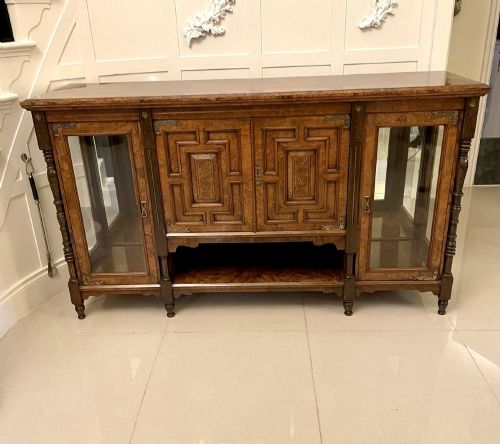
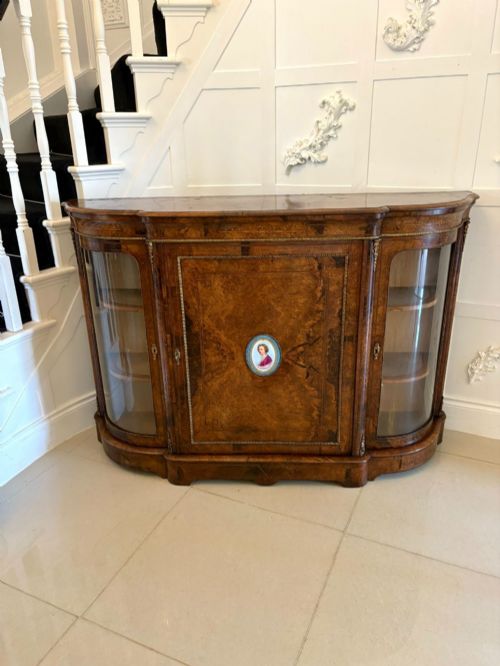
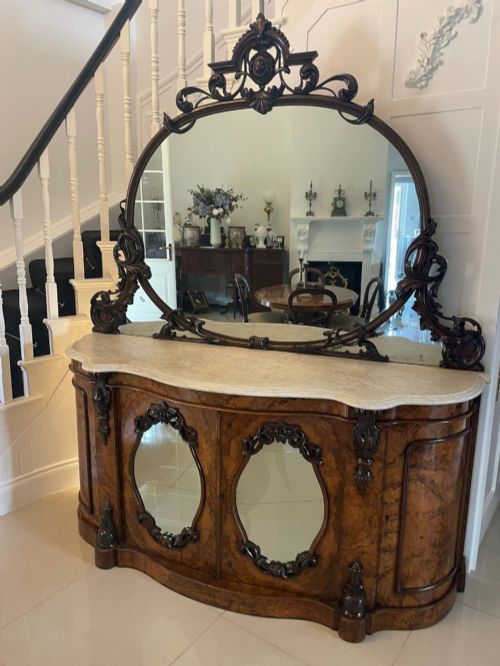


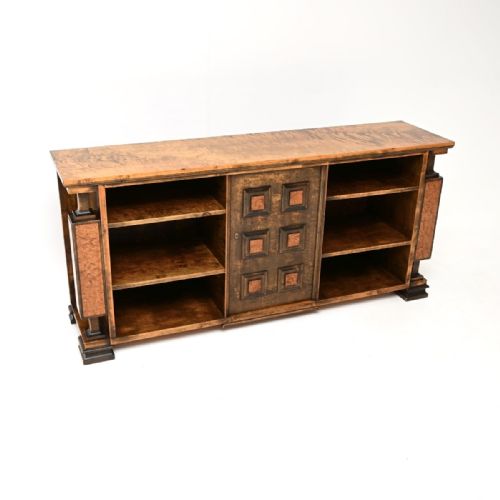
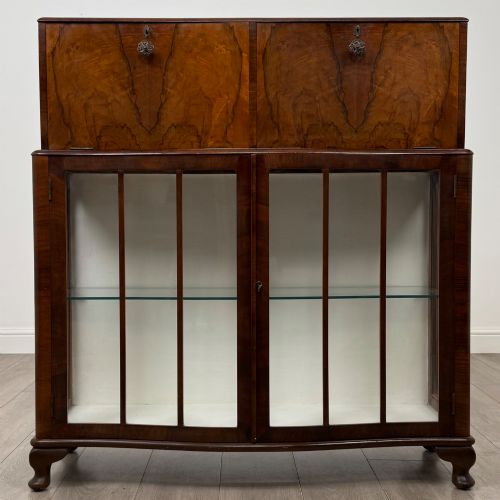
Walnut Display Sideboard
A walnut display sideboard unites storage with glazed or mirrored presentation, and these nineteenth and twentieth-century examples bring timber grain and metal mounts directly into a room.
Walnut Display Sideboard
A walnut display sideboard combines the enclosed storage of a traditional base cabinet with display space, often taking the form of a credenza or pier cabinet. These pieces merge practical utility with the presentation of decorative objects behind glass or open shelves.
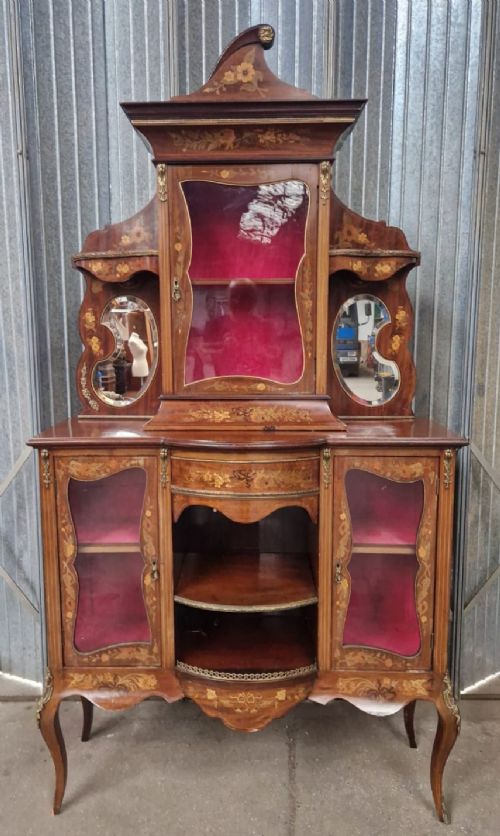
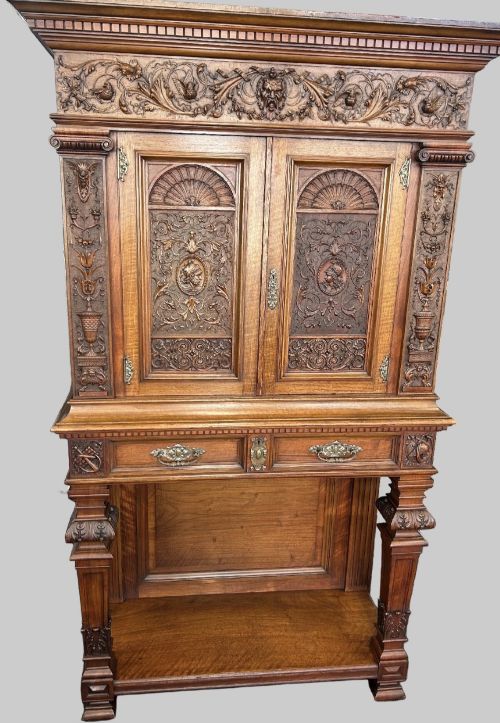
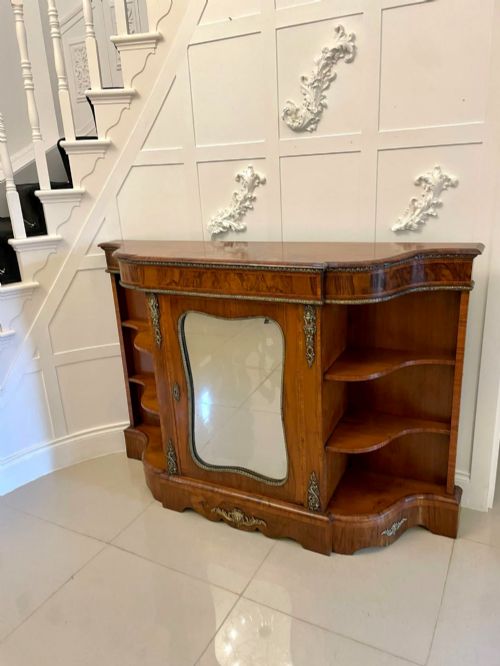
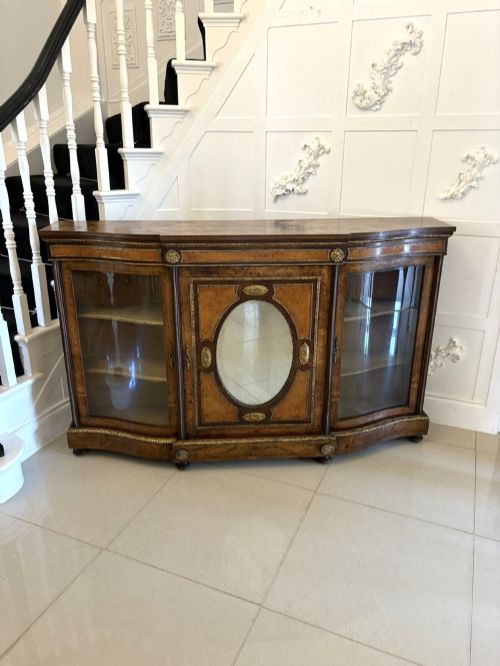
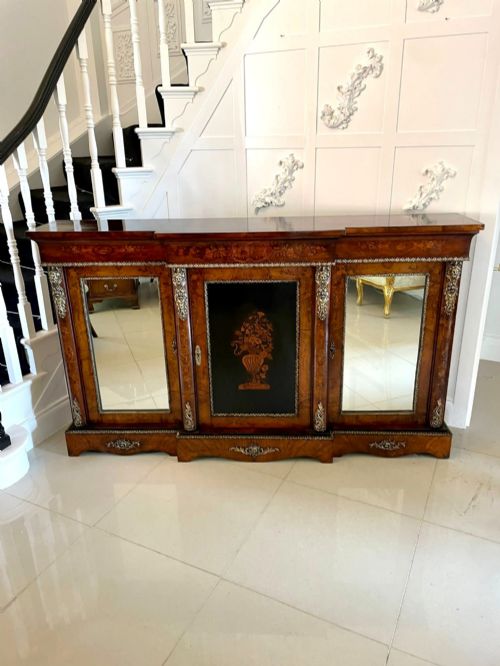
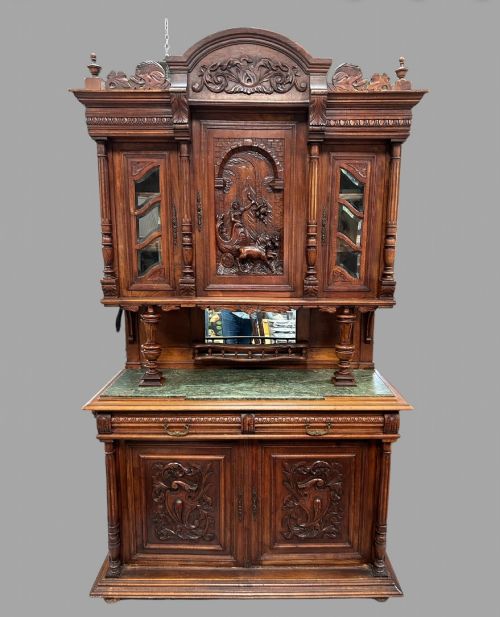
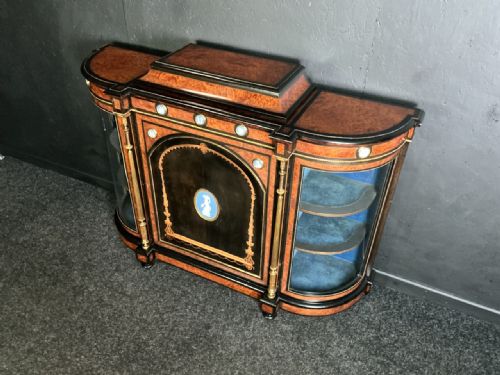
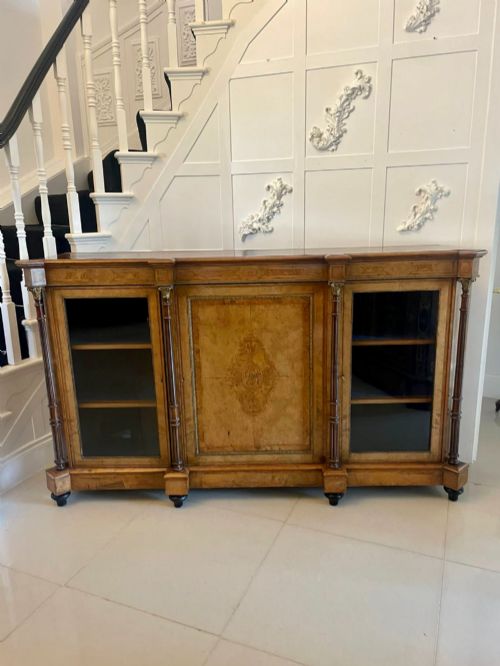
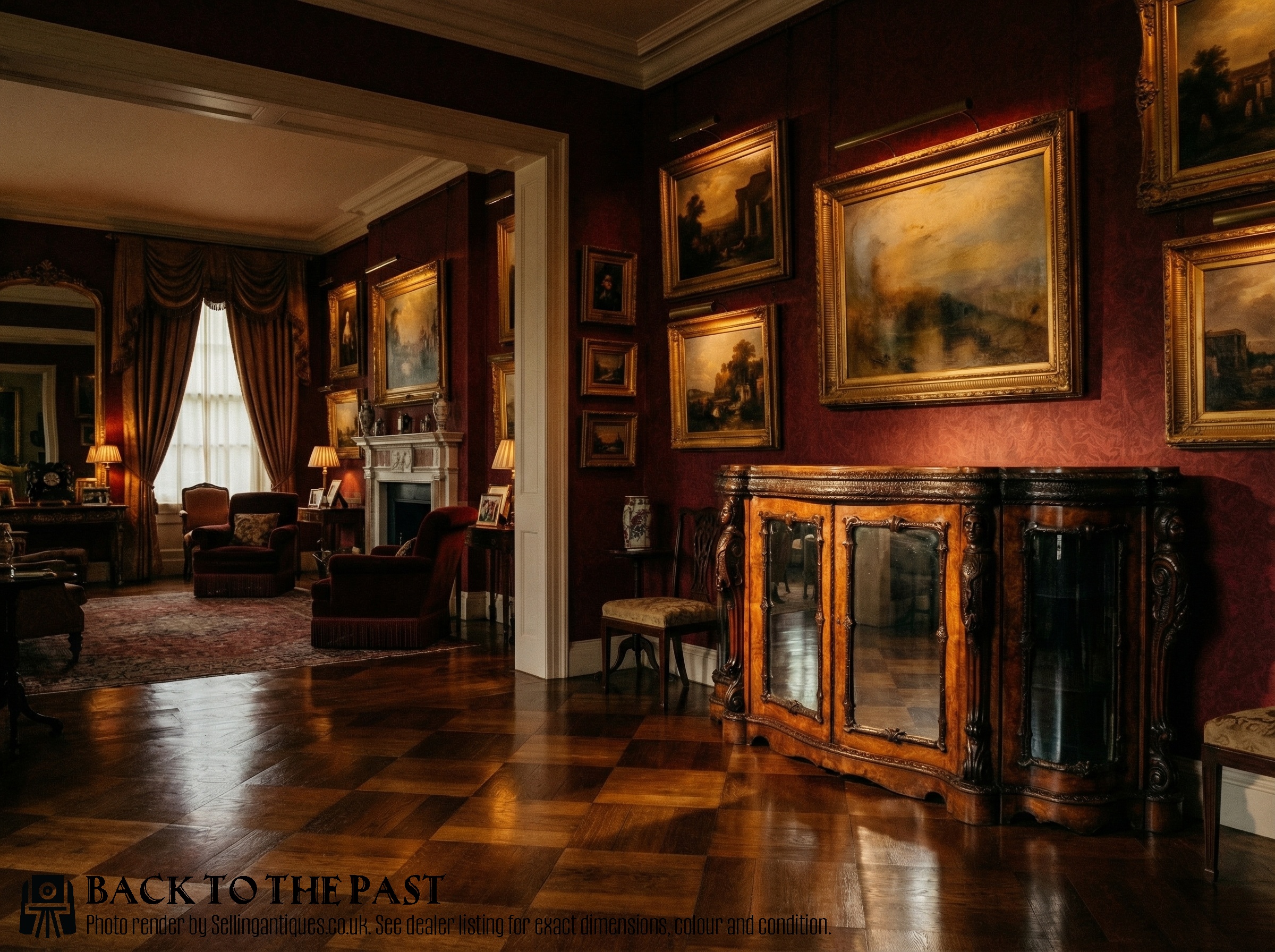
The pieces seen here date predominantly from the Victorian era down to the 1930s, encompassing styles from French Provincial and Aesthetic Movement to Art Deco and Regency. The Victorian burr walnut credenza with glazed side doors and central cupboards represents the most common form on this page.
Makers and workshops utilised specific regional preferences, creating serpentine fronts, mirrored backs, and breakfront configurations designed for drawing rooms and formal reception spaces. The fusion of sideboards, cabinets, and credenzas reflects the evolving domestic interiors of the nineteenth century.
How they were made
Cabinet makers selected figured timber veneers, particularly burr walnut, to cover structural carcases, laying the grain patterns symmetrically across doors and panels. This timber work was frequently enhanced with boxwood inlay, Tunbridgeware, and marquetry floral motifs.
Ormolu mounts cast in bronze were applied to corners, friezes, and pilasters, adding metallic contrast to the dark timber surfaces. Glass doors and mirrored backs introduced light reflection into the cabinetry, while ebonised wood and brass details completed the construction.
Makers occasionally hid small velvet-lined compartments behind gilded mounts for keeping secrets from the household.
What varies in quality
The distinction between standard commercial output and exhibition pieces rests in the complexity of the timber selection and the precision of the marquetry. Superior examples display intensely figured burr walnut matched across multiple panels rather than simple straight-grained boards.
The integration of cast ormolu mounts, hand-carved mirror frames, and stamped maker attribution elevates a piece beyond everyday domestic furniture. Quality also shows in the fluidity of serpentine curves and the exactness of boxwood stringing and floral inlays.
Gillows·August Ungethüm·Maison Gagneau·Leemings of Halifax
The Walnut Display Sideboard Glossary
- Burr walnut
- A figured wood grain taken from the wart-like growths on walnut trees, prized for its swirling, organic patterns. Cabinet makers sliced this timber into thin veneers to cover large cupboard doors.
- Credenza
- A low cabinet originating in Italy, adapted in nineteenth-century Britain and France for display and storage. They typically feature a central door flanked by curved glazed side compartments.
- Ormolu
- Gilded bronze mounts applied to furniture edges and panels for decorative effect. The technique involves treating metal with an amalgam of gold.
- Marquetry
- The art of applying pieces of veneer to a structure to form decorative designs and pictures. Artisans cut various woods and tinted materials to fit flush within the surface.
- Pier cabinet
- A narrow display cabinet designed to fit the wall space between windows. These tall, slender pieces often incorporate glass doors and velvet-lined interior shelves.
Walnut Display Sideboard: Frequently Asked Questions
What is a walnut display sideboard used for?
These pieces served primarily in formal reception rooms and drawing rooms to store dining accessories while displaying ceramics, glassware, and decorative objects behind glass doors.
The enclosed cupboards housed linens or silverware, while the top surface and interior shelves held ornaments for guests to admire.
How do I date a walnut display sideboard?
Dating relies on observing structural styling, timber preparation, and decorative motifs associated with specific decades. Mid-Victorian examples often feature heavy ormolu mounts and burr walnut marquetry, whereas 1930s pieces show cleaner geometric lines.
Cabinet construction methods and secondary timbers inside the carcase provide further chronological clues for the collector.
Where should I place a credenza in my home?
A credenza suits dining rooms, hallways, or living spaces where low furniture profile allows wall art or mirrors to hang above. Their shallow depth makes them practical for circulation spaces without blocking walkways.
Keep them away from direct sunlight and heat sources to protect the walnut veneer and prevent timber movement.
What is the difference between a credenza and a pier cabinet?
A credenza is typically wide and low, featuring a central cupboard flanked by curved glass cabinets designed to sit against a main room wall. A pier cabinet is much narrower and taller, built specifically to occupy the wall space between architectural windows.
Both forms utilise walnut and glass, but their spatial proportions serve different domestic layouts.