

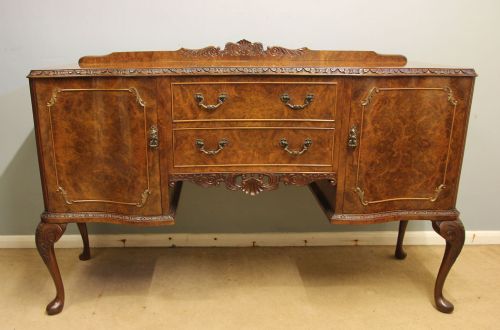
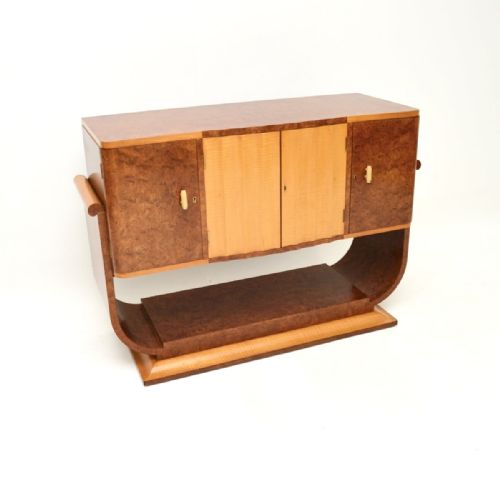
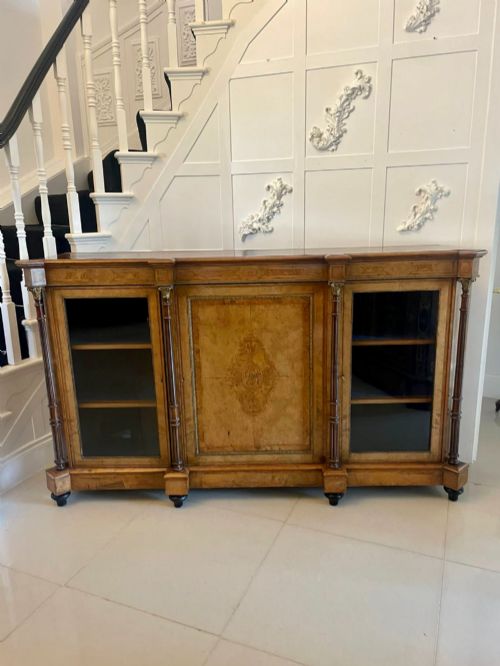
Walnut Dining Sideboard
A walnut dining sideboard anchors a room with rich timber grain, serving dining rooms from the Victorian era through Art Deco.
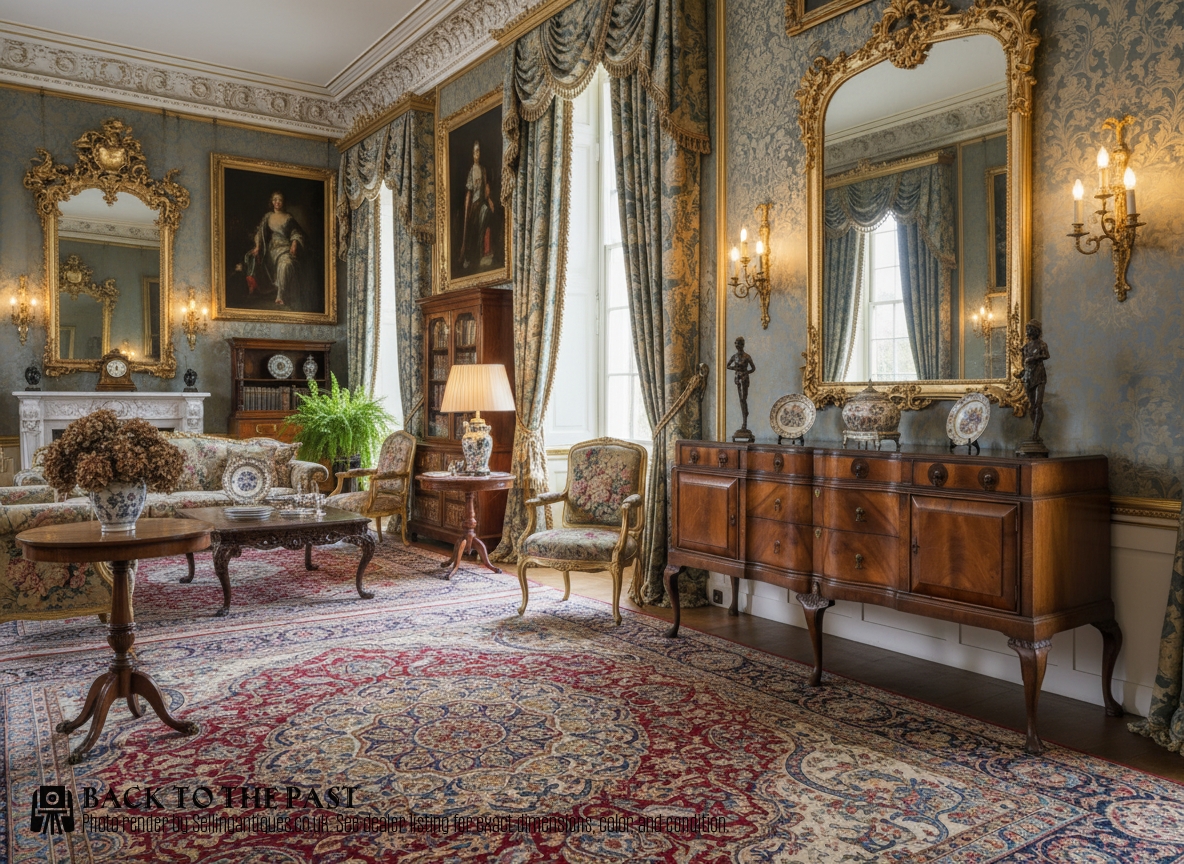
Walnut Dining Sideboard
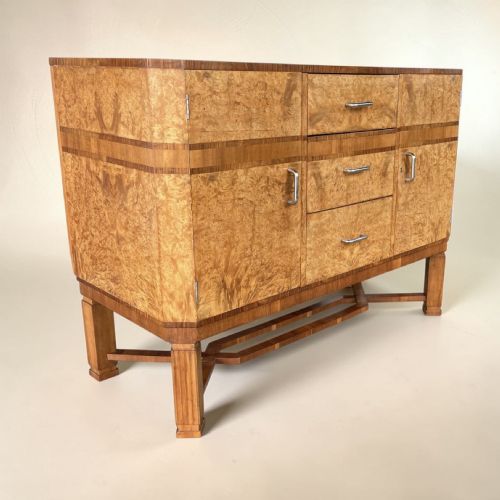
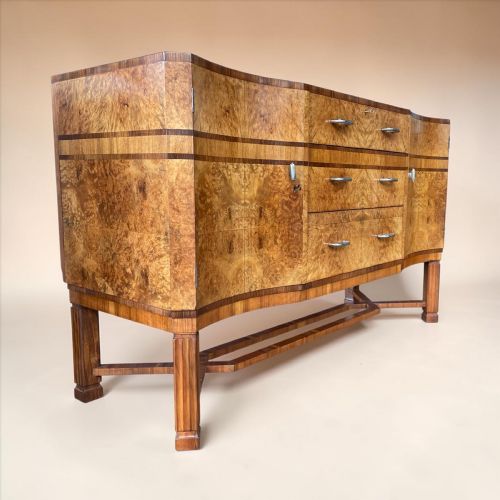
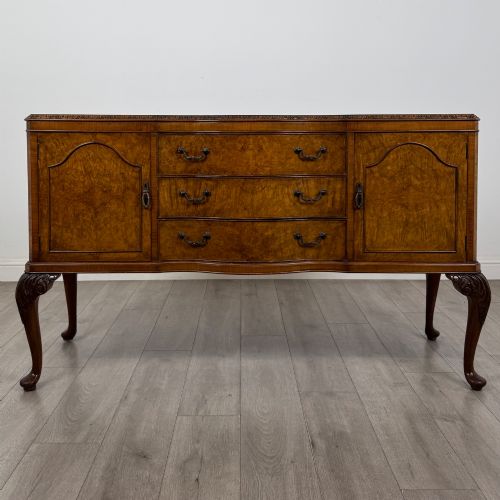
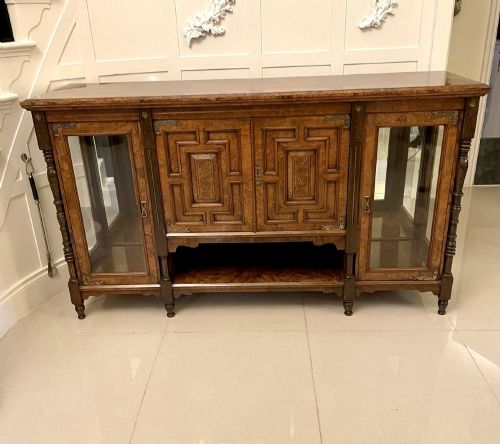
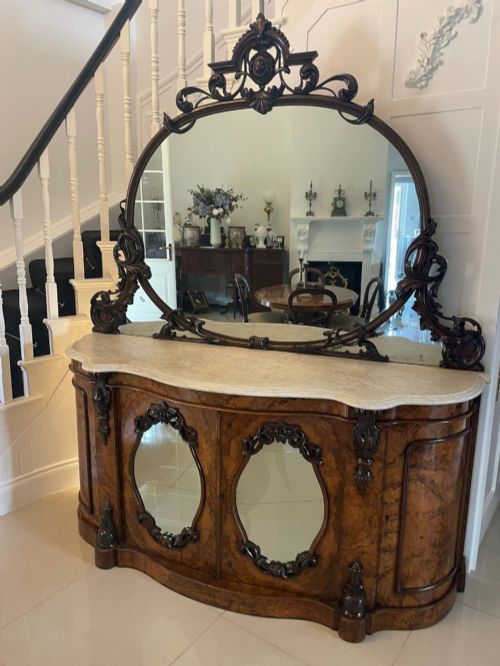
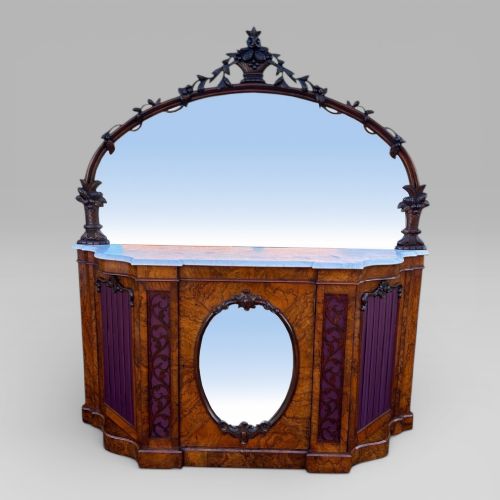
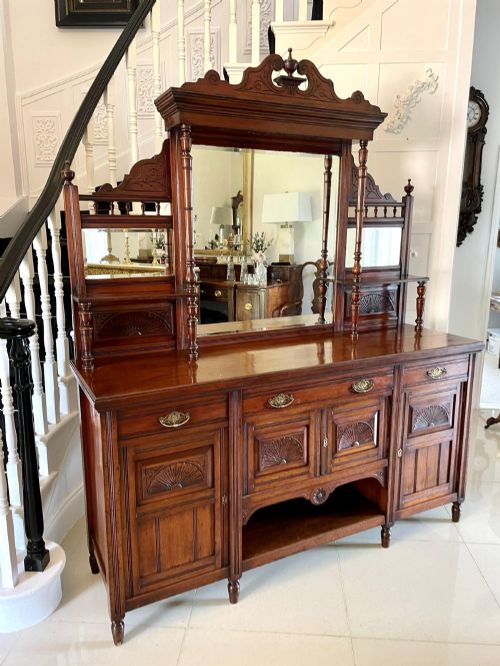
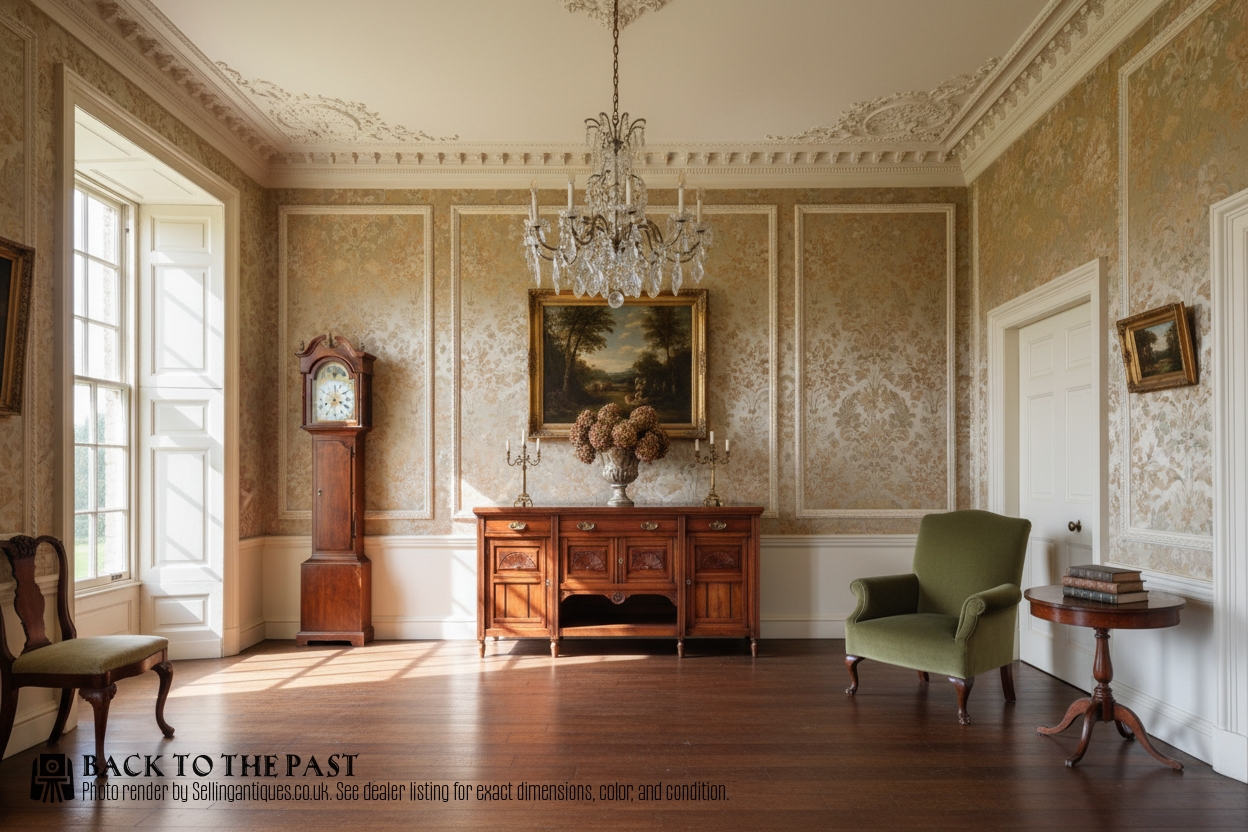
A walnut dining sideboard is a substantial dining room storage piece designed for serving food and storing tableware. These items range from formal Victorian credenzas with mirrored backs to streamlined Art Deco server cabinets.
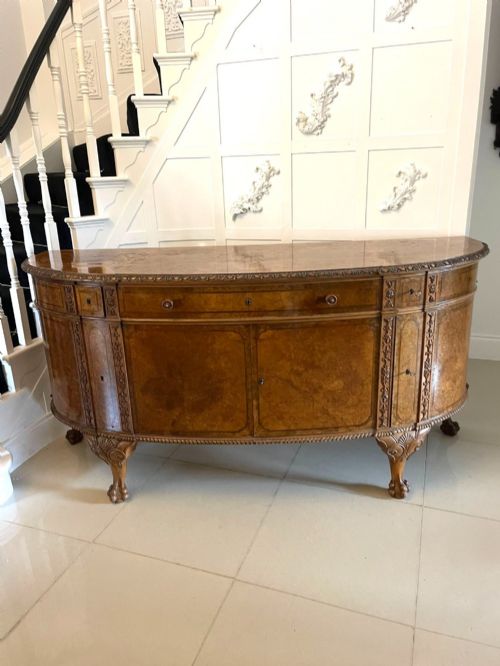
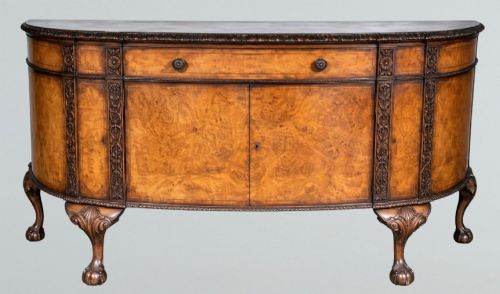
The most common examples met here combine walnut or burr walnut timber with practical cupboard and drawer space. Pieces span various historical periods including Victorian, Edwardian, and the 1930s.
Makers and designers such as Hille and Maurice Adams contributed notable examples to this category. Forms include serpentine fronts, bow fronts, and breakfronts suited to period dining spaces.
Materials and construction
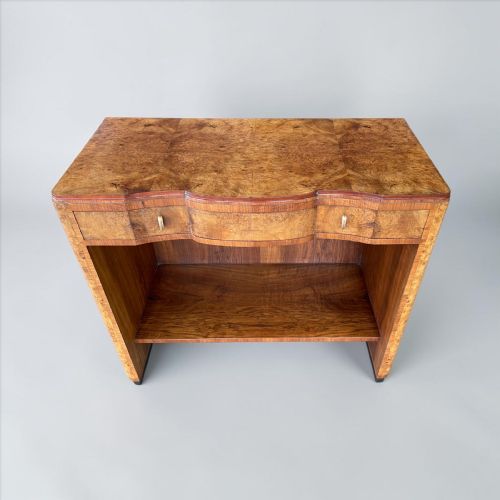
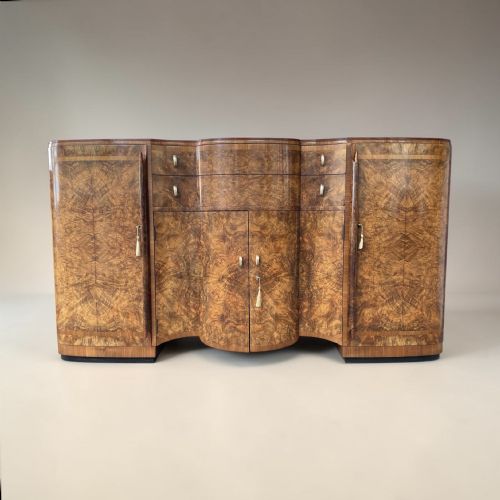
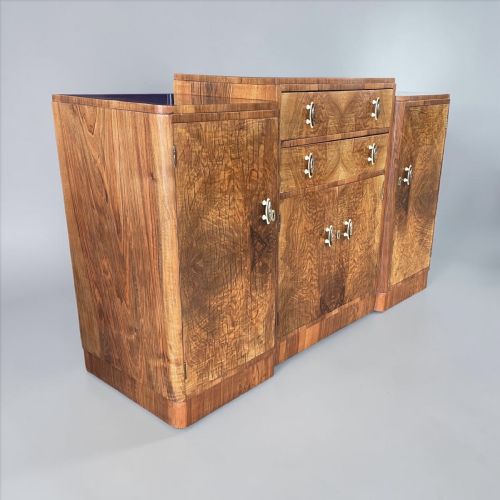
Craftsmen utilised solid walnut and decorative walnut veneer over secondary timbers to achieve rich patterned surfaces. Burr walnut sections provide swirling grain patterns across doors and drawer fronts.
Secondary materials such as marble, brass, glass, and mother-of-pearl appear on specific Victorian and Aesthetic Movement pieces. Carved details, marquetry inlay, and sycamore contrasting bands define the decorative finish of many twentieth-century examples.
Listings feature walnut dining sideboards spanning the Victorian period, the Aesthetic Movement, Edwardian revivals, and 1930s Art Deco.
Factors that determine quality
Quality depends upon the selection of timber grain, particularly the depth and symmetry of burr walnut veneer across the front. Finer pieces demonstrate meticulous matching of grain patterns and careful execution of marquetry or inlay.
Maurice Adams·Hille·Harry and Lou Epstein·Hamptons of Pall Mall London
The Walnut Dining Sideboard Glossary
- Burr walnut
- A prized timber harvested from tree growths that produces intricate, swirling grain patterns. It is frequently utilised for decorative veneer on cabinet doors.
- Credenza
- A low dining room cabinet, often featuring mirrored backs or glass doors in Victorian iterations. This form serves both display and storage functions.
- Marquetry
- The art of applying decorative pieces of veneer to a structure to form intricate designs or pictures. It appears frequently on twentieth-century surfaces.
- Breakfront
- A cabinet design where the central section projects forward from the flanking outer sections. This creates architectural depth and visual interest.
- Serpentine front
- A furniture front characterised by a concave central section flanked by convex ends, resembling a gentle wave. This shape requires skilled woodworking.
Walnut Dining Sideboard: Frequently Asked Questions
How do I date a walnut sideboard?
Dating relies upon stylistic markers, construction methods, and materials recorded in the design history of the piece. Victorian examples often incorporate heavy carving and mirror backs, whereas 1930s pieces lean towards clean Art Deco lines.
Examining internal timber and hardware provides further clues to the period of manufacture. Earlier pieces from the eighteenth century or Victorian era display different joinery techniques compared to Edwardian and Art Deco production.
What is the difference between a sideboard and a credenza?
A sideboard is primarily a dining room serving table with cupboards and drawers for tableware and food. A credenza traditionally denotes a low cabinet that may feature a mirrored superstructure or glass display sections.
In many listings, these terms overlap depending on the regional or historical terminology applied by makers. Both serve the fundamental purpose of dining room storage and display.
How do I care for burr walnut veneer?
Burr walnut requires protection from direct sunlight and excessive temperature fluctuations to prevent timber movement and fading. Dusting regularly with a soft, dry cloth maintains the polished surface without abrasive cleaners.
Applying appropriate wax feeds the timber and preserves the lustre of the veneer. Avoiding moisture accumulation safeguards both the wood and any delicate inlay work.
Where should I place a sideboard in a dining room?
A sideboard functions best against a primary dining room wall where it provides accessible surface space during meals. Positioning it opposite or adjacent to the dining table creates a balanced room layout.
Consider clearance for opening cabinet doors and drawers when measuring the intended space. Larger pieces with mirror backs require adequate wall height and suitable lighting to showcase the grain.