
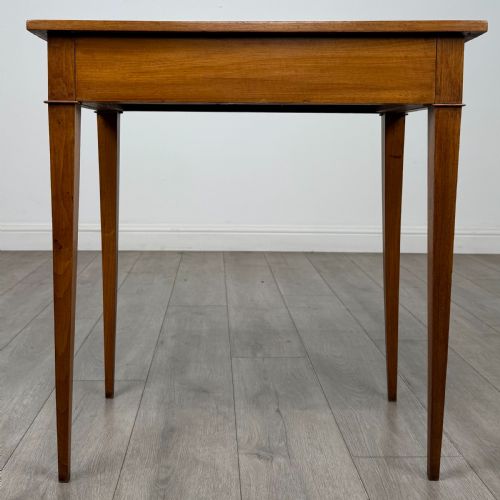
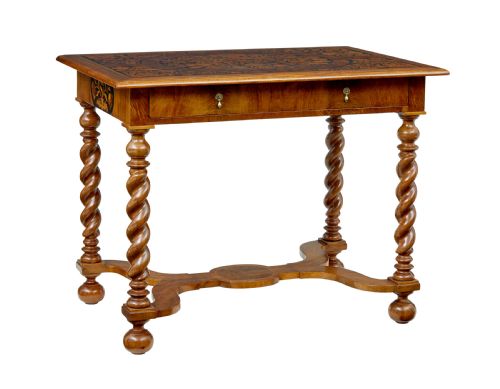
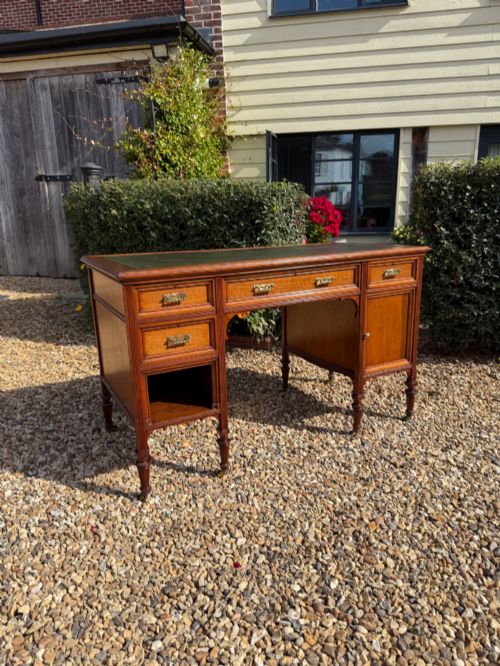
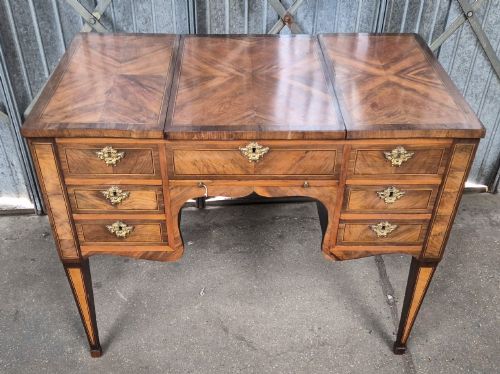
Walnut Desk Table
When you search for a walnut desk table, you enter a diverse tradition of domestic writing furniture fashioned from rich timbers spanning the Georgian, Victorian, and Art Deco eras.
Walnut Desk Table
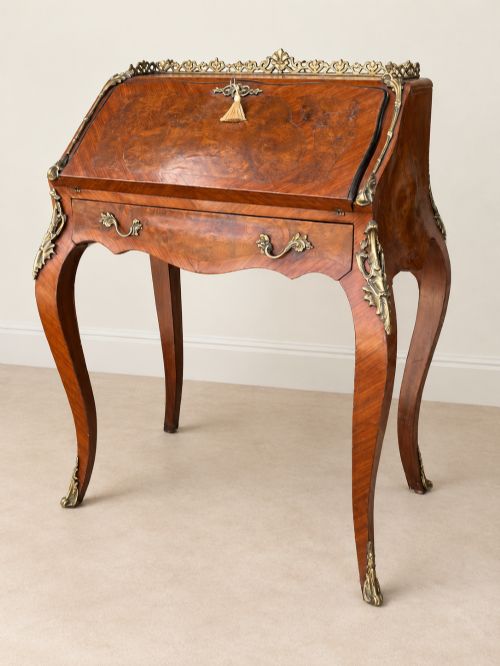
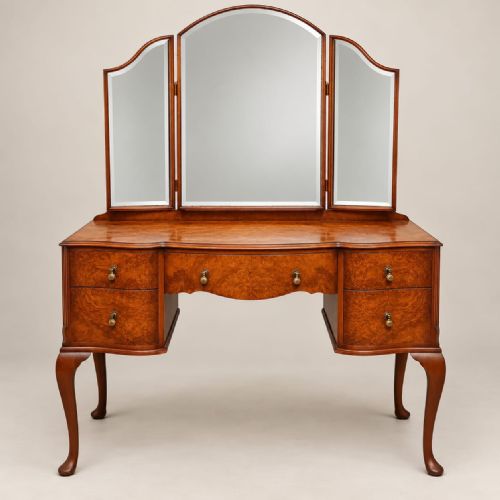
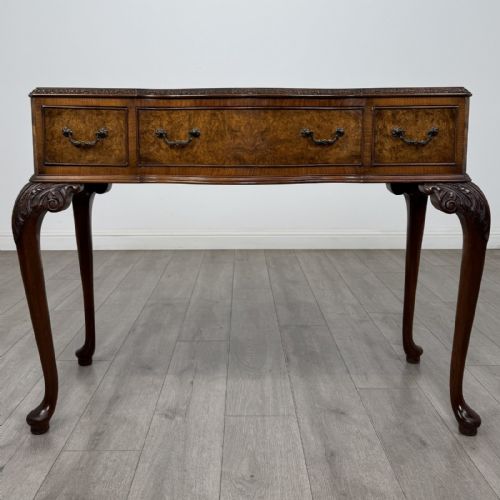
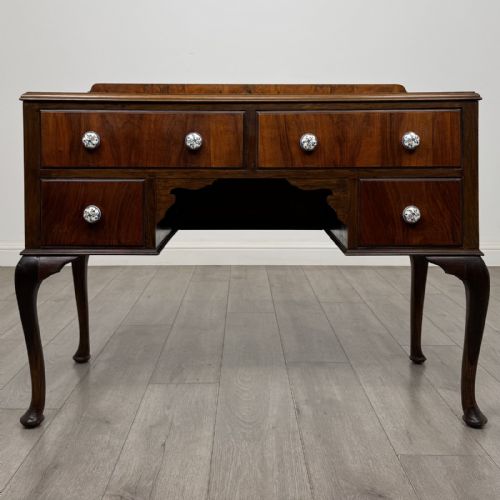
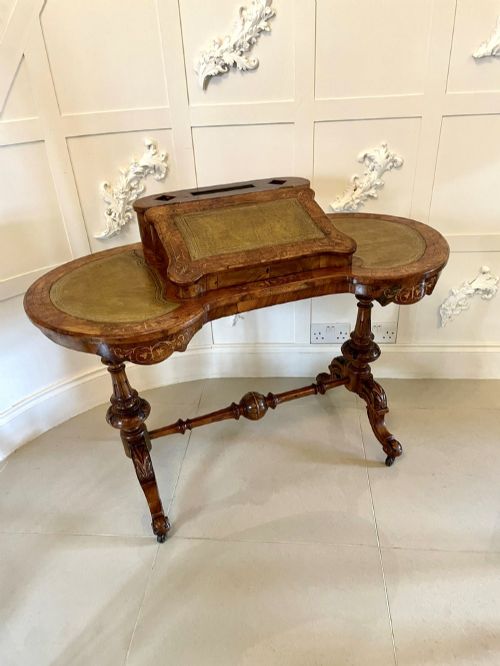
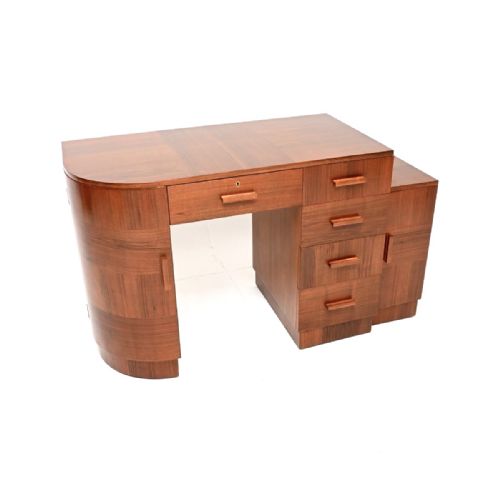
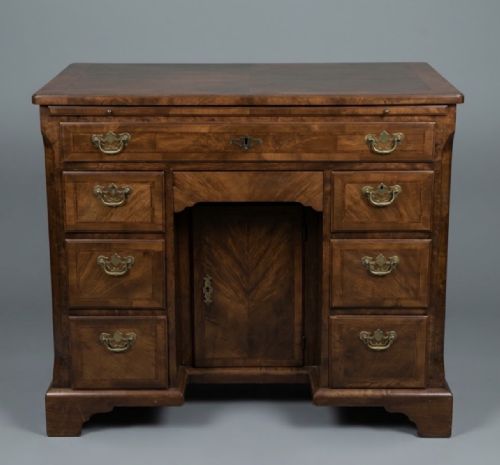
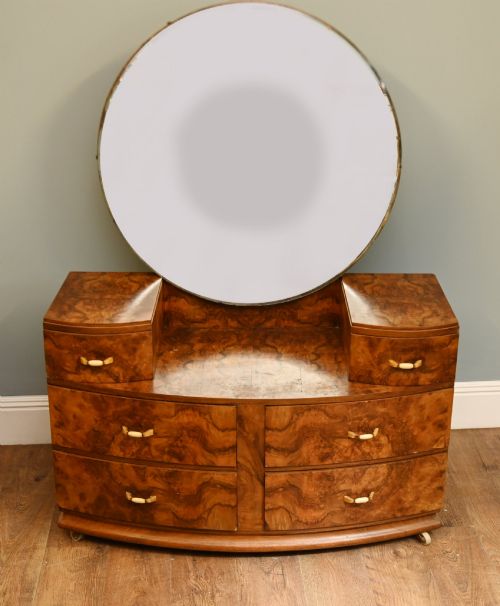
A walnut desk table bridges the functional demands of a workspace with the decorative presence of a fine table, appearing across centuries of cabinet making. Examples range from compact Georgian kneehole desks and elaborate Victorian kidney writing tables to streamlined Art Deco pedestals.
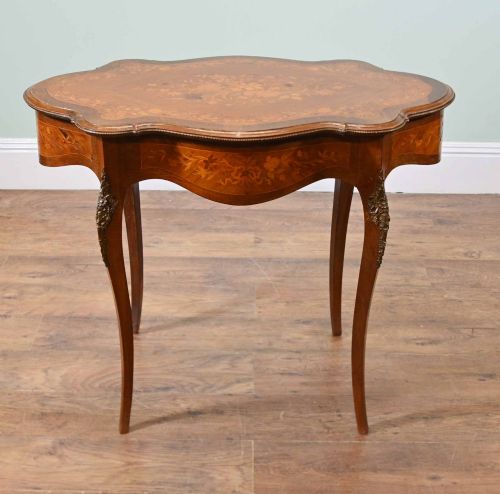
The material vocabulary of these pieces draws heavily on figured timbers, frequently pairing solid walnut carcasses with ornamental veneers. Makers utilised indigenous and continental styles alike, producing French bureau plats, English pedestal desks, and lighter ladies writing tables.
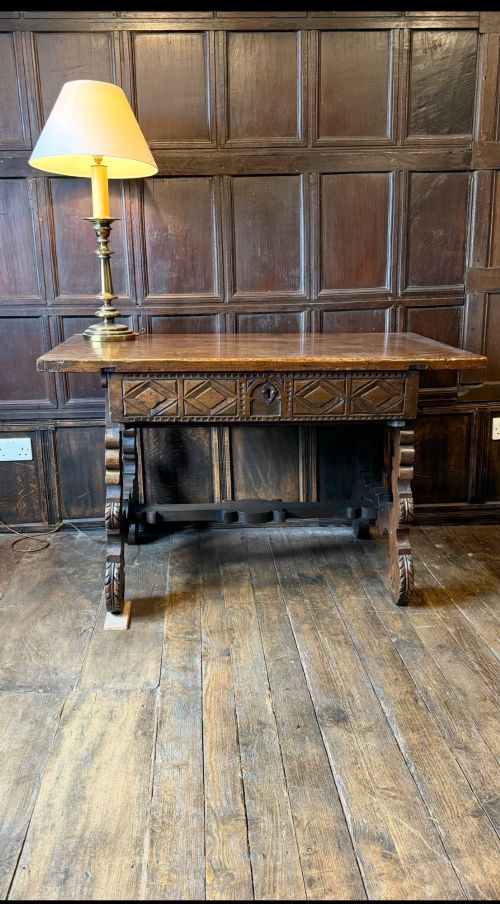
Surviving pieces reflect the shifting domestic habits of their periods, moving from heavy nineteenth-century library tables intended for freestanding room placement to compact twentieth-century designs adapted for modern studies.
Materials and Technique
Cabinet makers relied on figured walnut and burr walnut veneers applied over secondary woods to achieve striking symmetrical grain patterns across large flat surfaces. These veneers were often complemented by crossbanding in contrasting timbers and intricate boxwood stringing.
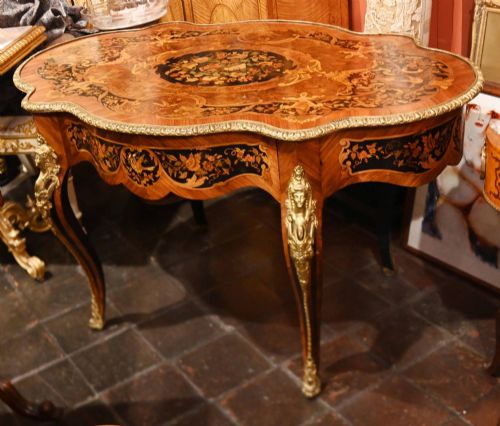
Leather inserts, frequently tooled in gold, were traditionally inset into the writing surfaces of desks and library tables to provide a durable writing plane. Metal mounts in brass or ormolu appear alongside ceramic plaques and parquetry inlays to accentuate the structural lines of French and English pieces.
One unexpected desk doubles as a globe stand, proving that even a walnut foot can have global ambitions.
Craftsmanship and Proportion
Superior execution shows in the careful selection and book-matching of burr walnut veneers, where grain patterns mirror each other seamlessly across drawer fronts and table tops. Lesser examples employ plain timber or rushed veneer matching that lacks depth and visual continuity.
JAS Shoolbred·Maple and Co·James Shoolbred
The Walnut Desk Table Glossary
- Burr walnut
- A decorative timber harvested from the wart-like growths on walnut trees, prized for its swirling, highly figured grain patterns. It is typically sliced into thin veneers for cabinet fronts and table tops.
- Bureau plat
- A freestanding French writing table featuring a flat top, usually lined with leather, and one or more drawers in the frieze. These tables are finished on all sides to allow placement in the centre of a room.
- Kneehole desk
- A compact writing desk featuring a central recess for the user's legs, flanked by pedestals of small drawers. This form became prominent during the Georgian period and remains popular for smaller studies.
- Parquetry
- A geometric mosaic of wood pieces used for decorative inlay on furniture surfaces. It creates angular patterns such as cubes or chevrons using contrasting timbers.
- Ormolu
- Gilded bronze mounts and ornaments applied to furniture, particularly popular on nineteenth-century French revival pieces. It provides a bright metallic contrast against dark woods.
Walnut Desk Table: Frequently Asked Questions
What is a walnut desk table?
A walnut desk table is a piece of furniture designed for writing and administrative tasks, constructed primarily from walnut or overlaid with walnut veneers. These items combine the surface utility of a table with the storage or compartments of a desk.
They appear in various forms across multiple centuries, ranging from formal Georgian kneeholes to ornate Victorian kidney tables and clean-lined Art Deco variants.
How do I date a walnut desk?
Dating relies on examining the construction methods, secondary woods used inside drawers, and the prevailing decorative style of the period. Georgian pieces display restrained proportions and fine dovetailing, while Victorian examples often feature richer burr veneers and elaborate turned legs.
Twentieth-century items introduce streamlined silhouettes and simplified hardware characteristic of Art Deco and Edwardian production.
Can I use a antique desk daily?
These tables and desks were built for heavy daily administrative work using seasoned timbers and robust joinery. Routine writing and computer use are well within their structural capabilities if treated with standard care for antique wooden surfaces.
Maintaining moderate room humidity protects the walnut veneers and leather writing surfaces from drying out or lifting over time.
Where should I place a freestanding desk?
Freestanding designs, particularly bureau plats and partners desks, are finished on all four sides and suit placement in the middle of a room. This allows the piece to serve as a visual centrepiece rather than sitting flush against a wall.
Wall-backed pedestal desks and side tables function best anchored against a study or hallway wall where foot traffic permits easy access.