


Walnut Corner Display Cupboard
A walnut corner display cupboard turns wasted architectural angles into elegant stages for porcelain and glass.
Walnut Corner Display Cupboard
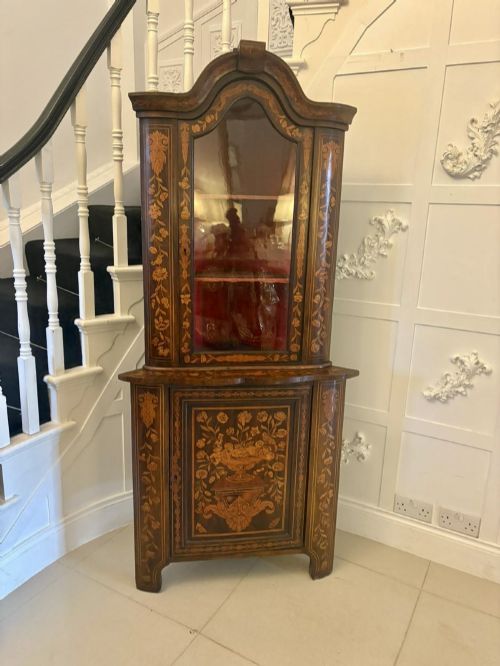
A walnut corner display cupboard makes clever use of awkward room junctions by combining triangular storage with glazed fronts designed to showcase precious objects. These pieces span centuries of domestic design, emerging in rich figured timbers and deep honey tones that anchor a room.
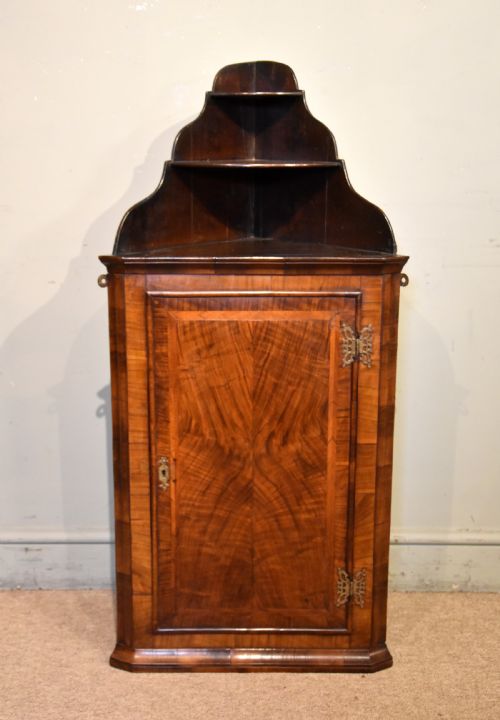
The versions most commonly met here range from sturdy Victorian iterations and refined George I revivals to earlier eighteenth-century examples featuring fine marquetry and glazed doors. Buyers encounter both hanging variants and tall two-part floor standing cabinets.
Form and function meet cleanly in these cabinets, offering secure shelving behind paned glass while softening the harsh ninety-degree intersection of standard walls. Their surfaces reveal the natural grain patterns characteristic of walnut timber, often enriched by lighter stringing or fruitwood details.
Materials and construction
Cabinet makers utilised solid walnut and decorative burr walnut veneers applied to stable secondary timbers, bringing rich figured grain to the fore. Boxwood inlay, marquetry, and fruitwood details frequently accent the primary surfaces.
Glazing bars divided the glass display doors into geometric panes, while brass hinges, escutcheons, and occasional ormolu mounts finished the exterior. Fabric linings often fitted the interior spaces behind the glass to set off the displayed contents.
The listings show walnut as the dominant timber, accompanied by glass, brass, fruitwood, and boxwood inlay across multiple periods.
Markers of quality
The distinction between ordinary and exceptional work lies in the choice of veneer and the crispness of any inlay or marquetry. Master craftsmen selected burr walnut with symmetrical grain patterns and executed fine boxwood stringing with absolute precision.
Proportion and joinery define the better pieces, where doors hang true and glazing bars remain slender yet robust. Original brass hardware and well preserved timber finishes separate untouched period examples from later restorations.
Liberty & Co.
The Walnut Corner Display Cupboard Glossary
- Marquetry
- A decorative technique where small pieces of veneer are assembled to form pictorial or geometric patterns on the cabinet surface. It frequently appears on Dutch examples from the eighteenth and nineteenth centuries.
- Burr walnut
- Wood taken from the abnormal growth of a walnut tree, yielding highly figured and swirling grain patterns. Cabinet makers prized this material for prominent door panels.
- Glazing bars
- The wooden strips that hold individual panes of glass within a cabinet door. Slim and intricate bars often indicate finer workmanship.
- Stringing
- Thin inlaid lines of contrasting timber used to outline panels and drawers. Boxwood is a common material for this delicate linear detail.
- Bow front
- A cabinet front that curves outward in a convex shape. This profile softens the corner geometry and adds visual depth.
Walnut Corner Display Cupboard: Frequently Asked Questions
How do I hang a wall cabinet?
Hanging corner cupboards require secure fixing to solid wall studs or masonry to support the considerable weight of timber and glass.
Professional installation ensures the cabinet stays level and the doors swing true without binding on the frame.
Can these hold heavy china?
Most period shelves are designed for lighter display items rather than heavy earthenware or dense stacks of dinnerware.
Checking the shelf supports and timber thickness will guide you on what weight the interior can safely accommodate.
How do I date a cabinet?
Dating relies on examining construction methods, timber choice, hinge types, and the style of the glazing bars.
Revival pieces from the Victorian and Edwardian eras often borrow earlier Queen Anne or George I motifs, making hardware inspection vital.
How should I clean walnut?
Walnut timber benefits from gentle dusting with a soft cloth and occasional treatment with quality beeswax to nourish the grain.
Avoid modern liquid polishes containing silicone, which can build up and dull the historic finish over time.