

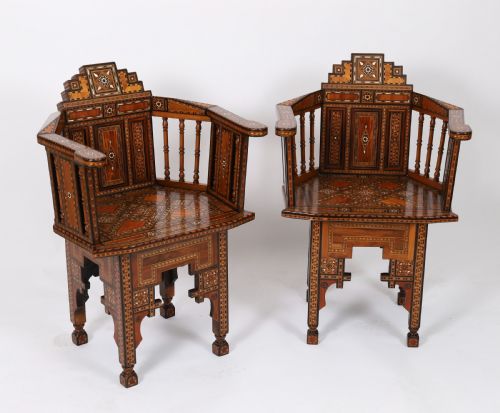


Walnut Corner Armchair
These walnut corner armchair pieces bring compact geometry and rich grain to awkward room angles.
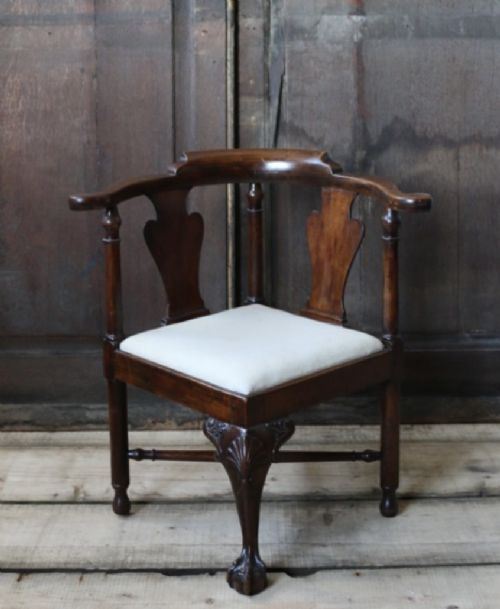
Walnut Corner Armchair
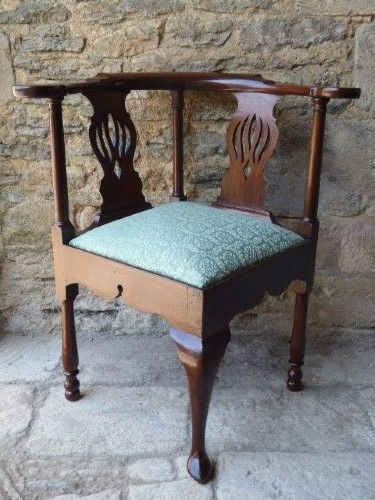
A walnut corner armchair is designed to fit snugly into room angles, utilising space that standard seating misses. The selections here include examples from the Georgian, Victorian, and nineteenth-century periods, spanning forms like desk chairs and bedroom chairs.
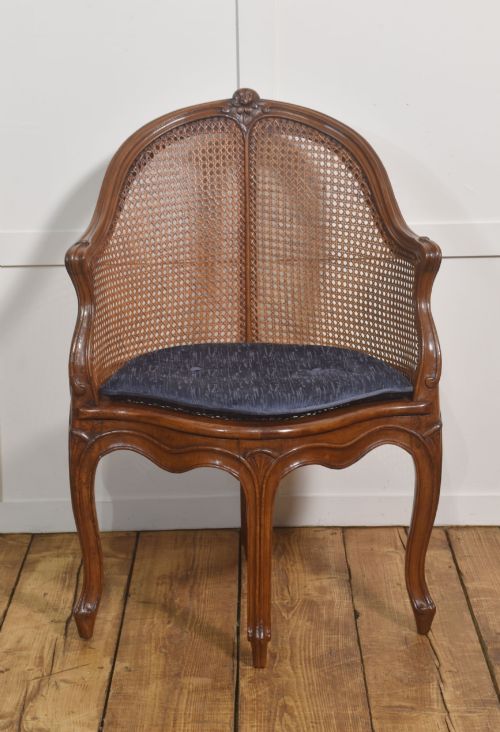
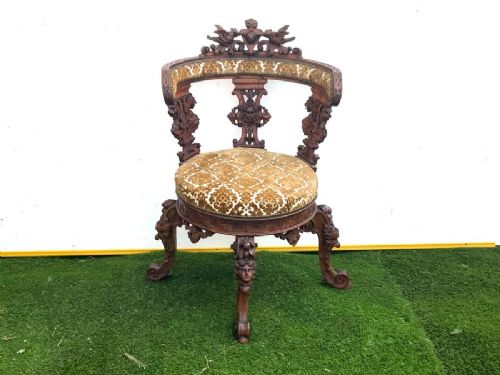
Most pieces encountered on this page date from the Georgian era and the nineteenth century, utilising walnut timber. They appear in styles ranging from Queen Anne and George II to Italian Renaissance Revival, Moorish Revival, and French Louis XV.
Makers shaped these items for practical domestic use, often employing them as reading seats or desk chairs. The evidence shows variations including carved figural motifs, parquetry inlay, cane seats, and upholstered textiles.
How they were made
Makers constructed these chairs primarily from walnut, employing structural timber framing capable of supporting the unusual diagonal geometry of a corner seat. Artisans frequently carved the wood directly, producing detailed figural elements and shaped arms.
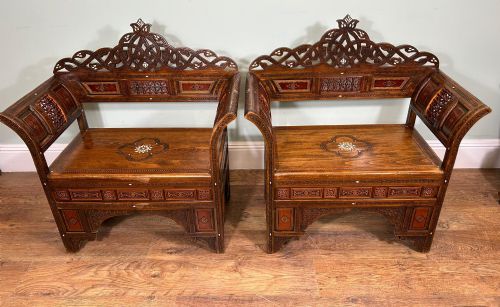
Surfaces received decorative treatments including parquetry inlay with materials like bone and mother-of-pearl, particularly visible on Levantine and Moorish pieces. Seats incorporated cane work, woven textiles, and upholstery in velvet, tapestry, and other fabrics.
Walnut Corner Armchair Retail Price Guide 2026
Typical asking prices for walnut corner armchair among the pieces listed under this phrase on Sellingantiques today, from the lower quarter to the upper quarter. They describe what is for sale here now, not the wider market.
Listings span multiple centuries from 1700 through the 1920s, utilising walnut alongside cane, velvet, bone, and mother-of-pearl.
What varies in quality
Quality rests in the crispness of the walnut carving and the precision of the joinery where the diagonal frame meets the backrest. Chairs featuring intricate parquetry inlay or figural carving demonstrate higher levels of artisan labour.
The choice of secondary materials such as cane, bone, mother-of-pearl, and high-grade upholstery textiles distinguishes standard domestic examples from more elaborate workshop productions.
The Walnut Corner Armchair Glossary
- Walnut
- A dense, dark timber prized for its rich grain patterns and durability in antique furniture construction. It provides the primary structural and visual medium for these chairs.
- Parquetry
- A geometric mosaic of wood veneer and other materials applied to a wooden structure to create decorative patterns. It appears on inlaid armchairs from Levantine and Moorish traditions.
- Cane
- Woven rattan or plant material used to form light, flexible seat panels. It offers a breathable alternative to solid wood or upholstered pads.
- George II
- An architectural and furniture style spanning the mid eighteenth century, characterised by robust proportions and carved ornamentation. Pieces from this period show early developments in corner chair design.
Walnut Corner Armchair: Frequently Asked Questions
Where do you put a corner armchair?
A walnut corner armchair is designed to tuck directly into the corner of a room, making efficient use of awkward spaces. They work well in studies, bedrooms, and drawing rooms where standard chairs disrupt traffic flow.
Because they fit into angles, they often serve as secondary seating or specific desk and reading chairs rather than primary lounge furniture.
How do you identify a Georgian corner chair?
Georgian examples, including pieces from the George I and George II periods, typically feature restrained lines, sturdy turned supports, and drop-in seats. The woodwork relies heavily on solid walnut grain rather than heavy surface inlay.
They often incorporate horseshoe-shaped backrests supported by multiple spindles and a central splat above a diagonal seat plan.
What is the difference between Moorish and Georgian styles?
Moorish and Syrian pieces from the twentieth and nineteenth centuries rely on dense geometric parquetry inlay using materials like bone and mother-of-pearl. They present intricate surface decoration across the entire frame.
Georgian chairs focus on structural timber form, carved cabriole legs, and smooth walnut surfaces rather than elaborate mosaic inlay.
Were these chairs used at desks?
Many corner chairs were specifically designed as desk and reading chairs, providing a stable, enclosed seat for writing. The diagonal plan allowed users to swivel slightly while remaining supported by the wraparound backrest.
Evidence notes specific desks and reading functions associated with early eighteenth-century examples.