

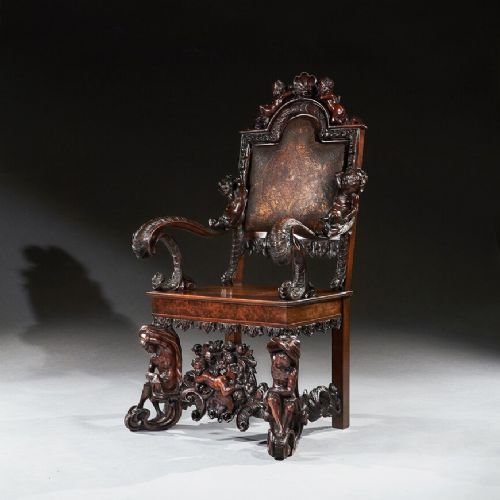


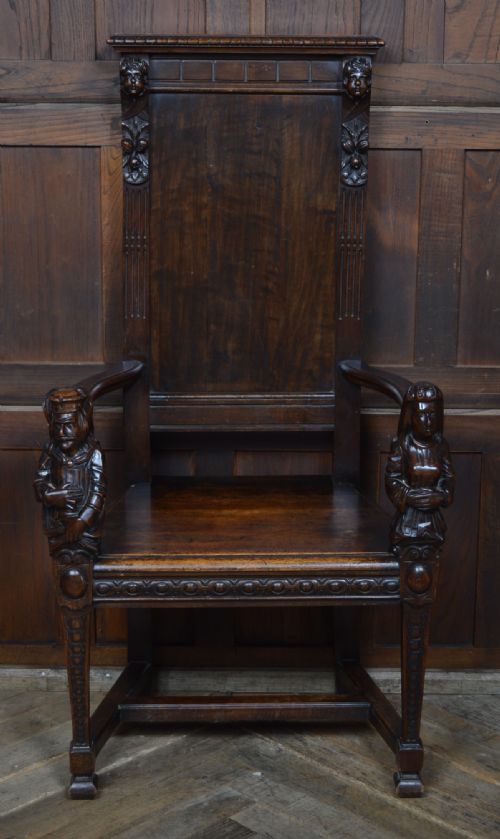


Figural Carved Chair
These figural carved chair examples are sculptural seats adorned with carved human, animal, or mythical forms that bring dramatic character to any room.
Figural Carved Chair
When you search for a figural carved chair, you encounter seating featuring hand-carved representations of figures or creatures integrated directly into the wooden frame. These pieces span armchairs, hall chairs, dining chairs, corner chairs, and side chairs from various international traditions.
The selections available here lean heavily into nineteenth-century production, alongside twentieth-century iterations. They range from Italian walnut armchairs after Andrea Brustolon to French Breton pairs, Chinese armchairs, and American eagle armchairs.
You will find regional expressions across the eras, including Italian Baroque Revival, Renaissance Revival, French Breton, Victorian and Gothic, and Indian Moghul styles. Walnut, oak, fruitwood, rosewood, and solid wood form the primary structural materials, often paired with leather, textile, or wool upholstery.
How they were made
Cabinetmakers utilised dense hardwoods like walnut, oak, rosewood, and fruitwood to support deep, elaborate sculptural relief. Carvers worked directly into the timber of the frame, shaping arms, legs, and crest rails into human or animal forms.
Many of these chairs incorporate traditional joinery alongside hand carving, with upholstered elements secured via textiles, leather, or needlepoint wool. The construction prioritises structural stability to bear the weight of carved wooden elements without compromising the seat.
Figural Carved Chair Retail Price Guide 2026
Typical asking prices for figural carved chair among the pieces listed under this phrase on Sellingantiques today, from the lower quarter to the upper quarter. They describe what is for sale here now, not the wider market.
Listings feature periods spanning the nineteenth century, the Victorian era, nineteen-hundred, and nineteen-twenty.
What varies in quality
The depth and fluidity of the carving separate standard workshop production from exhibition-quality execution. Superior pieces display anatomical precision in human and animal figures, with crisp undercut details rather than shallow, mechanical tooling.
Choice of timber also dictates grade, with finely grained walnut or rosewood offering a superior surface finish compared to simpler fruitwood or mixed timbers. The integration of the sculptural elements into the structural joints determines both aesthetic success and long-term durability.
Andrea Brustolon
The Figural Carved Chair Glossary
- Armchair
- A chair with supports for the arms or elbows. These often terminate in carved animal heads or human figures in this category.
- Corner chair
- A chair designed to fit into the corner of a room, typically featuring a diagonal seat plan and a continuous curved back rail supported by turned or carved pillars.
- Needlepoint
- A type of canvas work embroidery executed with wool yarn, frequently used for the seat covers and back pads of nineteenth-century chairs.
- Relief carving
- A sculptural technique where the figures project from a flat background surface. This method creates the three-dimensional pictorial scenes found on backrests and aprons.
- Fruitwood
- A dense wood derived from fruit-bearing trees such as pear or apple, utilised for cabinetmaking and turning. It offers a smooth grain suitable for detailed carving.
Figural Carved Chair: Frequently Asked Questions
What is a figural carved chair?
A figural carved chair is a seat decorated with sculpted human, animal, or mythological figures integrated into the wooden framework. These pieces function as both functional furniture and sculptural artworks.
They appear in various forms, including armchairs, hall chairs, and dining chairs, originating from diverse global traditions across the nineteenth and twentieth centuries.
How were these chairs used historically?
Historically, ornate figural chairs served as prominent statement pieces in principal rooms, halls, or parlours to demonstrate the status and taste of the owner. Dining chairs and armchairs provided seating while simultaneously showcasing the skill of the carver.
Certain forms, such as hall chairs, stood in entranceways for brief seating or visual impact, while corner chairs occupied domestic architectural nooks.
How do I care for carved wooden furniture?
Protect carved wooden frames by keeping them away from direct sunlight and sudden temperature changes, which can cause the timber to dry and split. Regular dusting with a soft, dry cloth preserves the fine details of the relief carving.
Avoid using harsh chemical polishes, opting instead for traditional beeswax applied sparingly to nourish the exposed wood surfaces.
How can I identify the period of a chair?
Dating relies on stylistic clues such as the specific revival movement, construction techniques, and the type of wood employed. Nineteenth-century examples often display exuberant historicism, referencing Italian Baroque, Gothic, or Renaissance motifs.
Examining the underside, joinery methods, and wear patterns helps distinguish nineteenth-century production from twentieth-century alternatives.