

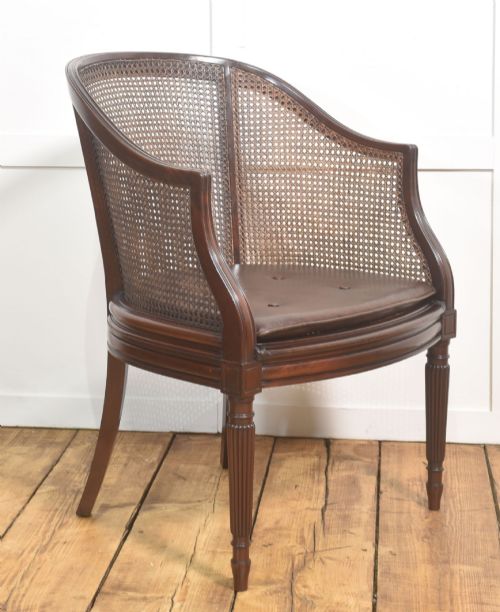
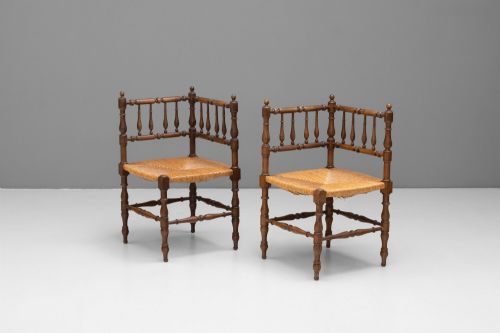
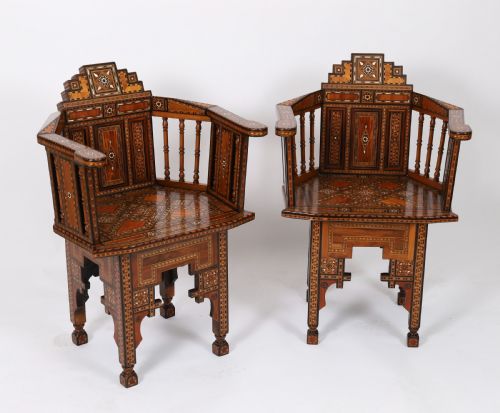


Brown Wood Corner Seat
A brown wood corner seat is a clever timber perch built to fit a room's angle, and collectors prize them for turning dead corners into useful seating.
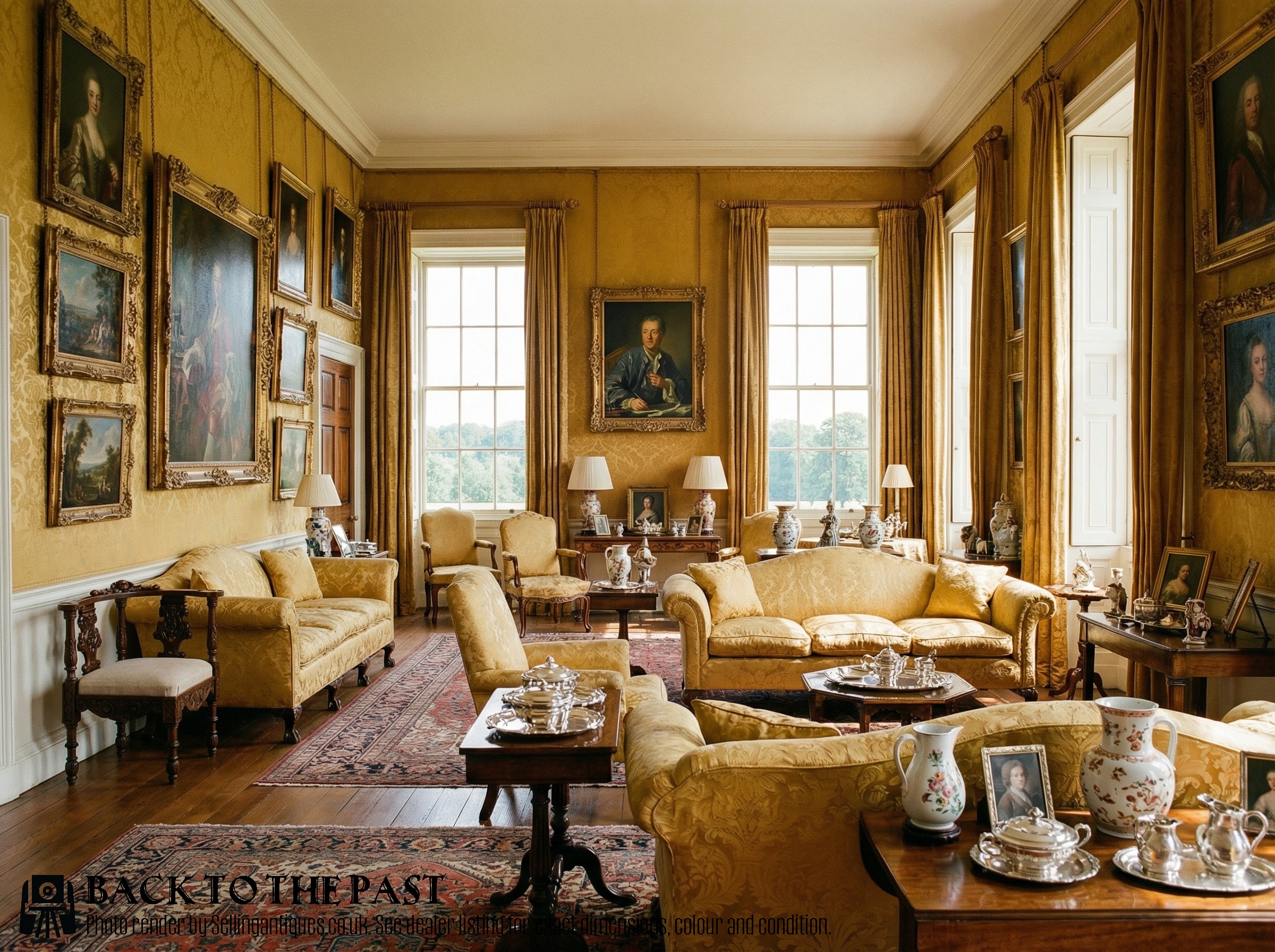
Brown Wood Corner Seat
A brown wood corner seat takes several forms across this selection, appearing as standard corner chairs, armchairs, and low salon seats designed to slot into room angles. The pieces span from the eighteenth century through the Victorian era and into the Edwardian period, offering a long trajectory of domestic use.
The most common examples you will encounter here are Edwardian inlaid mahogany corner chairs alongside robust oak Georgian pieces. Makers shaped these items from timber such as walnut, mahogany, and oak, often adding rush, cane, fabric, or leather to the seats.
Beyond standard forms, the selection includes Arts and Crafts stools, spinning chairs, and Levantine parquetry inlaid armchairs. Each variant serves the fundamental purpose of utilising awkward spatial angles while displaying the distinct style of its period.
Materials and construction methods
Makers constructed these seats using dense hardwoods like mahogany, walnut, and oak, often shaping the timber with hand-carved details or geometric parquetry inlay. These woods provided the structural rigidity required for corner seating frames that had to bear weight across unusual angled joints.
Seating surfaces utilised traditional woven materials such as cane and rush alongside upholstered pads in leather and fabric. Joinery techniques varied from period to period, supporting sturdy frames designed to withstand decades of daily use in domestic corners.
Brown Wood Corner Seat Retail Price Guide 2026
Typical asking prices for brown wood corner seat among the pieces listed under this phrase on Sellingantiques today, from the lower quarter to the upper quarter. They describe what is for sale here now, not the wider market.
Materials employed across these listed seats include mahogany, oak, walnut, satinwood, cane, rush, leather, and fabric.
Judging the standard of execution
Quality in these seats rests on the crispness of the carving, the precision of the wood inlay, and the integrity of the structural joints. Superior examples display thoughtful proportions and harmonious integration of decorative elements without crowding the timber frame.
Finer pieces demonstrate careful timber selection, where the grain pattern complements the form of the chair. The refinement of the turning and the neatness of cane or rush work distinguish high-standard craftsmanship from more utilitarian workshop production.
The Brown Wood Corner Seat Glossary
- Parquetry
- A geometric mosaic of wood pieces used for decorative inlay on furniture surfaces. It creates patterned wooden veneers across backs and seats.
- Cane
- Strips of peeled rattan woven into patterned mesh for chair seats and backs. This light material provides a resilient and flexible surface.
- Rush
- Dried marsh grasses twisted into cords and woven to form traditional chair seats. It offers a rustic, textured surface common in country pieces.
- Mahogany
- A durable tropical hardwood prized for its reddish-brown colour and fine grain. Cabinet makers utilised it extensively for Georgian and Edwardian seating.
Brown Wood Corner Seat: Frequently Asked Questions
What is a corner chair used for?
A brown wood corner seat was traditionally placed in the corner of a parlour, bedroom, or hallway to save floor space. They provided a comfortable spot for reading, writing at a corner desk, or casual conversation without obstructing room traffic.
Over time, these seats also served as decorative furniture pieces that filled empty architectural angles. Their unique diagonal stance made them distinct from standard chairs placed flat against walls.
How do I date a brown wood corner seat?
Dating relies on examining the timber species, construction joints, decorative styles, and secondary materials like upholstery or cane work. Georgian pieces often display heavier oak frames and simpler lines, whereas Edwardian examples frequently feature mahogany with delicate marquetry inlay.
Stylistic cues such as Arts and Crafts simplicity or Victorian carved ornamentation point directly to the prevailing tastes of their respective decades. Comparing the finish and hardware helps confirm the historical period.
Are these seats comfortable to sit in?
Comfort varies depending on the specific design, seat material, and whether the chair includes armrests. Solid wood or woven cane surfaces offer firm support, while upholstered leather or fabric pads provide softer seating.
Many styles feature curved backs and arms designed to support the body when seated at an angle. They were built for domestic tasks rather than prolonged lounging.
How do I care for antique wood and cane?
Maintain antique timber by keeping it away from direct heat sources and sudden humidity changes that can cause the wood to split. Regular dusting with a soft, dry cloth preserves the polished finish without building up residues.
Cane seats require gentle cleaning with a damp cloth to prevent the natural fibres from becoming brittle. Keeping the woven material slightly hydrated helps maintain its tensile strength.