
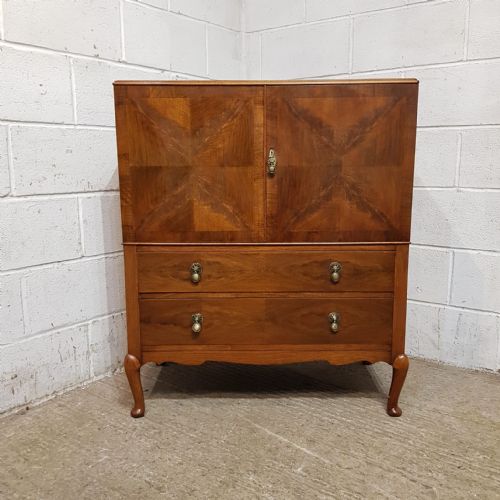
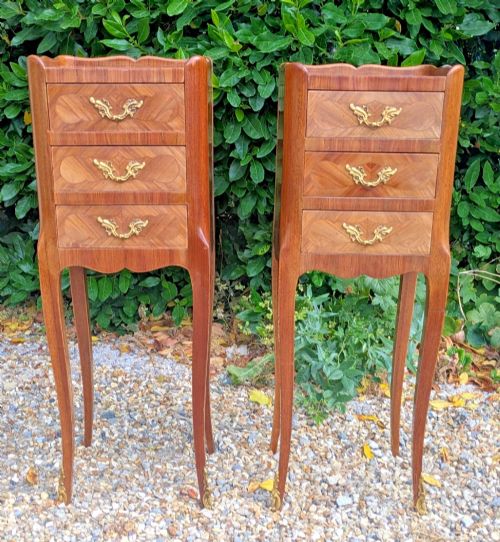
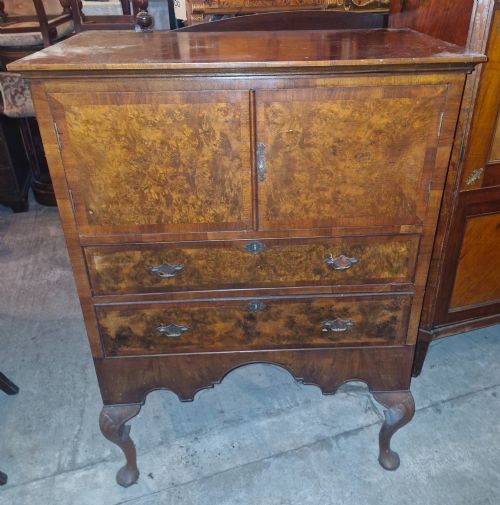
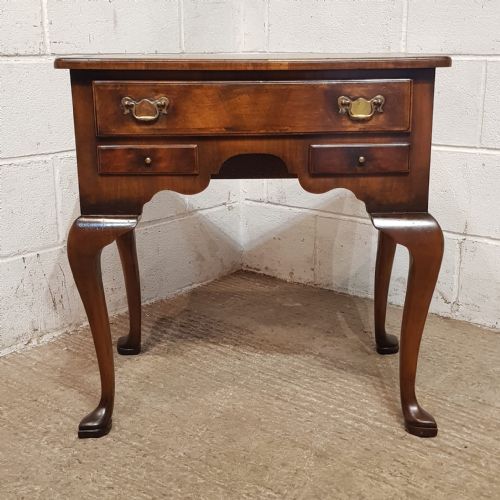
Walnut Chest on Legs
A walnut chest on legs brings figured timber and raised elevation together, offering structured storage with lighter visual weight.
Walnut Chest on Legs
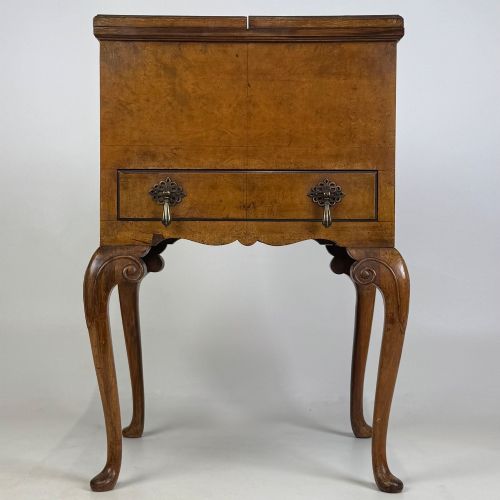
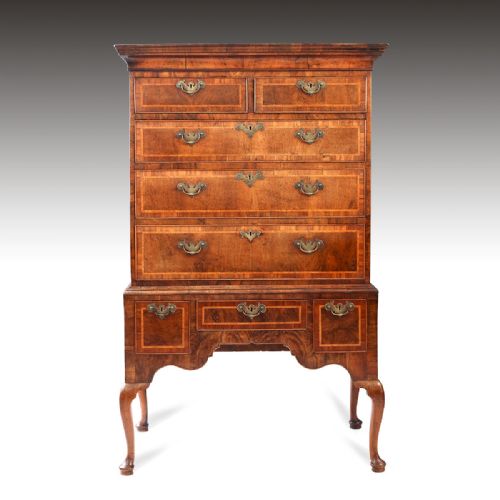
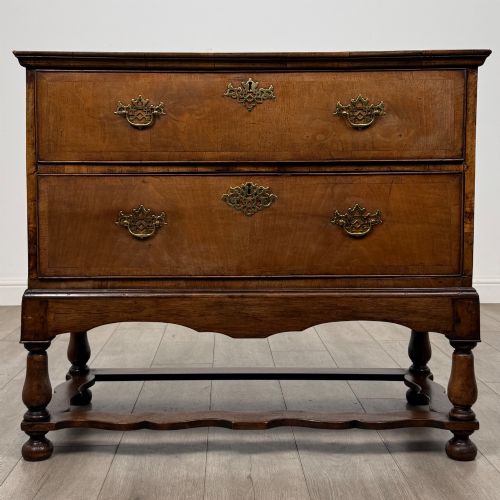
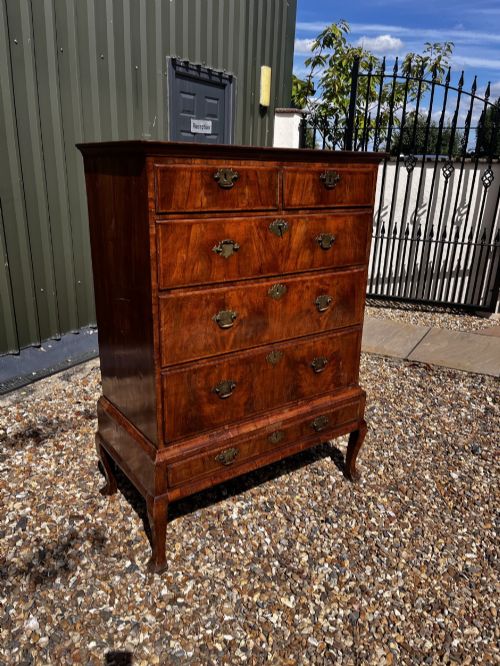
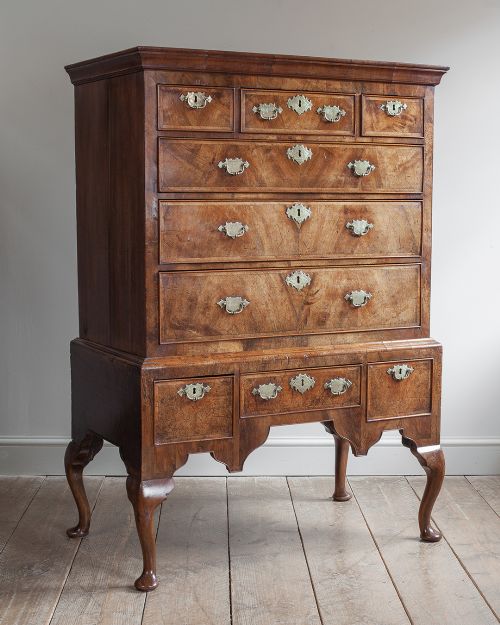
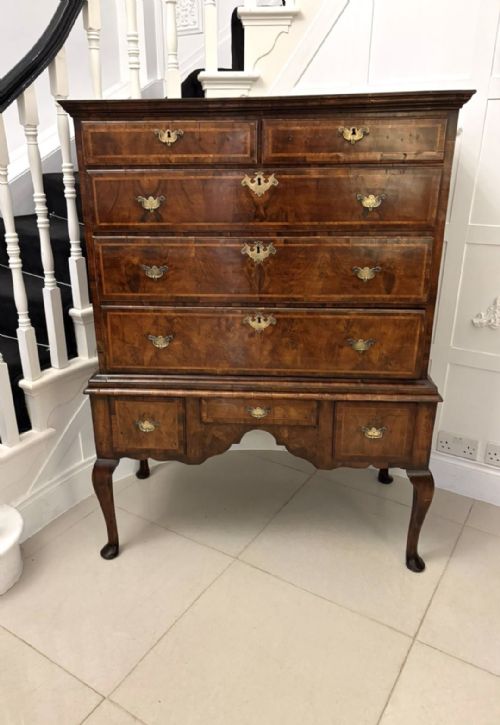
When you search for a walnut chest on legs, you are looking at elevated storage pieces that span from early eighteenth-century examples to later revival forms. These items combine drawer sections with elevated supports, appearing in forms such as lowboys, tallboys, and chests on stands.
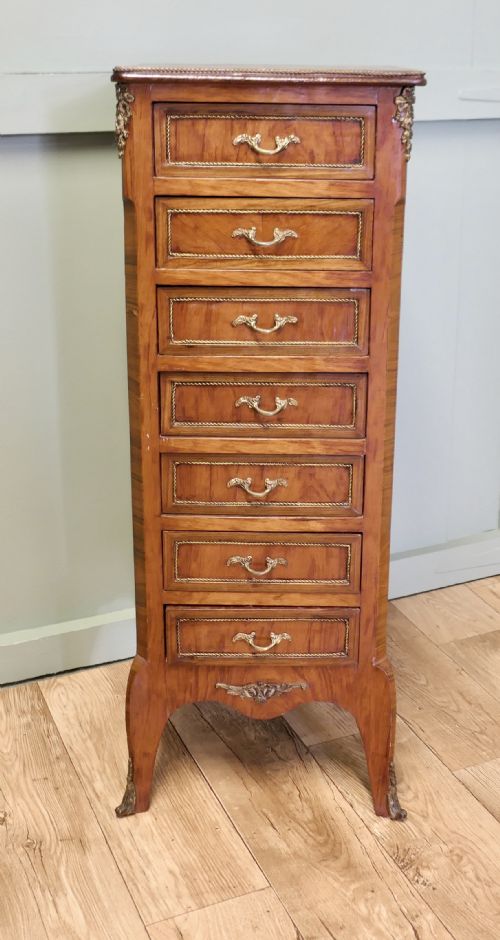
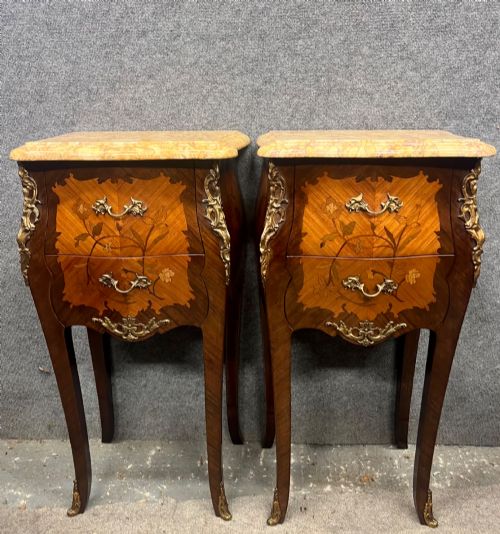
The pieces on this page emerge from distinct periods including the eighteenth century, the Georgian era, and twentieth-century revivals like the 1920s and 1930s. You will encounter formats ranging from petite bedside chests to grander two-piece tallboys and commodes.
Makers and designers across these eras utilised specific regional idioms, encompassing English Queen Anne and George II designs alongside French Louis styles. The overarching form remains consistent in its elevation above the floor on legs rather than resting directly on a plinth.
How they were made
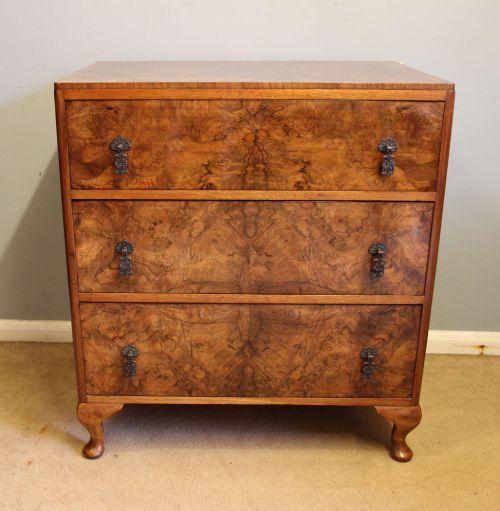
Construction relies heavily on walnut timber, frequently selected for figured grain patterns, burr figuring, or applied walnut veneers over secondary woods like oak. Cabinetmakers employed precise sawing to produce thin veneers that were laid onto carcases to display symmetrical grain patterns.
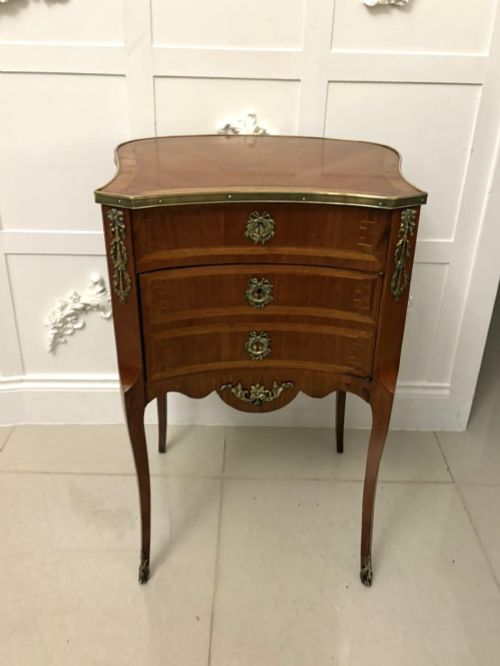
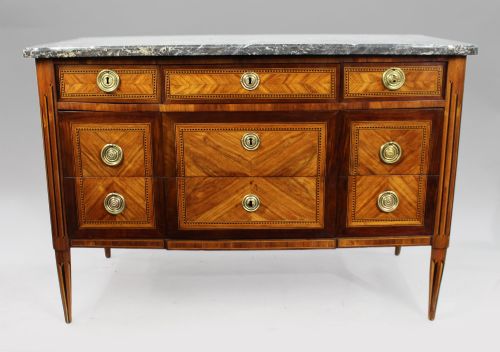
Surface embellishment often incorporates marquetry and parquetry inlays, complemented by brass handles, escutcheons, and occasionally ormolu mounts on continental pieces. Certain items integrate marble tops, combining stone surfaces with wooden cabinetry.
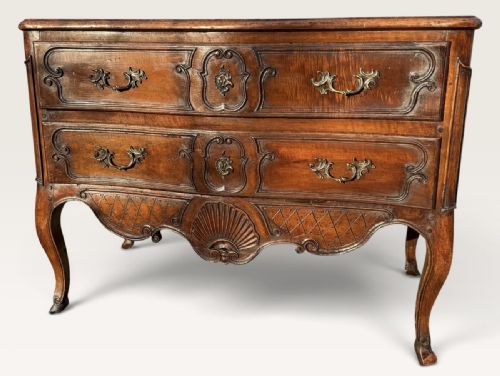
The supporting structures utilise shaped legs, including cabriole forms terminating in pads or feet, sometimes associated with or carved directly from the main carcase frame.
What varies in quality
The degree of refinement in the timber selection dictates much of the visual hierarchy, distinguishing deeply figured burr walnut surfaces from plainer veneer applications. The precision of crossbanding and the continuity of grain across drawer fronts separate standard production from exceptional examples.
Proportion and the integrity of the stand relative to the upper chest influence the overall success of the piece, particularly where stands are associated or period-matched. The crispness of carved details on cabriole legs and the retention of original brass hardware contribute further distinction.
The Walnut Chest on Legs Glossary
- Burr walnut
- A figured wood grain derived from growth excrescences on walnut trees, prized for its swirling patterns. It is frequently sliced into veneers for decorative cabinet fronts.
- Chest on stand
- A two-part form comprising a drawer chest elevated on an open frame with legs. This configuration lightens the silhouette of heavy storage furniture.
- Cabriole leg
- A furniture leg that curves outward and then tapers inward, mimicking animal limbs. It is characteristic of early eighteenth-century and revival designs.
- Lowboy
- A small table with drawers, standing on relatively tall legs, often used as a dressing table or side table. The form shares construction methods with larger chest stands.
- Marquetry
- The art of applying decorative veneer pieces in wood, metal, or shell to form pictorial or geometric patterns on a surface.
Walnut Chest on Legs: Frequently Asked Questions
What is a walnut chest on legs?
It is an elevated storage unit combining a set of drawers with a raised base or stand. This form lifts the main body off the floor to create a lighter visual presence.
Such pieces range from compact bedside formats to tall eighteenth-century examples resting on cabriole supports.
How do I date a walnut chest?
Dating relies on examining construction methods, timber preparation, and stylistic markers like drawer linings and leg profiles. Eighteenth-century pieces typically show hand-cut dovetails and solid timber carcases.
Later Edwardian and twentieth-century revivals often incorporate machine precision alongside period-inspired decorative veneers like burr walnut.
Where were these chests used?
These items served primarily in bedrooms, dressing rooms, and private chambers for storing garments and personal items. Smaller variants functioned as bedside tables or lamp tables.
Their decorative wood grains and elevated profiles allowed them to double as prominent display surfaces in reception rooms.
How do I care for walnut furniture?
Maintenance involves keeping pieces away from direct sunlight and maintaining stable humidity levels to protect sensitive veneers. Regular dusting with a soft cloth preserves the polished finish.
Harsh chemical cleaners should be avoided in favour of traditional wax applications recommended for antique wood surfaces.