








Serpentine Burr Walnut Desk
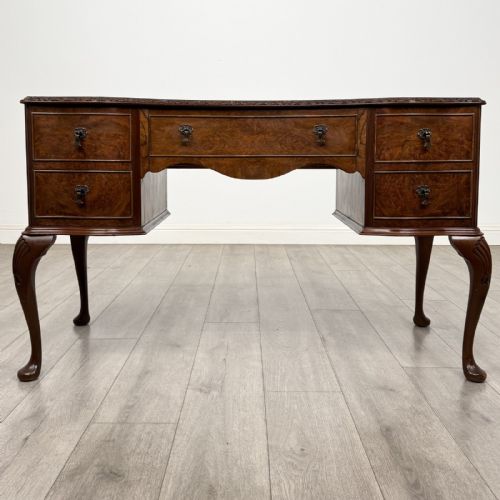
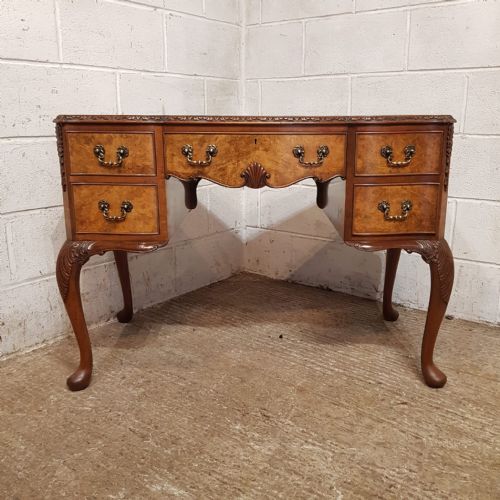
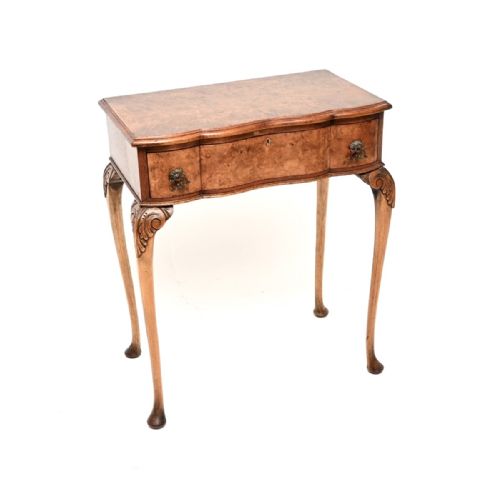
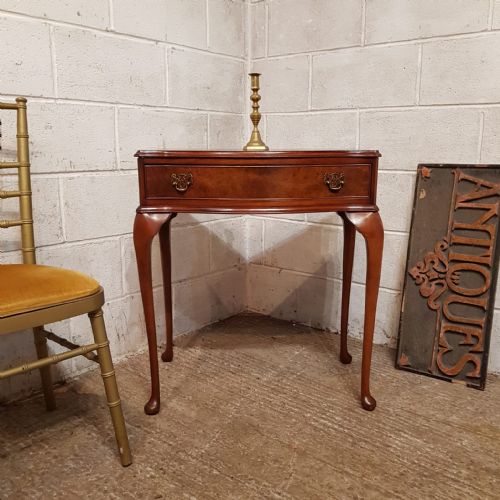
A serpentine burr walnut desk combines sweeping, undulating curves with the intricate grain patterns of burr timber.
Serpentine Burr Walnut Desk
A serpentine burr walnut desk is a writing surface featuring a distinct convex and concave curved front profile paired with figured timber veneers. These pieces emerge primarily from Victorian workshops and later revival periods around nineteen-twenty, spanning pedestals, kneeholes, and bureau plats.
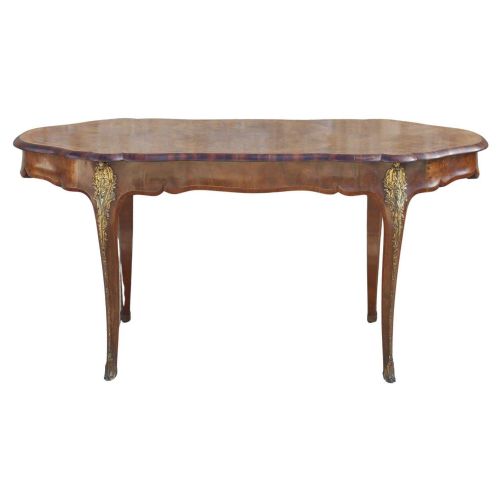
Buyers encounter both English pedestal forms and continental writing tables influenced by French Rococo revival styles. The combination of shaped woodwork and inset leather writing surfaces defines the standard domestic working furniture of these eras.
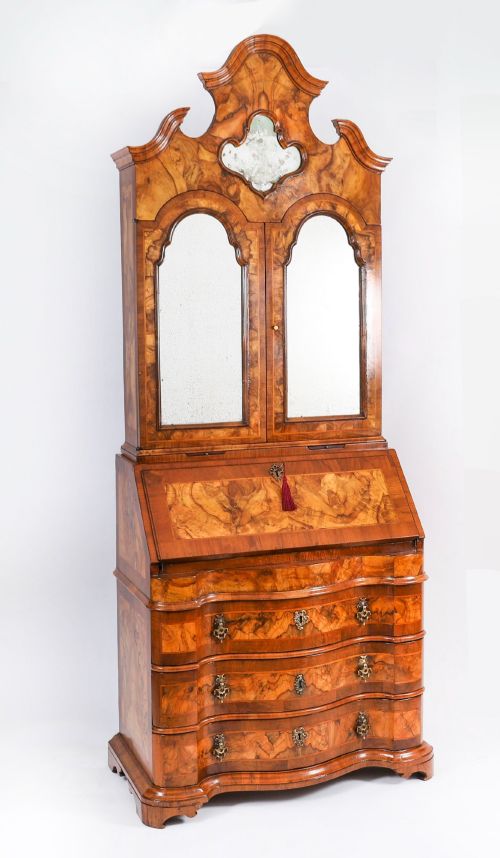
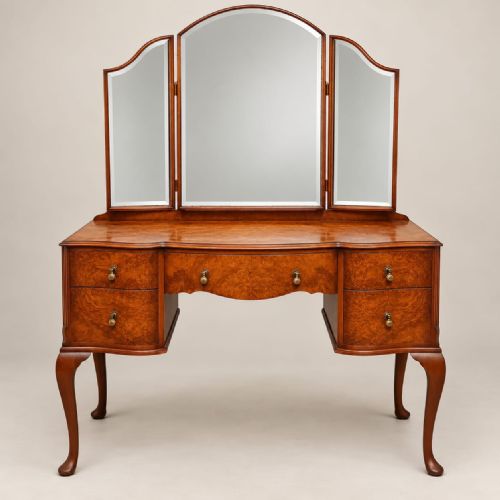
The characteristic undulating line applies not only to large pedestal desks but also to smaller side tables and bureau bookcases adapted for writing. Walnut and burr walnut veneers dominate the construction, often accented with marquetry and brass hardware.
How They Were Made
Craftsmen applied thin slices of burr walnut veneer over solid secondary timbers to create swirling, highly figured patterns across curved drawer fronts and tops. This method requires precise cutting and matching of the grain to maintain symmetry along the serpentine contour.
Cabinetmakers integrated ormolu mounts, gilt bronze details, and brass handles into the framework, particularly on pieces influenced by French styles. Leather inserts, often tooled with gold, were then fitted into the writing surfaces.
Internal drawer construction typically relied on dovetail joints made from secondary woods like mahogany or oak, ensuring durability beneath the decorative exterior.
Serpentine Burr Walnut Desk Retail Price Guide 2026
Typical asking prices for serpentine burr walnut desk among the pieces listed under this phrase on Sellingantiques today, from the lower quarter to the upper quarter. They describe what is for sale here now, not the wider market.
Butterfly-shaped card tables introduce winged timber patterns that fold out for evening games.
What Varies in Quality
The choice and matching of the burr walnut veneer dictate visual success, with superior examples displaying continuous, balanced grain patterns across every drawer and surface. Inferior pieces show disjointed patches or plain timber substituting for decorative burr.
The execution of the serpentine curve reveals the maker's skill, requiring smooth, continuous transitions rather than abrupt angles. Cabinetwork with hand-cut dovetails and well-cast ormolu or brass mounts sits at the upper end of the range.
Proportion and structural integrity separate standard utility items from finer reception furniture. Pieces retaining original leather writing surfaces and intact marquetry inlay command greater appreciation among collectors.
Maple and Co
The Serpentine Burr Walnut Desk Glossary
- Serpentine
- A front profile characterised by a convex central section flanked by two concave curves. This undulating shape requires advanced woodworking skills to veneer accurately.
- Burr Walnut
- Timber taken from the growth excrescences on walnut trees, yielding complex, swirling grain patterns. It is sliced into veneers for decorative cabinetwork.
- Bureau Plat
- A freestanding French writing table featuring a flat top, usually with drawers beneath. These tables often incorporate ormolu mounts and cabriole legs.
- Ormolu
- Gilded bronze mounts applied to furniture for decorative effect. It gained popularity during the revival periods mimicking French eighteenth-century designs.
- Kneehole Desk
- A compact pedestal desk featuring a central recess for the user's legs, flanked by banks of smaller drawers. This form became common during the eighteenth and nineteenth centuries.
- Marquetry
- The art of applying decorative pieces of veneer to a structure to form intricate designs. Craftsmen use various woods and tinted materials to build pictorial or geometric motifs.
Serpentine Burr Walnut Desk: Frequently Asked Questions
What is a serpentine burr walnut desk?
A serpentine burr walnut desk is a writing table featuring an undulating curved front and highly figured wood veneer. These pieces were produced mainly during the Victorian era and subsequent twentieth-century revival periods.
They combine decorative cabinetwork with functional writing surfaces, often incorporating drawers and leather inserts. The distinct curved shape sets them apart from standard flat-fronted desks.
How do I care for burr walnut?
Burr walnut furniture requires protection from direct sunlight and excessive moisture to prevent veneer lifting and fading. Regular dusting with a soft cloth maintains the finish without chemical buildup.
Applying a traditional beeswax polish occasionally helps nourish the wood and preserves the lustre of the grain. Avoid placing hot or wet items directly onto the surface.
Are these desks suitable for daily work?
Many of these desks provide practical writing surfaces and drawer storage suitable for modern study or office use. Pedestal and kneehole configurations offer ample room for contemporary seating.
Care should be taken with inset leather tops, which benefit from protective blotters during heavy writing tasks. The historic nature of the timber means gentle handling preserves the joints and polish.
How do I tell Victorian from later pieces?
Nineteenth-century pieces often exhibit heavier construction methods, hand-cut dovetailing, and traditional polishing techniques. Timber selection and secondary woods like oak or mahogany provide clues to the period of origin.
Twentieth-century revival items from nineteen-twenty or nineteen-thirty may show machine-made elements alongside traditional styling. Examining the interior drawer construction helps clarify the manufacturing date.