
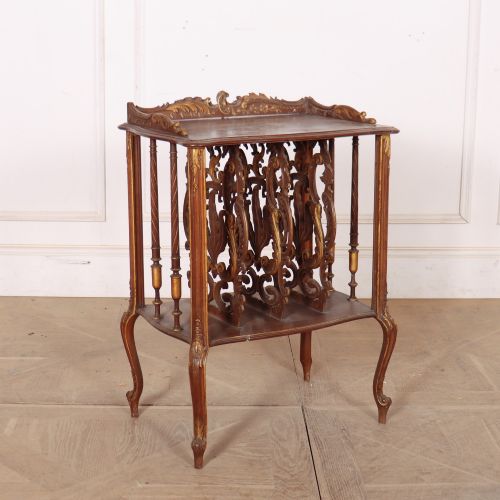


Walnut Canterbury Magazine Rack
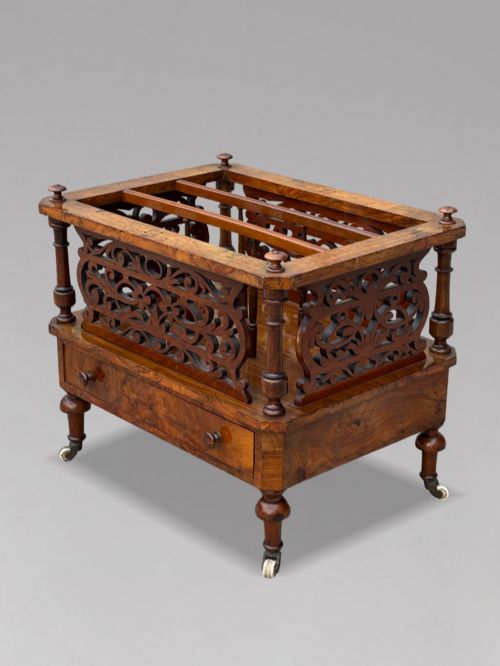
A walnut canterbury magazine rack brings structured charm to a room, holding papers and folios with upright division.
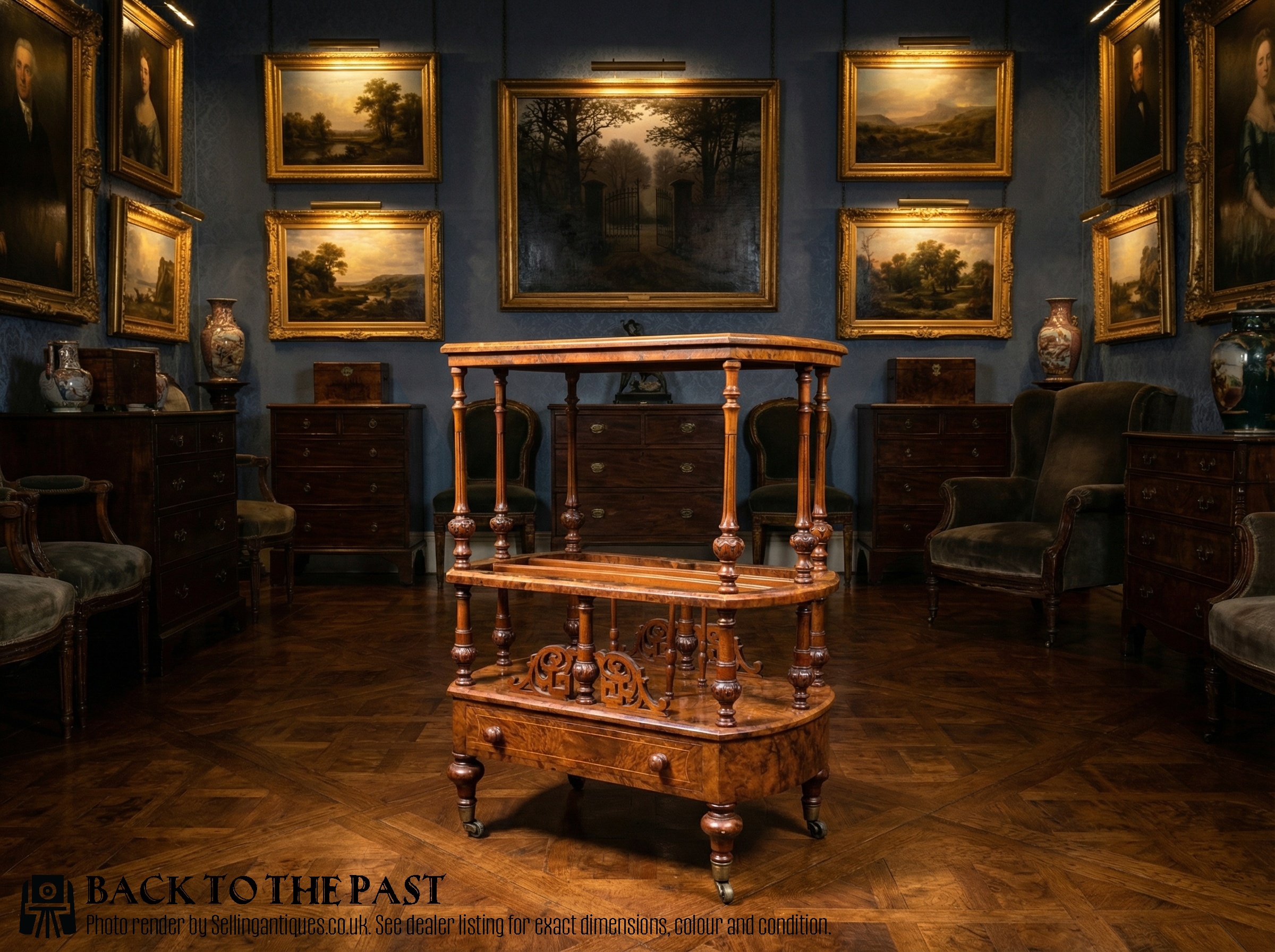
Walnut Canterbury Magazine Rack
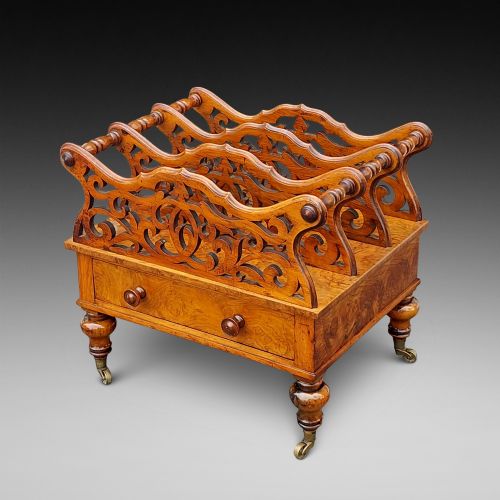
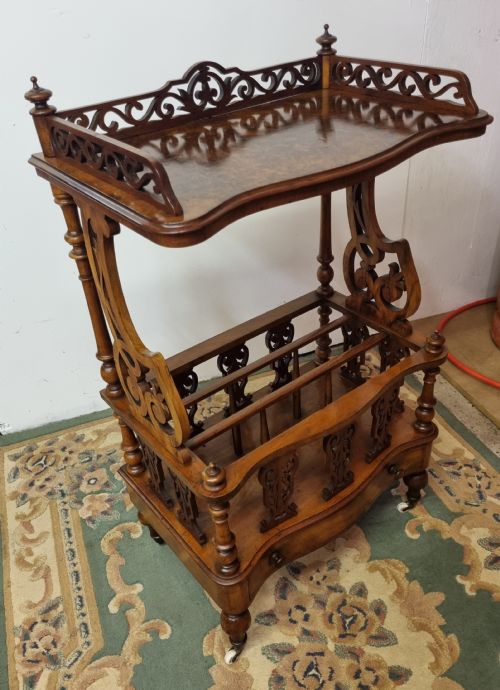
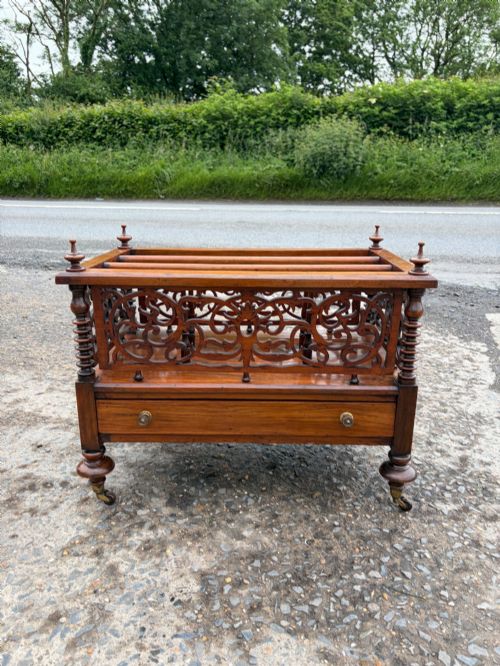
A walnut canterbury magazine rack serves as a low, partitioned stand designed originally to hold sheet music, newspapers, and folios. The pieces appearing most frequently across these records belong to the Victorian period, spanning the mid to late nineteenth century, alongside examples from the Regency era.
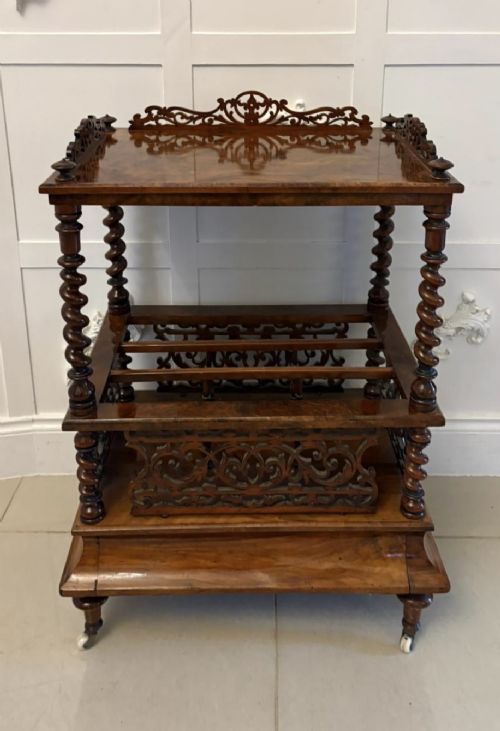
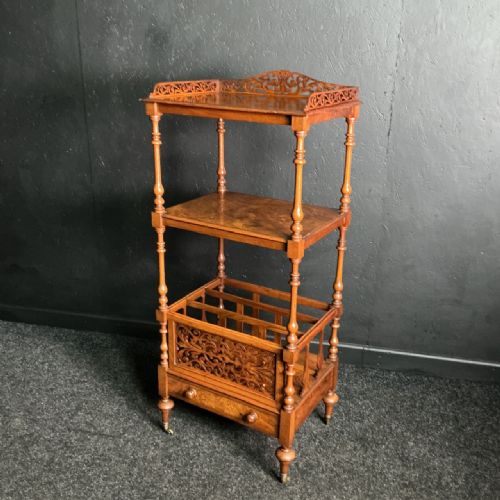
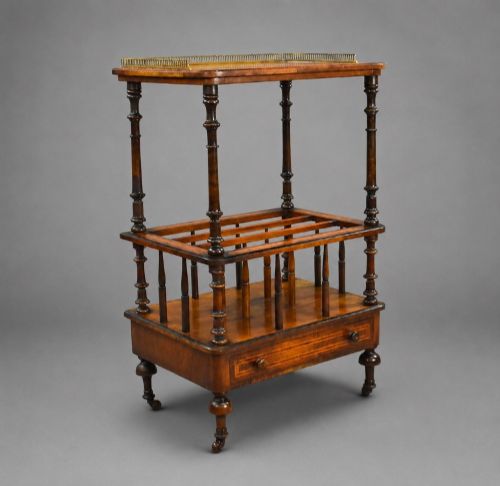
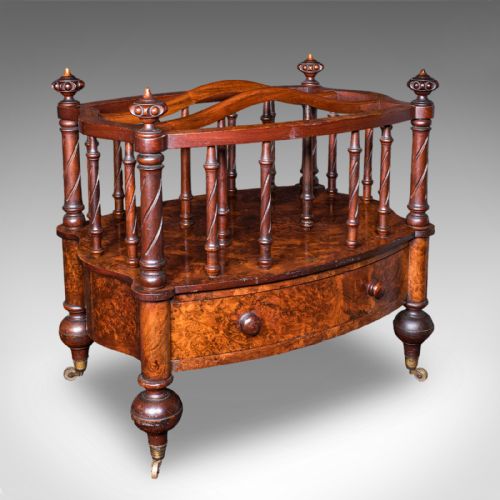
Makers combined the function of a newspaper tidy with that of an occasional table or whatnot, often incorporating tiers, drawers, or combined music stands. These designs range from simple rectangular partitions to serpentine shapes and oval formats supported on slender legs with castors.
The form developed primarily as a low stand with slatted divisions for upright storage, though many surviving items merge the traditional rack with display shelves or a work top. This multi-purpose construction reflects domestic habits of the nineteenth century, when reading materials and music scores required tidy containment in the drawing room.
Materials and Technique
Cabinet makers utilised solid walnut, black walnut, and highly figured burr walnut veneers to construct the main framework and partitions. The distinctive grain patterns of burr walnut were prized for exterior surfaces, providing rich visual movement across the panels and table tops.
Decoration relied heavily on wood inlay, boxwood stringing, and marquetry motifs set into the walnut ground. Metal components such as brass, copper, and ormolu appeared on mounts, handles, and castors, while ceramic elements occasionally formed details on related stands.
Listings feature walnut, burr walnut, and black walnut across Victorian and Regency periods, frequently combining rack storage with tiers and drawers.
Distinctions in Execution
Quality reveals itself in the selection of the timber veneers, where dense burr walnut and careful book-matching display greater visual depth than plain flat planks. The complexity of the joinery, particularly in pierced fretwork partitions and shaped serpentine edges, separates standard production from finer workshop output.
Edwards and Roberts·Shoolbred
The Walnut Canterbury Magazine Rack Glossary
- Canterbury
- A low stand fitted with upright partitions for holding music sheets, books, or newspapers. The name derives from an eighteenth-century Archbishop of Canterbury who supposedly commissioned the first such piece.
- Whatnot
- An open set of tiered shelves used for displaying ornaments or holding books. Many examples combine this shelving structure with a canterbury base below.
- Burr Walnut
- A veneer sliced from the gnarled growth or wart of a walnut tree, yielding swirling, highly decorative grain patterns. Cabinet makers used this timber for prominent exterior surfaces.
- Marquetry
- Decorative patterns formed by fitting contrasting veneer pieces into a prepared wooden ground. This technique created floral or geometric designs across the top and sides of the stand.
- Serpentine
- A curved shape featuring a convex centre flanked by concave ends, creating a gentle wave-like outline. This contour appears frequently on the edges of higher-quality tabletops and bases.
Walnut Canterbury Magazine Rack: Frequently Asked Questions
What were canterburys originally used for?
These stands were designed to hold sheet music, folios, and newspapers close to seating areas in nineteenth-century drawing rooms. The upright partitions kept unbound papers neat and accessible.
Over time, makers adapted the form to include small drawers, shelves, and table tops, turning a simple rack into a versatile piece of occasional furniture.
How do I distinguish Victorian from Regency examples?
Regency pieces generally display cleaner classical lines, often leaning towards simpler architectural forms and restraint in ornamentation. They date from the early nineteenth century.
Victorian items, which form the majority of surviving examples, tend to feature heavier carving, elaborate burr walnut veneers, inlaid marquetry, and serpentine contours.
Can these stands hold modern magazines?
Most partitions easily accommodate standard contemporary periodicals, newspapers, and art books. The vertical divisions provide sturdy support for heavy publications.
Buyers should check the internal width of the specific partitions if storing oversized folios or thick Sunday editions.
Where should I place a walnut canterbury in a room?
These compact pieces fit well beside a sofa, armchair, or as an occasional side table between seating arrangements. Their finished backs and freestanding nature allow placement in the centre of a room.
They also function effectively as low display surfaces for small lamps or decorative objects when combined with a whatnot tier or work top.