
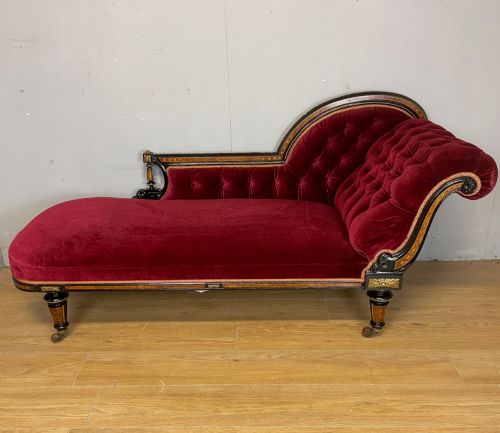
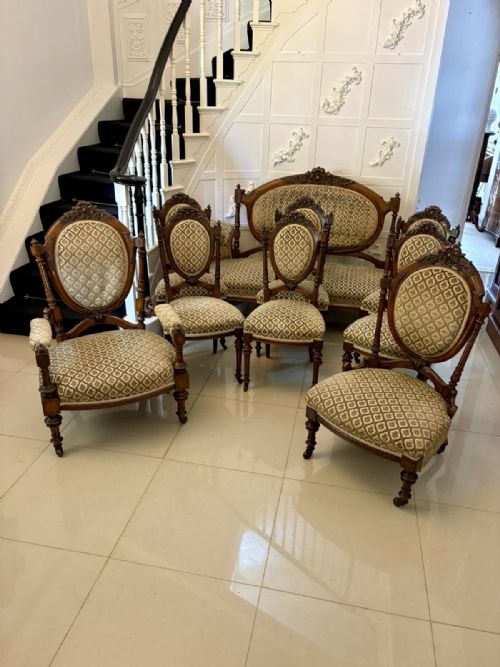


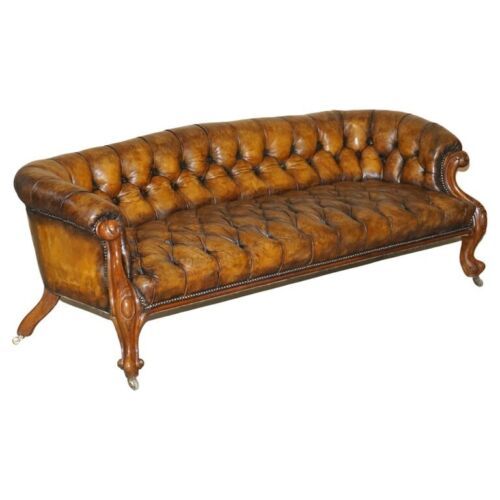

Walnut Buttoned Sofa
A walnut buttoned sofa brings tactile warmth and deep Victorian comfort to a room, combining rich timber frames with luxurious upholstery.
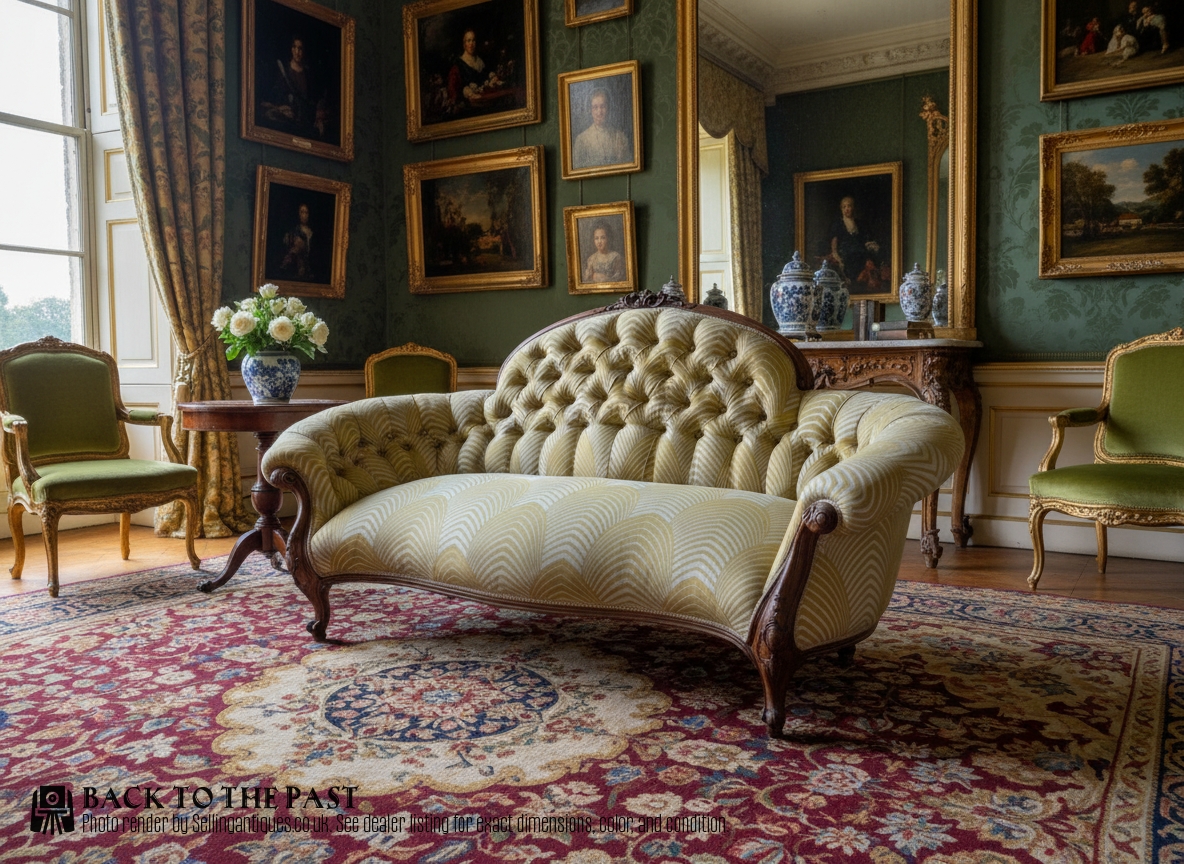
Walnut Buttoned Sofa
When you search for a walnut buttoned sofa, you encounter substantial seating options primarily originating from the Victorian period alongside examples spanning the nineteenth and early twentieth centuries. These pieces appear as double end settees, Chesterfield sofas, and expansive country house seating designed for formal drawing rooms.
The version you are most likely to meet on this page is the Victorian walnut framed settee featuring distinct buttoned upholstery and carved show frames. Such pieces frequently arrive paired within larger salon suites or exist as standalone statement items shaped by revivalist aesthetics.
How they were made
Cabinet makers utilised solid walnut for the exposed structural frames, often carving intricate details into the show wood while incorporating mahogany or auxiliary timbers for internal support. Artisans then applied traditional upholstery techniques, securing horsehair or natural fibre stuffing through the foundation webbing before creating the characteristic deep tufting with tight stitching.
The tactile surface finish relies on textiles such as velvet, damask, or leather pulled taut against the padding and secured through buttoning. Brass hardware and castors occasionally complete the lower framework, allowing these heavy timber seats to move across carpeted floors.
What varies in quality
The distinction between ordinary seating and exceptional pieces rests upon the crispness of the timber carving and the architectural balance of the walnut frame. Superior examples demonstrate fluid curves, deeply moulded show wood, and substantial proportions that reflect the hand of a skilled maker.
Upholstery execution further defines the tier of the piece, where precise button alignment and harmonious textile selection elevate the finished silhouette. The integrity of the underlying frame construction ensures lasting stability across generations of use.
Howard and Sons
The Walnut Buttoned Sofa Glossary
- Button back
- Upholstery style featuring indented tufts held securely by twine and covered buttons. This technique creates a distinctive padded diamond pattern across the backrest.
- Show frame
- Exposed timber framework surrounding the upholstered sections of a seat. It displays the carved walnut grain and structural joinery.
- Chesterfield
- Traditional deep-buttoned sofa design characterised by rolled arms and a back of the same height. Nineteenth-century versions frequently employ walnut frames and leather or velvet coverings.
- Salon suite
- Matching set of seating comprising a settee and several armchairs. These groupings furnished formal Victorian drawing rooms with uniform materials and styles.
Walnut Buttoned Sofa: Frequently Asked Questions
What is a buttoned walnut sofa?
A buttoned walnut sofa is a nineteenth-century seat featuring an exposed timber frame made from walnut and upholstery secured with deep tufted buttons. These pieces typically display Victorian revivalist styles and generous proportions.
Such furniture served as formal seating in grand reception rooms, offering firm support through traditional sprung interiors and padded armrests.
How do I date a walnut settee?
Dating relies on examining the timber framing, carving styles, and upholstery construction methods visible on the piece. Victorian examples often incorporate Rococo Revival motifs and rich walnut grain.
Later pieces from the early twentieth century may adopt simpler Edwardian or revival lines while retaining traditional joinery techniques.
Where should I place this sofa?
These substantial sofas suit principal reception spaces, libraries, or large living areas where the carved walnut frame can be appreciated from multiple angles. Their deep seating makes them functional for daily relaxation.
Ensure adequate floor space exists around the piece to showcase the show wood and allow clearance for rolled arms or double-end configurations.
How do I care for walnut wood?
Maintain the exposed walnut surfaces by dusting regularly with a dry cloth and occasionally applying traditional beeswax to nourish the timber. Avoid placing the furniture near direct heat sources or strong sunlight.
Protect the upholstery textiles according to their specific fabric composition, using specialist cleaning methods for velvet, damask, or leather finishes.