

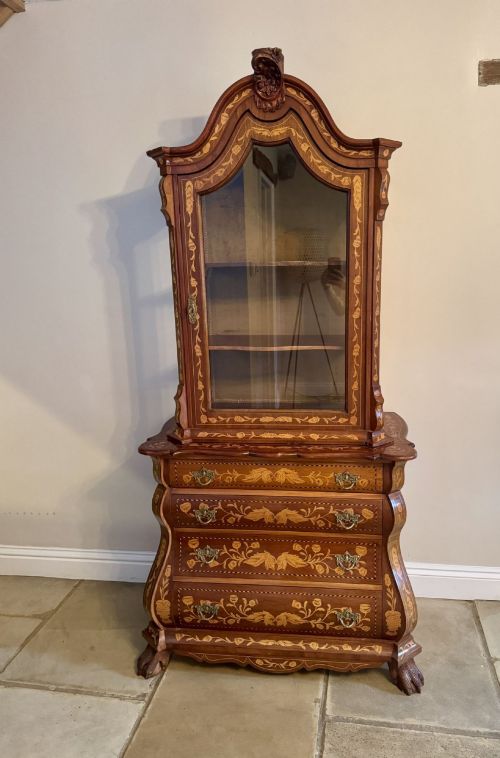
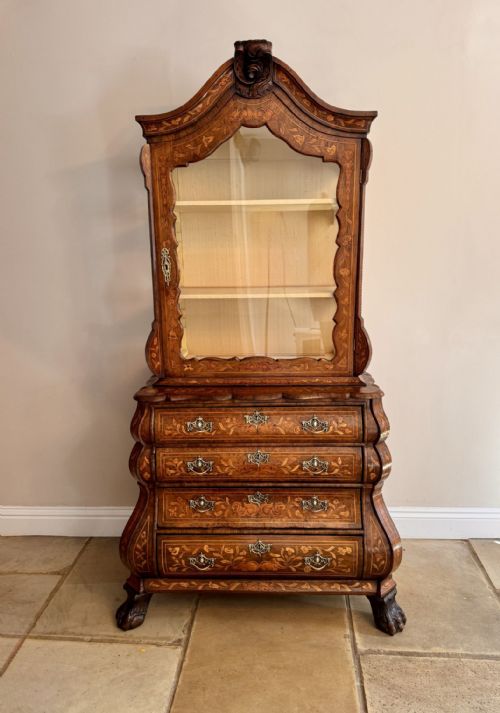
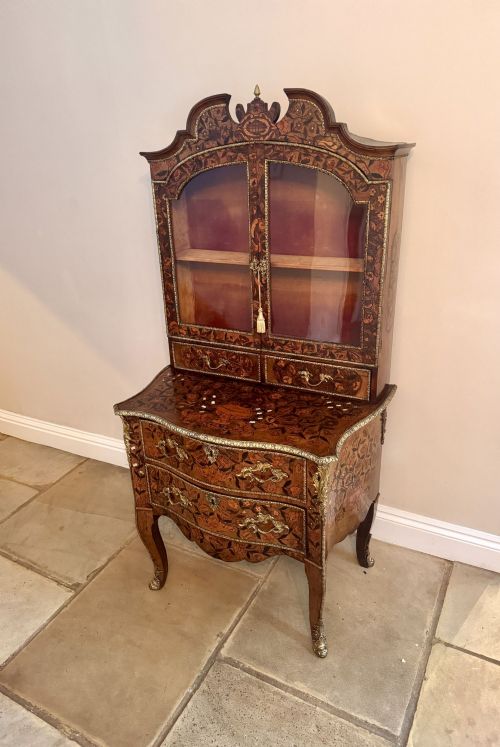

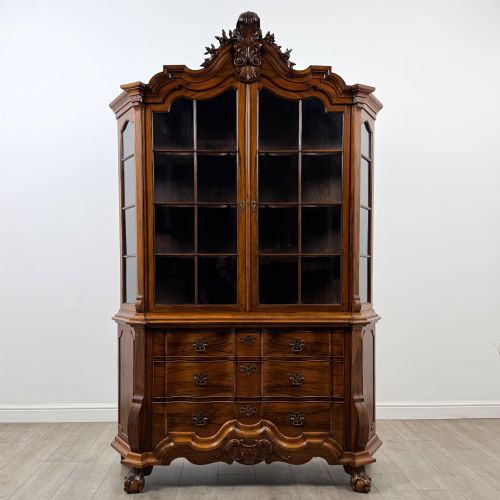
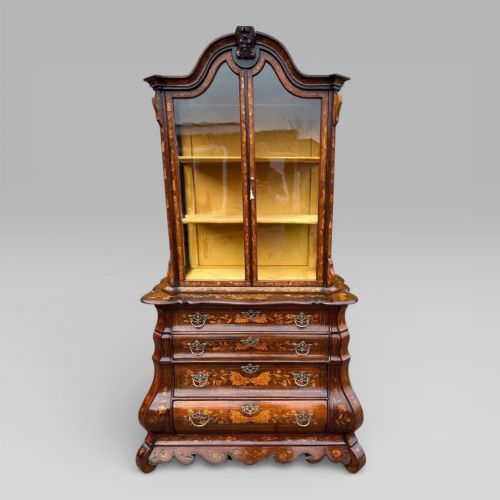
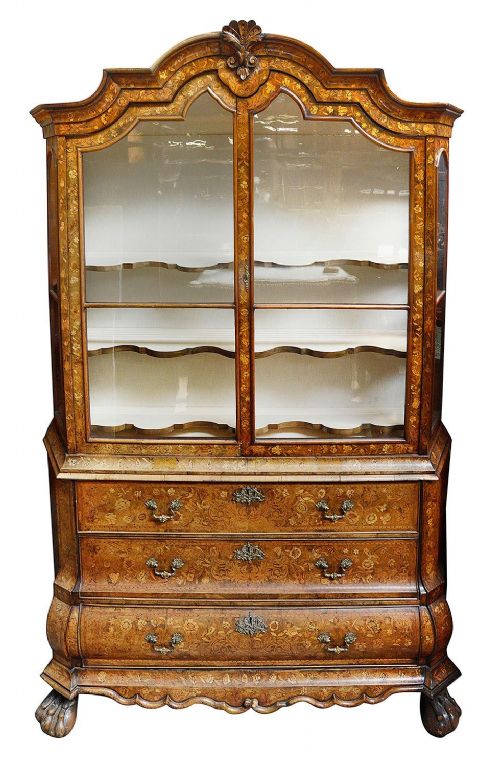
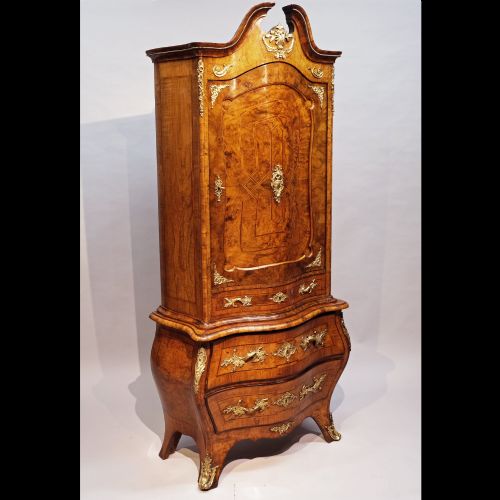


Walnut Bombe Display Cabinet
A walnut bombe display cabinet brings sweeping continental curves and figured veneers to a room, offering both display space and generous storage.
Walnut Bombe Display Cabinet
A walnut bombe display cabinet is a substantial piece of furniture defined by its swelling, outward-curving lower section and upper glazed display compartment. These pieces emerge in styles like Dutch Baroque and Dutch Rococo, frequently showcasing elaborate marquetry inlay.
The form combines a cabinet on chest or bureau bookcase structure with the distinct bulging profile of the bombe base. Examples span from the eighteenth century through to later revivals in the nineteenth and twentieth centuries.
Buyers encounter variations that range from tall glazed vitrines mounted on shaped chests to lower bureau bookcases designed for both writing and display. Walnut and burr walnut dominate the surfaces, often enriched with fruitwood marquetry details.
Materials and construction
Cabinetmakers constructed these pieces using oak or fruitwood carcases overlaid with figured walnut and burr walnut veneers. The characteristic bulging bombe shape required skilled timber bending and shaping techniques to achieve the rounded profile.
Marquetry decoration involved meticulous hand-cutting of fruitwood veneers to form floral and scroll motifs across the drawer fronts and doors. Ormolu mounts and cast brass hardware provided functional and decorative accents on key examples.
Walnut Bombe Display Cabinet Retail Price Guide 2026
Typical asking prices for walnut bombe display cabinet among the pieces listed under this phrase on Sellingantiques today, from the lower quarter to the upper quarter. They describe what is for sale here now, not the wider market.
One notable cabinet carries an association with King Willem I of the Netherlands, bringing royal continental provenance straight to the drawing room.
Judging quality and craftsmanship
Quality rests upon the choice of veneers, where deeply figured burr walnut and balanced fruitwood marquetry display superior artisan selection. The crispness of the carving along the canted corners and claw and ball feet distinguishes finer workshops.
Construction integrity shows in the smooth operation of the shaped drawers that follow the curved contours of the bombe base without binding. Original glass panes and well-fitted door frames indicate higher standards of period cabinetmaking.
Edwards & Roberts
The Walnut Bombe Display Cabinet Glossary
- Bombe
- A swelling or bulging out of the lower part of a piece of furniture. This characteristic profile requires complex joinery to maintain structural stability.
- Marquetry
- Inlaid woodwork forming decorative patterns using various tinted woods and fruitwoods. Artisans fit these veneer pieces together like a puzzle before gluing them to the carcase.
- Vitrine
- A glass-fronted cabinet designed for displaying porcelain, silver, or curiosities. The glazed doors and sides allow light to reach the objects inside.
- Burr walnut
- Wood taken from a walnut tree outgrowth, featuring swirling, knotted grain patterns. Cabinetmakers prize this timber for creating decorative veneered surfaces.
- Ormolu
- Gilt bronze mounts applied to furniture for decorative effect. These metallic elements highlight the corners and framing of high-status continental pieces.
Walnut Bombe Display Cabinet: Frequently Asked Questions
What is a bombe base?
A bombe base curves outward on all sides, creating a rounded, swelling silhouette that distinguishes continental furniture from straight-sided British designs.
This shape demands advanced woodworking skill to ensure the drawers fit the curved frame precisely while maintaining strength.
How do I style a display cabinet?
These cabinets suit traditional drawing rooms or dining spaces where their figured veneers and curved profiles serve as a focal point.
Use the glazed upper section for books or collections while relying on the deep lower drawers for concealed storage.
Are these pieces eighteenth century?
Dating relies on examining the interior secondary woods, drawer construction methods, and the style of the marquetry inlay.
Revival pieces from the nineteenth and twentieth centuries often replicate earlier Dutch Baroque and Rococo designs using machine-cut elements.
What is fruitwood marquetry?
Fruitwood marquetry uses dense timber veneers from fruit-bearing trees, such as pear or apple, dyed or shaded to create pictorial floral designs.
Craftsmen set these delicate pieces directly into the walnut background to form intricate panels across the doors and drawer fronts.