

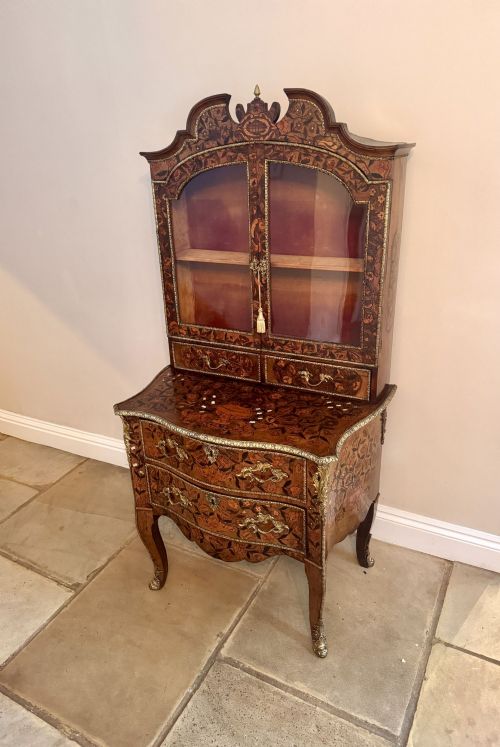
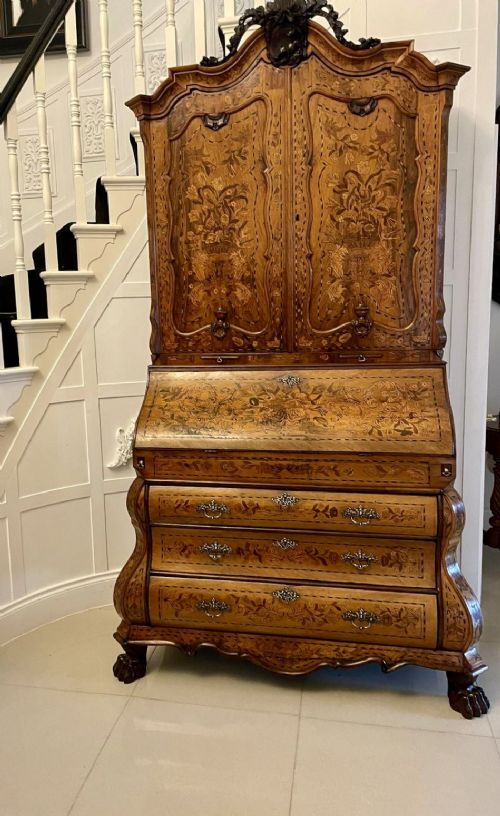
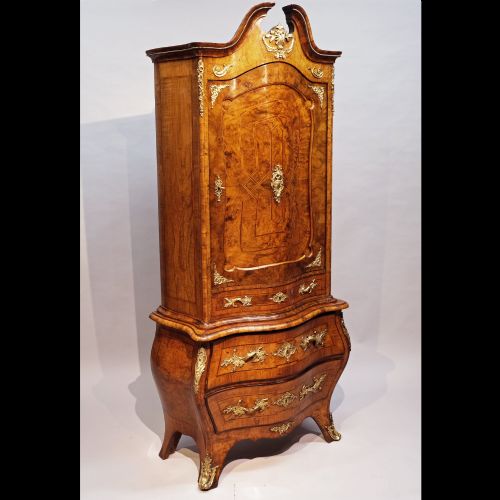


Dutch Rococo Marquetry Cabinet
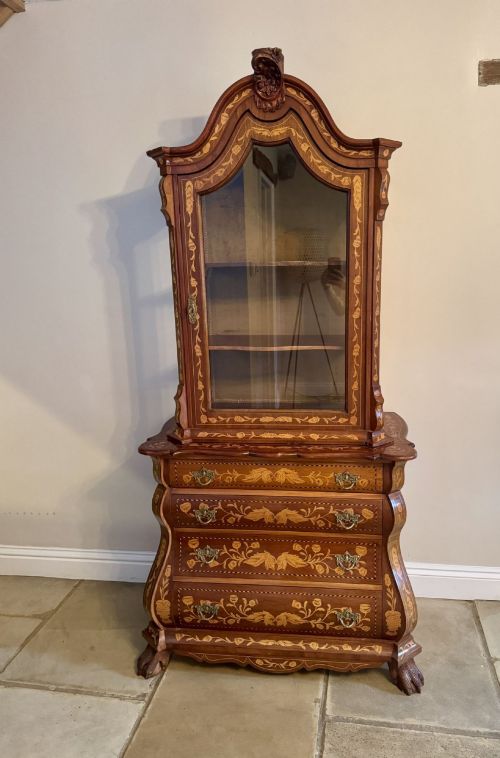
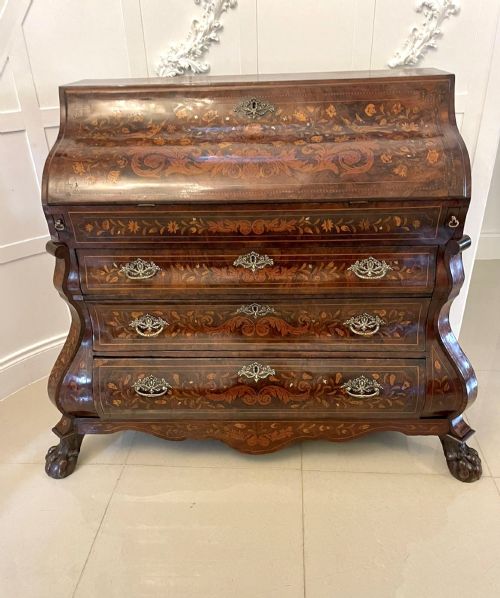
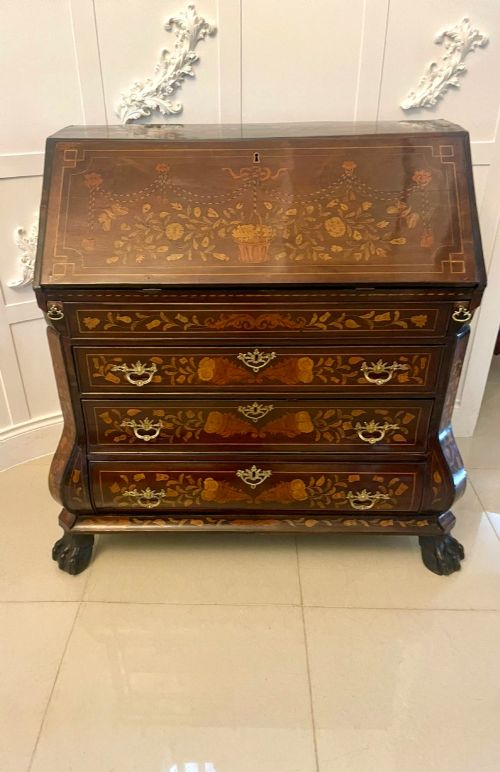
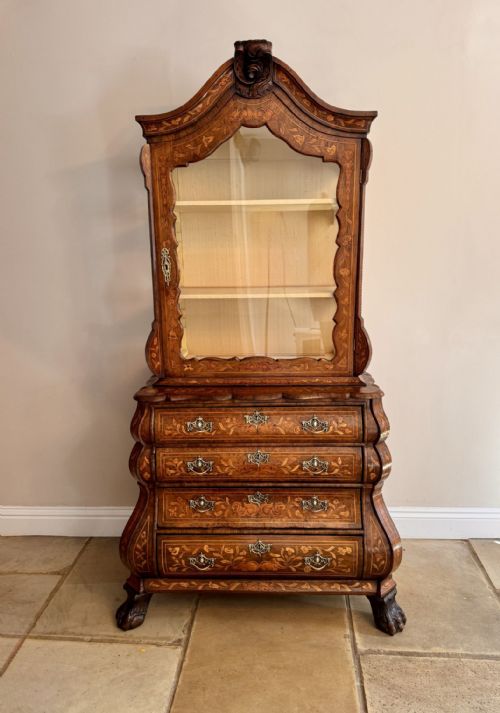
These dutch rococo marquetry cabinet pieces bring striking floral timber work and bombe forms into a room.
Dutch Rococo Marquetry Cabinet
A dutch rococo marquetry cabinet takes the form of a display cabinet, bureau bookcase, or bureau cabinet built with a distinct swelling bombe silhouette. These pieces combine practical storage with elaborate floral timber inlay across doors, drawer fronts, and sloping writing flaps.
The versions met on this page span the eighteenth century alongside revival pieces from later decades. Walnut, burr walnut, and mahogany form the primary carcasses, decorated with fruitwood marquetry depicting floral and botanical motifs.
Buyers encounter various configurations including bureau bookcases with glazed upper sections, tall vitrines, and lower chests with shaped drawers. Each piece demonstrates the characteristic continental rococo movement through serpentine lines and curved facades.
How they were made
Cabinet makers constructed the solid carcasses using oak and walnut, applying fine veneers of burr walnut and mahogany to the exterior surfaces. Fruitwood marquetry was meticulously hand-cut and inlaid to create intricate floral designs across the curving panels.
The bombe shape required skilled timber bending and shaping to achieve the swelling profile characteristic of the style. Brass handles, escutcheons, and mounts were fitted to complement the rich tones of the figured wood.
Dutch Rococo Marquetry Cabinet Retail Price Guide 2026
Typical asking prices for dutch rococo marquetry cabinet among the pieces listed under this phrase on Sellingantiques today, from the lower quarter to the upper quarter. They describe what is for sale here now, not the wider market.
What varies in quality
The crispness and complexity of the fruitwood marquetry separate finer examples from simpler production. Natural variation in the figuring of the burr walnut veneer and the depth of the timber tones influence visual impact.
The precision of the bombe shaping and the fluidity of the serpentine lines reflect the maker's skill. Integration of original brass hardware and the overall balance of the proportions determine the standing of each piece.
The Dutch Rococo Marquetry Cabinet Glossary
- Bombe
- A swelling, outward-curving profile found on the sides and fronts of furniture from this period. This convex shaping requires advanced woodworking skill to execute cleanly.
- Marquetry
- A technique where small pieces of tinted and natural wood veneer are fitted together to form pictorial designs. Floral patterns feature prominently in these compositions.
- Vitrine
- A glass-fronted display cabinet designed for showing porcelain and small objects. These pieces elevate the contents by framing them behind glazed doors.
- Escutcheon
- A decorative metal plate surrounding a keyhole. These fittings provide structural reinforcement and visual accent to drawer fronts and cabinet doors.
Dutch Rococo Marquetry Cabinet: Frequently Asked Questions
What is a bombe shape?
A bombe shape refers to furniture with convex, swelling fronts and sides that curve outward. This silhouette defines many pieces from the period and requires specialised joinery.
Craftsmen shaped thick timbers or applied veneer over curved carcases to achieve this distinctive profile, which adds volume and movement to the furniture.
How do I care for walnut veneer?
Walnut veneer requires stable indoor humidity and protection from direct sunlight to prevent fading and splitting. Regular dusting with a soft, dry cloth preserves the polished surface.
Avoid placing these items near heat sources or damp areas, as fluctuating conditions stress the historical adhesives and timber joints beneath the marquetry.
Where were these cabinets used?
These cabinets served as focal points in formal reception rooms, parlours, and studies of wealthy homes. They stored precious books, documents, and displayed valued collections.
The combination of enclosed storage and display space made them versatile furniture for both administrative tasks and showcasing possessions.
How do I spot revival pieces?
Revival pieces from later periods often feature machine-cut veneers and construction methods distinct from eighteenth-century originals. Timber selection and secondary woods inside the carcass reveal the manufacturing era.
Examining the interior linings, drawer construction, and wear patterns helps differentiate between eighteenth-century production and subsequent nineteenth or twentieth-century interpretations.