

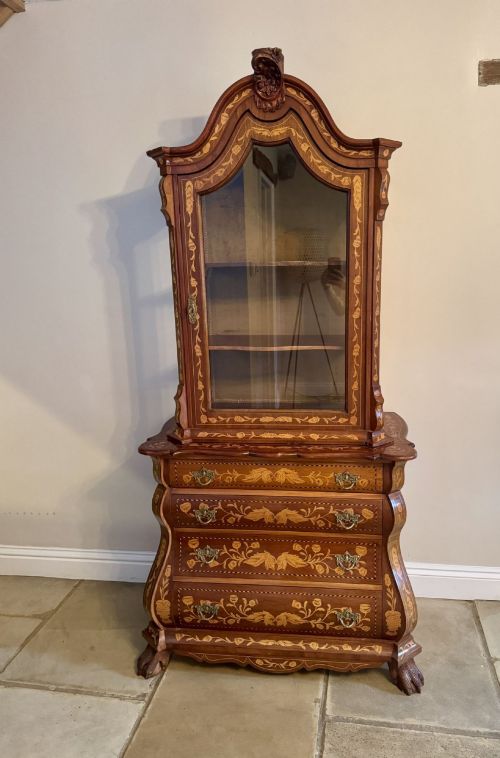
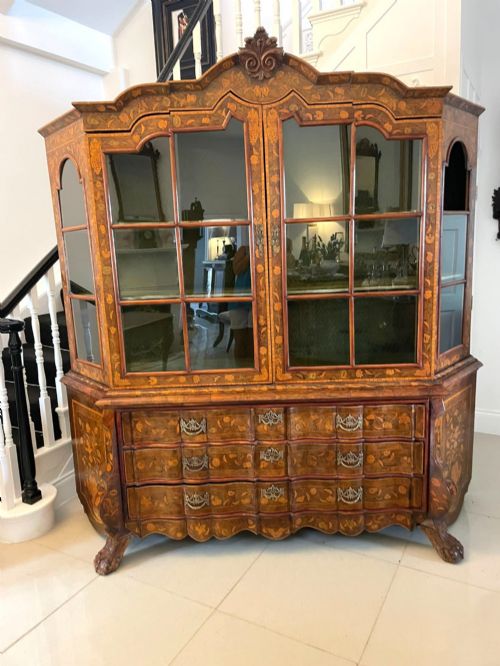
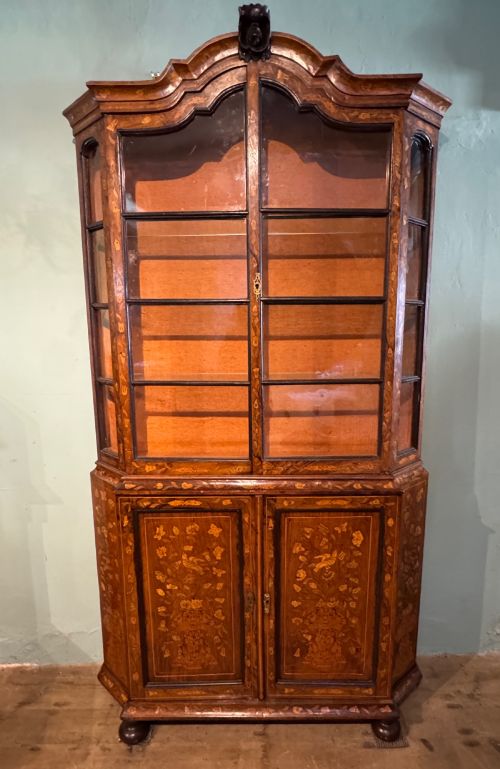
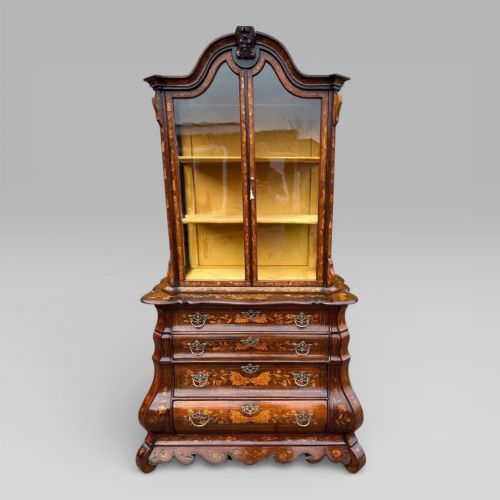


Dutch Floral Inlaid Vitrine
A dutch floral inlaid vitrine brings brilliant floral marquetry and generous display space together, making it an arresting centrepiece for any room.
Dutch Floral Inlaid Vitrine
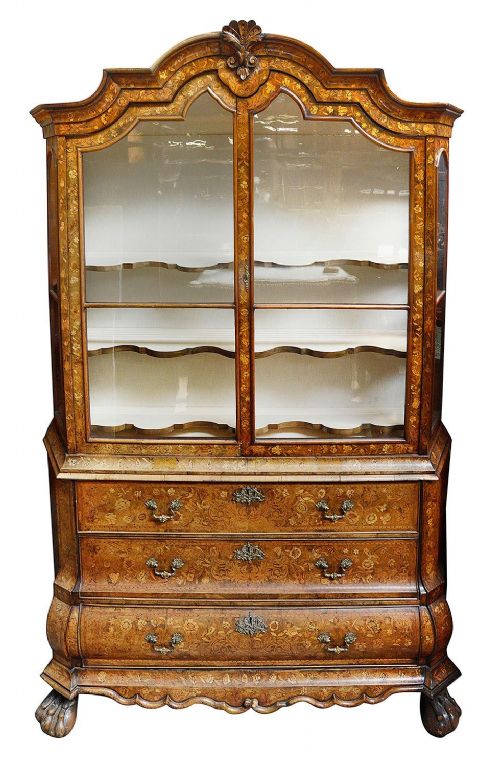
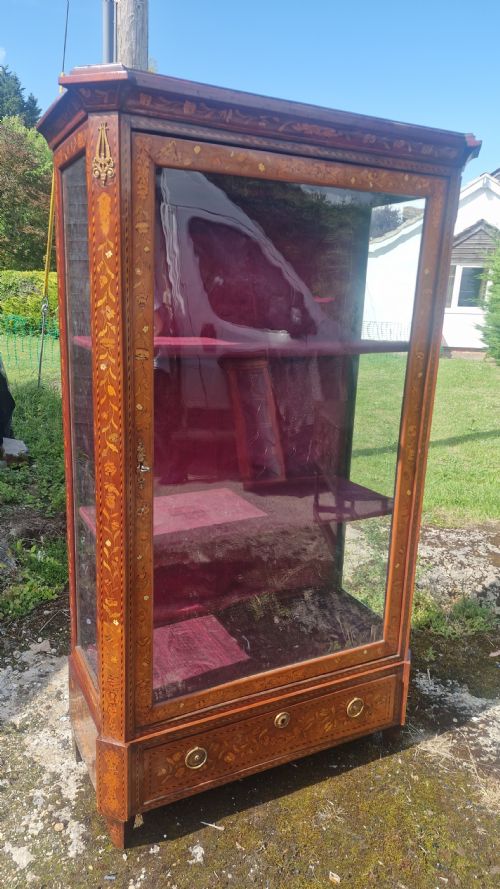
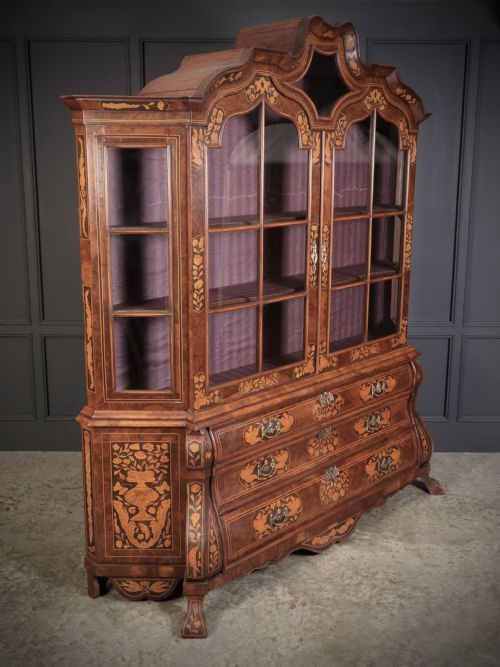
A dutch floral inlaid vitrine is a cabinet designed for display, usually featuring glass doors or panels alongside detailed wood inlay. The form encompasses distinct variations, from tall display cabinets and corner cupboards to impressive bombé cabinets on chests.
The versions most commonly met on this page span several centuries, with examples originating from the eighteenth century through to the early decades of the twentieth century. Makers and cabinetmakers utilised varied structural forms, combining glazed compartments with marquetry ornamentation.
These pieces serve primarily to exhibit glassware, china or collections while offering enclosed storage beneath or within the main body. The overarching style draws heavily on traditional Dutch baroque and rococo aesthetics, expressed through floral motifs.
How they were made
Makers constructed the carcase and shelves using primary and secondary timbers such as walnut, burr walnut, oak, mahogany and fruitwood. These foundational woods provided the structural stability required for large display cases and bombé shapes.
Surface decoration relies on intricate marquetry techniques, setting varied woods into the carcase to form elaborate floral patterns. Glazing frames the upper sections, while brass hardware and velvet linings frequently complete the interior and exterior detailing.
Dutch Floral Inlaid Vitrine Retail Price Guide 2026
Typical asking prices for dutch floral inlaid vitrine among the pieces listed under this phrase on Sellingantiques today, from the lower quarter to the upper quarter. They describe what is for sale here now, not the wider market.
What varies in quality
The distinction between tiers of work rests on the precision of the marquetry and the ambition of the carcase form. Bombé profiles demand sophisticated joinery and shaping compared to straight-fronted alternatives.
Material selection drives the visual impact, particularly the choice between standard walnut, figured burr walnut and contrasting fruitwoods. The crispness of the floral inlay and the integration of glazed doors determine the success of the piece.
Edwards & Roberts
The Dutch Floral Inlaid Vitrine Glossary
- Marquetry
- Decorative woodwork where pieces of veneer are fitted into a ground to form floral and geometric designs. This technique defines the visual character of the cabinet facade.
- Bombé
- A bulging, swelling contour found on the front and sides of certain cabinets. It requires advanced woodworking skill to execute successfully.
- Vitrine
- A glass-fronted cabinet created for displaying objects of curiosity or porcelain. The glazed panels protect the contents while allowing all-round visibility.
- Burr walnut
- Timber taken from a walnut tree growth, yielding complex, swirling grain patterns. It is prized for high-status cabinet surfaces.
- Fruitwood
- Timbers derived from fruit-bearing trees, utilised in marquetry for lighter colour tones and subtle contrasts against darker walnut.
Dutch Floral Inlaid Vitrine: Frequently Asked Questions
What is a dutch floral inlaid vitrine?
A dutch floral inlaid vitrine is a glazed display cabinet adorned with intricate wood marquetry depicting flowers. These pieces combine practical storage with decorative presence.
They emerged from traditional cabinet-making practices in the Netherlands, utilising walnut, fruitwood and varied timbers to create striking focal points.
How were these cabinets used?
Historically, these cabinets served to store and display valuable porcelain, glassware and small collectibles. The glass doors kept dust at bay while allowing guests to admire the contents.
Lower sections or cabinet bases provided enclosed storage for items that required concealment, balancing display with utility.
How do I live with one?
Living with a vitrine involves placing it away from direct sunlight to protect the wood veneers and interior velvet linings. Regular dusting and stable room humidity preserve the structure.
Use the interior shelves to display curated collections, letting the floral marquetry complement your existing interior scheme.
How can I tell the periods apart?
Eighteenth-century examples often display classical bombé silhouettes and hand-cut marquetry with deep patination. Later revival pieces from the nineteenth and twentieth centuries adopt similar baroque motifs using different construction methods.
Examining the secondary woods, internal fixings and the depth of the timber grain helps establish the likely period of manufacture.