
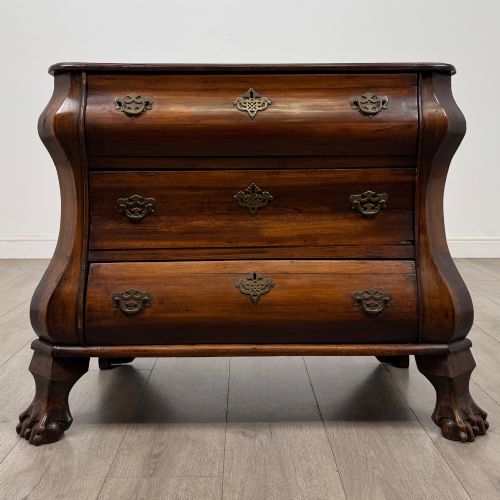
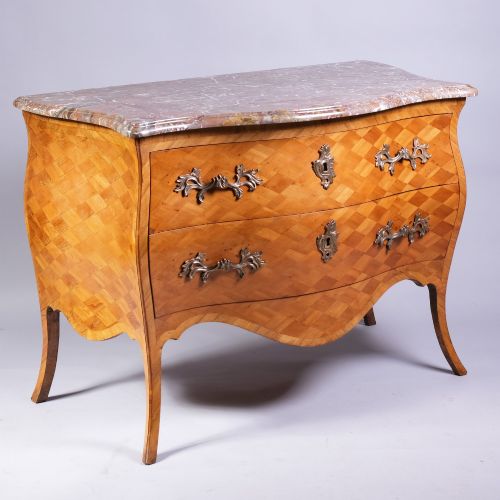
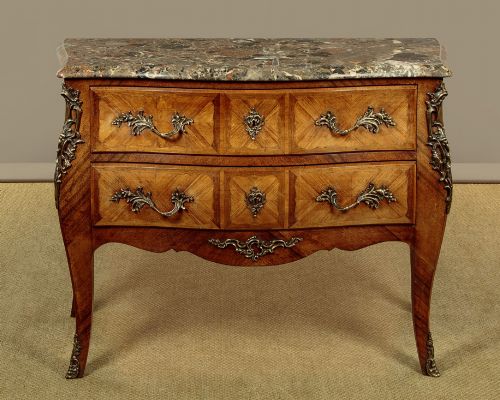
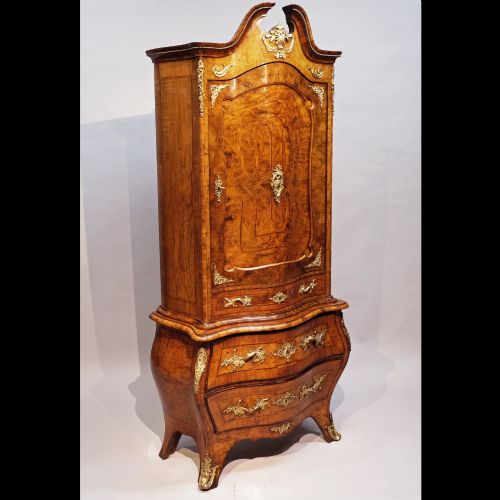
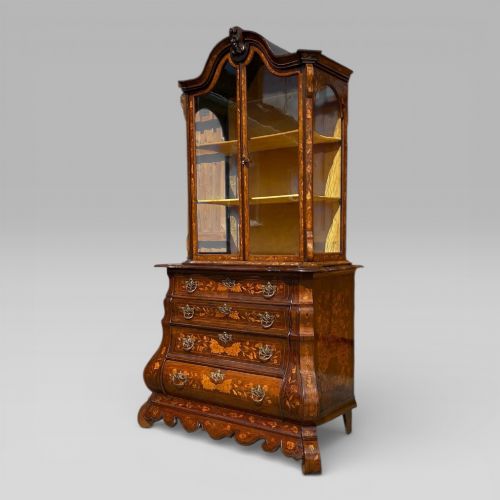
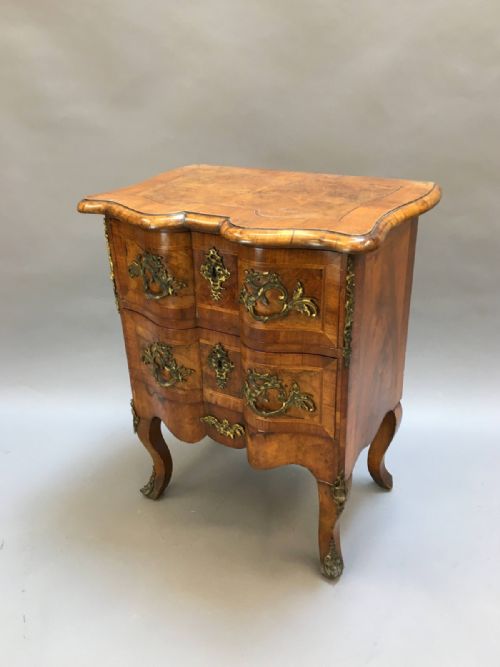


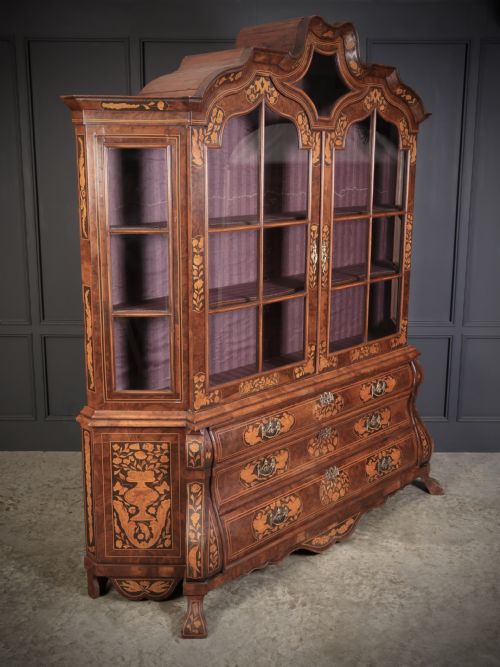

Walnut Bombe Chest Drawers
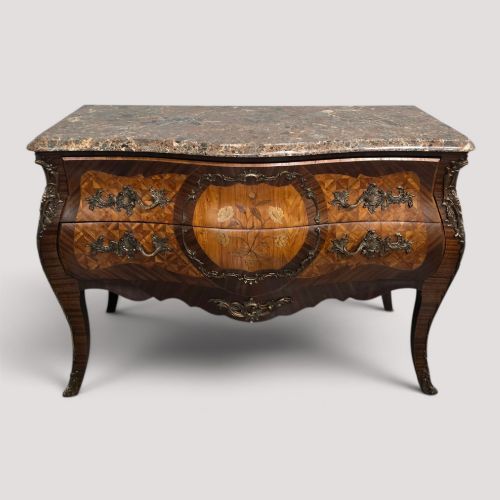
These walnut bombe chest drawers combine swelling serpentine outlines with rich timber figures, offering substantial storage alongside striking Continental presence.
Walnut Bombe Chest Drawers
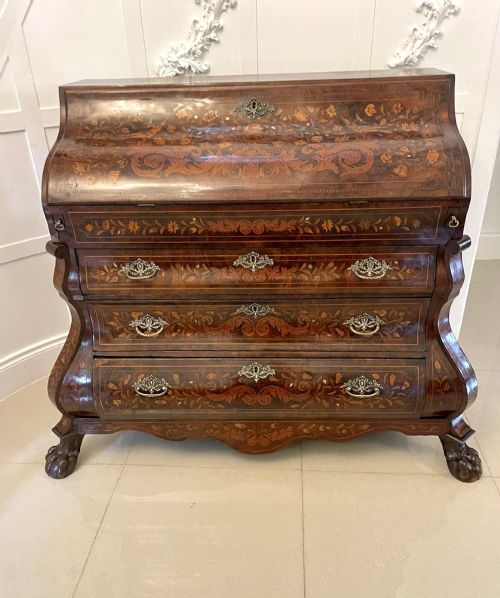
A walnut bombe chest drawers presents a distinctly swollen or outward-curving profile, moving away from flat cabinet sides to create a sculptural silhouette. These pieces appear frequently in eighteenth-century Dutch and French iterations, often taking the form of commodes, bureaus, or display cabinets.
Makers shaped the carcass with pronounced outward sweeps on the front and sides, requiring careful carpentry to maintain structural integrity while following the curved lines. Buyers encounter examples ranging from eighteenth-century origins through nineteenth-century revivals and early twentieth-century interpretations.
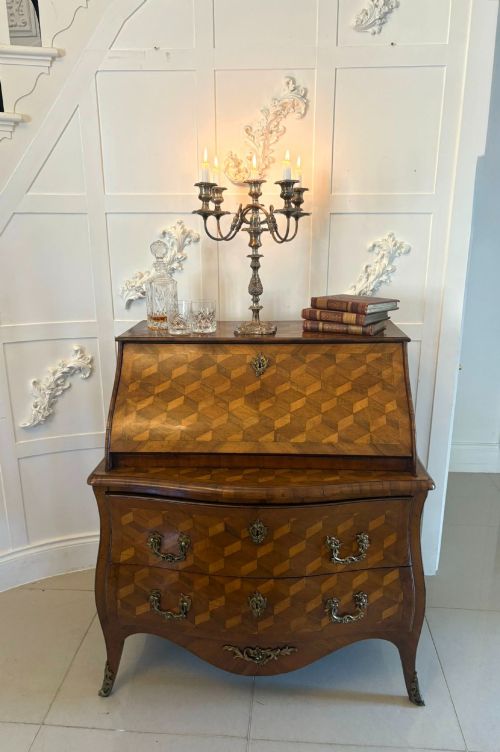
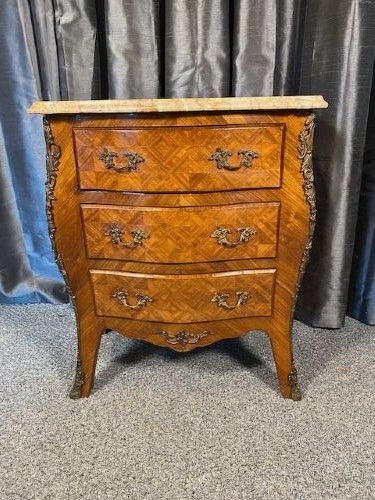
The form encompasses smaller bedside cabinets alongside large commodes and bureau desks, frequently decorated with intricate marquetry or parquetry patterns. Walnut and burr walnut dominate the surfaces, occasionally accompanied by marble tops and cast metal mounts.
How they were made
Cabinetmakers constructed the swelling carcasses using softwood frames veneered with figured walnut and burr walnut, sawing thin slices of timber to lay over curved surfaces. This veneering technique allowed workshops to display rich grain patterns across the bold front and side sweeps of the commode.
Many examples incorporate floral marquetry and geometric parquetry, cutting various woods and fruitwoods to fit together within the walnut ground. Ormolu mounts and marble slabs complete the construction on specific French and Continental pieces, adding weight and contrast to the timber.
The inventory includes Dutch marquetry bureaus, French commodes, and display cabinets alongside bedside tables.
What varies in quality
The rhythm of the curves defines the success of the piece, distinguishing confident Continental shaping from rigid later interpretations. A balanced profile maintains its swelling contour smoothly from the top drawer down to the feet without awkward flat spots.
The choice and placement of burr walnut veneer dictate the visual impact of the surface, particularly where grain patterns mirror across drawer fronts. Crispness in the marquetry inlay and the integration of cast bronze or ormolu mounts further separate standard production from superior examples.
Edwards & Roberts
The Walnut Bombe Chest Drawers Glossary
- Bombe
- An outward-swelling, bulging contour used on the front and sides of furniture. This profile originated in Continental workshops during the eighteenth century.
- Burr walnut
- Timber taken from the warted growths on walnut trees, showing highly figured, swirling grain patterns. Cabinetmakers used these veneers for decorative surfaces.
- Marquetry
- The art of applying pieces of veneer to a structure to form decorative patterns and pictorial designs. Craftsmen utilised various fruitwoods and contrasting timbers.
- Ormolu
- Gilded bronze used for decorative mounts, handles, and feet on furniture. This material appears frequently on French commodes.
- Commode
- A low chest of drawers, typically standing on short legs. The term encompasses various Continental storage forms from the eighteenth century onwards.
Walnut Bombe Chest Drawers: Frequently Asked Questions
What is a bombe chest?
A bombe chest is a storage piece featuring an outward-curving, swelling profile on the front and sides. This distinctive shape requires specialised joinery to build curved drawer fronts and carcasses.
Originating in continental Europe during the eighteenth century, these pieces became prominent in Dutch and French cabinetmaking. They serve as functional storage while acting as substantial focal points in a room.
How do I spot an 18th-century piece?
Eighteenth-century examples display hand-cut dovetails, oak or soft-wood secondary drawer linings, and natural beeswax finishes on the walnut timber. The proportions and the fluidity of the swelling curves differ noticeably from later nineteenth-century revival pieces.
Examination of the internal construction reveals traditional joinery methods unique to the period. Continental workshops also employed specific marquetry techniques and timber selections characteristic of that era.
Where should I place a commode?
These chests suit spacious hallways, living rooms, or bedrooms where their sculptural profiles can be viewed from multiple angles. Their deep proportions require adequate floor space away from narrow corridors.
Pairing a marble-topped commode with simple surroundings allows the figured walnut grain and curved silhouette to stand out. Ambient lighting helps highlight the subtle variations in the timber surface.
Why use burr walnut?
Burr walnut provides intensely decorative, swirling grain patterns that ordinary timber lacks. Cabinetmakers valued these irregular growths for creating striking visual panels across drawer fronts.
Using veneer allowed workshops to stretch limited supplies of figured wood across large curved surfaces. This technique maximised the decorative potential of the timber while maintaining structural stability.