
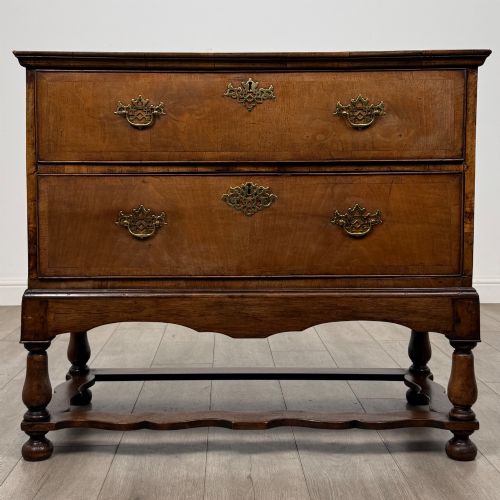
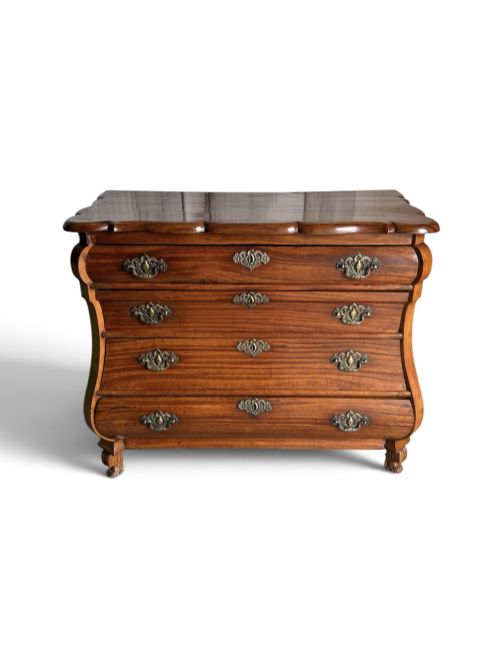
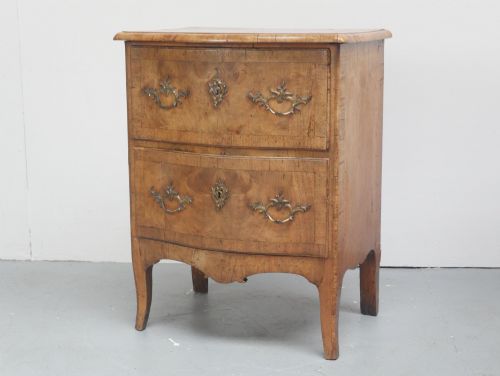
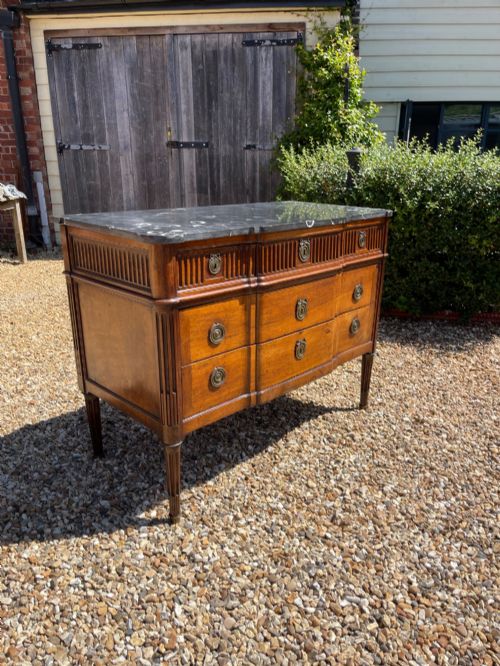
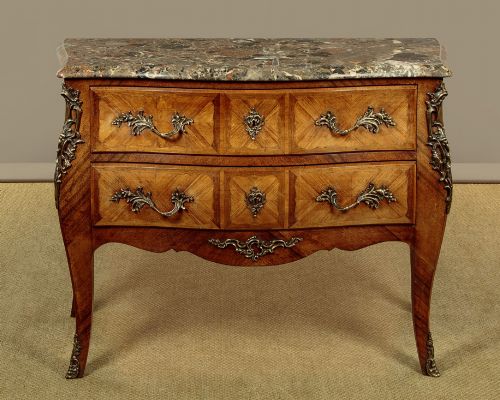
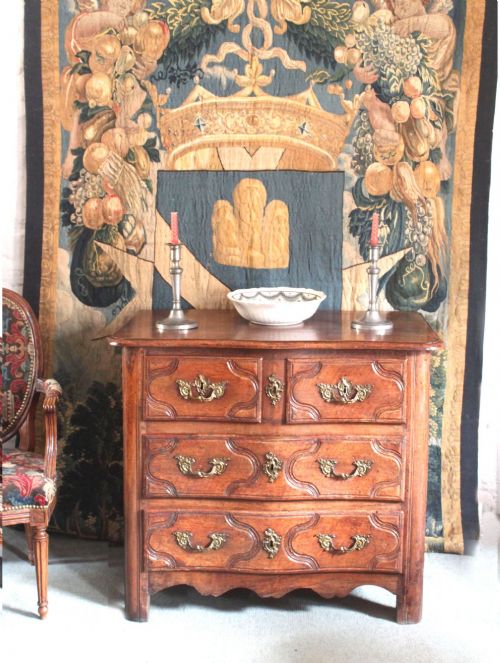


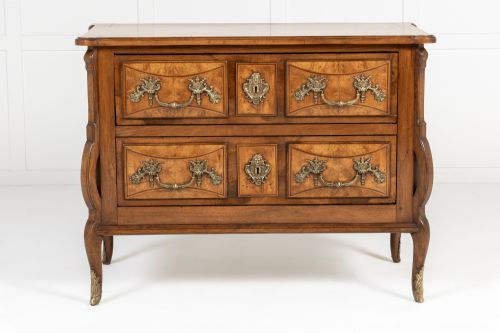


Brass Mounted Wooden Commode
These brass mounted wooden commode examples combine timber storage with metal mounts, offering practical surface space and period character.
Brass Mounted Wooden Commode
A brass mounted wooden commode serves primarily as a chest of drawers or bedside table, emerging from periods such as the eighteenth century and the Victorian era. These pieces appear in forms ranging from full size serpentine chests to miniature furniture and bedside chests.
The selections span regional styles like French Provincial and Dutch Colonial, alongside formal iterations in Louis XV and William and Mary aesthetics. Buyers frequently encounter eighteenth century walnut and cherrywood specimens alongside later nineteenth century interpretations.
Configuration and scale vary considerably across the inventory, encompassing bombe profiles, bow fronts, and standard rectangular chests of drawers. This diversity reflects centuries of domestic furniture production across various European workshops.
How they were made
Construction relies on solid timbers and applied veneers, utilising walnut, mahogany, oak, fruitwood, and cherrywood over structural carcases. Cabinetmakers shaped these woods into serpentine or bombe contours through precise joinery and timber selection.
Metal components provide structural reinforcement and decorative accent, with brass mounts secured to drawer fronts, corners, and feet. Surface enrichment often includes marquetry, oyster veneers, inlay, or painted finishes, paired occasionally with marble tops.
Miniature commodes and apprentice chests provided makers with a portable way to demonstrate complex serpentine and bombe techniques to prospective clients.
What varies in quality
The sophistication of the timber figure and the execution of surface work separate standard examples from finer pieces. Burr walnut, burr ash, and intricate marquetry demand advanced cabinetmaking skill compared to plain fruitwood or oak.
The integration and detailing of the brass mounts also influence the piece, where heavier cast elements and precise fitting demonstrate superior workshop standards. Proportions, particularly on serpentine and bombe forms, dictate the visual balance of the finished commode.
The Brass Mounted Wooden Commode Glossary
- Bombe
- A bulging or outwardly swelling commode profile associated with eighteenth century cabinetmaking. This curved shape requires skilled timber bending or shaping.
- Serpentine
- A front outline curving inward centrally and outward at the ends. It appears frequently on eighteenth century French and English chests of drawers.
- Marquetry
- The art of forming decorative patterns using thin slices of wood and other materials. It creates pictorial or geometric designs across the surface of the commode.
- Oyster veneer
- Slices of branch wood cut transversely to show circular growth rings. This technique produces a distinctive repeating pattern across the drawer fronts.
- Mazarin
- A specific regional form of French commode often featuring distinctive drawer configurations. These pieces date primarily to the eighteenth century.
Brass Mounted Wooden Commode: Frequently Asked Questions
What is a commode?
A commode functions as a low chest of drawers or cabinet designed for domestic storage. These pieces typically feature multiple drawers and sit in bedrooms or living spaces.
Historically, they evolved from simple storage boxes into decorative furniture featuring marble tops and metal mounts.
How do I date a commode?
Dating relies on examining the timber species, construction methods, and stylistic cues such as hardware and leg forms. Eighteenth century pieces often feature hand-cut dovetails and solid regional timbers.
Later Victorian and twentieth century reproductions incorporate machine-sawn elements and different timber preparation techniques.
Are these commodes suitable for daily use?
These pieces function adequately for modern storage when handled with reasonable care for antique surfaces and mechanisms. Drawer runners and internal structures generally support light everyday items.
Placement away from direct heat sources helps preserve vulnerable veneers and solid wood panels.
What woods were commonly used?
Cabinetmakers utilised a wide selection of timbers including walnut, mahogany, cherrywood, oak, and fruitwood. Burr walnut and burr ash appeared on high status decorative surfaces.
Secondary woods inside the carcase often include oak or pine depending on the region of manufacture.