

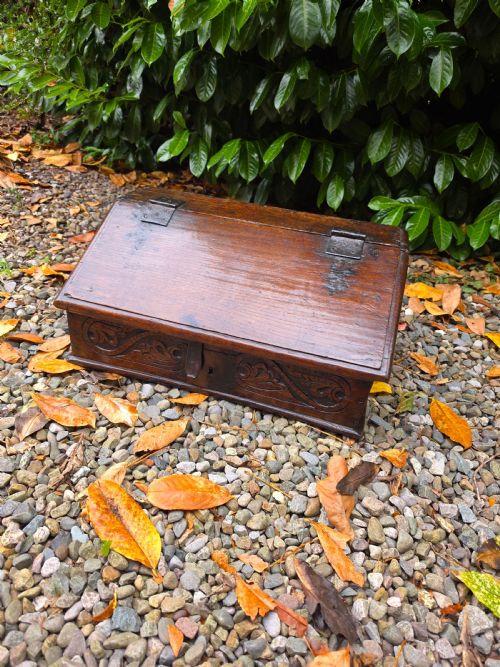
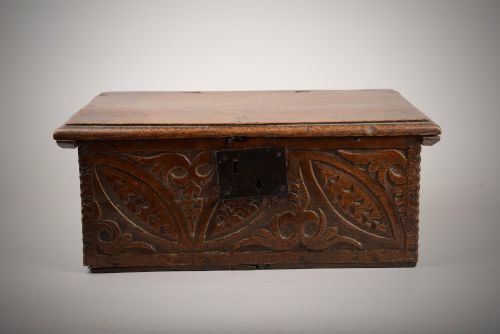
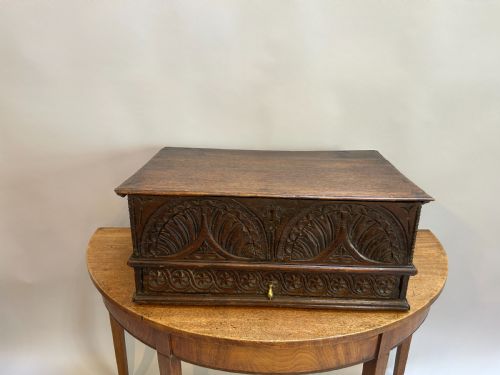


Carved Oak Table Chest
A carved oak table chest brings robust vernacular craft and centuries of utility straight to the surface of your room.
Carved Oak Table Chest
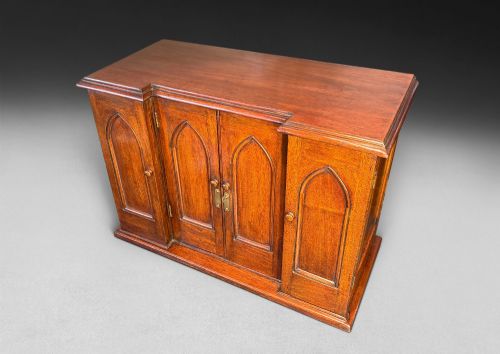
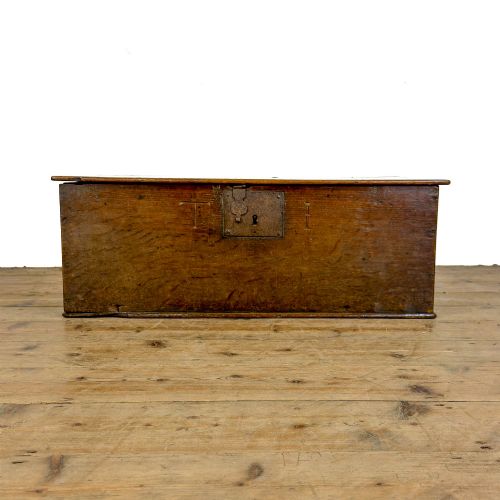
A carved oak table chest unites compact storage with the sturdy presence of solid timber, often taking the form of a bible box, desk box, or low table-top cabinet. Buyers searching for a carved oak table chest encounter pieces ranging from seventeenth-century vernacular boxes to twentieth-century revival interpretations designed to sit upon larger surfaces or stands.
The selection on this page bridges utilitarian boxes from the seventeenth and eighteenth centuries with later revival iterations, displaying styles such as Jacobean, Gothic Revival, and Arts and Crafts. These items served practical domestic or devotional purposes, functioning as portable repositories for household documents, books, or valuables before integrated bedroom furniture became standard.
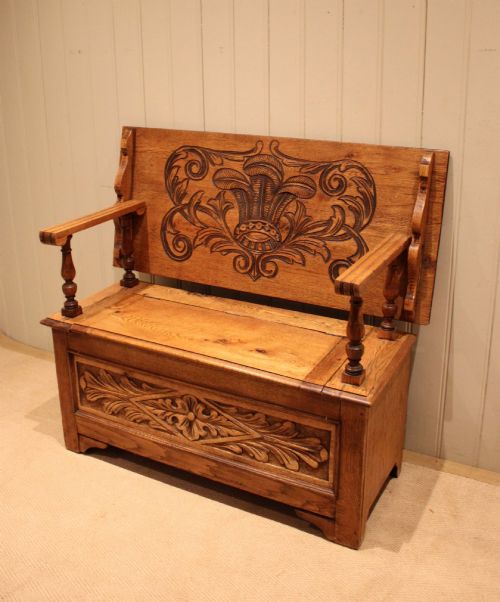
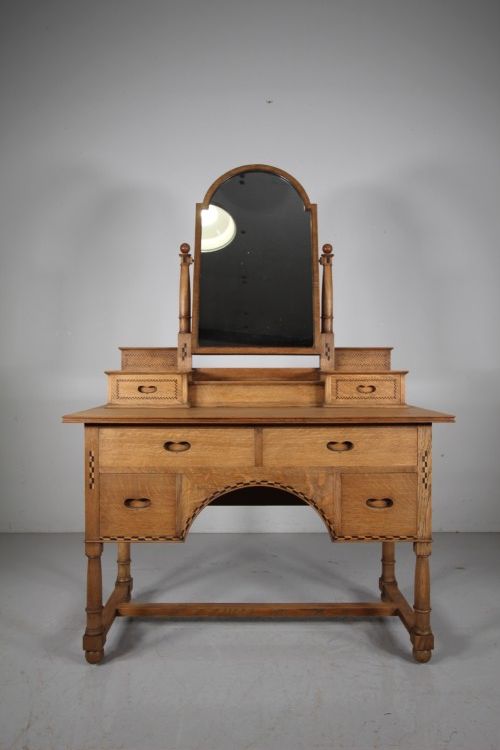
Within these listings, the form frequently overlaps with related compact case pieces like lowboy dressing tables, table boxes with internal drawers, and monks benches. This variety reflects how makers adapted sturdy oak construction to suit changing domestic storage needs across the seventeenth, eighteenth, nineteenth, and twentieth centuries.
Judging quality and character
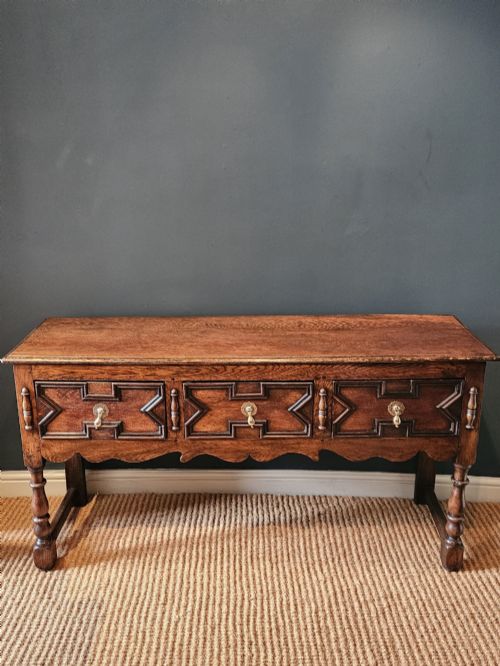
Quality rests in the crispness of the hand-carved detail and the integrity of the original oak timber. Pieces featuring deeply carved friezes, geometric moulding, and intact internal drawers demonstrate superior craftsmanship compared to simpler, plain-panelled variants.
The proportion of the box relative to its decorative elements dictates visual balance. Finer examples retain their original brass or iron hardware and uncompromised structural joints, showing honest patination from age rather than excessive modern restoration.
Listings feature solid oak construction spanning the seventeenth century through to the Edwardian period and the nineteen-thirties.
Shapland and Petter·Heals
The Carved Oak Table Chest Glossary
- Bible box
- A small, sloped or flat-topped wooden chest traditionally used to store family bibles and important documents. These boxes often rested on tables before being mounted on dedicated stands.
- Monks bench
- A multifunctional piece of furniture featuring a hinged top that converts a bench seat into a table back. This form maximised space in historical interiors.
- Lowboy
- A small oak or walnut dressing table featuring one or more rows of drawers raised on relatively tall legs. They emerged during the late seventeenth and eighteenth centuries for personal grooming.
- Geometric moulded
- A decorative surface treatment utilising applied wooden strips to create raised geometric patterns on drawer fronts and panels. This technique was popular in seventeenth-century joinery.
Carved Oak Table Chest: Frequently Asked Questions
What is a carved oak table chest used for?
These chests originally served to secure sacred texts, personal letters, and valuable household documents away from dust and dampness.
In modern interiors, they function as striking decorative storage on top of sideboards, desks, or tables, holding smaller everyday items.
How can I tell a seventeenth-century box from a later revival piece?
Early pieces display hand- cleft timber, irregular tool marks, and traditional pegged joinery that reflects period construction methods.
Revival pieces made in the nineteenth or twentieth century often exhibit uniform machine-sawn boards, standard screws, and cleaner internal surfaces.
Did these chests always sit on tables?
Many early boxes were designed to sit directly on existing tables or floor surfaces while in use.
Over time, some variants were manufactured as bible box on stand configurations or adapted with dedicated legs to function independently.
How should I care for antique oak furniture?
Maintain the wood by keeping it away from direct heat sources and sudden humidity shifts that cause timber to split.
Apply a traditional beeswax polish sparingly and buff with a soft cloth to preserve the natural lustre of the oak.