
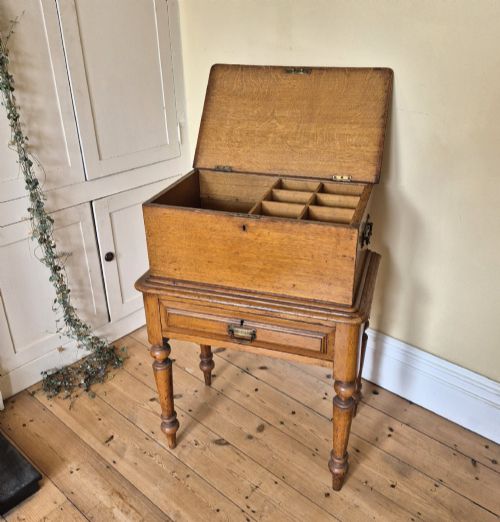
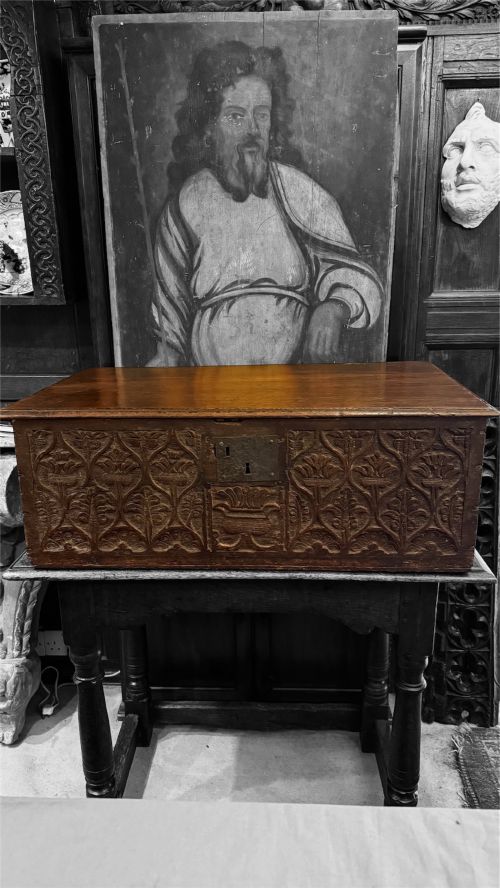


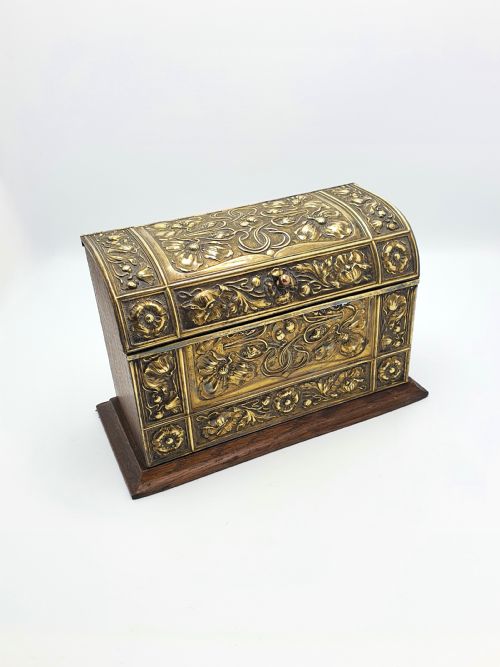


Vintage Oak Document Box
A vintage oak document box is a sturdy receptacle designed to protect papers, deeds and valuables, built from timber that develops a deep patina over decades.
Vintage Oak Document Box
When you search for a vintage oak document box, you encounter pieces spanning multiple centuries, from seventeenth-century joined chests to Victorian desktop tidies. The selection ranges from plain utility boxes intended for deeds to intricately carved seventeenth-century Bible boxes and painted Scandinavian strong boxes.
You are most likely to meet nineteenth-century and Victorian examples on this page, alongside earlier Jacobean and Georgian forms. These objects served practical purposes in homes, offices and railways, functioning as portable safes or desk organizers before the era of modern filing.
Forms vary widely according to their original use, including slant-front desk boxes with secret drawers, wall organizers, stationery boxes and specialised receptacles like railway ticket dispensers. Despite this variety, solid oak remains the unifying material across the entire collection.
How they were made
Cabinet makers constructed these boxes using solid oak timbers, often joined with traditional methods or augmented by mixed wood inlay. The primary structure relies on the density and durability of oak, which accepts surface treatments ranging from chip carving to hand-applied pigment.
Metal components play a crucial structural and decorative role, featuring brass hinges, iron locks, and heavy wrought iron bands. Some examples incorporate contrasting materials like bone or delicate inlay work to accent the primary wooden housing.
Listings feature oak combined with brass, iron, wrought iron, pigment, bone, and mixed wood inlay across multiple centuries.
What varies in quality
The distinction between ordinary and superior boxes lies in the crispness of the carpentry and the preservation of original surfaces. Early chip carving or well-executed folk art painting elevates a piece beyond basic utilitarian storage.
Hardware integrity and internal complexity also dictate standing. Boxes retaining original brass bindings, functional locks, and working secret drawers command greater interest than those altered or stripped of their period fittings.
The Vintage Oak Document Box Glossary
- Bible box
- A small lidded chest originally built to store a family Bible or important manuscripts. These pieces often feature sloping lids that doubled as writing surfaces.
- Chip carving
- A decorative technique where the carver removes small chips of wood from the surface to create geometric patterns. It appears frequently on seventeenth-century pieces.
- Strong box
- A heavily reinforced storage container designed for security. These boxes typically incorporate iron straps or wrought metal bands to deter forced entry.
- Stationery box
- A compartmented desk accessory designed to hold writing paper and envelopes upright. They emerged more prominently in the Victorian period as correspondence increased.
- Inlay
- The insertion of contrasting materials into recessed areas of the wood base. Examples in this category use mixed woods to create decorative motifs.
Vintage Oak Document Box: Frequently Asked Questions
What is a document box?
A document box is a portable container constructed to safeguard important papers, legal deeds, and personal valuables. Historically, these receptacles kept dampness and prying eyes away from vital records.
Over time, forms evolved from heavy seventeenth-century joined timber chests to lighter Victorian stationery boxes and specialised desk organizers.
How old are these oak boxes?
The pieces span several centuries, with origins stretching from the seventeen hundreds back to the seventeen hundreds and earlier Jacobean periods. Later examples extend through the Georgian and Victorian eras into the Edwardian period.
Determining age relies on examining construction methods, joinery, and the style of brass or iron hardware attached to the oak.
Did they use locks?
Many boxes incorporated iron or brass locks to secure sensitive documents and currency from unauthorized access. Surviving examples frequently retain their original escutcheons, though keys are sometimes lost over the centuries.
The presence of working locks and robust metal banding usually indicates a box intended for high-value storage.
How do I care for antique oak?
Antique oak benefits from stable indoor environments away from direct heat sources and excessive moisture swings. Applying a traditional wax polish occasionally helps nourish the wood and maintain the surface sheen.
Avoid modern liquid cleaners that can strip the historic finish and dry out the grain of the timber.