
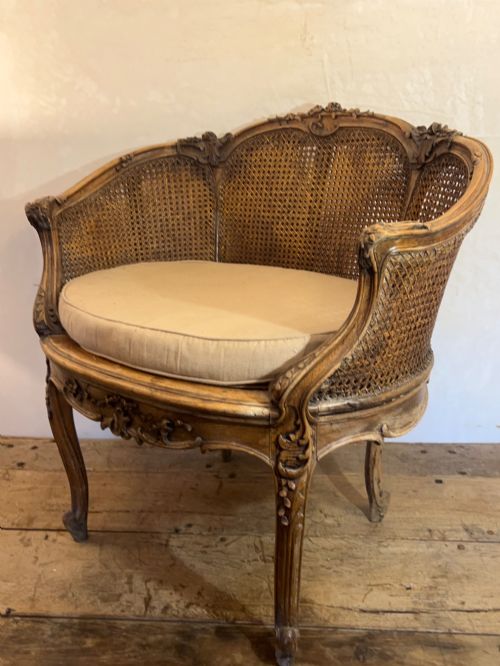
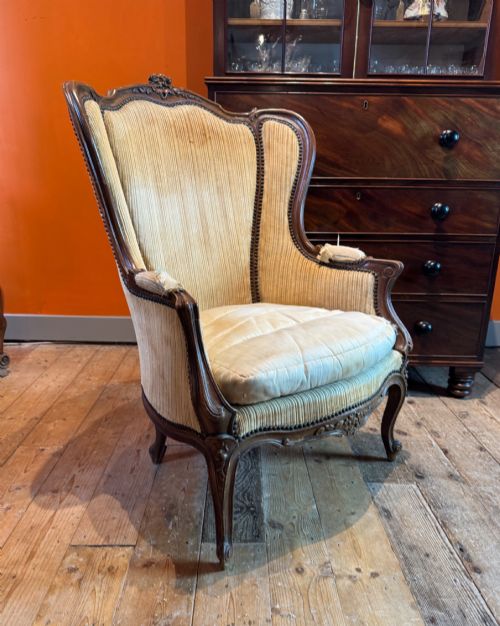
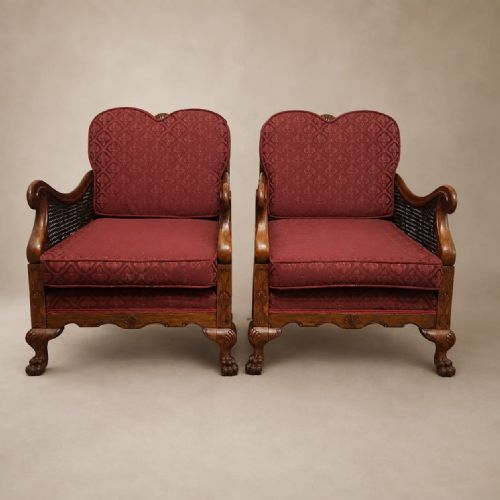
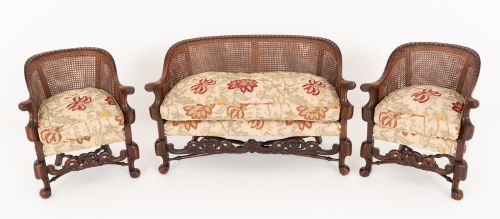
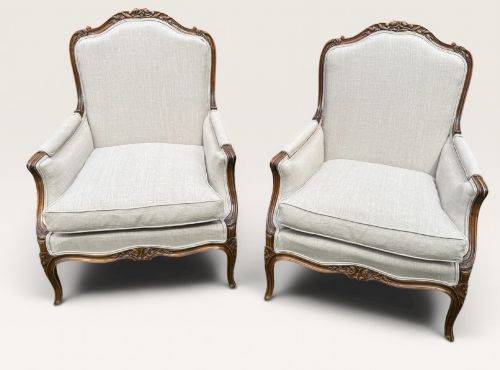
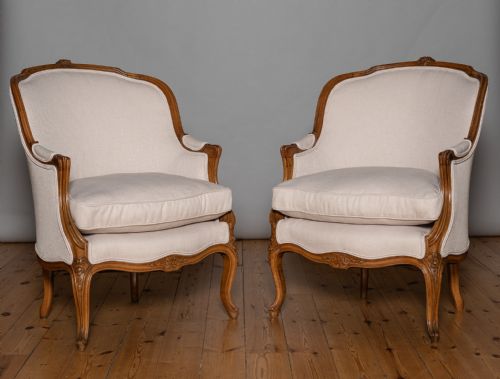


Walnut Bergere Armchair
A walnut bergere armchair brings classic French and 20th-century lounge seating into a room with rich carved wood and woven cane.
Walnut Bergere Armchair
A walnut bergere armchair is an enclosed upholstered or caned seat designed for relaxation, appearing frequently in French and English period designs. When searching for a walnut bergere armchair, buyers encounter 19th-century examples alongside 1920s revivals and Edwardian seating suites.
The form spans individual lounge chairs, library seats, and large salon suites paired with matching settees. Many pieces originate from French workshops adhering to Louis XV and Louis XVI styles, while others reflect later Art Deco sensibilities.
Materials and construction methods
Makers shaped the structural frames from solid walnut, often applying elaborate carved ornamentation in regional interpretations of Rococo and French Empire aesthetics. Artisans integrated natural cane, split cane, and rattan panels into the backrests and sides to create light yet sturdy enclosures.
Upholstery completed the design, utilising textiles such as silk, velvet, linen, and fabric alongside traditional stuffing techniques. Some pieces combined the exposed timber frame with loose cushions or fully upholstered padded armrests.
Listings feature walnut frames paired with cane, rattan, velvet, silk, and linen across Victorian, Edwardian, and Art Deco periods.
Factors influencing execution and finish
The depth and crispness of the carved walnut frame separate standard production from superior examples. Skilled hand-carving along the cabriole legs and crest rails demonstrates a higher tier of craftsmanship than simpler moulded timber.
The tightness of the cane work and the quality of the textile upholstery dictate the overall finish. Intricate marquetry inlay and well-preserved structural joinery further distinguish the most accomplished lounge chairs.
The Walnut Bergere Armchair Glossary
- Bergere
- An enclosed upholstered armchair with a wooden frame, originating in France during the early 18th century. These seats often feature exposed timber borders and cane panels.
- Cane
- Woven rattan material used to form breathable backrests and side panels on historic seating. Split cane variants offer a finer texture.
- Carolean Style
- A British furniture design period spanning the late 17th century, characterised by rich walnut framing and elaborate carving. Pieces in this manner reappear in later revival suites.
- Louis XV Style
- A decorative aesthetic defined by asymmetrical curves, naturalistic floral motifs, and cabriole legs. This style heavily influences many 19th-century French armchairs.
- Marquetry
- Decorative veneer work arranged in geometric or pictorial patterns across wooden surfaces. It appears on select French Empire frames.
Walnut Bergere Armchair: Frequently Asked Questions
What is a bergere armchair?
A bergere armchair is a deep, wide seat featuring enclosed sides and a wooden frame. It differs from standard armchairs through its combination of solid timber structure and woven cane or upholstered panels.
Originating in France, these chairs prioritise comfort and formal elegance. They function well as reading seats or as matching additions to larger salon suites.
How do I date a walnut armchair?
Dating relies on observing stylistic details, construction methods, and material choices. Pieces inspired by French reigns often reflect 19th-century revivals rather than original 18th-century production.
Examining the grain of the walnut, the weave of the cane, and the type of joinery provides clues to whether a chair originates from the Victorian era, the Edwardian period, or the 1920s.
Are these chairs comfortable for daily use?
These lounge chairs are built with generous proportions designed for relaxation. Many examples incorporate cushioned seats or loose squabs resting above the supportive cane base.
Reupholstered variants offer modern padding levels while retaining the historic wooden frame. They suit everyday placement in living rooms and studies.
What is the difference between cane and upholstered backrests?
Caned backrests utilise woven rattan to create a lightweight, semi-transparent panel that shows the interior frame. Upholstered versions cover the back entirely in textile, velvet, or silk.
Caned variants provide a lighter visual profile suited to airy spaces, while upholstered options offer a softer surface and greater warmth.