

Vintage Library Seats
Vintage library seats bring enduring comfort and rich character to a room, spanning grand mahogany armchairs and sturdy oak desk chairs.
Vintage Library Seats
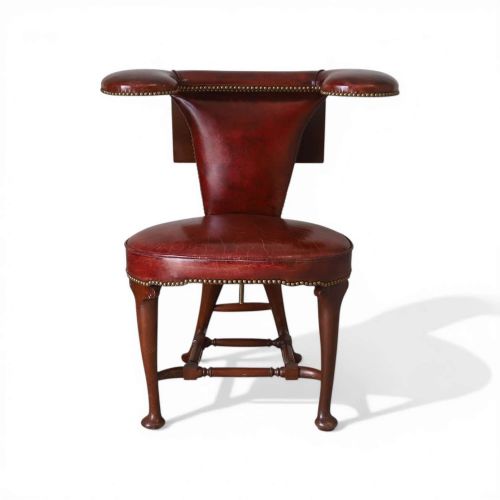
Vintage library seats encompass a diverse range of forms designed for reading, study and repose, including armchairs, desk chairs, reading chairs, sofas and stools.
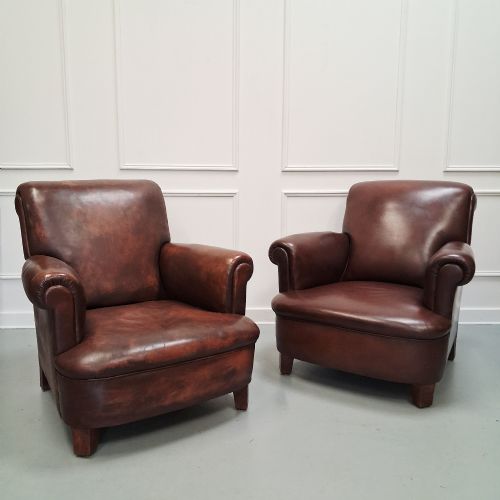
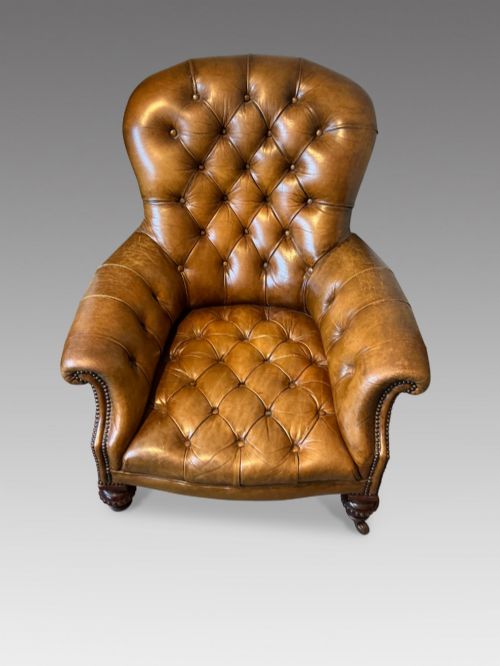
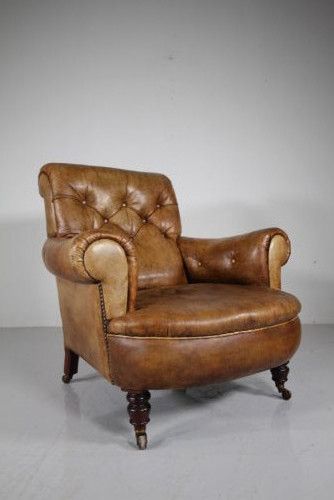
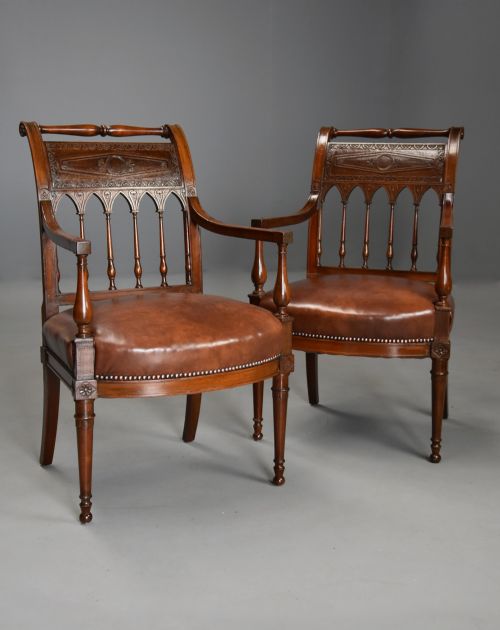
Buyers will encounter substantial leather-upholstered armchairs alongside cane-backed bergères and timber-framed desk chairs suitable for home studies.
Materials and construction
Cabinet makers utilised dense hardwoods such as mahogany, oak, walnut and rosewood to construct the structural frames, often incorporating detailed carving or polished finishes.
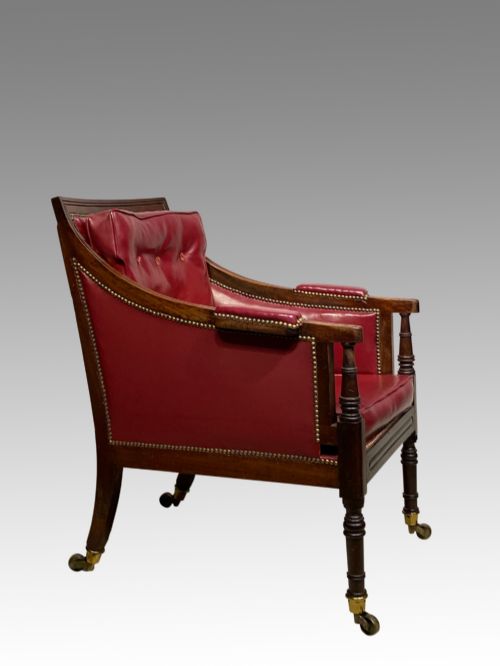
Seating surfaces typically combined supportive webbing or cane work with upholstered leather, fabric, velvet or hide, secured with brass detailing where appropriate.
Solid ebony frame construction appears alongside standard mahogany, offering a dense and unusual alternative for the study.
Craftsmanship and distinction
The distinction between standard examples and exceptional pieces lies in the depth of timber carving, the choice of secondary woods, and the integrity of the original frame joinery.
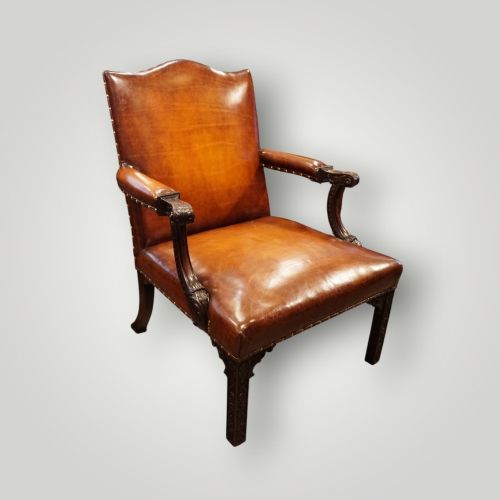
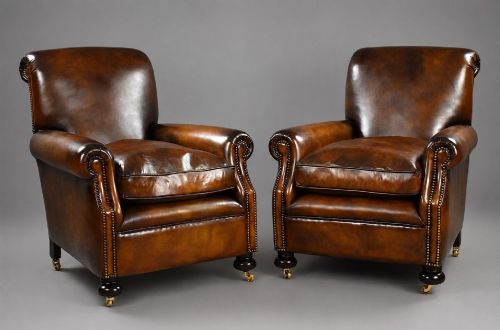
Superior execution shows in hand-dyed leathers, balanced proportions, and the survival of period details such as brass castors or precise blind fretwork.
The Vintage Library Seats Glossary
- Bergère
- An enclosed armchair with cane panels to the back and sides, frequently paired with a loose cushion.
- Gainsborough chair
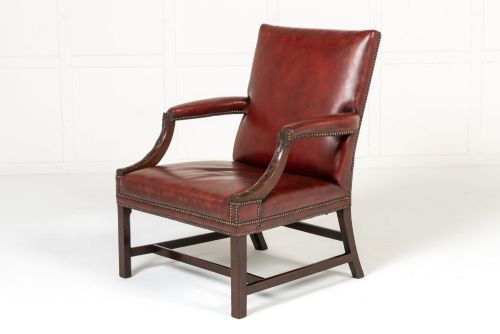
- A wide, open-armed armchair with a padded seat and back, standing on short legs originating in the eighteenth century.
- Caned
- Woven rattan or cane material utilised for chair backs and seats to provide resilient flexibility.
- Campaign chair
- Portable folding furniture engineered for travel, often featuring adjustable elements and brass mounts.
Vintage Library Seats: Frequently Asked Questions
What defines a proper library seat?
These seating pieces were traditionally designed for prolonged study, reading or writing in private libraries and grand studies. They prioritise supportive upright or slightly reclined postures over casual lounging.
Makers built them using robust hardwoods like mahogany and oak to withstand daily use, frequently incorporating leather or cane for durability.
How do I distinguish Victorian from Georgian examples?
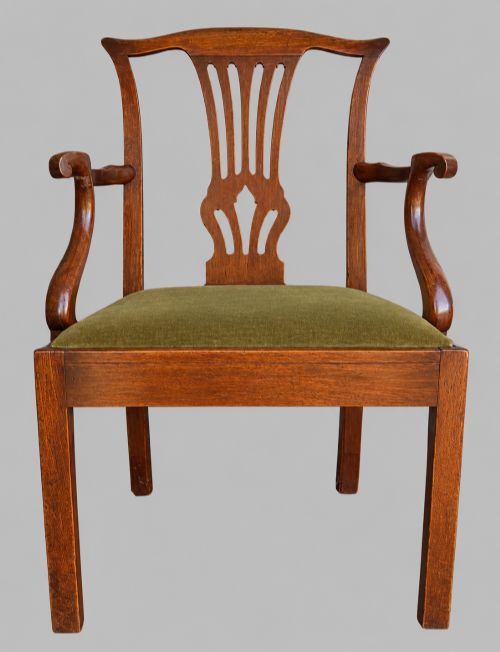
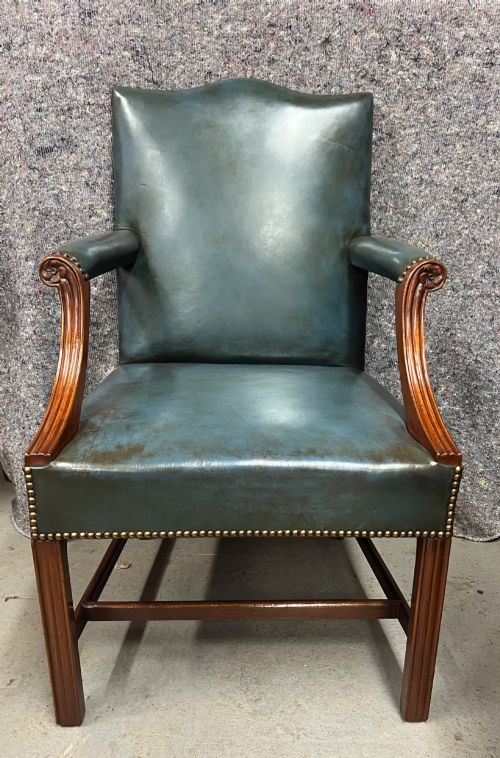
Georgian pieces often display refined proportions, lighter mahogany frames, and restrained classical carving such as Chippendale-style details. They date from the eighteenth and early nineteenth centuries.
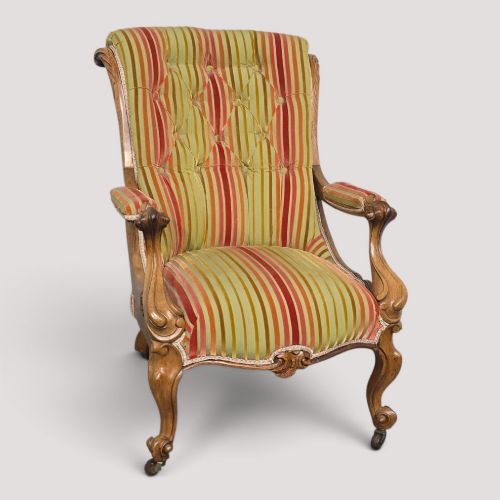
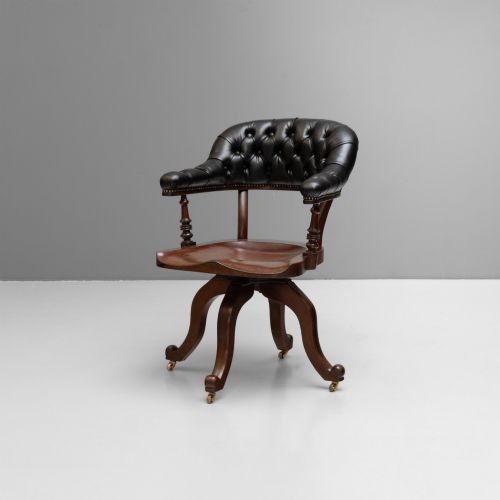
Victorian iterations tend to be heavier in scale, employing darker finishes, deeper button-upholstered leather, and more elaborate moulded woodwork.
Are desk chairs and reading chairs the same?
Desk chairs are typically engineered for seated work at a writing table, often featuring swivel mechanisms, adjustable heights or sturdy wooden frames. Reading chairs focus on comfort during extended periods of holding a book.
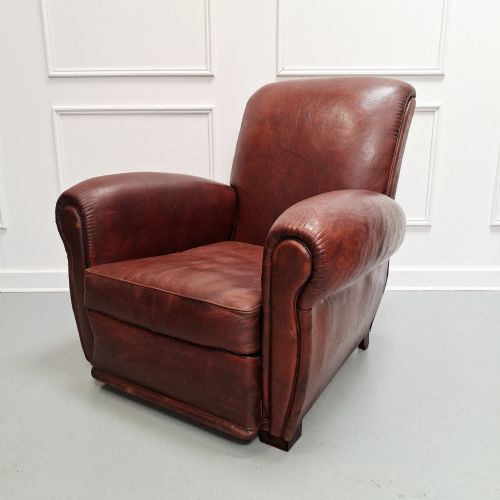
Reading chairs frequently feature wider proportions and upholstered armrests, whereas desk chairs lean towards mobility and compact forms.
How should I care for leather upholstery?
Historic leather requires gentle maintenance to prevent the hide from drying out or cracking over decades of use. Regular dusting and occasional application of appropriate conservation leather dressings help preserve the surface.
Keep these seats away from direct sunlight and strong heat sources to maintain the natural moisture and tone of the hide.