


Caned Barrel Armchair
A caned barrel armchair wraps the sitter in woven cane panels and a rounded back, offering both light grace and sturdy support.
Caned Barrel Armchair
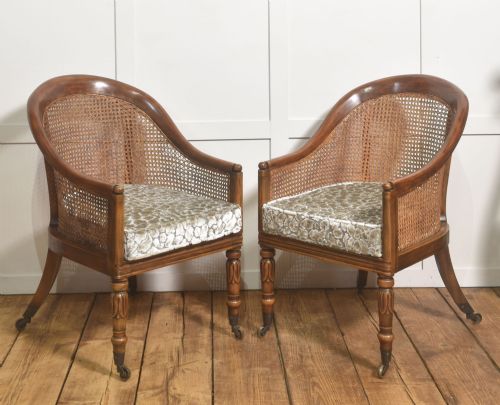
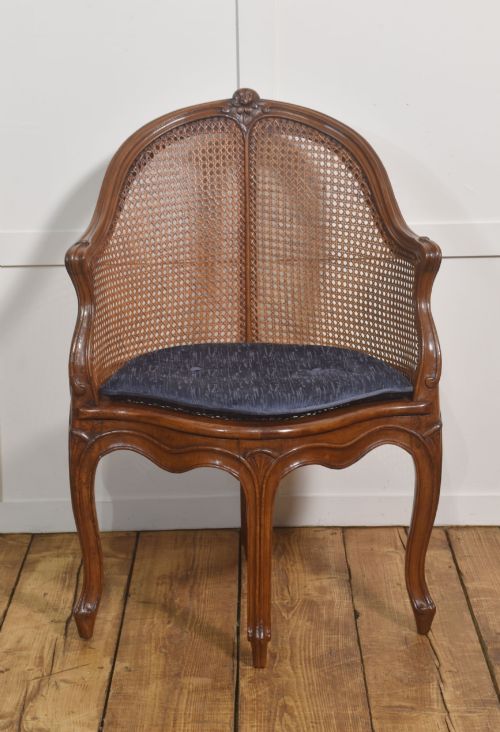
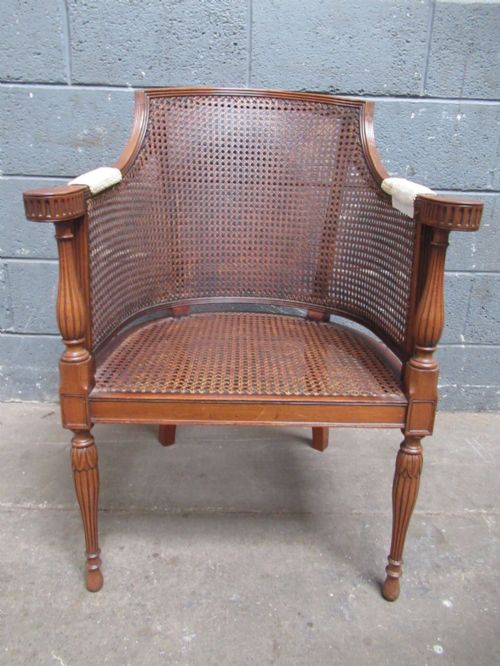
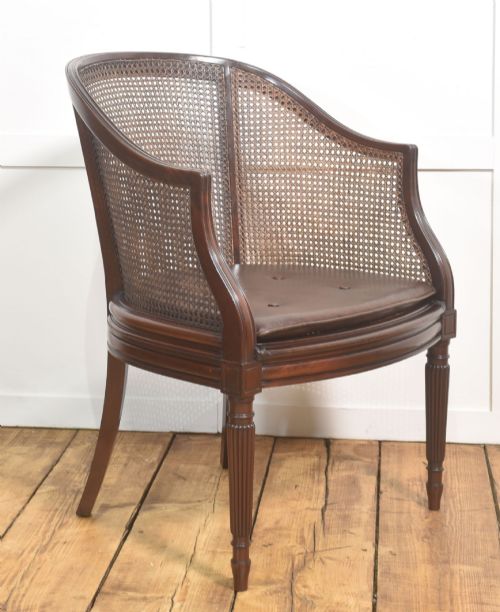
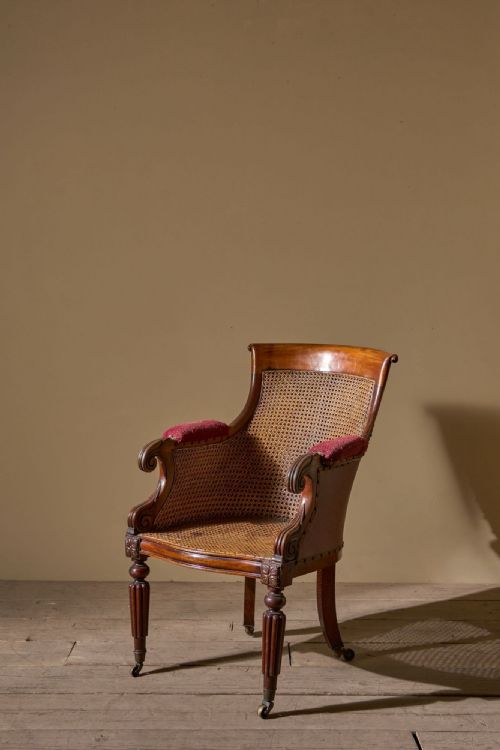
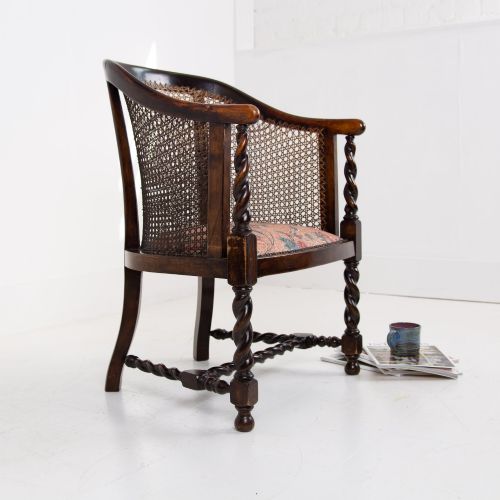
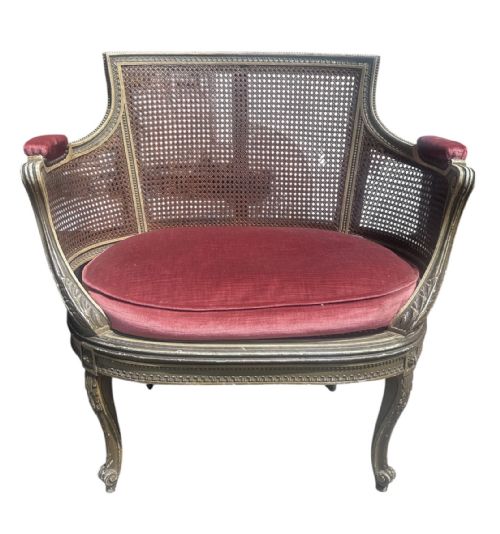
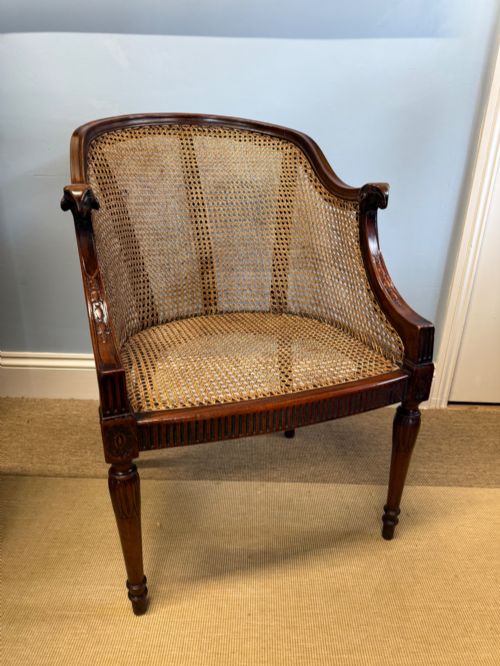
A caned barrel armchair takes the curving enclosure of the traditional tub form and lines the back and sides with woven plant fibres. This page gathers examples stretching from the Regency period through Victorian and Edwardian decades into the 1930s, alongside French Louis XV style interpretations.
The profile is defined by a continuous semi-circular rail that flows directly into low arms, creating a protective enclosure for the sitter. Most pieces encountered here employ mahogany or walnut for the primary frame, though teak and simulated rosewood also appear.
Makers adapted this rounded silhouette across formal library armchairs, country house seating, and parlour musician's chairs. The combination of solid timber framing and open woven panels keeps the substantial form from feeling heavy in a room.
Construction and materials
Makers fashioned the curved structural frames from dense hardwoods such as mahogany, walnut, and teak, bending or carving the timber to form the characteristic rounded tub profile. Simulated rosewood finishes also turn up on Regency examples, achieving a decorative grain effect on the primary woodwork.
The defining feature relies on the skilled hand-weaving of natural cane and rattan panels through pre-drilled holes along the inner frame. Drop-in upholstered seat pads or fixed cane seats complete the construction, often paired with loose cushions in fabric, velvet, or leather.
Musicians once requested specialised parlour chairs with low sides to accommodate their instruments without catching their elbows.
Judging quality
Quality rests in the tightness and regularity of the cane weave, where even tension across the curved panels separates superior craftsmanship from hasty repair work. Finer examples display crisp carving along the wooden frame and robust joinery that maintains rigidity along the curved back rail.
The harmony between the timber species and the scale of the frame dictates the overall presence of the piece. Subtly figured walnut and rich mahogany elevate the visual weight of the chair, whereas clumsily proportioned frames lack the intended grace of the tub silhouette.
The Caned Barrel Armchair Glossary
- Caning
- The craft of weaving rattan or plant strips through frame holes to create porous, supportive panels. This technique lightens the visual and physical weight of large seat backs.
- Bergère
- A French-style upholstered armchair with enclosed sides, where the space between the arm and seat is filled with cane or upholstery. These pieces often feature exposed wooden frames in walnut or mahogany.
- Tub chair
- An armchair featuring a continuous curved back and arms forming a single semi-circular enclosure. The design derives its name from its deep, rounded profile.
- Simulated rosewood
- A decorative paint technique applied to common timber to mimic the dark grain and reddish hue of genuine rosewood. This method was favoured during the Regency period for fashionable library seating.
Caned Barrel Armchair: Frequently Asked Questions
How do I clean caned panels?
Dust the woven cane regularly with a soft brush to prevent grit from lodging in the strands. Dampen the material occasionally with a sponge to maintain moisture and prevent the natural fibres from becoming brittle.
Avoid soaking the wood or leaving excess water on the woven surface during cleaning. A gentle wipe is sufficient to keep the rattan flexible over decades of daily use.
Where should I place this chair?
A caned barrel armchair suits reading corners, libraries, and studies where its rounded back offers comfortable support. The open weave lets light pass through, making it ideal for smaller spaces where solid upholstery might appear too heavy.
Keep the chair away from direct heat sources and strong sunlight to protect both the wooden frame and the natural cane from drying out.
Are these seats comfortable?
The curved tub shape supports the back and arms naturally, creating a cosy sitting position. Many examples include fitted seat cushions upholstered in fabric, velvet, or leather for added padding.
Original cane seats offer resilient support, though modern replacement pads are frequently added for extra comfort during long periods of reading.
How do I identify a Regency piece?
Regency examples display classical restraint in their carved details and often utilise unusual finishes such as simulated rosewood. The proportions tend to be rigorous, reflecting the neoclassical taste of the early nineteenth century.
Construction marks and timber choice help distinguish these earlier library armchairs from later Edwardian or 1930s revivals.