



Bergere Accent Chairs
Bergere accent chairs combine upholstered comfort with traditional woven cane panels to create inviting seats for any room.
Bergere Accent Chairs
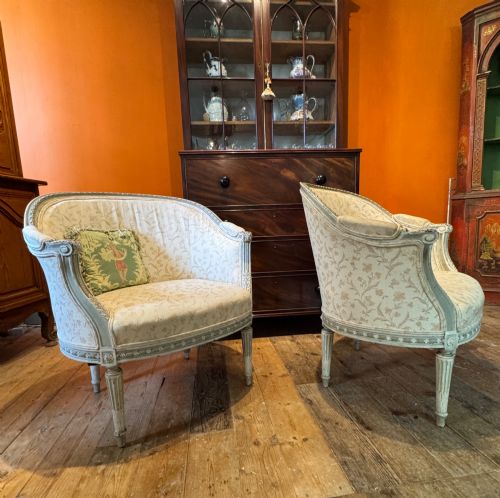
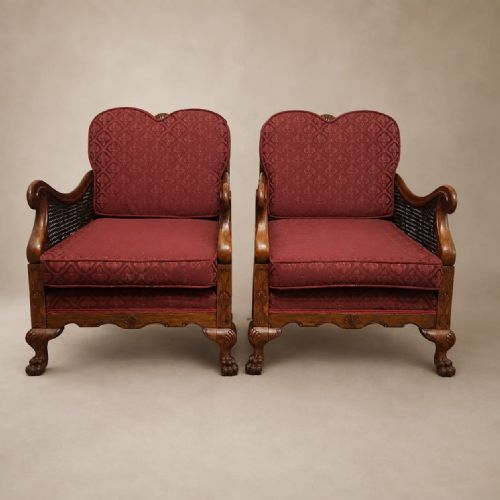
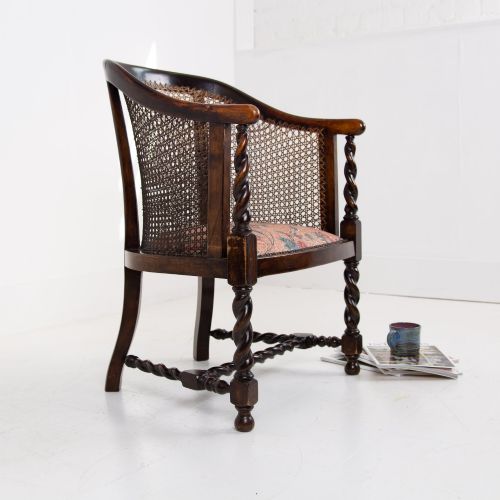
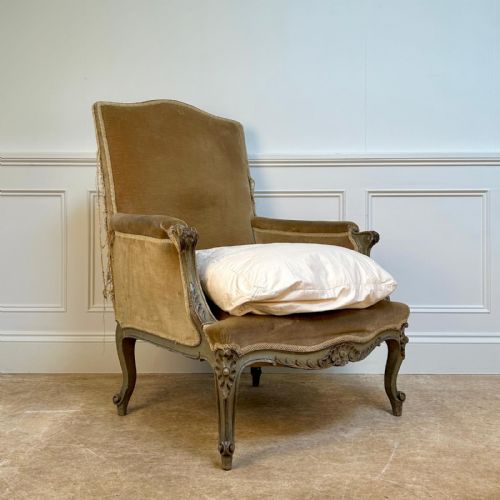
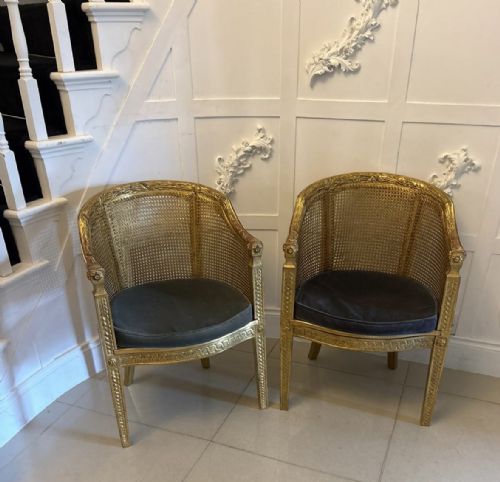
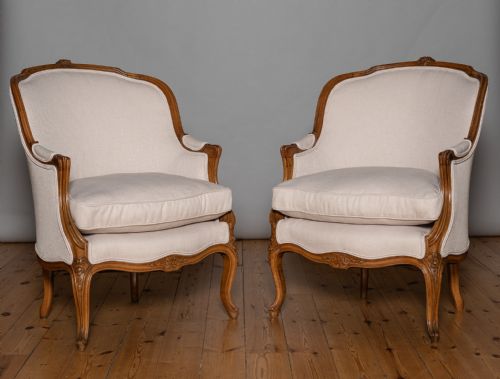
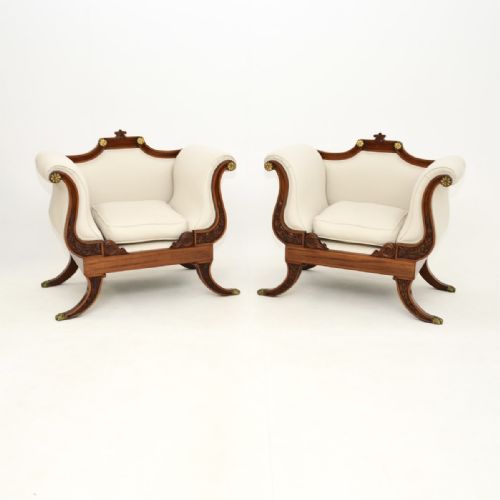
Bergere accent chairs are traditional armchairs featuring enclosed sides and woven cane panels, appearing primarily in French styles such as Louis XV and Louis XVI alongside Regency and Edwardian interpretations.
The selection here encompasses nineteenth century examples through to pieces from the early twentieth century, offering options built from mahogany, walnut, oak, and giltwood.
Buyers will encounter single armchairs, matched pairs, and larger sets originating from French, Swedish, and English traditions, often retaining original paint, carved details, or period upholstery.
Materials and construction methods
Cabinet makers constructed the solid frames of these chairs using timbers such as mahogany, walnut, oak, and beech, frequently embellishing them with elaborate hand carvings or giltwood finishes.
The distinctive enclosed sides and backs utilise woven cane panels, requiring skilled handwork to thread natural cane through drilled frame margins.
Seating provisions often combine sprung or webbed foundations with loose cushions upholstered in fabric, velvet, silk, or leather.
Distinctions in craftsmanship and condition
Quality rests heavily on the integrity of the wooden frame, where crispness of hand carving and stability of joints distinguish superior seating from simpler production.
The condition and tightness of the woven cane panels significantly influence desirability, with intact original weaving holding particular appeal alongside properly re-caned examples.
Surfaces demonstrate varying degrees of preservation, ranging from patinated original paint and gilding to polished timber finishes that reflect the piece's specific period of origin.
The Bergere Accent Chairs Glossary
- Bergere
- An enclosed upholstered armchair featuring wooden frames and cane or upholstered sides. This form originated in France during the eighteenth century.
- Giltwood
- Timber treated with gold leaf or gilt finish. It appears frequently on decorative nineteenth century salon chairs.
- Caning
- A weaving technique utilising split rattan or cane to create supportive panels for chair backs and sides. It provides both structural rigidity and aesthetic lightness.
- Fauteuil
- An open-armed French upholstered armchair with exposed wooden framing. Unlike the bergere, its sides remain open.
- Louis XVI Style
- A neoclassical aesthetic characterised by straight tapered legs, geometric symmetry, and carved classical motifs. It frequently influences formal French seating.
Bergere Accent Chairs: Frequently Asked Questions
Where should I place a bergere chair?
These armchairs suit sitting rooms, libraries, and bedrooms where their decorative frames and comfortable proportions can serve as focal points. Pair them with complementary side tables to create dedicated reading areas.
Because many examples feature finished backs and detailed woodwork, they sit well away from walls where their profiles remain visible from all angles.
How do I care for cane panels?
Dust cane panels regularly using a soft brush and keep them away from direct heat sources that can dry out the natural material. Applying a damp cloth occasionally helps maintain the flexibility of the cane.
Avoid placing excessive localized weight on the woven surfaces to prevent the strands from snapping or sagging over time.
Are these chairs comfortable for daily use?
Most bergere chairs provide supportive seating through their deep proportions and cushioned bases. Many examples accommodate loose down or foam pads that can be adjusted for personal comfort.
Earlier models often feature firm sprung foundations designed for upright sitting rather than deep lounging.
How do I identify the period of a chair?
Dating relies on examining the timber species, joinery methods, and stylistic cues such as the carved details found on the legs and arm supports. French revival pieces often emulate earlier monarchical styles while retaining manufacturing techniques characteristic of their actual production era.
Comparing the turned elements, stretcher configurations, and hardware against documented examples helps narrow down the decade of manufacture.