


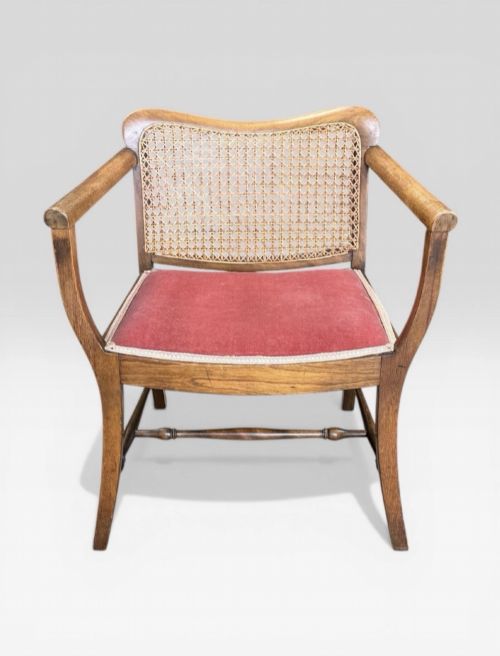


Edwardian Bergere Armchair
An edwardian bergere armchair offers deep-seated comfort through woven cane panels and a sturdy wooden frame.
Edwardian Bergere Armchair
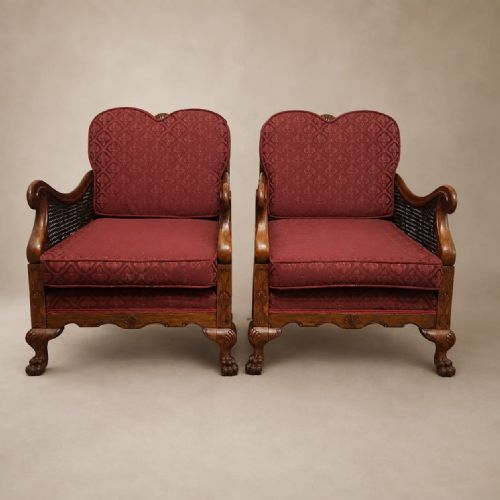
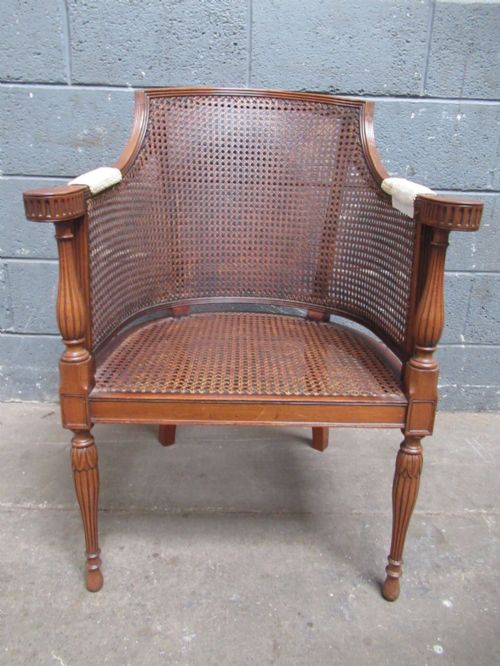
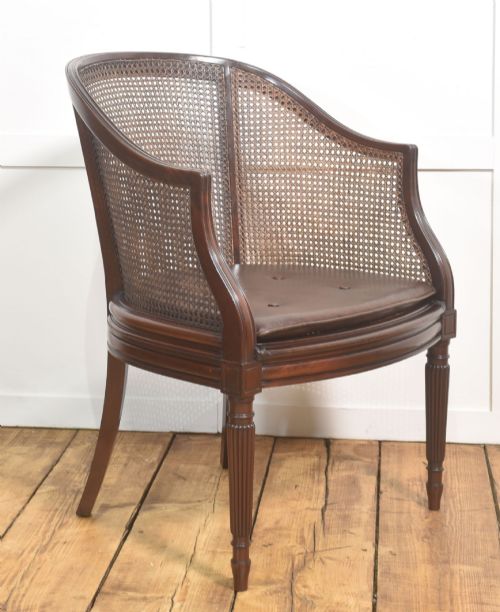
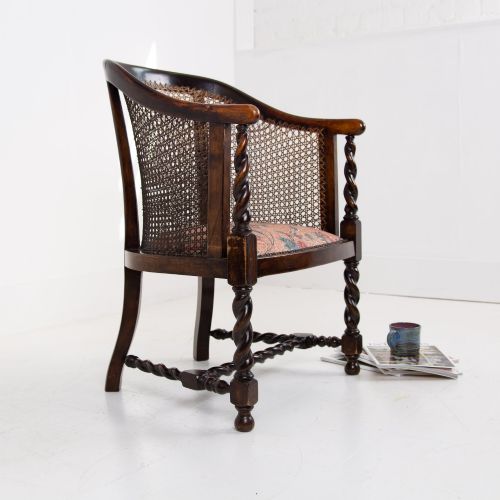
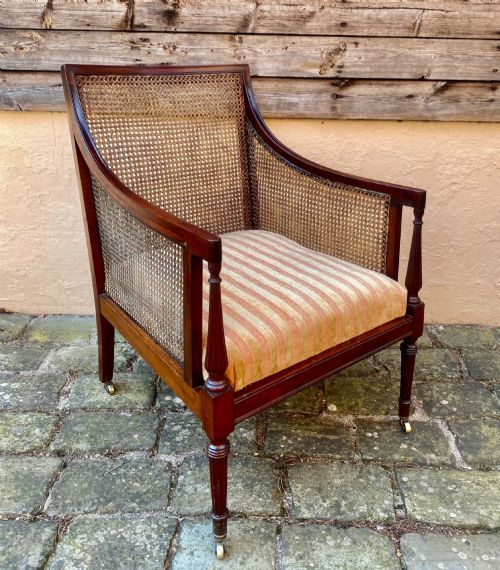
The edwardian bergere armchair sits at the intersection of comfort and formal reception seating, frequently encountered in library and lounge configurations. These chairs bring together traditional wooden frames and woven cane sides or backs.
Evidence shows examples spanning the nineteenth century through the 1930s, with a strong representation of Edwardian production alongside Victorian, Regency, and later revival pieces. Buyers meet diverse forms here, including tub chairs, library armchairs, and fireside seating.
Makers utilised various woods such as mahogany, oak, walnut, and satinwood to build these seats, often pairing the natural frames with upholstered cushions in leather or fabric.
Materials and Construction
Carpenters constructed the structural frames from solid hardwoods like mahogany, oak, and walnut, frequently incorporating inlay, satinwood banding, or painted decoration. These timbers provided the load-bearing strength required for deeply upholstered or caned seating.
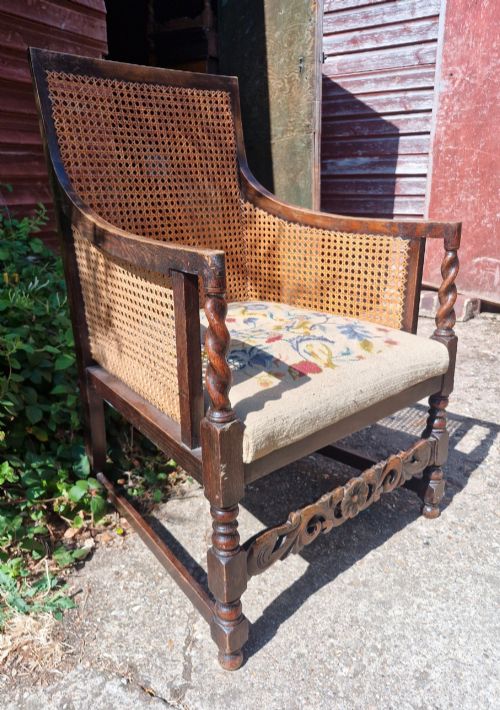
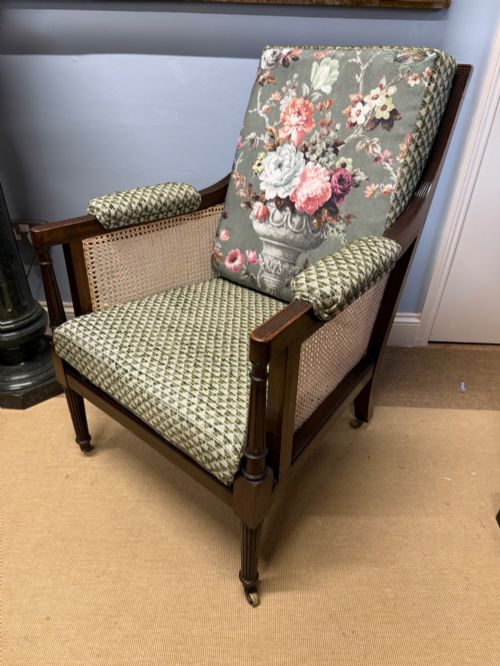
The characteristic caning involves split cane or double-caned panels woven tightly into the frame channels to create a resilient, flexible support. Artisans complemented this woven work with brass hardware, drop-in cushions, and upholstery in leather, velvet, or fabric.
Some library armchairs arrived with built-in swivel actions or folding steamer mechanisms for maximum nineteenth-century relaxation.
Craftsmanship and Proportion
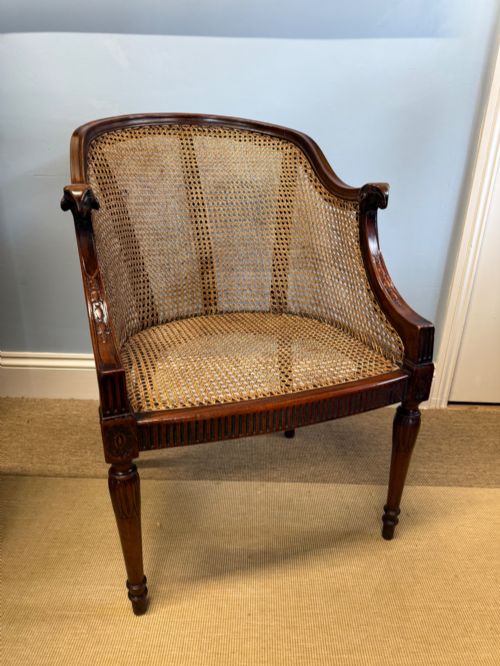
Quality rests upon the crispness of the timber carving, the tightness and regularity of the cane weaving, and the structural integrity of the frame joints. Finer examples display careful timber selection, such as figured mahogany or matched walnut, alongside refined inlay work.
Proportion and scale dictate the visual weight of the chair, with superior pieces maintaining balanced arm terminals, harmonious rake in the back legs, and integrated stylistic details like barley twist turnings or carved angel motifs.
James Shoolbred
The Edwardian Bergere Armchair Glossary
- Bergere
- An enclosed upholstered armchair originating in France, typically featuring wooden frames and cane side panels. The style gained immense popularity during the Edwardian period in English country houses.
- Caning
- A method of weaving peeled rattan cane strips into a patterned mesh. This technique forms the supportive back and side inserts of traditional seating.
- Inlay
- A decorative technique where contrasting pieces of wood or shell are inserted into recesses within the primary timber surface. It frequently defines Edwardian satinwood and mahogany furniture.
- Tub Chair
- An armchair characterised by a continuous curved back and armrest rail forming a rounded enclosure. These pieces offer compact dimensions and wrap-around support.
Edwardian Bergere Armchair: Frequently Asked Questions
How do I care for cane panels?
Cane requires moderate humidity to prevent the natural rattan fibres from drying out and snapping under pressure.
Dust the woven surfaces gently with a soft brush and avoid placing the chair near direct heat sources.
Were these chairs used in libraries?
Library armchairs provided sturdy reading seats designed for long hours of study in formal rooms.
Their robust mahogany or oak frames often included wide armrests and supportive high backs.
How to spot a revival style?
Revival pieces borrow decorative motifs from earlier eras, such as Louis XV curves or Regency proportions.
Examination of the timber ageing, construction joints, and cane weaving technique helps determine the actual manufacturing period.