


Walnut Barley Twist Table
These walnut barley twist tables bring rich timber tones and spiralling supports to a room, offering both practical surface space and traditional character.
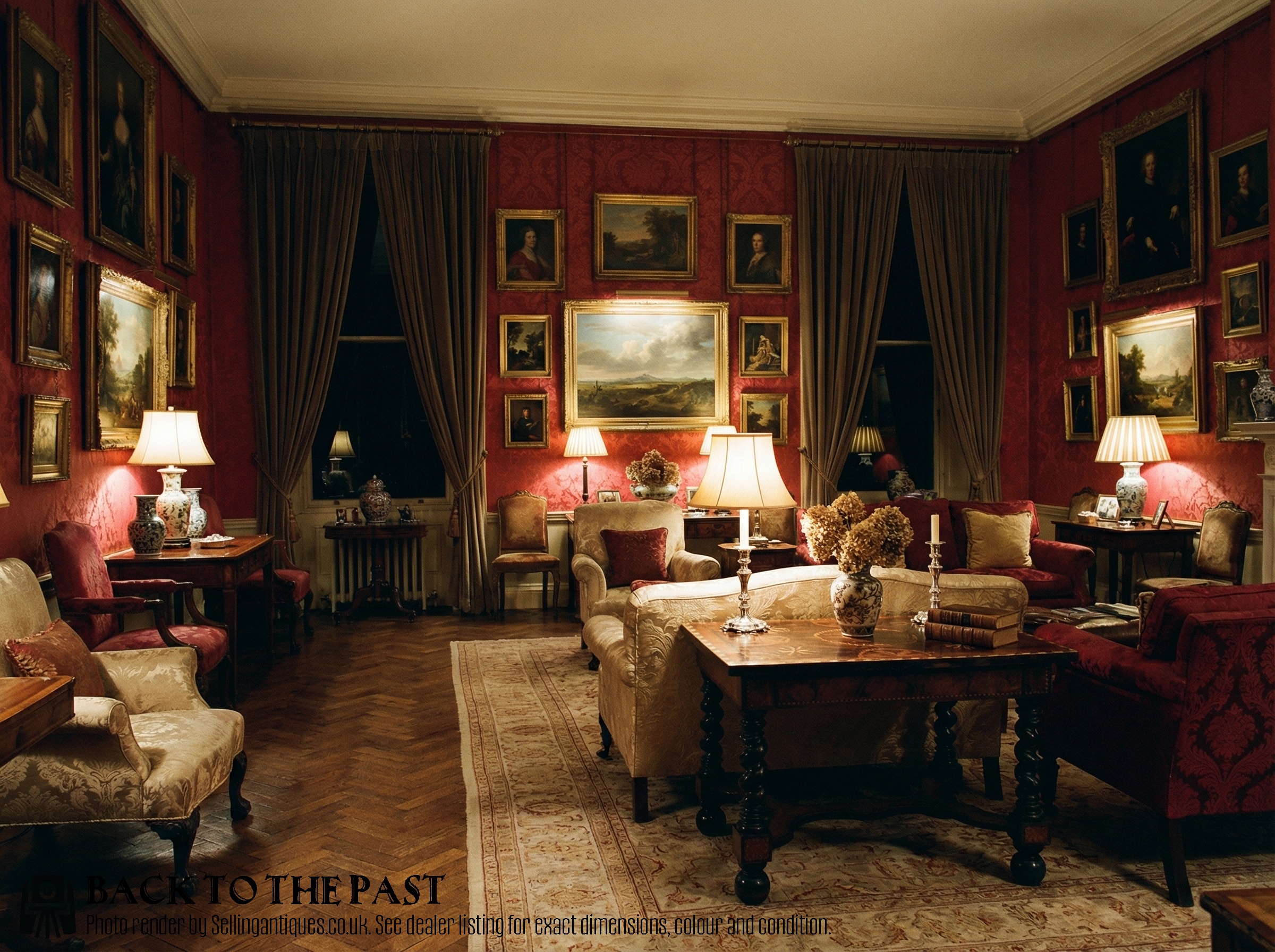
How they were made
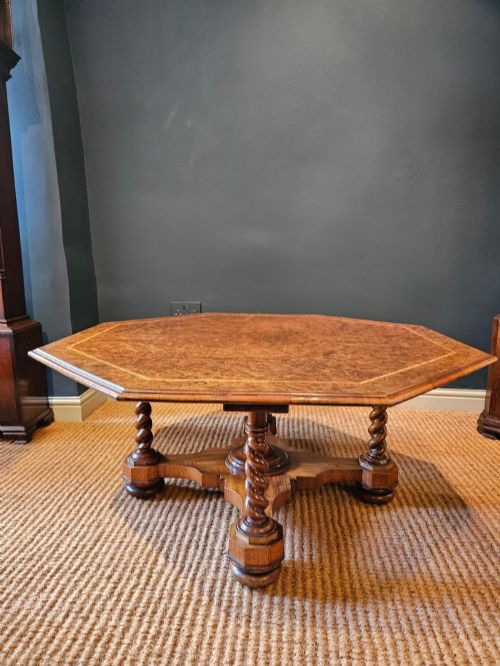
Cabinet makers utilised solid walnut and decorative veneers such as burr walnut, applying wood inlay, boxwood, and floral marquetry to enhance the visual depth of the tops. Secondary timbers like oak often provided structural stability for drawers and framing.
The characteristic twist legs were shaped by hand or lathe, turning square or cylindrical timber into spiralling columns that required precise carpentry to maintain load-bearing strength. Brass fittings, such as castors, hinges, and drawer handles, finished many of the operational tables.
What varies in quality
Quality rests in the crispness of the twist turning and the selection of the timber veneer, where deeply figured burr walnut commands greater visual presence than plain grain. The integration of secondary elements, such as inlaid chess boards or parquetry patterns, distinguishes finer workshop production from standard utility items.
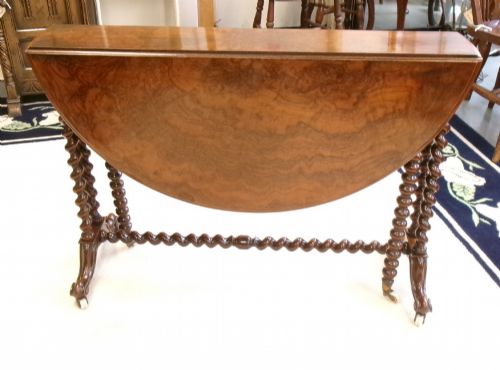
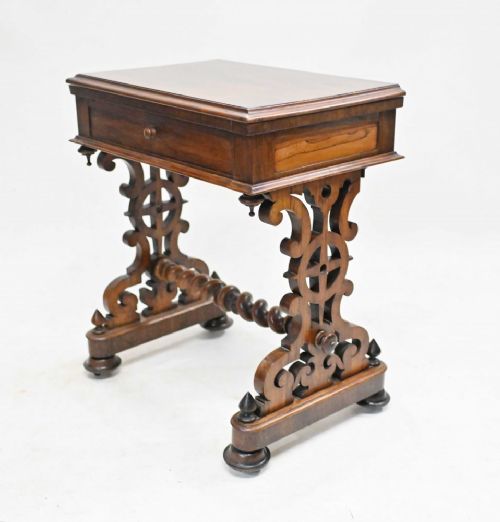
Structural integrity also separates examples, seen in the stability of drop-leaf mechanisms, the smooth operation of drawers, and the preservation of original polish and brass components. Tables retaining their authentic patination and proportion reflect superior original craftsmanship.
Walnut Barley Twist Table Retail Price Guide 2026
Typical asking prices for walnut barley twist table among the pieces listed under this phrase on Sellingantiques today, from the lower quarter to the upper quarter. They describe what is for sale here now, not the wider market.
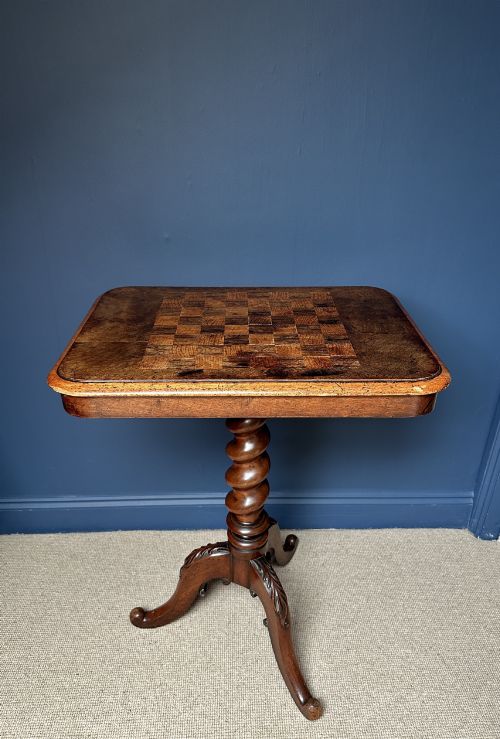
Some tables hide entire chess boards within their tops, ready for an impromptu match by the fireplace.
Howard & Sons·James Winter·Holland & Son
The Walnut Barley Twist Table Glossary
- Barley twist
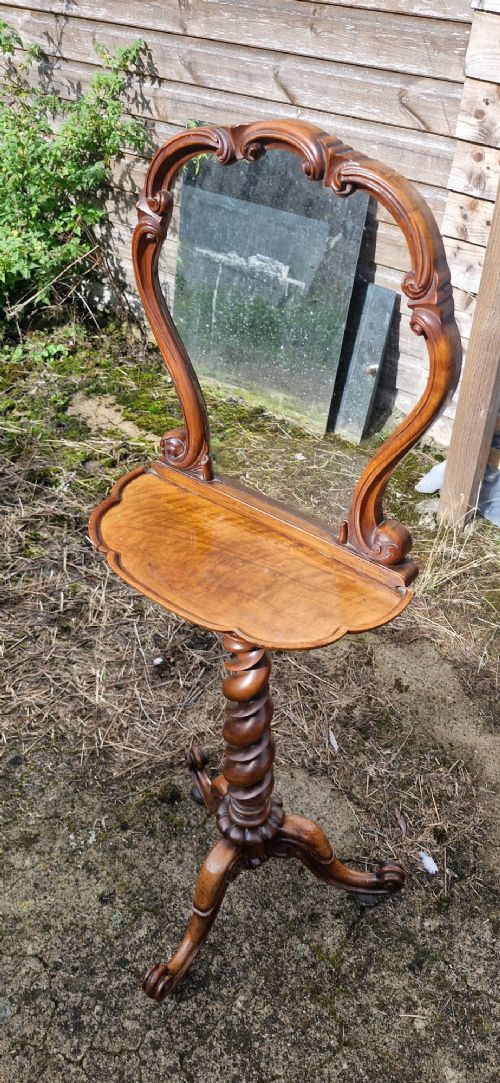
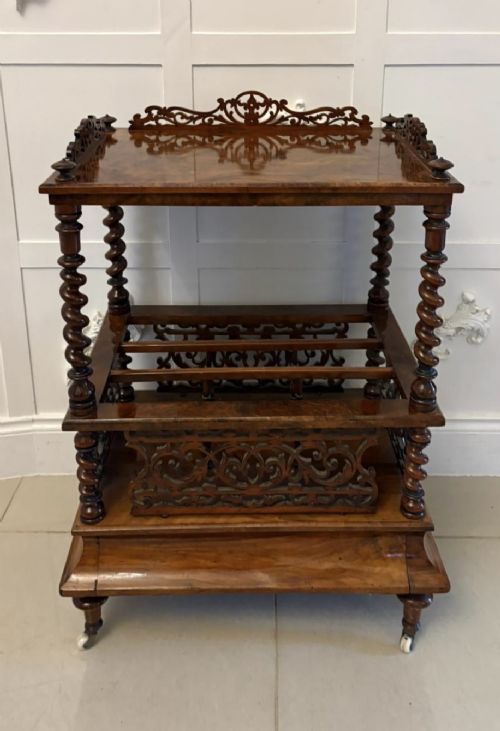
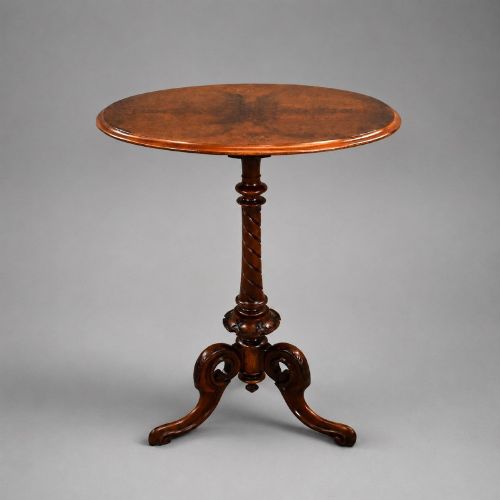
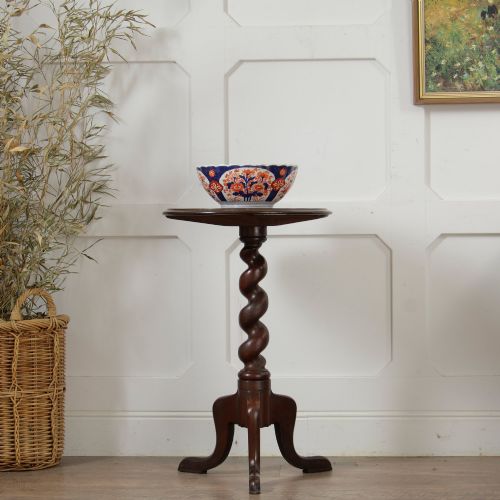
- A turned timber support resembling a spiralling rope or column. This decorative leg style appears widely across seventeenth-century and Victorian furniture.
- Burr walnut
- A figured wood veneer taken from the warted growths of a walnut tree. It produces complex, swirling grain patterns highly valued for table tops.
- Sutherland table
- A narrow drop-leaf table with hinged flaps supported by pivoting gate legs. It folds down compactly when not in use.
- Marquetry
- Decorative wood inlay forming pictorial or geometric patterns on a surface. Craftsmen used contrasting timbers and boxwood to achieve detailed motifs.
- Occasional table
- A small, movable table intended for versatile use around a room. Examples include wine tables, lamp stands, and small side pieces.
Walnut Barley Twist Table: Frequently Asked Questions
How do I date a walnut barley twist table?
Dating relies on examining construction methods, timber choice, and secondary woods like oak or mahogany. Victorian examples often feature heavier burr walnut veneers and brass castors, whereas seventeenth-century versions display simpler gateleg frames and pegged joints.
Hardware styles, drawer linings, and the sharpness of the twist turning provide further clues to the decade of manufacture. Comparing the piece against documented examples helps narrow down the period.
What rooms suit a barley twist table?
These tables adapt easily to various living spaces due to their range of sizes, from compact lamp and wine tables to wider centre and side pieces. A small occasional table fits well beside a sofa or in a hallway as a lamp stand.
Larger octagonal or centre tables anchor a main living room, offering a decorative surface for books and objects. Their warm timber tones complement both traditional interiors and modern mixed-period rooms.
Were these tables used for games?
Many nineteenth-century examples incorporated integrated gaming boards, featuring inlaid chess, backgammon, or card playing surfaces. These convertible designs allowed families to fold out or reverse the top for evening entertainment.
Drawers beneath the surface typically stored playing pieces, dice, and cards. Such dual-purpose items combined practical furniture with recreational utility for the parlour.
How should I care for walnut veneer?
Walnut veneer requires protection from direct sunlight and excessive heat fluctuations to prevent drying and cracking. Regular dusting with a soft, dry cloth preserves the polished finish.
Occasional applications of appropriate furniture wax nourish the timber and maintain its natural lustre. Avoid placing damp items directly on the surface to protect the historic polish.