

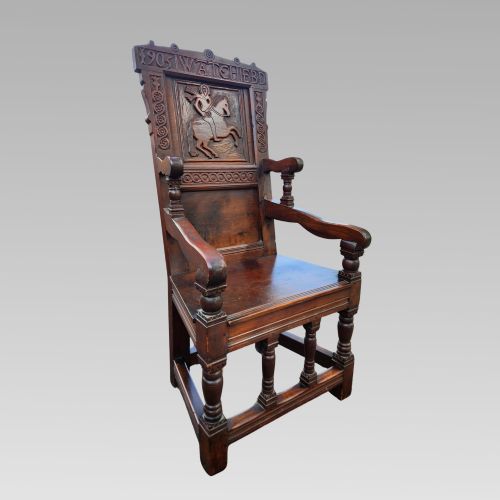
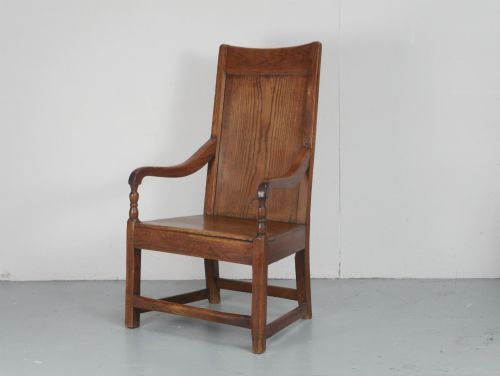
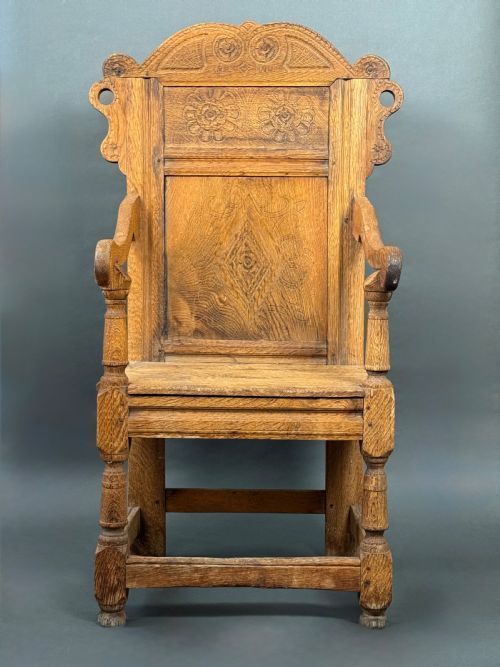
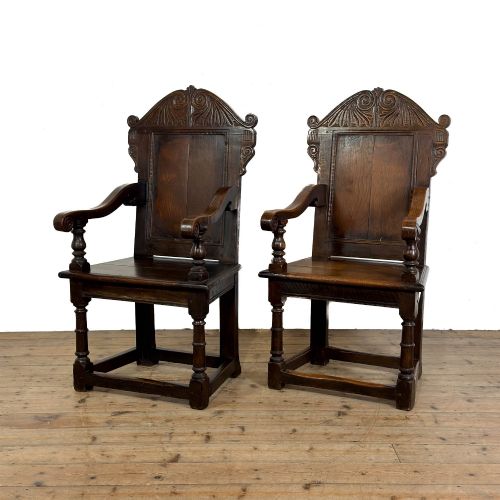


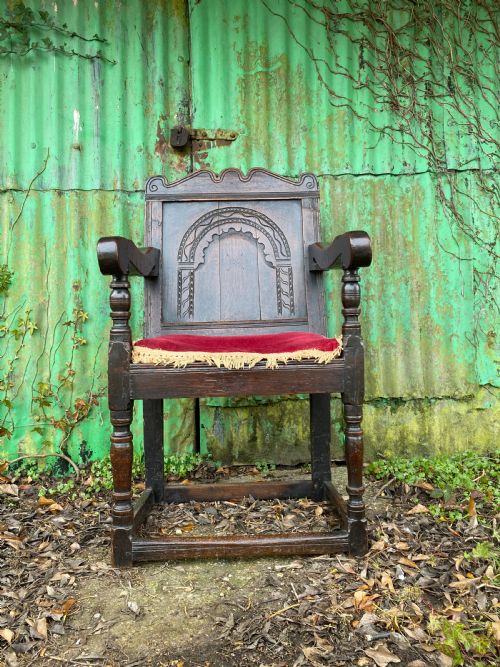


Wainscot Style Chair
Wainscot style chair pieces are solid timber seats built with panelled backs, offering sturdy structure and historical presence.
Wainscot Style Chair
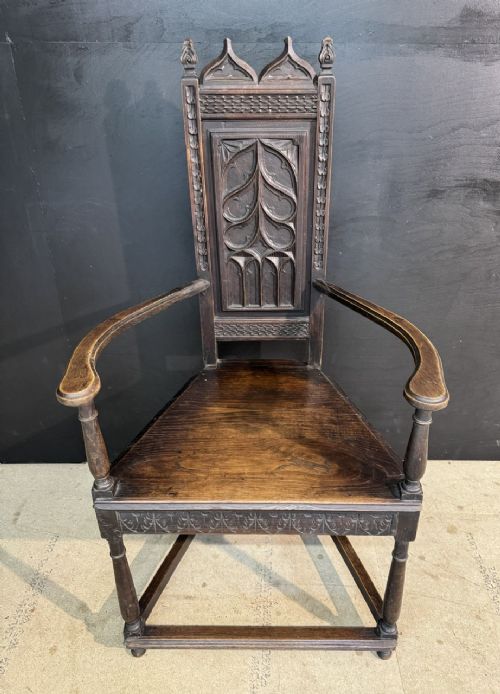
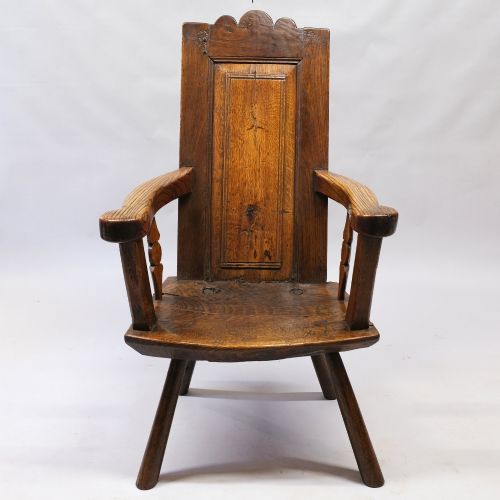
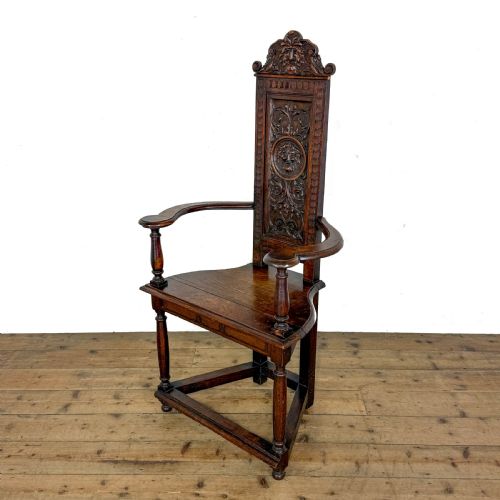
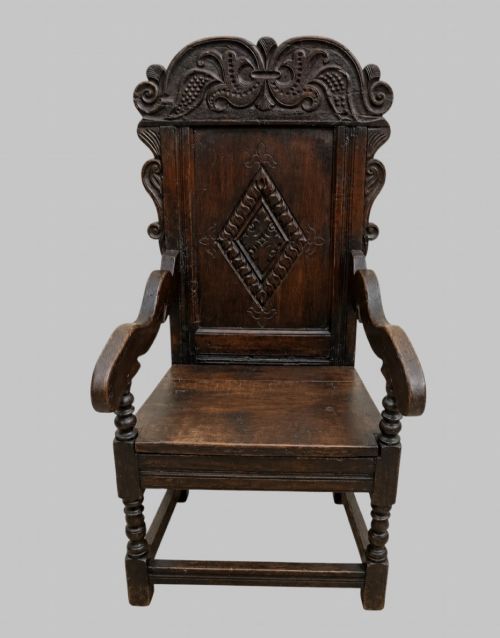
A wainscot style chair is a substantial timber seat featuring a flat panelled back, solid wooden arms, and a box or framed underframe. Most examples encountered here date from the seventeenth, eighteenth, and nineteenth centuries, alongside revival interpretations from the nineteen-thirties.
The form originates from early domestic seating when wood was abundant and panelling kept draughts at bay. Armchairs predominate, though variations include side chairs, hall chairs, small proportions, and occasional oak settles or benches.
Stylistic influences range across Jacobean, Tudor, Gothic revival, and Georgian vernacular traditions. Many nineteenth-century examples deliberately adopt a seventeenth-century manner, utilising carved strapwork and geometric panelling.
Materials and Construction Methods
Oak is the primary material across the centuries, occasionally paired with elm for seats or secondary timbers. Joinery relies on mortise and tenon joints secured with wooden pegs, creating a rigid frame without metal fastenings.
Surface decoration involves hand carving with gouges and chisels, producing geometric strapwork, scrolling foliage, and arcaded panel backs. Some variations incorporate leather upholstery secured with metal studs or loose velvet cushions.
Wainscot Style Chair Retail Price Guide 2026
Typical asking prices for wainscot style chair among the pieces listed under this phrase on Sellingantiques today, from the lower quarter to the upper quarter. They describe what is for sale here now, not the wider market.
Some miniature examples were built for children, proving that even toddlers were expected to sit with proper posture.
Judging Quality and Age in Wainscot Seating
Quality rests on the crispness of the hand carving and the integrity of the timber framing. Early seventeenth-century originals display deep patination and honest wear to the footings, whereas revival pieces from the nineteenth and twentieth centuries show different tool marks and fresher timber surfaces.
Proportion and scale distinguish finer examples from bulkier copies. A well-balanced small size or child's armchair demonstrates the same structural joinery as a full-scale dining chair but requires greater precision in the panel reduction.
The Wainscot Style Chair Glossary
- Wainscot chair
- A solid wooden chair with a panelled back, derived from wall panelling techniques. These pieces provide sturdy seating with historical architectural lines.
- Panel back
- A flat wooden back constructed from a frame enclosing one or more thin panels. This method accommodated timber shrinkage and allowed for carved decoration.
- Backstool
- An early term for an upholstered or panelled chair without arms. Such pieces functioned as side chairs in formal rooms.
- Jacobean revival
- A nineteenth or twentieth-century design movement copying seventeenth-century decorative motifs. These items replicate earlier styles using contemporary workshop methods.
- Strapwork
- Carved flat bands interlaced in geometric patterns found on chair backs and rails. This ornament defines much seventeenth-century English woodwork.
Wainscot Style Chair: Frequently Asked Questions
What is a wainscot style chair?
A wainscot style chair is a heavy wooden seat featuring a panelled back and solid arms. The design stems from early domestic joinery.
Most examples seen are constructed from oak, incorporating carved panels and mortise and tenon joinery.
How old are these chairs usually?
Original pieces date back to the seventeenth and eighteenth centuries. Many others are nineteenth-century revivals built in older styles.
Revival pieces from the nineteen-thirties and Edwardian eras also appear alongside genuine early items.
Where were they used?
These seats originated as principal chairs for the head of a household in great halls. Later versions served in parlours, halls, and dining rooms.
Smaller formats and hall chairs were adapted for entryways and secondary chambers.
How do I care for oak wainscot furniture?
Maintain the timber by applying traditional beeswax to nourish the dry wood surface. Avoid placing chairs near direct heat sources.
Protect leather panels and velvet cushions from prolonged sunlight to prevent fading and cracking.