


Mid 18th Century Armchair
A mid 18th century armchair brings remarkable Georgian joinery and carved proportion to a room, offering serious collectors a tangible link to the domestic comfort of the period.
Mid 18th Century Armchair
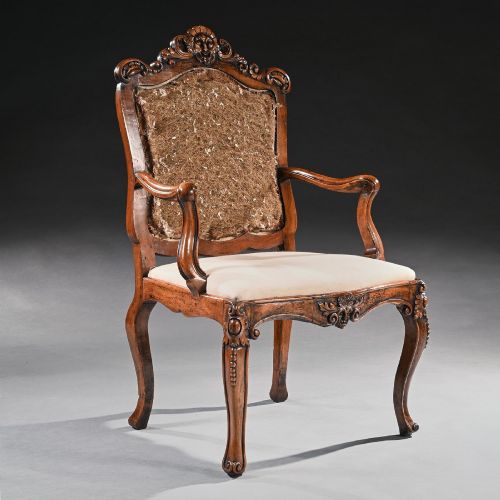
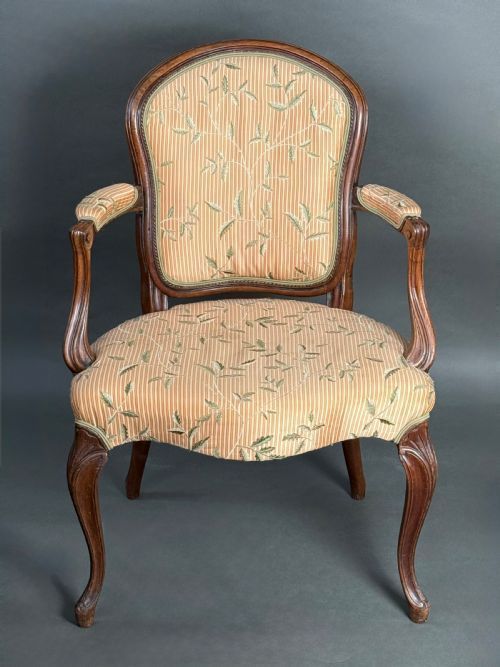
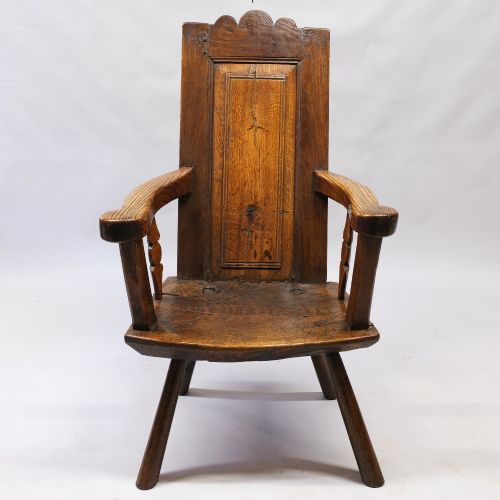
A mid 18th century armchair represents a diverse group of seating furniture produced during the Georgian era, encompassing formal open armchairs, library chairs, and wing armchairs alongside vernacular Windsor and panel backed variants. These forms reflect the shifting domestic priorities of the middle decades of the seventeen-hundreds, balancing formal reception room elegance with everyday utility.
Mahogany and walnut dominate the formal metropolitan examples, often displaying the carved flourishes associated with George II aesthetics and Italian or French Rococo influences. Alongside these fine timber frames, regional makers utilised ash, elm, fruitwood, and oak to construct robust vernacular Windsor and corner chair forms.
How they were made
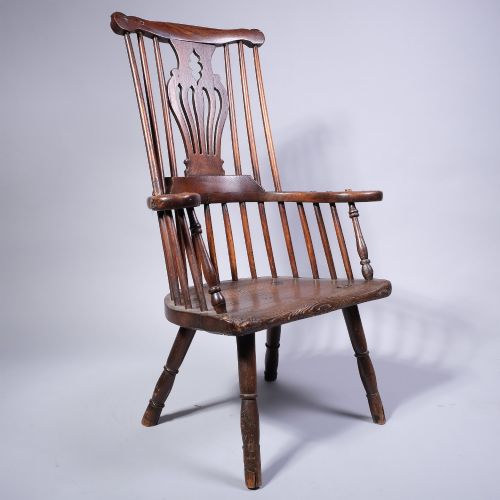
Cabinet makers and vernacular joiners relied heavily on native and imported timbers, pairing dense hardwoods like mahogany and walnut for carved show frames with sturdy ash, elm, and oak for regional comb back and panel backed structures. Construction techniques combined traditional mortise and tenon joinery with steam-bending for comb back Windsor crest rails and intricate hand-carving for Rococo head rails.
Upholstery foundations utilised natural stuffing materials fixed over webbing, later recovered in silk or various traditional fabrics to suit changing interior tastes. Brass studwork frequently secured the borders of upholstered wing and library chairs, adding a refined metallic accent to the timber chassis.
One child's Oxford armchair proves that eighteenth century toddlers sat with just as much dignity as their parents.
What varies in quality
The degree of crispness in hand-carved details separates standard regional production from high-style metropolitan work, particularly on crest rails, arms, and cabriole legs. Flourishes executed with deep, confident tool marks indicate a master workshop hand rather than a routine provincial output.
Originality of timber surfaces and structural integrity heavily influence the standing of any given piece, where untouched patination on elm, ash, or mahogany preserves the historical character. Altered underframes or replacement stretchers alter the balance of an example, shifting its standing among serious collectors.
The Mid 18th Century Armchair Glossary
- Wing armchair
- A high-backed upholstered seat featuring protective side panels designed to shield the sitter from draughts. These grand forms often rest on substantial cabriole legs.
- Comb back Windsor
- A vernacular seating form where vertical spindles extend through the seat to support a raised, comb-like head rail. This regional construction provides notable structural rigidity using native timbers like ash and elm.
- George II
- A stylistic period spanning the mid seventeen-hundreds characterised by robust proportions and heavy carved ornament. Pieces from this era frequently employ dark mahogany and walnut.
- Corner chair
- A square-seated chair designed to fit into room angles, featuring a diagonal seat plan and a continuous curved arm rail supported by turned spindles.
Mid 18th Century Armchair: Frequently Asked Questions
How do I identify a George II armchair?
Look for dense mahogany or walnut framing, substantial proportions, and carved ornamental details characteristic of the mid seventeen-hundreds.
These pieces often display bold cabriole legs terminating in pad or claw and ball feet, reflecting the dominant aesthetic of the era.
What is a comb back Windsor chair?
A comb back Windsor is a regional seating form featuring a central plank seat fitted with spindle supports and a distinct raised head rail.
Craftsmen typically built these robust chairs from native timbers such as ash, elm, and fruitwood without internal upholstery.
Where were corner chairs placed?
Corner chairs were designed to slot neatly into the angles of eighteenth century rooms, providing a compact seating option.
The diagonal orientation of the seat and the continuous curved arm rail made them practical for writing desks and tight spaces.
How do walnut and mahogany pieces differ?
Walnut frames tend to align with earlier George II tastes and frequently exhibit intricate carved details on lighter, figured timber.
Mahogany examples often appear heavier and darker, supporting the robust structural demands of grand library and open armchairs.