
18th Century Open Chair
When you search for an 18th century open chair, you are seeking a seating form that balances substantial timber framing with generous upholstered comfort.
18th Century Open Chair
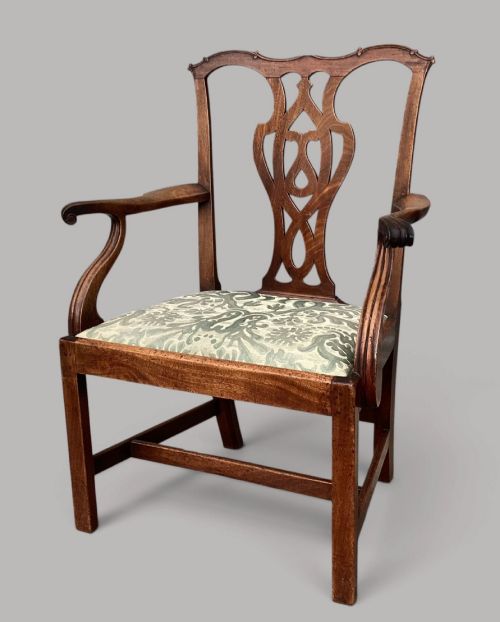
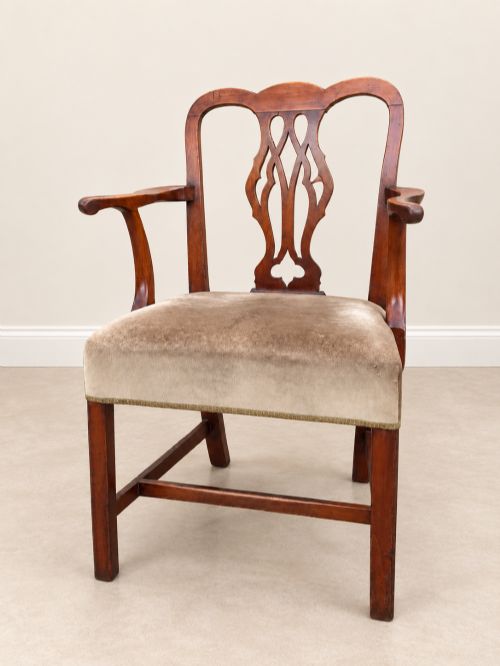
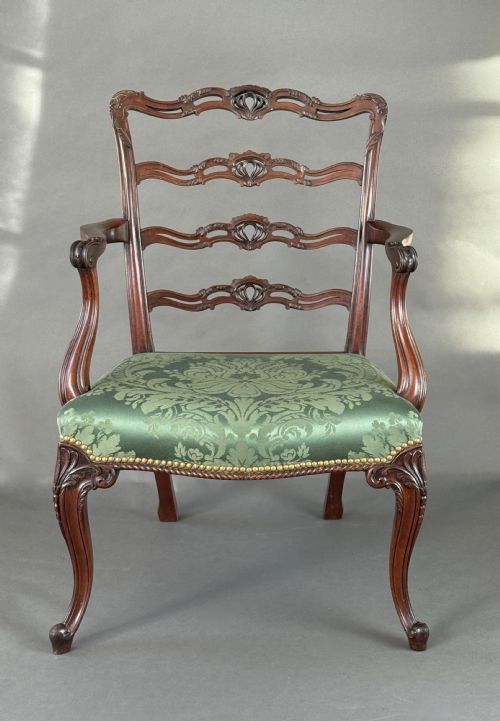
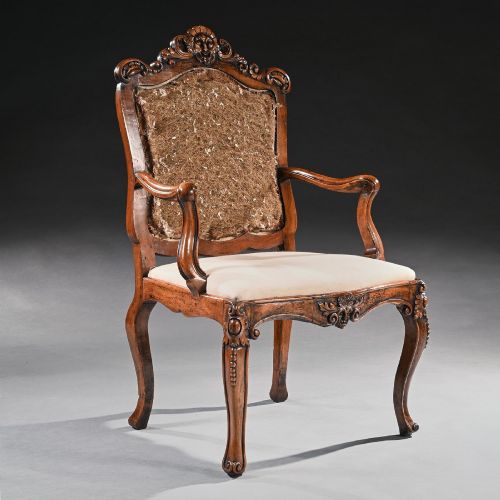
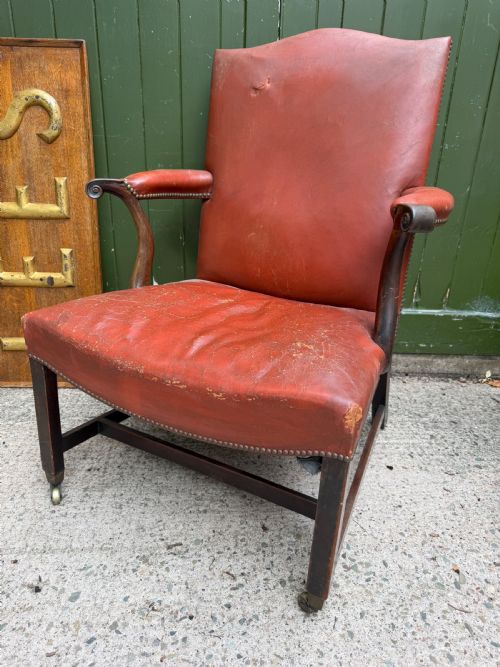
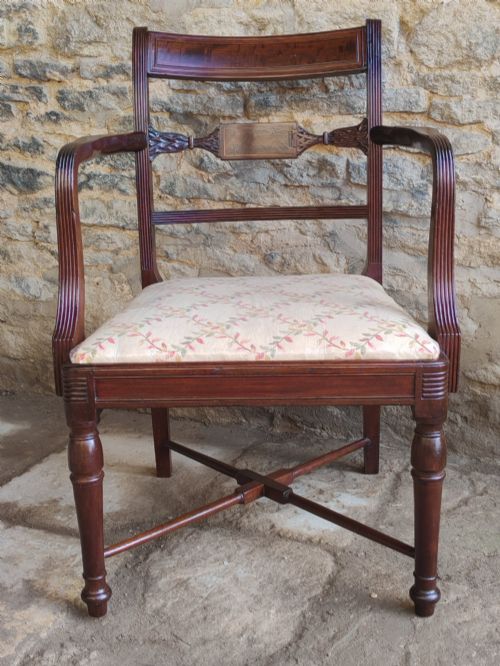
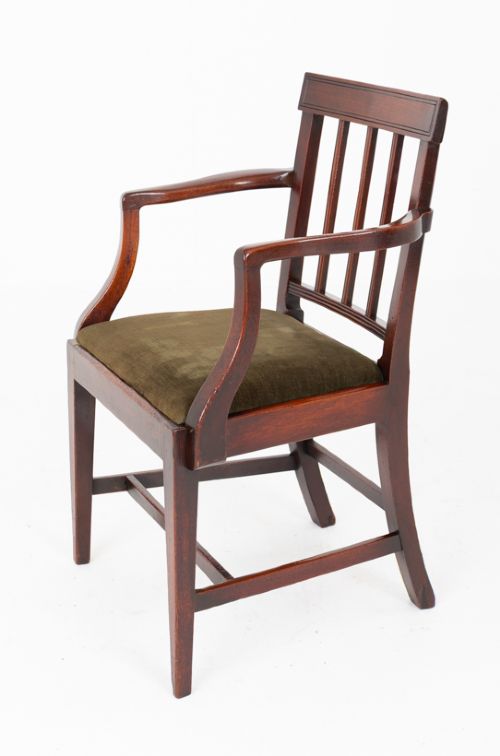
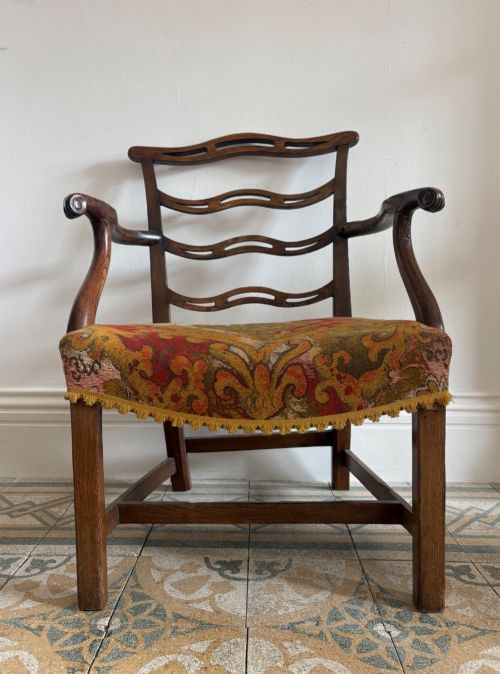
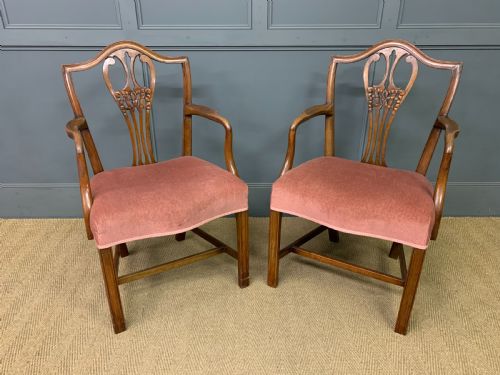
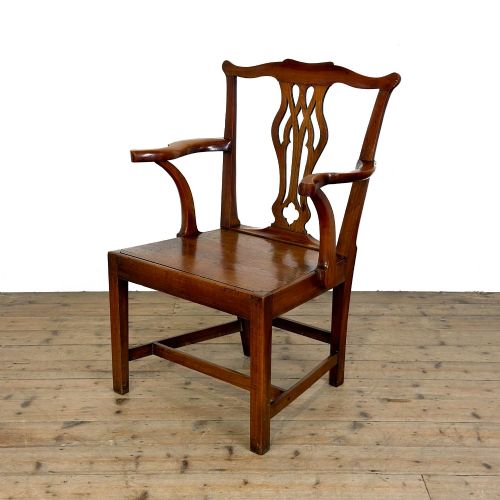
An 18th century open chair encompasses seating forms designed with un-upholstered wooden armrests, leaving the sides open rather than enclosed. On this page, the pieces most frequently seen are mahogany armchairs and library seats originating from Georgian England, alongside continental walnut and giltwood examples.
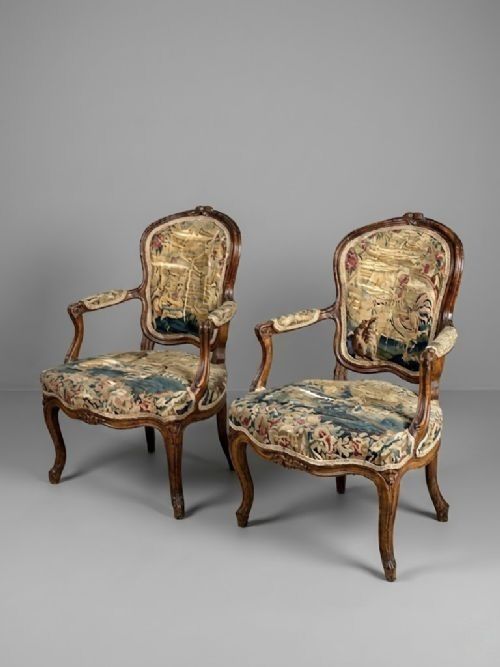
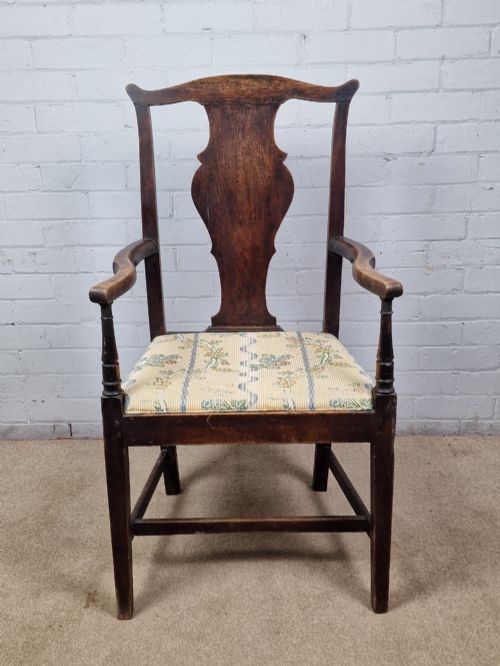
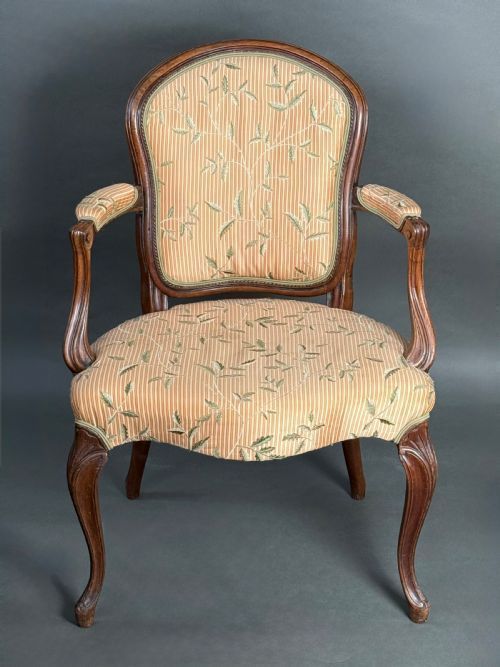
The selection ranges from robust Scottish and English library armchairs to delicate French fauteuils and regional country ladderbacks. Makers produced these for specific domestic duties, resulting in specialised forms such as desk chairs, drunkards chairs, and carvers meant for the ends of dining tables.
How they were made
Cabinetmakers and joiners constructed the frames primarily from dense hardwoods like mahogany and walnut, though fruitwood, elm, and satinwood also appear. These timbers provided the structural integrity needed for carved cabriole legs, ladder backs, and intricate rail details.
Upholstery completed the design, employing materials such as leather, silk, velvet, tapestry, and fabric secured over padding. Brass tacks frequently fasten the textile edges to the wooden seat rails, while painted or gilt surfaces finish select continental frames.
The inventory records specialised seating forms including desk chairs, drunkards chairs, and sedan open armchairs.
What varies in quality
The distinction between standard examples and the finest pieces lies in the crispness and depth of the timber carving. Superior chairs exhibit sculptural fluency in the arms, legs, and crest rails, executed by skilled hands rather than routine production methods.
Proportion and scale dictate the success of the design, with top-tier library and Gainsborough chairs offering commanding presence without losing structural harmony. The choice and retention of original covering materials, from period leather to old silks, further separate ordinary seating from exceptional survivals.
Gillows·Robert Manwaring
The 18th Century Open Chair Glossary
- Gainsborough chair
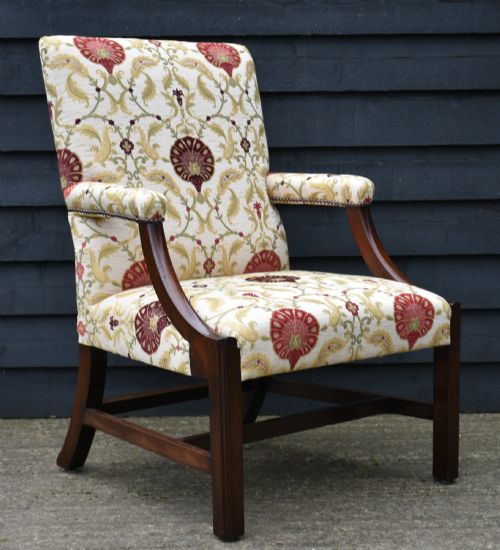
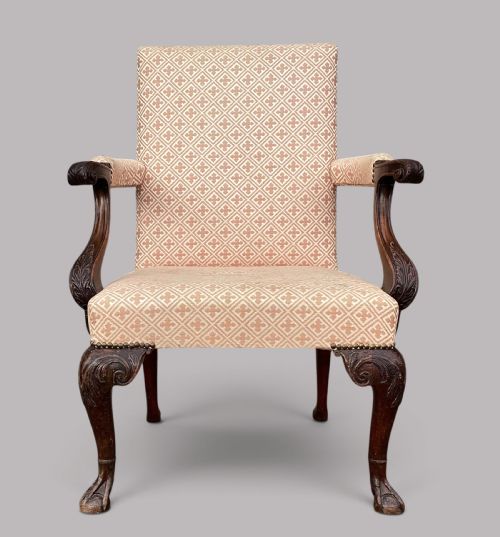
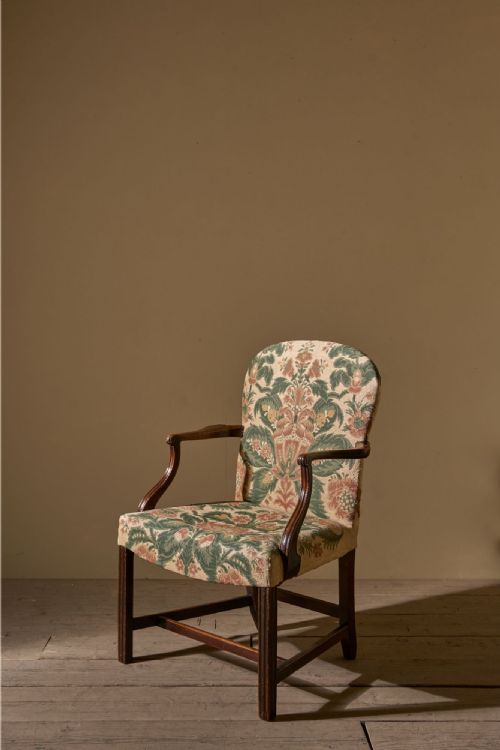
- A type of upholstered library armchair with open sides, short armrests, and a padded back, popular during the Georgian era. This form offered comfort for reading and writing in studies.
- Carver
- A term for an armchair, traditionally used at the head of a dining table to distinguish it from smaller side chairs. These often share stylistic motifs with the matching dining set.
- Cabriole leg
- A furniture leg that curves out at the knee and tapers inward to the foot, echoing animal limbs. It frequently terminates in a pad or claw and ball foot on 18th-century seats.
- Fauteuil
- An open-arm armchair with an exposed wooden frame, originating in France. These seats typically feature carved woodwork and upholstered back panels and arm pads.
- Shield-back
- A chair back shaped in the outline of a shield, introduced during the Hepplewhite period. This design allowed for pierced splats decorated with carved wheat ears or drapery.
18th Century Open Chair: Frequently Asked Questions
What is a Gainsborough chair?
A Gainsborough chair is a wide, upholstered library armchair featuring open padded arms and a supportive backrest. Cabinetmakers built these substantial seats for 18th-century writing rooms and studies.
They stand apart from standard dining chairs through their generous proportions and deep seating designed for extended periods of reading.
How do I date an 18th century chair?
Dating relies on examining the timber species, construction joints, and stylistic vocabulary of the frame. Carving details like cabriole legs or shield backs point directly to specific decades within the Georgian and Rococo periods.
Secondary woods used in the frame interior and the method of upholstery application provide further clues to the precise era of manufacture.
Where were open chairs used?
These seats served primarily in reception rooms, libraries, parlours, and around dining tables. Library armchairs sat near bookcases for quiet study, while lighter painted or gilt versions graced formal salons.
Regional country variations equipped domestic dining spaces and modest parlours with sturdy, practical seating.
Can I use an antique armchair daily?
Many of these chairs remain structurally sound enough for regular domestic use, provided they receive careful treatment. Solid mahogany and walnut frames offer enduring strength for modern living spaces.
Placing them away from direct heat sources and excessive sunlight protects the historic timber and original or period upholstery fabrics.