

Vernacular Windsor Armchair
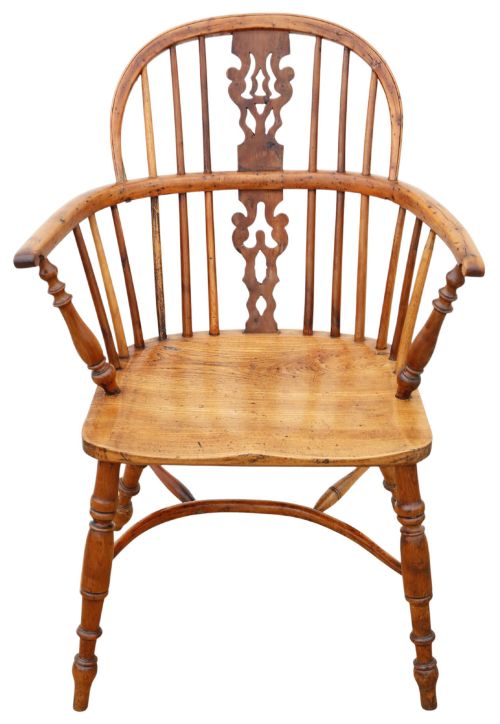
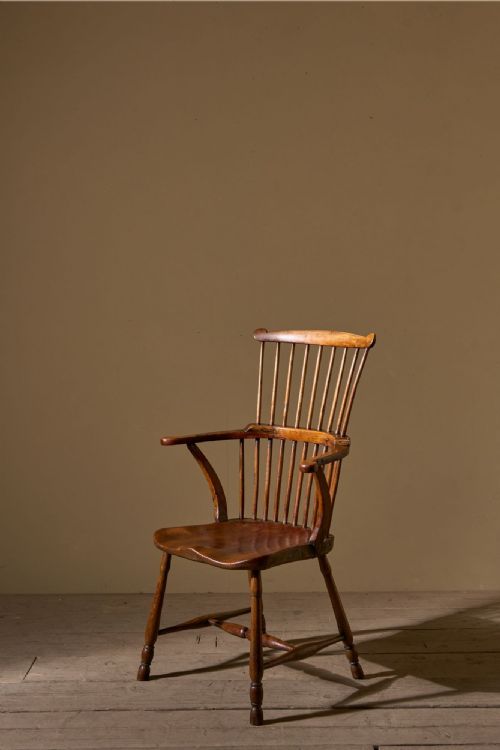
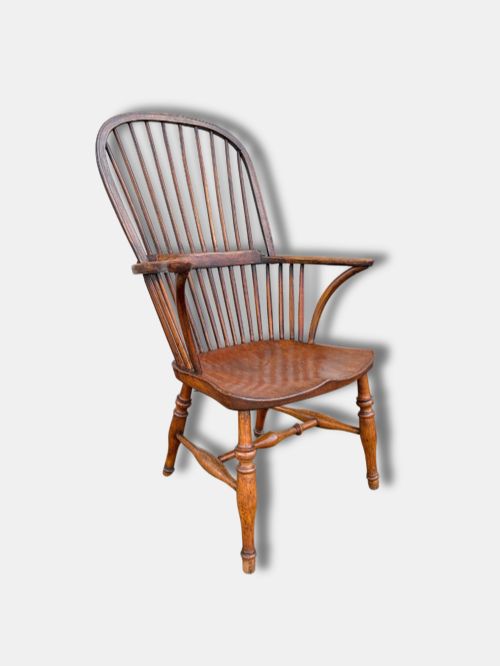
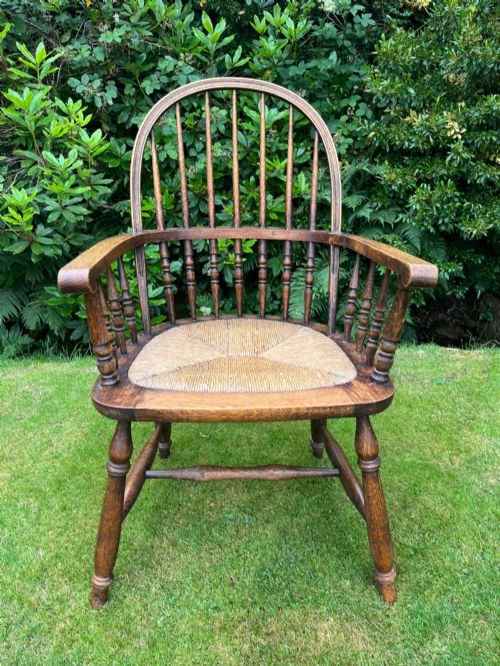
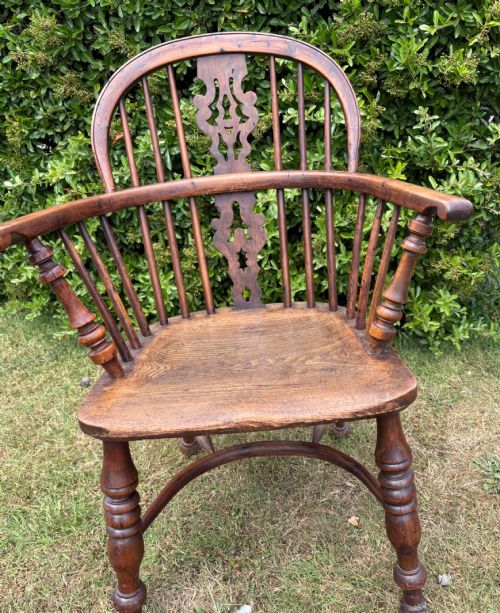
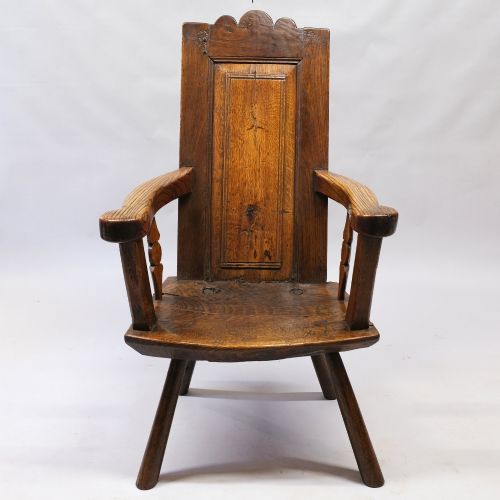
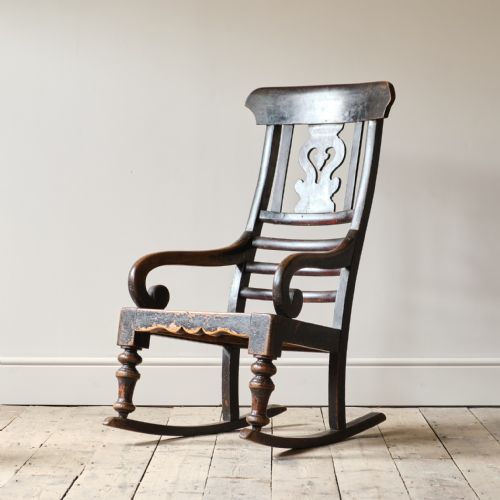
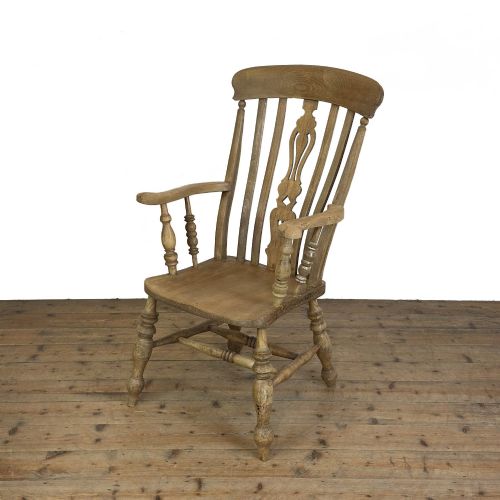
These vernacular windsor armchairs are timber seats built by regional joiners for country houses, combining solid plank seats with spindle backs.
Vernacular Windsor Armchair
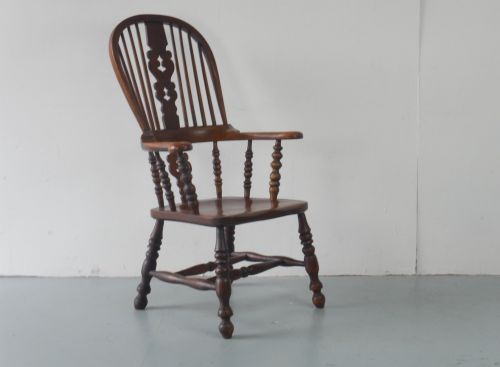
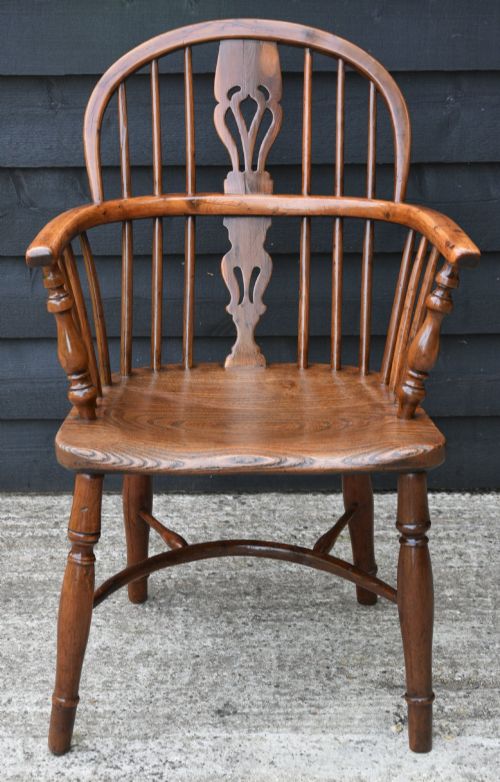
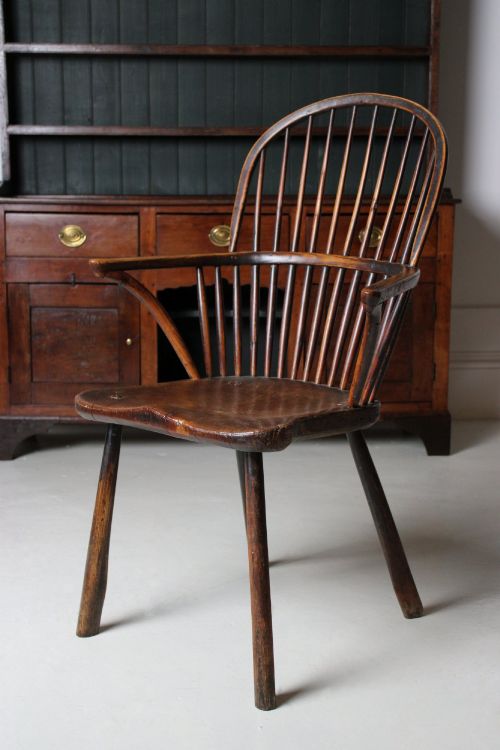
A vernacular windsor armchair is a traditional seating form defined by its thick wooden saddle seat into which the legs and back spindles are wedged directly. You will frequently encounter examples from the eighteenth and nineteenth centuries originating from English country workshops, alongside regional variants from Wales and Ireland.
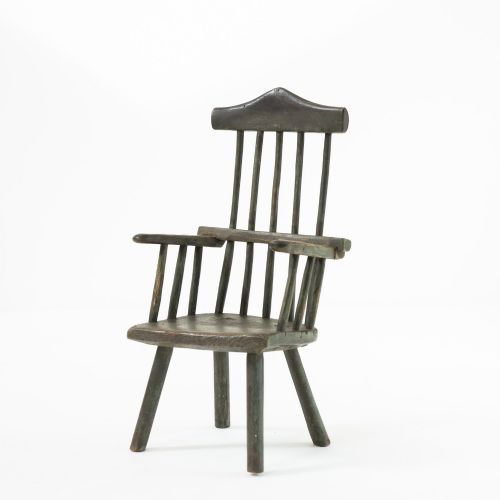
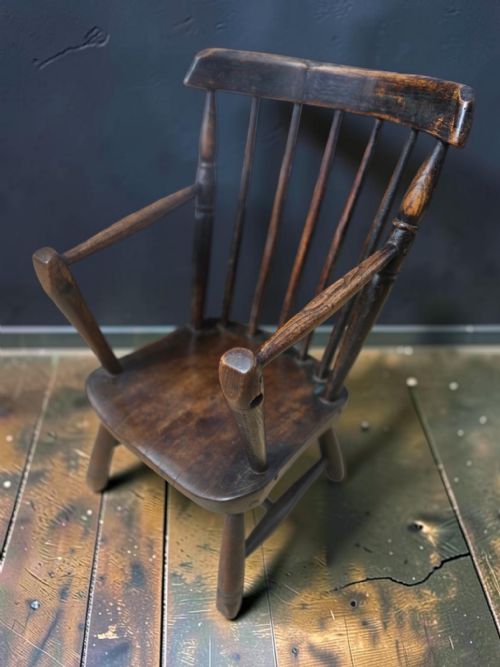
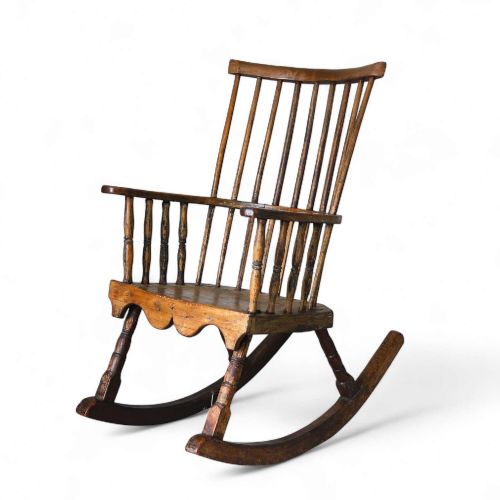
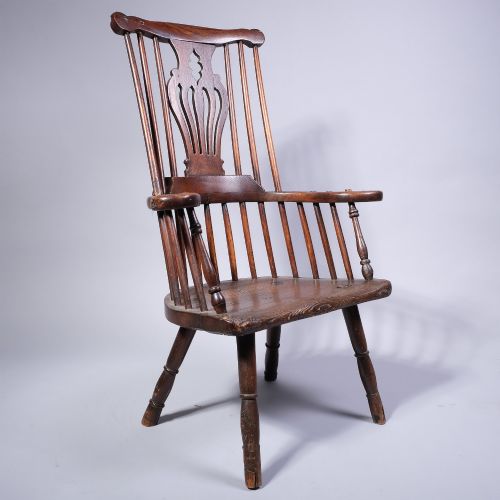
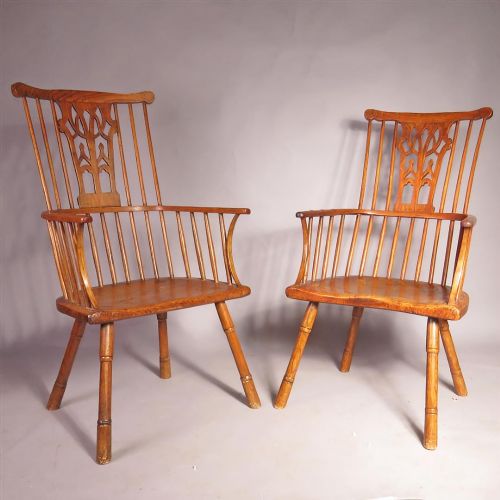
The styles range from comb-back and hoop-back designs to low-back and panel-backed variations, often categorized under English country or primitive vernacular traditions. Alongside standard armchairs, the selection includes child-sized armchairs, rocking chairs, and high chairs constructed by local artisans.
Makers working across regions like the Thames Valley, the West Country, and Scotland utilised local timber stocks to shape functional seating. These chairs served everyday domestic use in farmhouses and cottages, resulting in honest utilitarian pieces carrying distinct regional characteristics.
How they were made
Joiners constructed these seats by combining multiple timber species within a single chair, pairing elm for resilient solid seats with ash or yew for steam-bent hoops and slender spindles. Some examples incorporate fruitwood, laburnum, or oak, occasionally finished with a layer of traditional brown paint or ebonisation.
Makers shaped the heavy plank seats using an adze or scorp to create a comfortable scooped profile before boring tapered holes to receive the undercarriage legs and back uprights. Steam-bending techniques allowed craftsmen to form continuous back rails and bows from straight-grained green timber.
Vernacular Windsor Armchair Retail Price Guide 2026
Typical asking prices for vernacular windsor armchair among the pieces listed under this phrase on Sellingantiques today, from the lower quarter to the upper quarter. They describe what is for sale here now, not the wider market.
The listings span the eighteenth and nineteenth centuries, featuring regional furniture built primarily from elm, ash, and yew.
What varies in quality
Quality in a vernacular windsor armchair rests upon the harmony of its proportions, the balance of the turned undercarriage legs, and the elegance of the back comb or hoop. Chairs retaining their original unpainted timber surfaces with rich, deep patination command greater appreciation than heavily restored equivalents.
The refinement of the spindle turnings and the comfort sculpted into the solid elm seat distinguish superior regional work from basic utility seating. Examples bearing identifiable maker stamps or originating from recognised West Country or Thames Valley workshops demonstrate higher levels of vernacular craftsmanship.
Gabbitass Worksop maker·Duncan McKellar of Fenwick·Fred Walker Rockley
The Vernacular Windsor Armchair Glossary
- Comb-back
- A chair back featuring a horizontal top rail supported by vertical spindles that resemble the teeth of a comb, often finished with small wooden ears.
- Hoop-back
- A continuous bentwood rail that forms both the arms and the top bow of the chair in a single sweeping curve.
- Broadarm
- A chair arm widened significantly on one side to provide a writing or working surface for the user.
- Stick-back
- A simplified chair back constructed from plain turned spindles inserted directly into the seat plank without a central splat.
- Saddle seat
- A thick wooden seat base shaped with hollows and contours to mimic the ergonomics of a riding saddle.
Vernacular Windsor Armchair: Frequently Asked Questions
What is a vernacular windsor armchair?
A vernacular windsor armchair is a traditional wooden seat featuring a solid plank base with legs and back spindles wedged directly into the wood. These pieces were built by regional joiners rather than large urban factories.
They rely on sturdy domestic timbers like elm, ash, and yew to create functional, hard-wearing seating for everyday household use.
How do I date an old windsor chair?
Dating these chairs involves examining the construction methods, tool marks on the seat underside, and the specific style of the back assembly. Eighteenth-century models often feature comb backs and panel backs, while nineteenth-century versions frequently employ hoop-back designs and ebonised finishes.
Regional characteristics and timber choices also help narrow down the period of manufacture when maker marks are absent.
Where were these chairs originally made?
Regional makers constructed these armchairs in rural workshops across England, Wales, Ireland, and Scotland. Distinct regional styles emerged, such as the Thames Valley tradition or Welsh comb-back chairs.
Local craftsmen utilised the timber species readily available in their surrounding woodlands, which explains the variety of woods found in regional pieces.
How should I care for a wooden armchair?
Maintain these chairs by keeping them away from direct heat sources and dramatic humidity fluctuations that can cause timber to split or joints to loosen. Regular dusting with a soft cloth preserves the dry surface finish and natural patination.
Applying a traditional beeswax polish occasionally helps nourish older hardwoods without building up unwanted residues.