
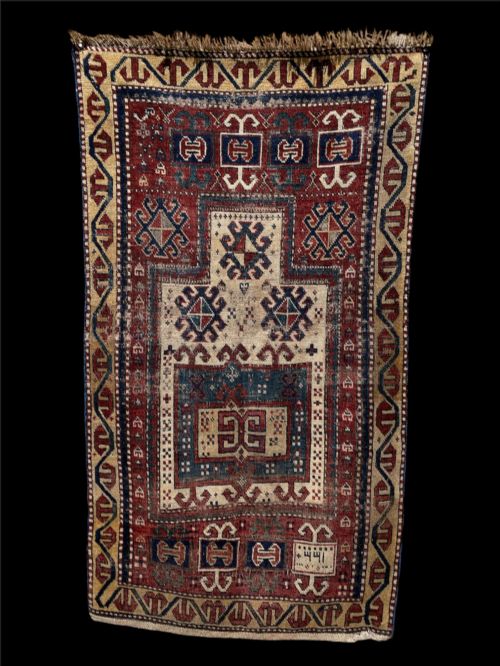
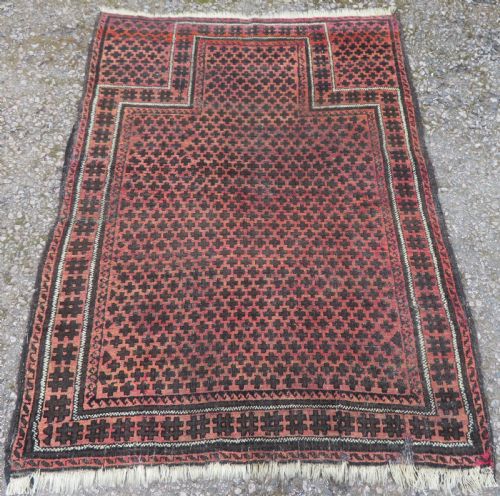


Vintage Wool Prayer Mat
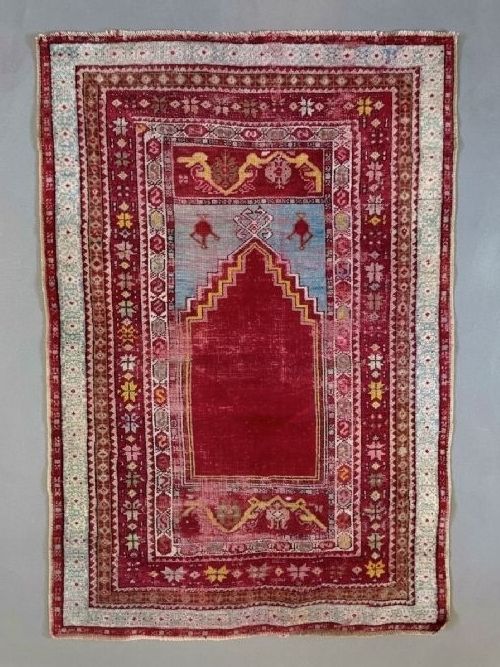
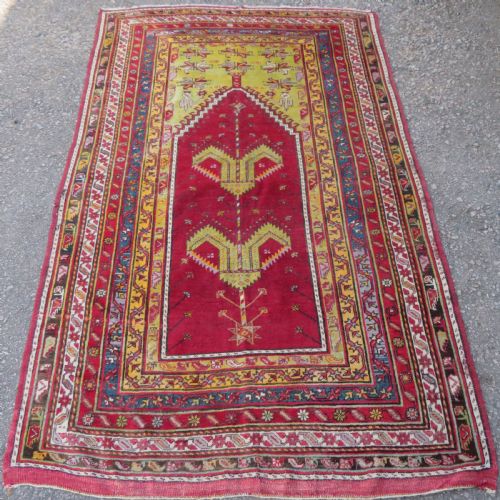
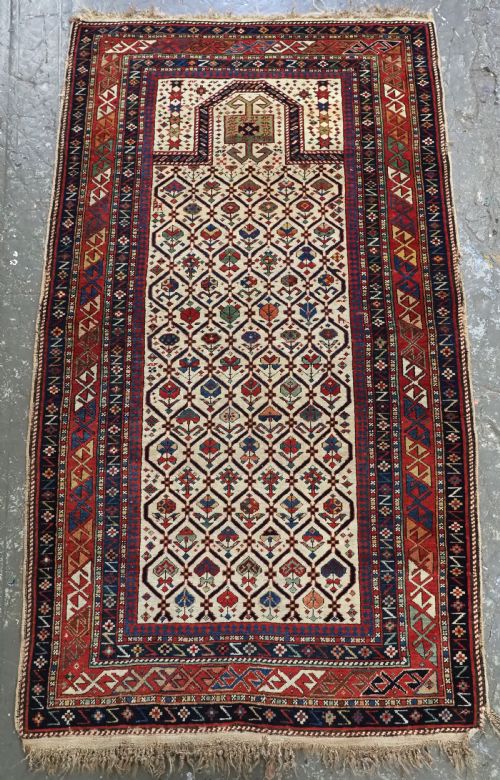
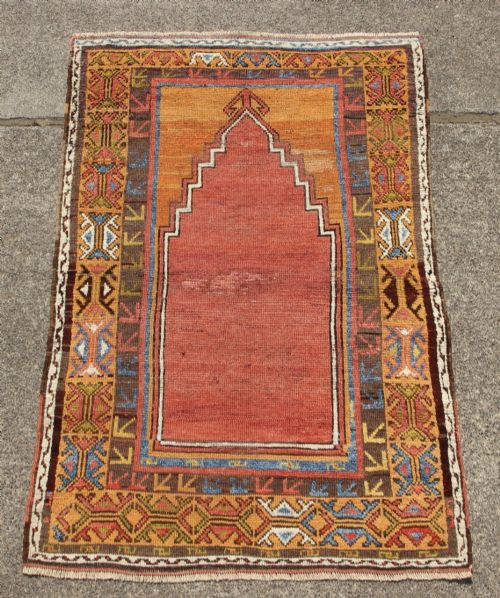
A vintage wool prayer mat brings centuries of tribal artistry into a room, offering tactile warmth and a distinct architectural niche.
Vintage Wool Prayer Mat
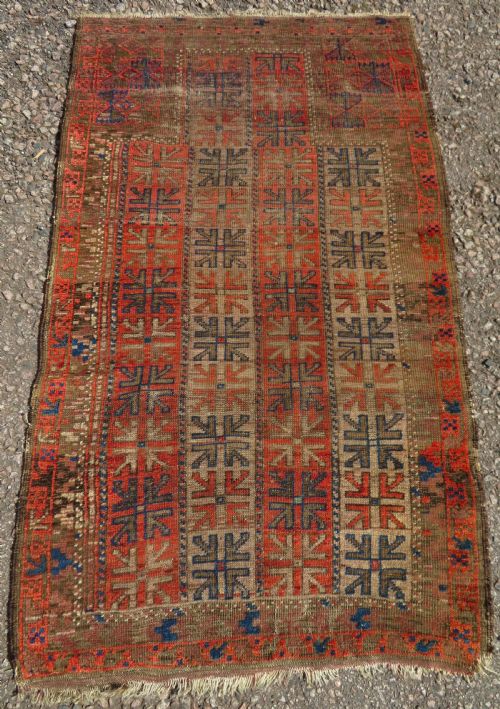
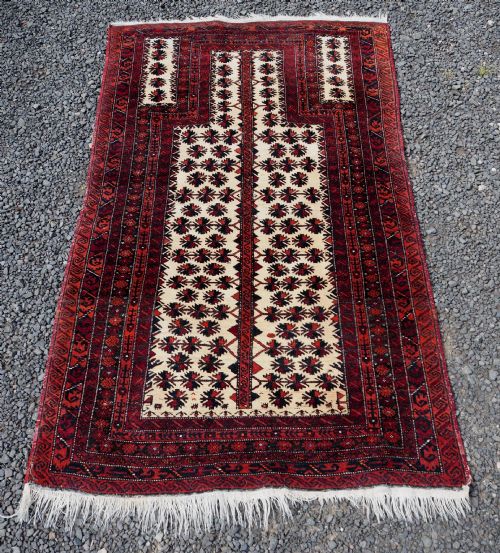
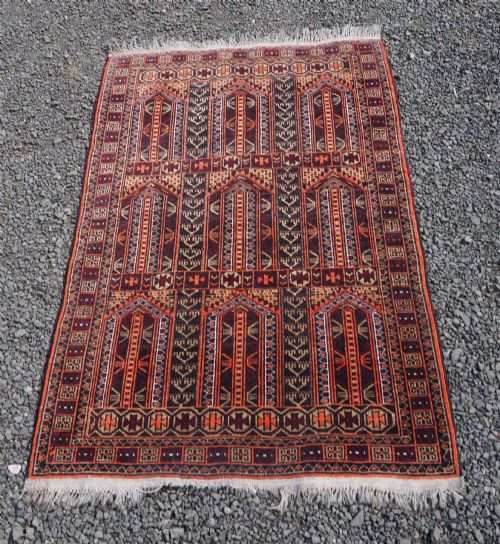
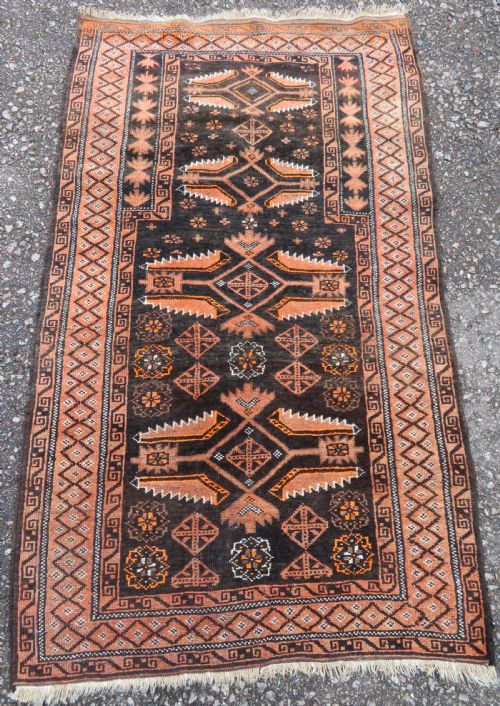
A vintage wool prayer mat is a portable textile defined by a central arch or mihrab design, originating from village and nomadic traditions across Anatolia, the Caucasus, Persia, and Afghanistan. Buyers exploring these pieces encounter formats woven for daily devotional use, characterised by symbolic geometry, floral lattices, and architectural motifs.
The selection ranges from mid-nineteenth-century Anatolian examples to early twentieth-century Afghan and Baluch village pieces. These rugs frequently display regional signatures such as stepped mihrabs, long kilim ends, and varied medallion structures that reflect the specific heritage of the weaver.
How they were made
Weavers constructed these mats using hand-spun wool and cotton foundations, often incorporating camel wool for durability and varied natural texture. Natural dyes supplied deep reds, indigos, and ivories that mellow gradually over decades of exposure and use.
The hand-knotting technique allowed makers to execute intricate geometric borders and floral vase designs with dense pile. Many pieces finished their construction with woven kilim ends to protect the structural integrity of the field.
Regional forms on this page include Caucasian, Afghan Tribal, Anatolian, Ottoman, and Persian tribal traditions.
What varies in quality
Quality rests in the clarity of the design and the integrity of the natural materials, where tighter knot densities and resilient hand-spun wool produce sharper motifs and longer wear. Subtle variations in the depth of natural dye palettes separate standard village productions from exceptional regional pieces.
The preservation of original borders, kilim ends, and structural edges influences the overall character of a textile. Surviving examples that retain their untouched format demonstrate the original maker's technical precision and material selection.
The Vintage Wool Prayer Mat Glossary
- Mihrab
- The arched niche found on a prayer mat, designed to direct the placement of the textile towards a specific orientation. This architectural motif forms the primary focal point of the field.
- Kilim end
- The flat-woven section extending beyond the knotted pile at either end of a rug. It protected the pile from fraying during daily use and travel.
- Natural dye
- Colourants derived from plant, root, and insect sources prior to the widespread adoption of synthetic aniline dyes. These materials produce complex, harmonious tones that age with considerable depth.
- Hand-spun wool
- Fleece processed and twisted into yarn by hand rather than by industrial machinery. This method retains natural lanolin and creates irregular textures that absorb natural dyes unevenly.
- Pile
- The vertical surface yarn of a rug, formed by individual knots tied to the warp and weft foundation. Its density dictates the weight and tactile feel of the textile.
Vintage Wool Prayer Mat: Frequently Asked Questions
How were these mats used historically?
These textiles served as personal, portable spaces for daily prayers, rolled out when required and stored between devotional times.
Because they were personal items rather than large floor coverings, their smaller formats allowed them to travel easily with nomadic and village weavers.
How do I care for a vintage wool mat?
Protect the wool and natural dyes by placing the textile in low-traffic areas away from direct, harsh sunlight. Gentle vacuuming without a rotating brush roll helps maintain the pile.
Professional specialist cleaning is recommended to preserve the hand-spun fibres and natural dye compounds over time.
How do I distinguish regional styles?
Anatolian and Caucasian examples frequently feature crisp geometric lattices, floral motifs, and structured architectural arches. Baluch and Afghan village pieces tend towards darker palettes, camel wool elements, and repetitive lotus or mihrab patterns.
Comparing border structures and foundational materials helps identify whether a rug originates from western Anatolia or eastern Persia.
Can I use these mats on the floor?
These textiles function effectively as small area rugs, wall hangings, or accent pieces in lighter-traffic zones of a home. Their durable wool construction withstands careful placement on standard interior flooring.
Using a suitable underlay prevents slipping and reduces friction against the original foundation threads.