
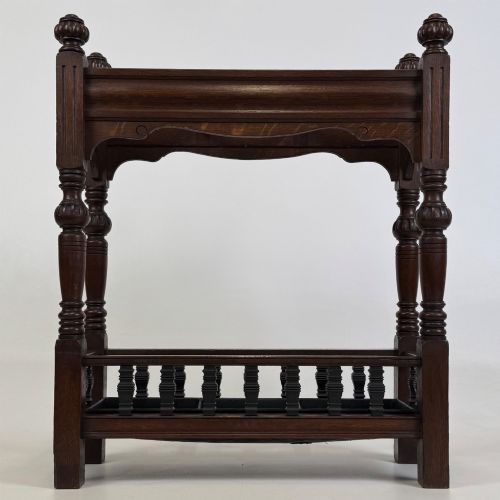
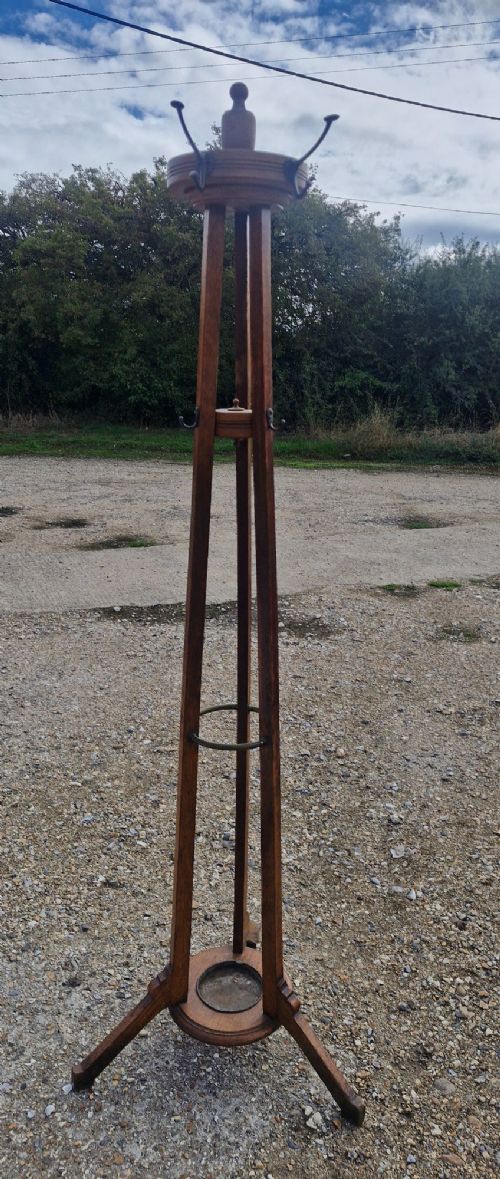
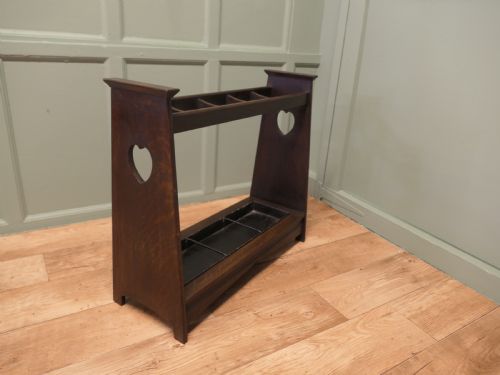

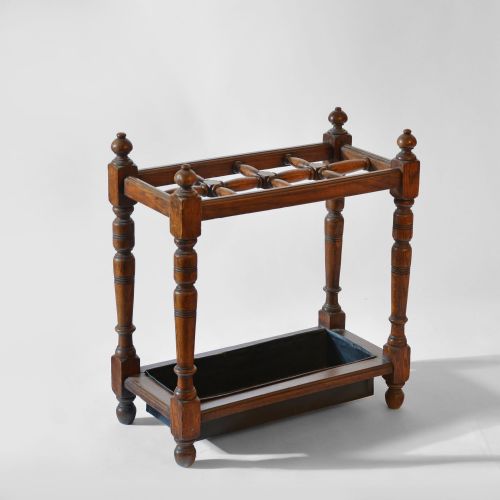
Vintage Wooden Umbrella Holder
A vintage wooden umbrella holder controls the hallway clutter while grounding the entryway in period timber.
Vintage Wooden Umbrella Holder
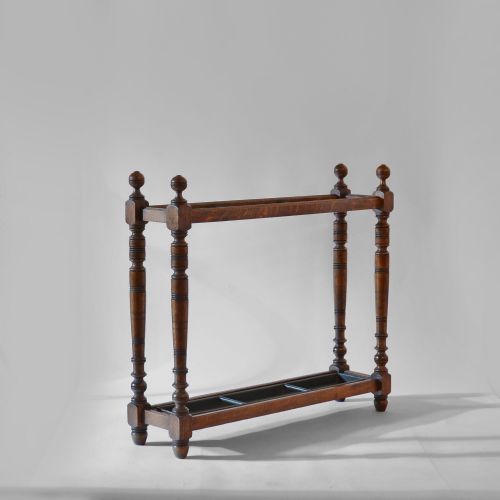
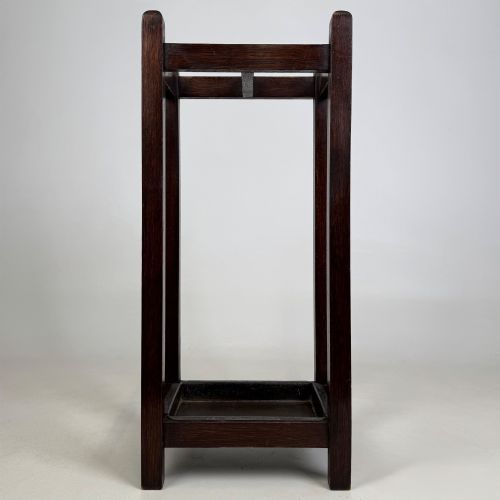
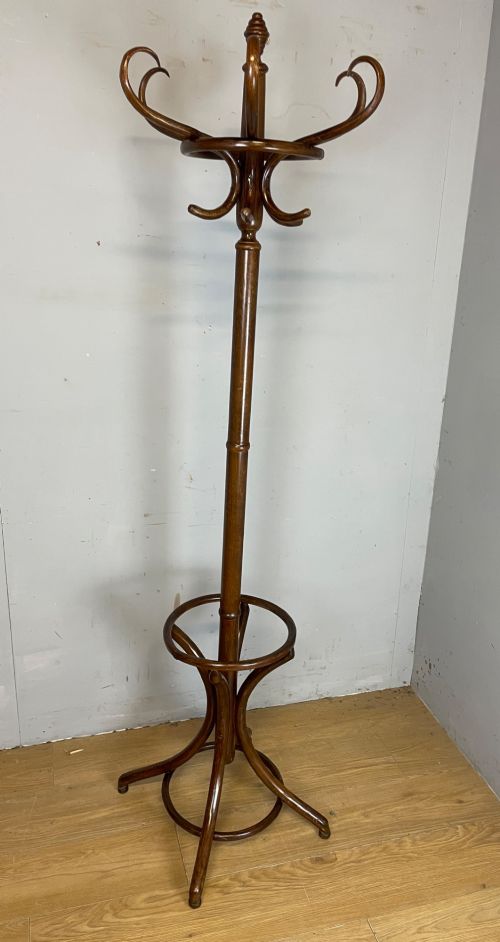
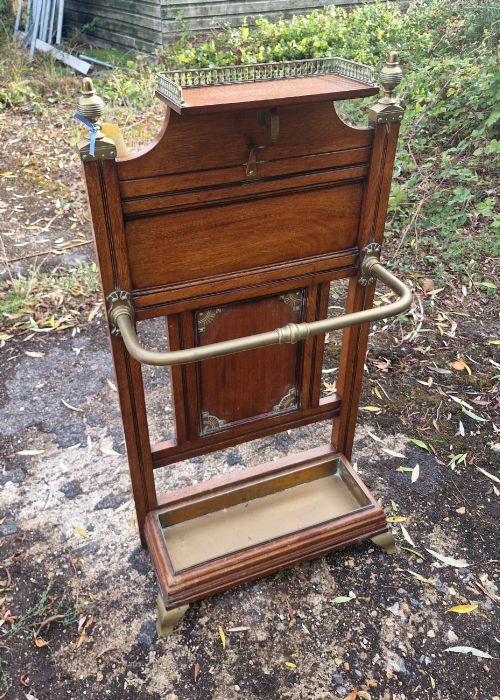
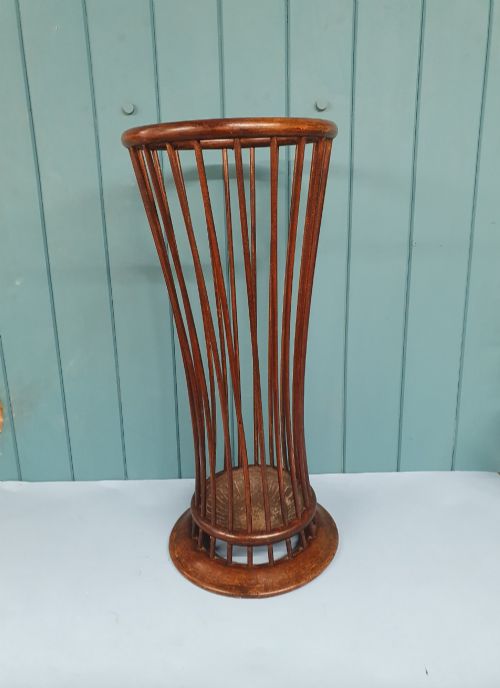
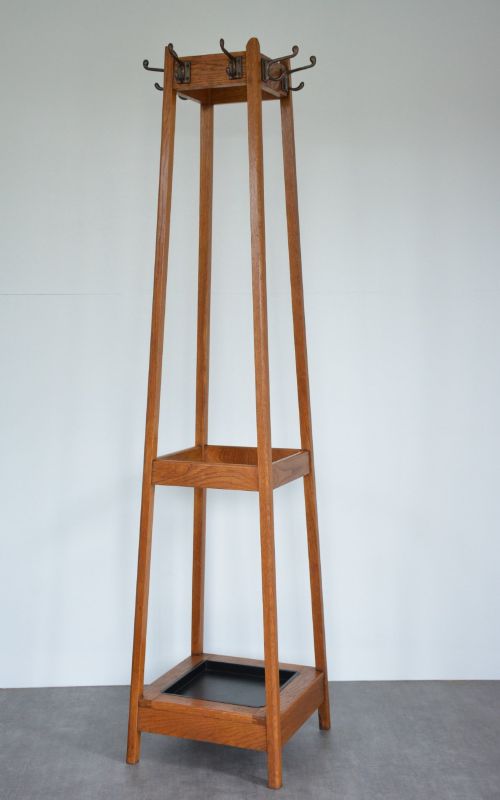
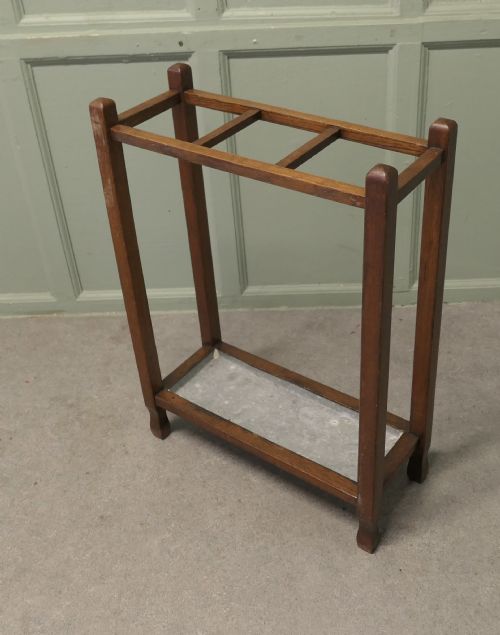
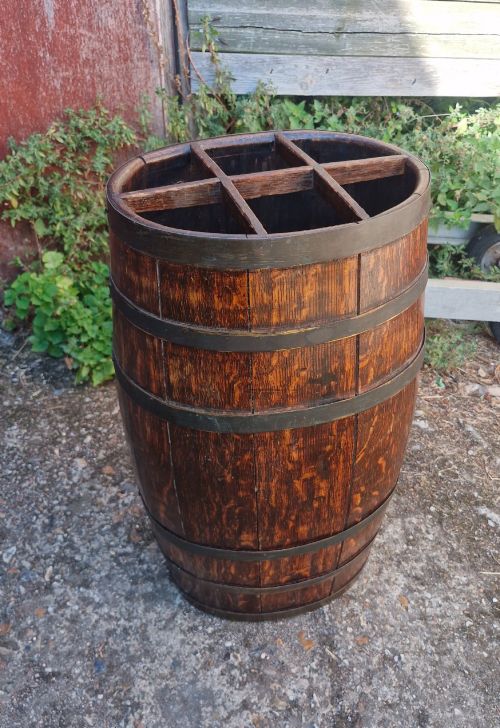
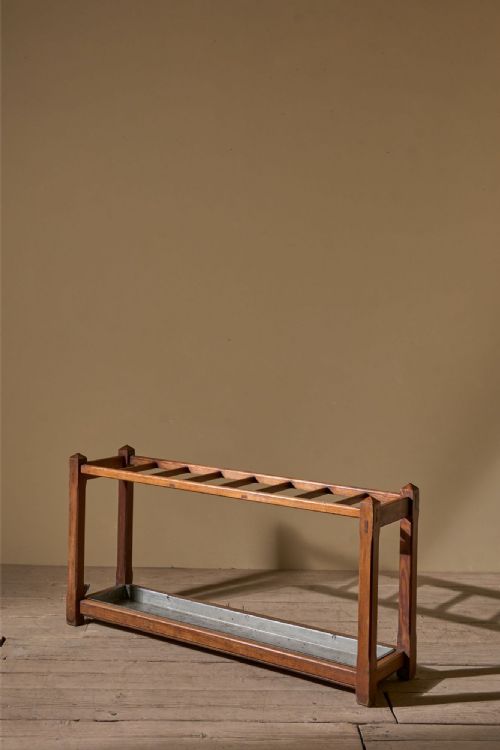
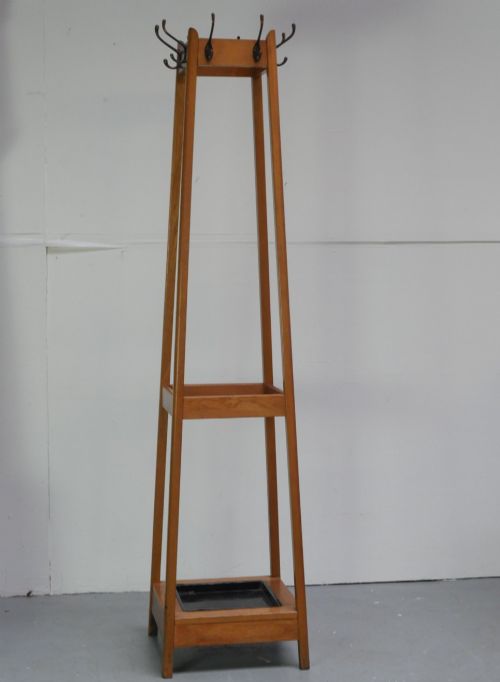
A vintage wooden umbrella holder spans simple barrel designs and multi-division hall racks found across the Victorian and Edwardian eras. These pieces range from upright floor stands to corner units and combined coat trees built for domestic entries.
Materials and construction
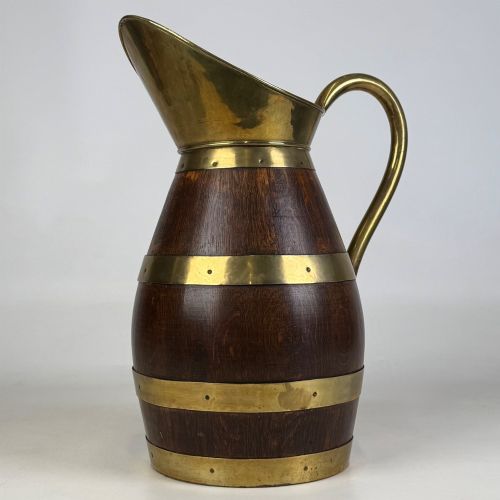
Solid timber forms the primary structure, with oak, mahogany, pine and beech shaped through joinery and coopered barrel techniques. Metal elements such as brass bands, iron hooks and zinc drip trays provide necessary water protection and structural reinforcement.
Surface treatments include polished golden oak, bentwood steam shaping and carved decorative details. The integration of metal liners preserves the timber from daily moisture exposure.
A Black Forest stand brings carved woodland animals directly into the hallway to guard your wet umbrellas.
Judging quality
Quality rests on the integrity of the timber framing, the survival of original metal drip trays, and the strength of coopered staves or joined corners. Pieces showing maker attribution or specific design movements command greater attention.
Proportion and utility separate standard utility items from refined hall furniture. Retained hardware and untouched patination indicate superior preservation over time.
Thonet·Heals of London·Liberty Design
The Vintage Wooden Umbrella Holder Glossary
- Coopered barrel
- Construction using curved wooden staves bound by metal hoops, common in cylindrical umbrella holders. This method mirrors traditional cask-making techniques.
- Drip tray
- A removable metal insert placed at the base to catch water from wet umbrellas. It protects the surrounding wooden floorboards from moisture damage.
- Bentwood
- Wood softened through steam and shaped into curved forms, frequently utilised in umbrella and hat stands. This technique creates light yet robust frames.
- Arts and Crafts
- A design movement prioritising traditional craftsmanship, visible grain, and simple utility in oak furniture. Pieces from this style often feature exposed joinery.
- Hall stand
- A multi-functional piece combining umbrella storage with coat hooks and sometimes a mirror. It served as a central fixture in period entranceways.
Vintage Wooden Umbrella Holder: Frequently Asked Questions
How do I protect the wood from wet umbrellas?
Most period stands include an original metal or zinc drip tray inside the base to catch moisture. Ensure this liner remains watertight before placing wet items inside.
For pieces lacking a metal liner, use a modern plastic insert discreetly placed at the bottom to shield the historic timber from standing water.
Where should I place a stick stand in my home?
These holders suit narrow hallways, boot rooms, and entrance lobbies where coats and walking accessories gather. Their upright proportions demand very little floor space.
Keep the stand away from direct radiators and intense sunlight to prevent the timber from drying out, cracking, or warping over the seasons.
How do I distinguish Victorian from Edwardian stands?
Victorian examples often feature heavier carved timber, dark polished mahogany, and robust coopered barrel forms. Aesthetic Movement and Gothic Revival influences frequently appear in this bracket.
Edwardian pieces tend to display lighter golden oak, simpler Arts and Crafts lines, or bentwood construction. These lighter tones reflect changing interior tastes at the turn of the century.
Can these stands hold walking sticks as well?
Historic hall stands and barrel holders were manufactured for both walking sticks and umbrellas alike. Many feature divided top rails to keep slender items upright.
The smaller ring diameters and multi-division dividers accommodate slim cane shafts alongside standard umbrella handles.