

Oak Coat Tree Stand
These oak coat tree stand pieces combine sturdy timber with functional hooks, rails and umbrella holders to anchor an entrance hall.
Oak Coat Tree Stand
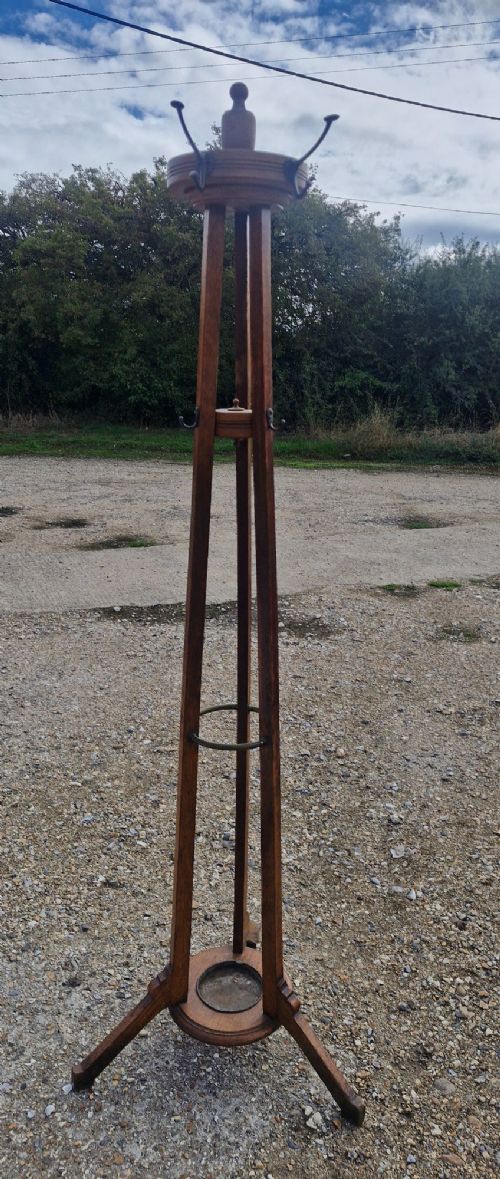
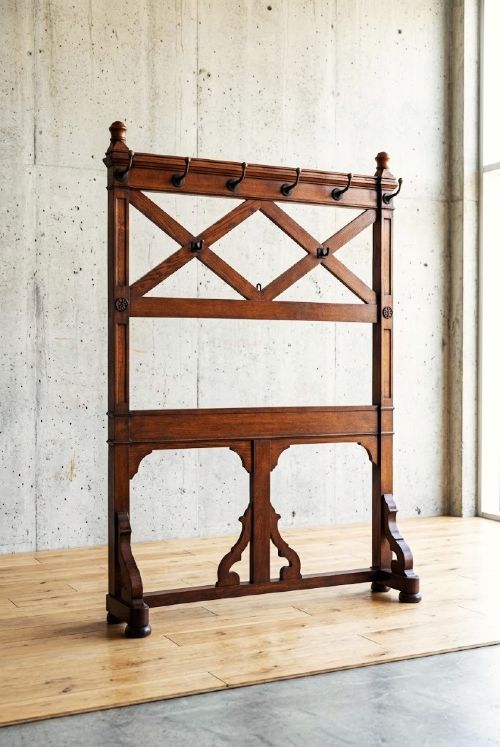
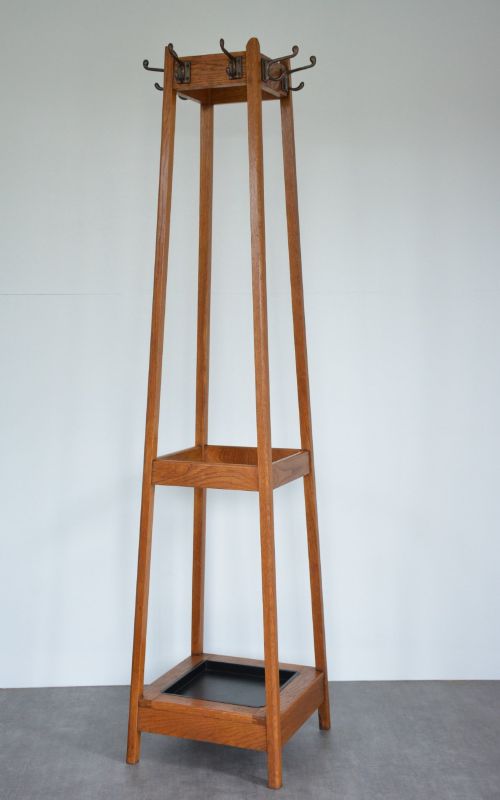
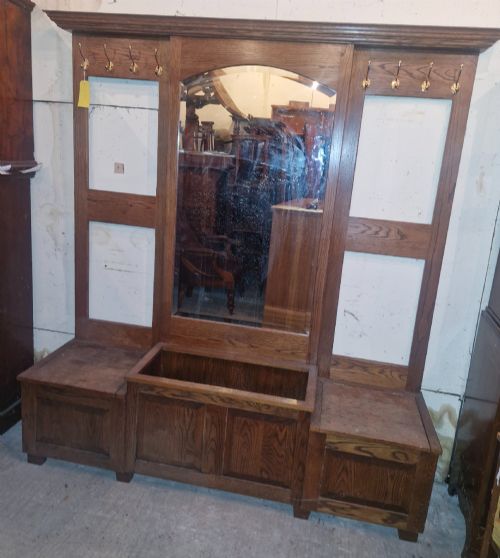
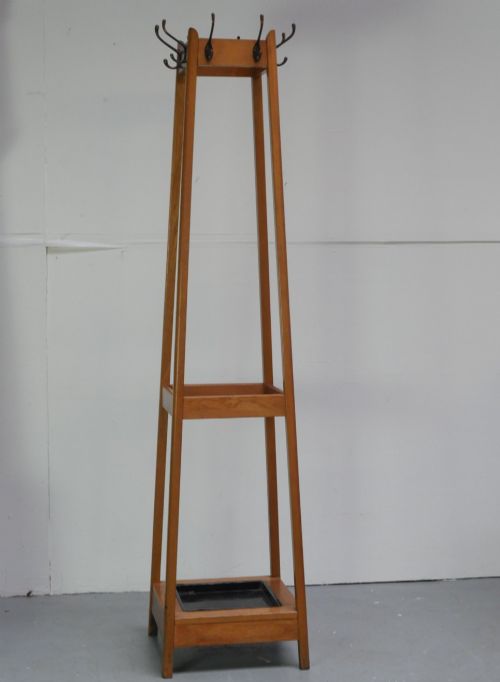
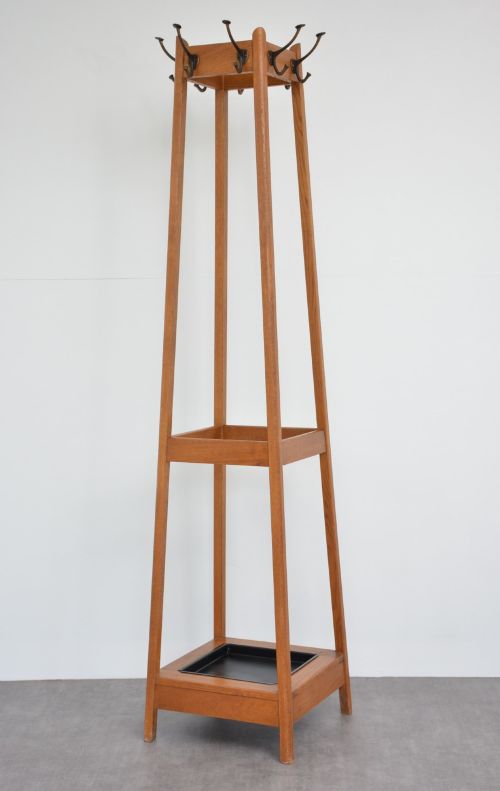
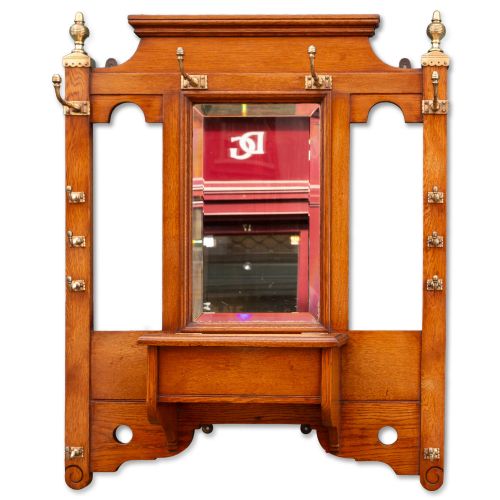
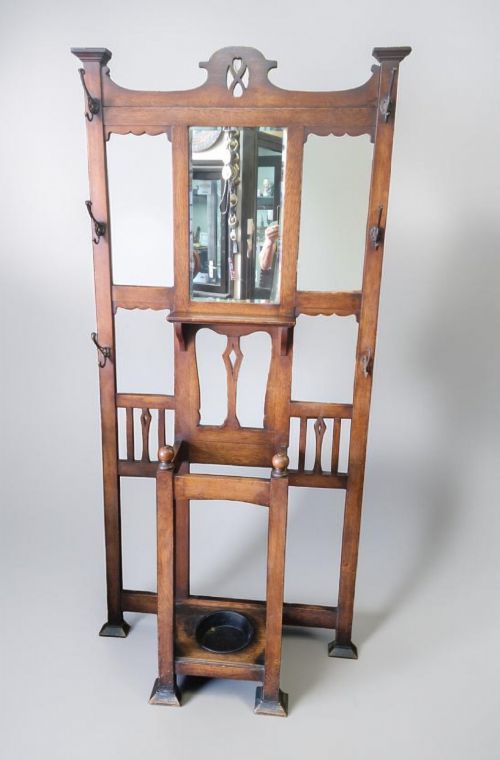
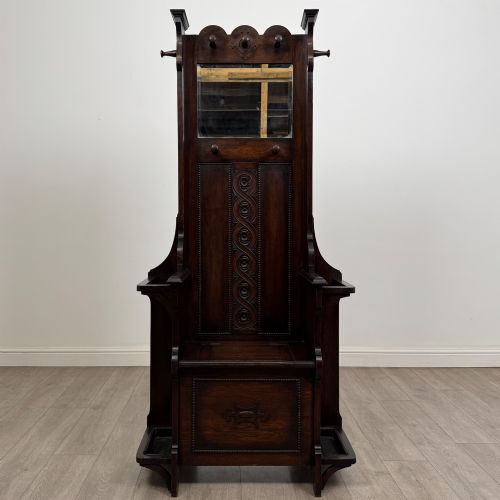
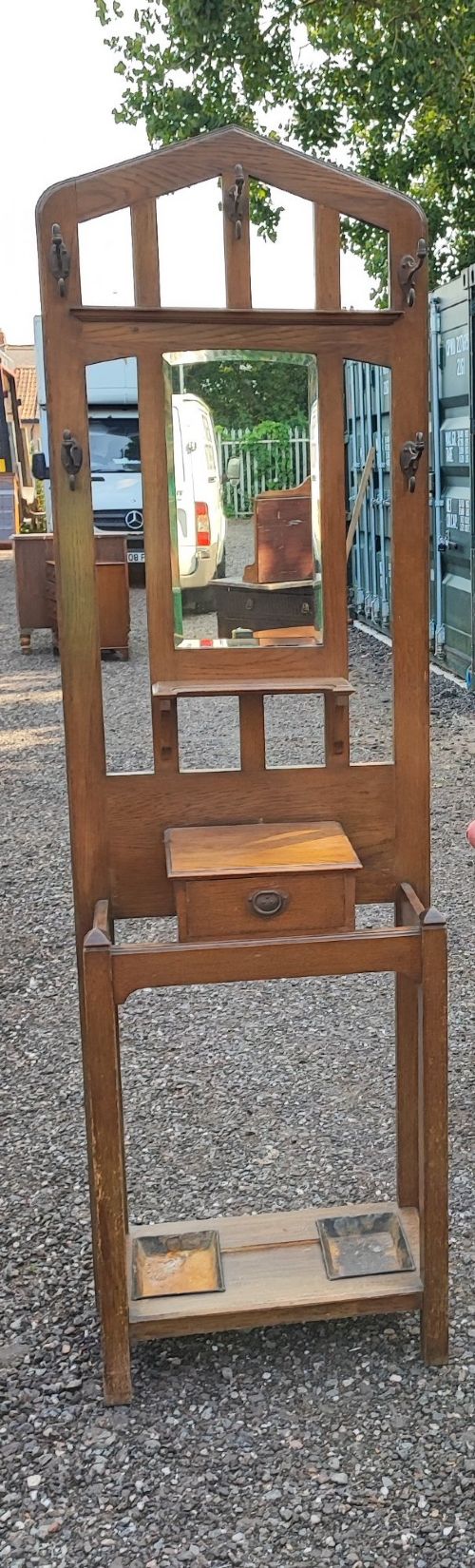
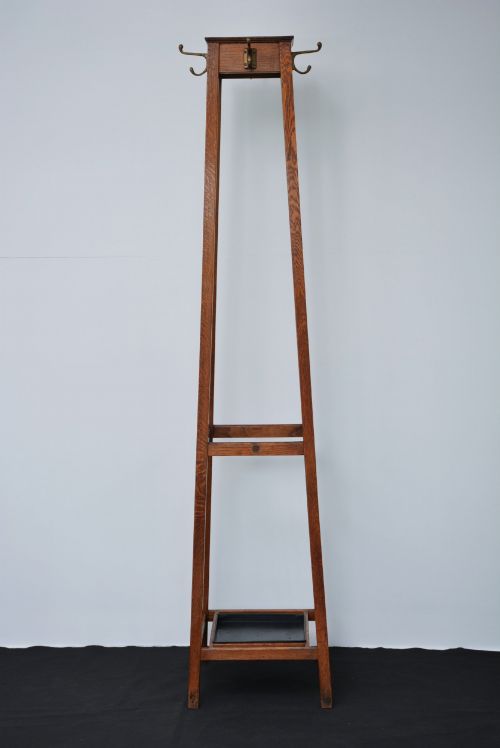
When you search for an oak coat tree stand, you encounter substantial furniture designed for hallway use, spanning forms from simple upright coat racks to massive hall stands with integrated seats and umbrella holders. The most frequent versions on this page date from the Victorian and Edwardian periods, alongside Arts and Crafts and industrial examples.
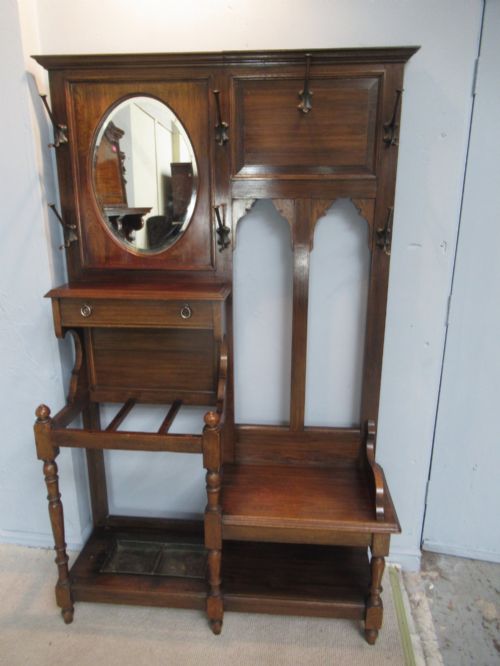
Many of these hall stands incorporate mirrors, carved panels, and drip trays alongside their primary function of holding hats, coats, and walking sticks. The physical scale ranges from narrow upright poles to large multi-functional hall seat combinations built for spacious entranceways.
Materials and Construction Techniques
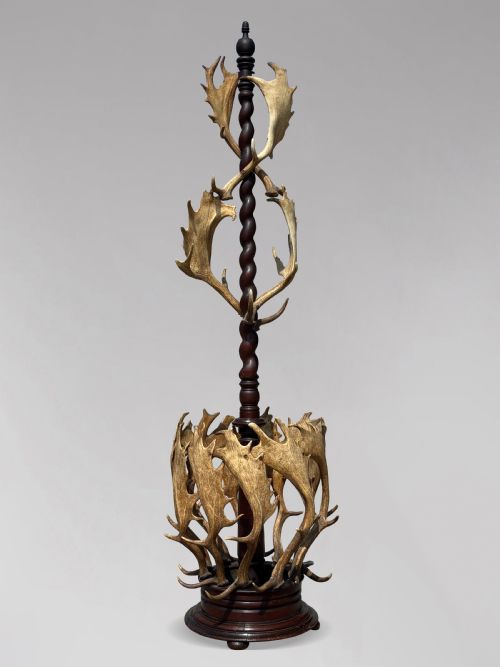
Solid oak provides the primary structural timber, often supported by brass, iron, or cast metal hooks and fittings. Some examples integrate glass mirrors, marble, and organic materials such as horn or antlers.
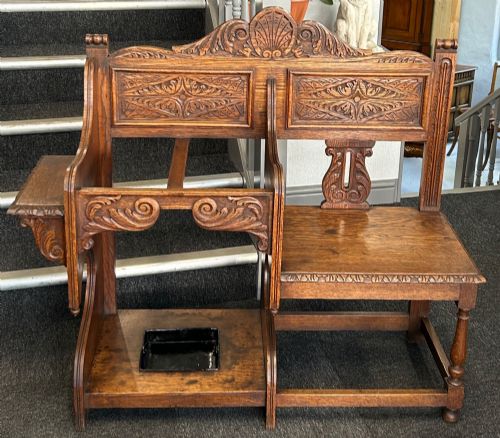
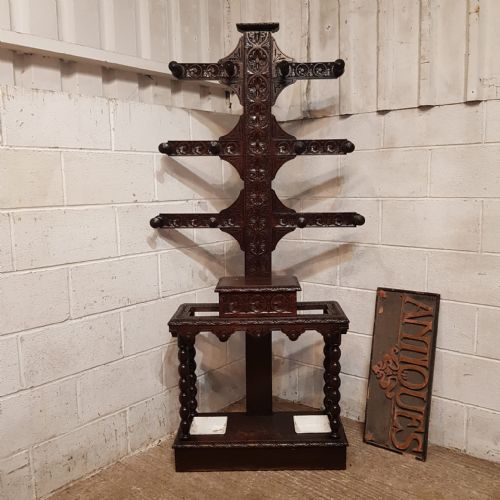
Cabinet makers utilised traditional joinery alongside steam-bent wood for bentwood variations, and applied heavy relief carving for styles influenced by the Gothic Revival, Black Forest, and Art Nouveau movements.
Listings feature oak combined with diverse materials including cow horn, glass, marble, and cast iron across Victorian and Edwardian periods.
Distinctions in Quality
The standard of carving and the weight of the timber set finer examples apart from utilitarian items. Deeply undercut Greenman motifs or complex figural work indicate higher workshop skill than flat machine stamping.
Integrity of the original metal hardware, such as brass coat hooks and removable drip trays, influences the overall coherence of a piece. Robust structural framing that supports heavy winter coats without lean distinguishes better engineering.
J Parker of Woodstock·Fischel·Astrola·William Whiteley
The Oak Coat Tree Stand Glossary
- Hall stand
- A tall piece of hall furniture combining coat hooks, a mirror, and frequently a glove drawer, seat, or stick wells. These items organise the entrance of a house.
- Drip tray
- A metal tray positioned at the base of a stand to catch water from umbrellas and walking sticks. This feature protects the timber floor from moisture damage.
- Greenman
- A decorative architectural carving depicting a human face disgorged from foliage. This motif appears frequently on Victorian and Edwardian carved oak stands.
- Bentwood
- Wood shaped by applying steam to soften the grain before bending it into curves. This technique creates lightweight yet resilient frames.
- Arts and Crafts
- A design movement prioritising simple forms, visible construction, and traditional craftsmanship. Pieces from this aesthetic often display unadorned golden oak surfaces.
Oak Coat Tree Stand: Frequently Asked Questions
Where do I place an oak coat tree stand?
These pieces fit best in an entrance hall or porch where guests arrive. They require adequate clearance for hanging garments and accessing lower umbrella holders.
Position the stand against a sturdy wall, particularly if the design is tall or narrow, to ensure stability during daily use.
How do I care for the oak wood?
Maintain the timber by dusting regularly with a dry cloth and applying natural beeswax periodically to nourish the grain. Avoid placing the stand directly beside heat sources that might dry out the wood.
Keep metal drip trays clean and dry to prevent rust transfer onto the surrounding oak floorboards.
How do I distinguish Victorian from Edwardian stands?
Victorian stands typically feature heavier proportions, darker finishes, and dense ornamentation such as Gothic Revival tracery or deep Greenman carvings. They project a formal, imposing presence.
Edwardian examples often utilise lighter golden oak tones, cleaner lines, and simpler Arts and Crafts influences that reflect a brighter domestic aesthetic.
What is the purpose of the built-in mirror?
The mirror allows individuals to check their appearance before leaving the house. It also serves a practical role in smaller hallways by reflecting natural light and creating a sense of expanded space.