

Vintage Oak Hall Tree
A vintage oak hall tree greets visitors at the threshold, combining practical storage for hats and coats with the enduring grain of solid timber.
Vintage Oak Hall Tree
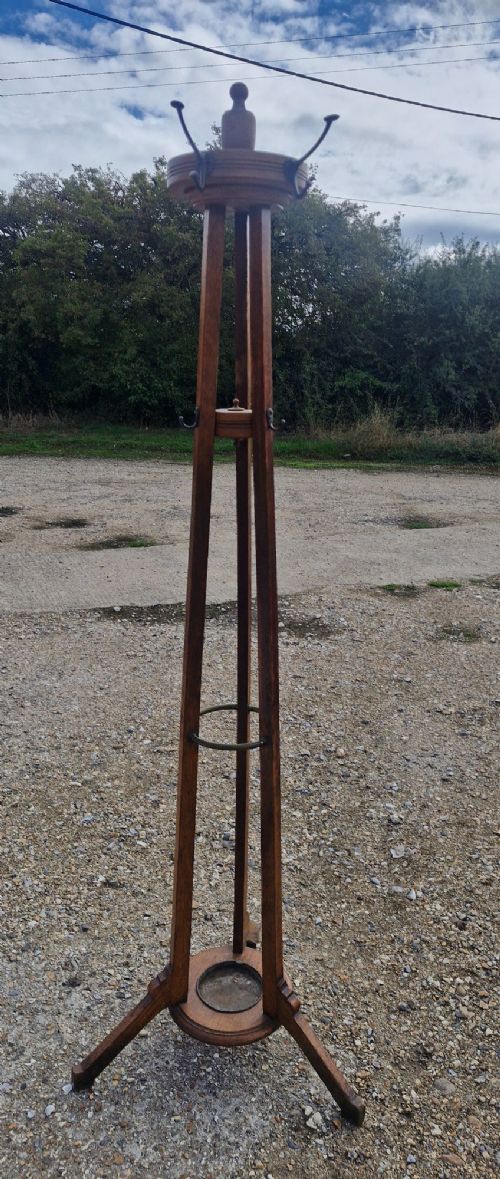
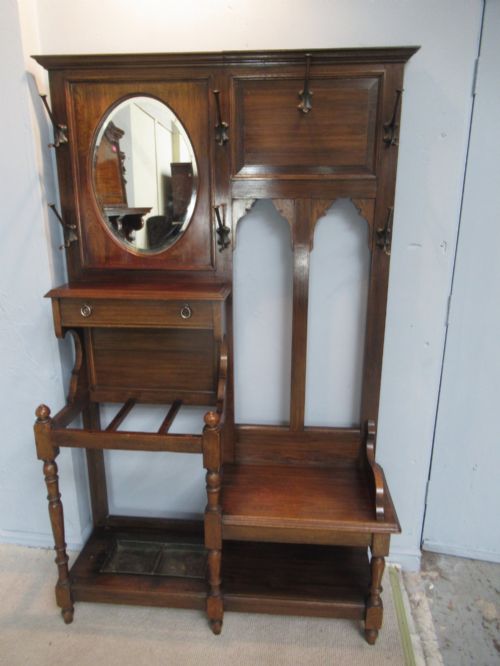
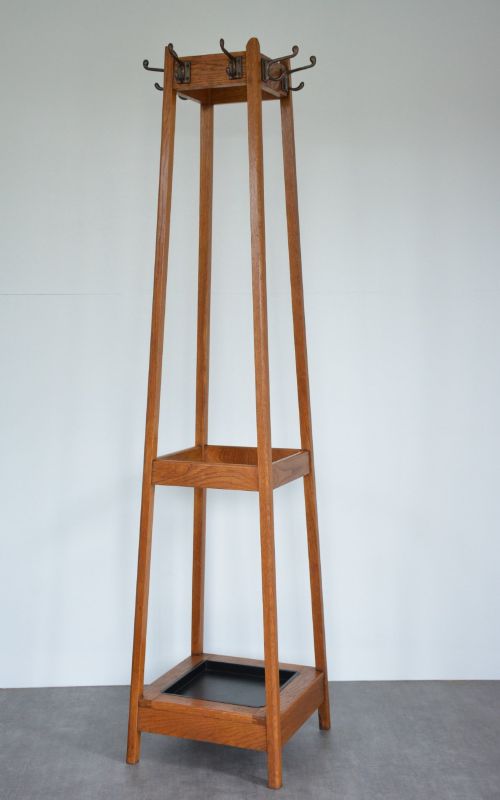
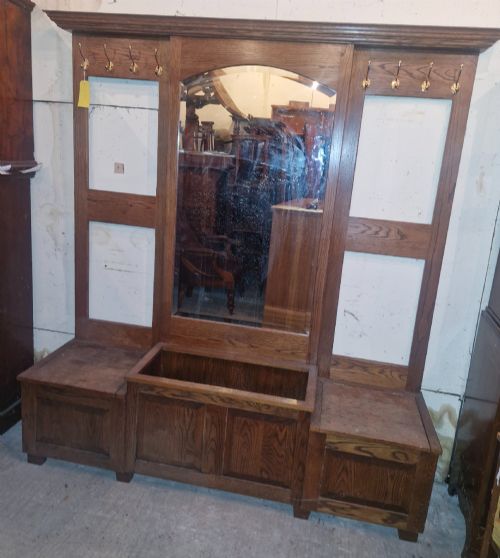
A vintage oak hall tree serves as a functional entrance piece designed to hold outdoor garments, hats, and walking gear. When searching for this phrase, buyers encounter vertical stands and larger combination furniture pieces.
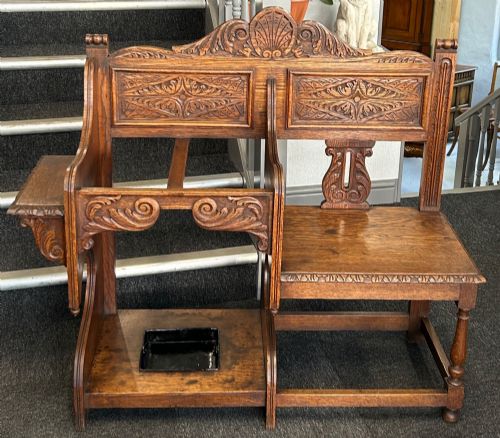
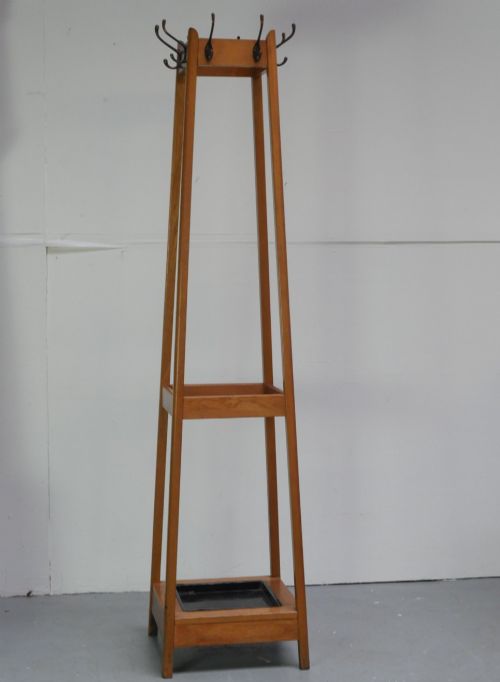
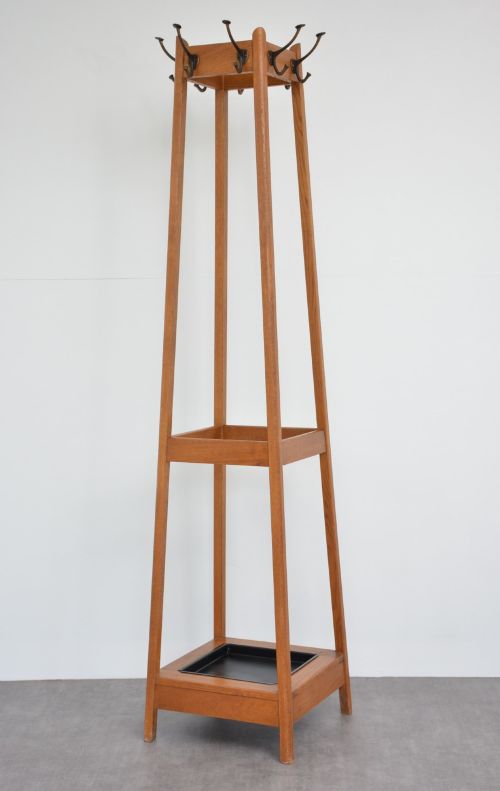
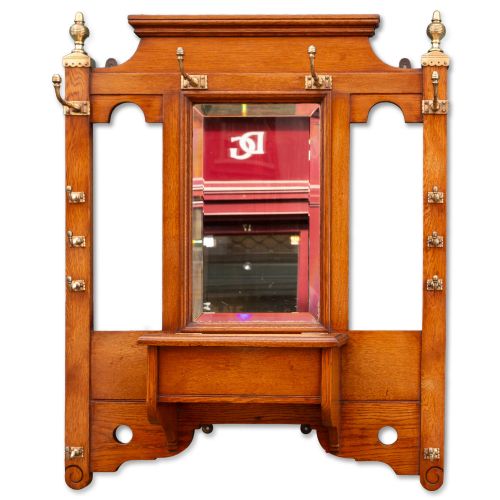
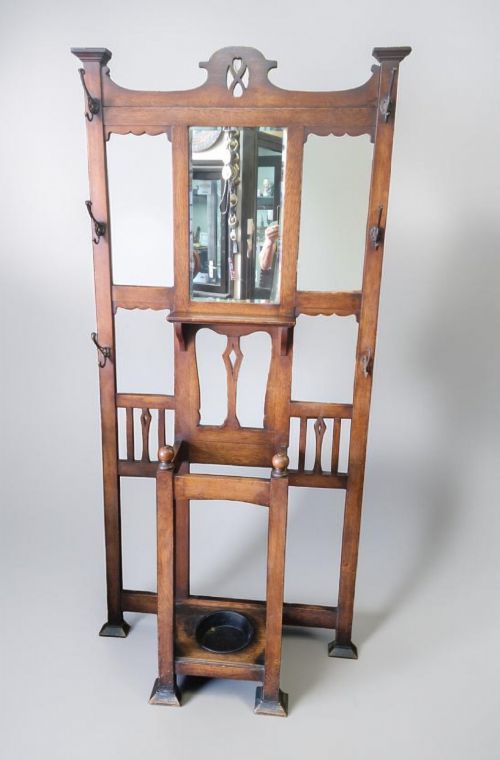
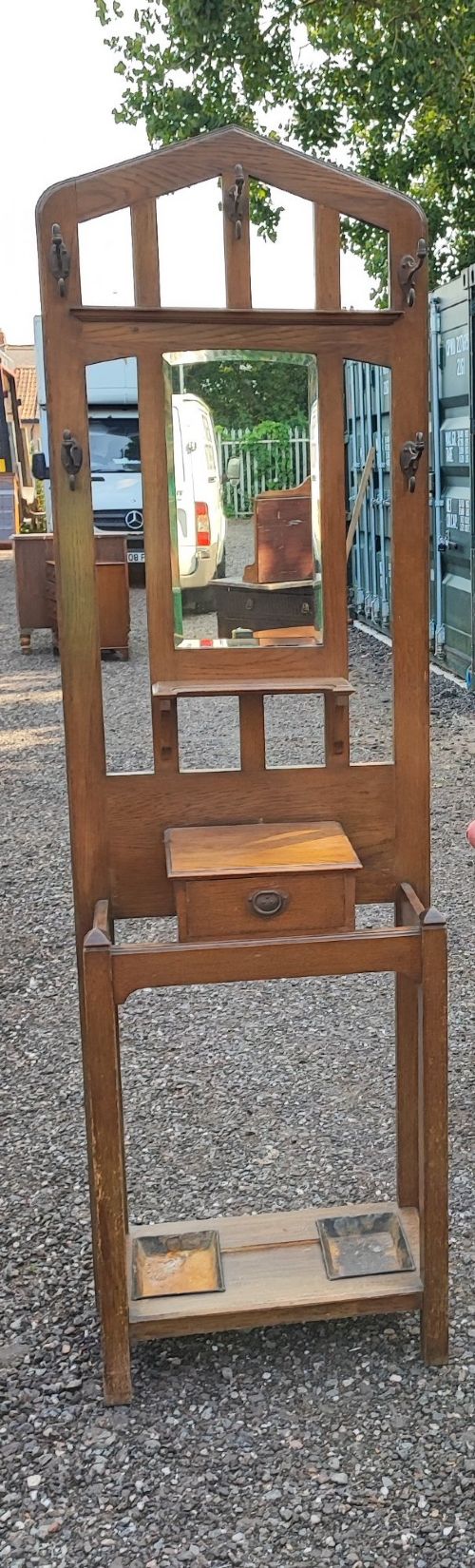
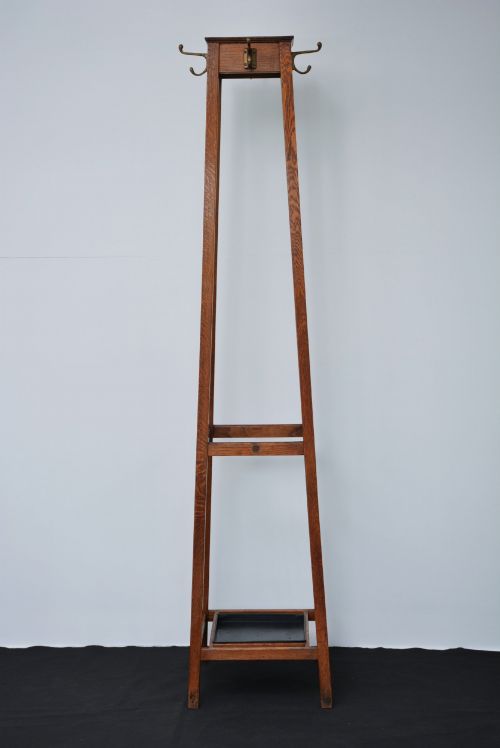
The most common examples on this page date from the Victorian, Edwardian, and Arts and Crafts periods. These variants often incorporate umbrella holders, drip trays, and occasionally integrated seating or mirrors.
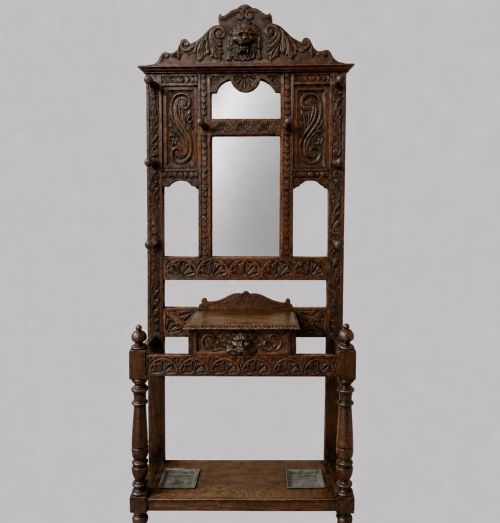
Makers utilised sturdy timbers to construct pieces intended for heavy daily use in entrance halls. The forms range from simple revolving hat stands to elaborately carved architectural hallstands.
Materials and construction
Craftsmen built these pieces predominantly using solid oak, frequently finished to highlight the natural golden grain. Structural integrity was paramount, leading to robust frames designed to bear the weight of heavy winter coats.
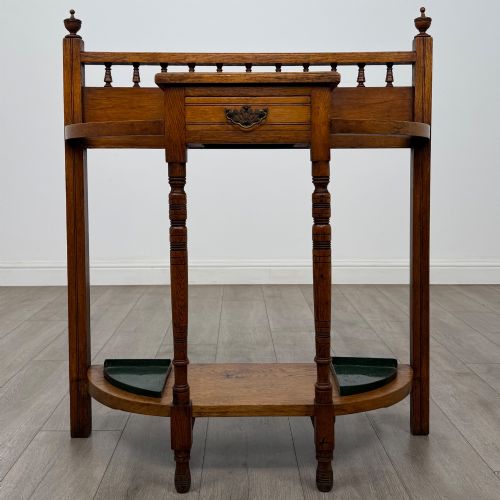
Metal fixtures such as brass hooks, iron brackets, and cast iron drip trays were integrated to manage wet umbrellas and walking sticks. Carved wooden details, mirrors, and occasionally horn or glass elements appear across various styles.
Joinery methods varied from traditional mortise and tenon frames to bentwood techniques seen in specific revolving and upright designs. The combination of dense timber and durable metal hardware ensured longevity.
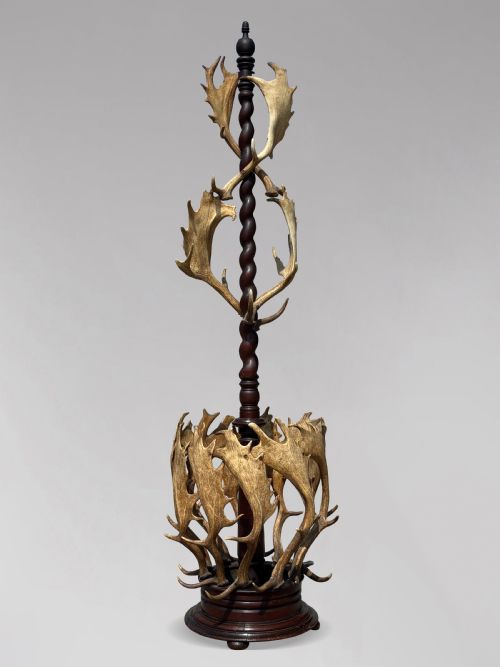
Several pieces incorporate genuine animal horns alongside traditional oak, proving that Victorians had a distinctly wild approach to hallway organisation.
Distinctions in quality
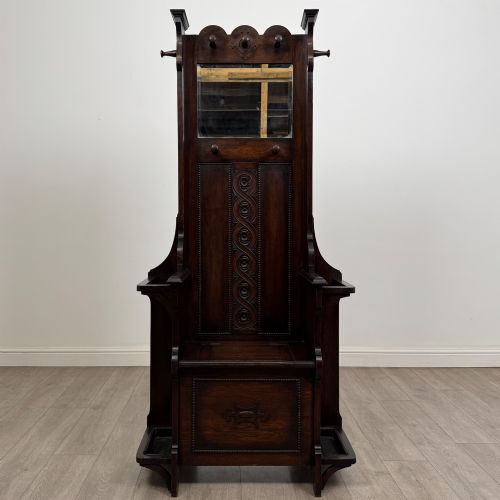
The standard of carving and architectural detail separates simpler utility items from superior examples. Elaborate ornamentation, such as Green Man motifs or deep relief work, elevates the status of a piece.
The integration of functional accessories like original brass drip trays, functioning mirrors, and secure wall-mounting or freestanding stability dictates the overall merit of the construction.
Material selection also plays a role, with choice golden oak and well-preserved horn or bentwood components representing higher tiers of craftsmanship within specific stylistic traditions.
J Parker of Woodstock·Fischel·Astrola
The Vintage Oak Hall Tree Glossary
- Hallstand
- A piece of hallway furniture combining coat hooks, hat storage, and umbrella holders. Many also feature a central mirror or a lift-seat bench.
- Arts and Crafts
- A design movement favouring honest construction, visible joinery, and natural materials. Pieces from this style often display simpler, functional oak forms.
- Bentwood
- A technique of steaming wood until pliable and bending it into curved shapes. This method created lightweight yet resilient frames for coat stands.
- Drip tray
- A metal base situated beneath umbrella holders to catch moisture from wet sticks. These pans protected wooden floors from water damage.
- Revolving hat stand
- A rotating upper section allowing easy access to multiple hats and coats. This clever mechanism typifies early twentieth century utility.
Vintage Oak Hall Tree: Frequently Asked Questions
What is a hall tree?
A hall tree is a piece of entrance furniture designed to hold hats, coats, and walking sticks. It provides an organised drop zone right inside the front door.
Historically, these items kept heavy outerwear ready for departure while managing wet umbrellas with integrated drip trays.
How do I date an oak hall stand?
Dating relies on stylistic clues, hardware types, and construction methods. Victorian examples often feature heavy carving, while Arts and Crafts pieces display simpler lines.
Edwardian versions frequently incorporate golden oak and lighter proportions. Examining mirrors and metal hooks also helps narrow down the decade.
Are these pieces freestanding or wall mounted?
Both types exist within this category. Freestanding floor stands rely on heavy bases or wider footprints for stability.
Wall mounted racks attach directly to hallway studs to save floor space while offering the same coat and hat storage.
How do I maintain oak furniture?
Regular dusting with a dry cloth keeps the surface clean. Occasional application of suitable wax preserves the lustre of the timber.
Keep wooden furniture away from direct heat sources and damp environments to protect the grain and prevent warping.