

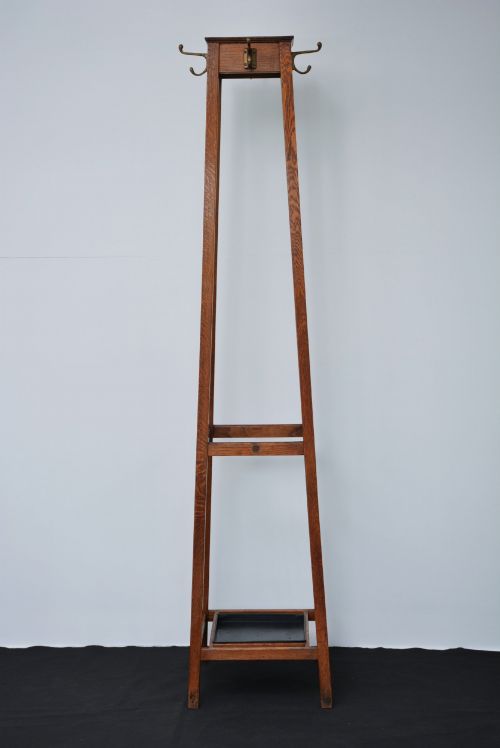
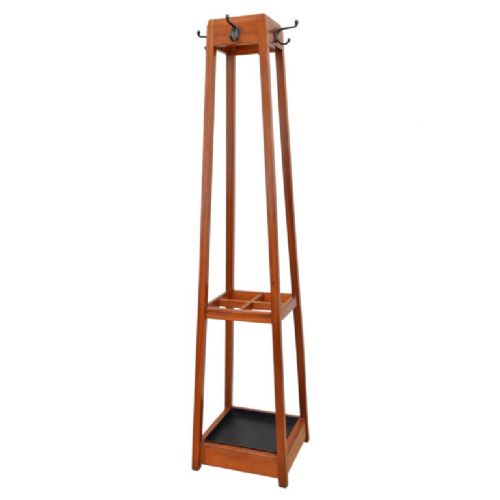

Hallway Storage Stand Oak
A hallway storage stand oak brings practical timber utility and period character directly to an entrance.
Hallway Storage Stand Oak
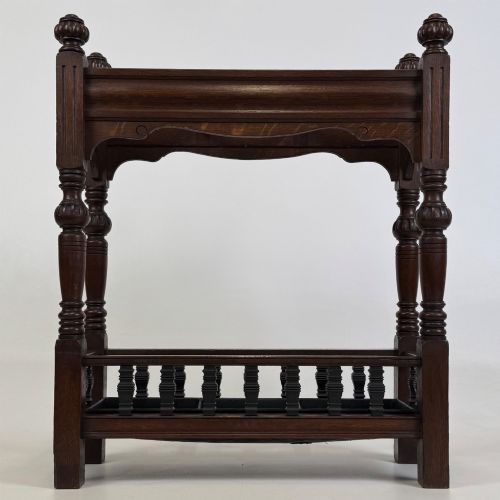
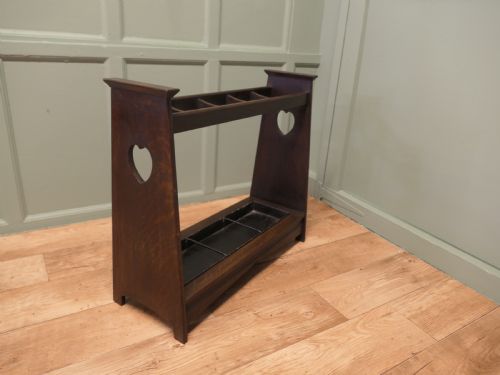
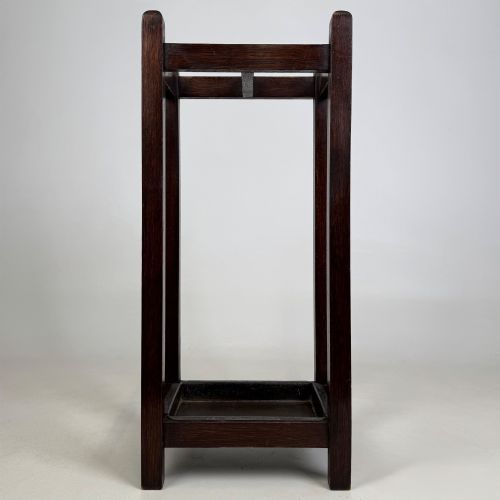
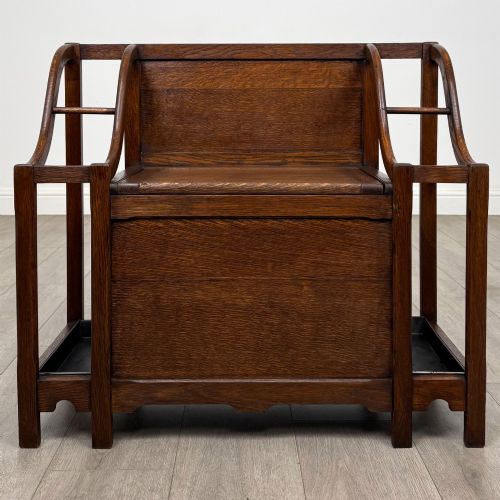
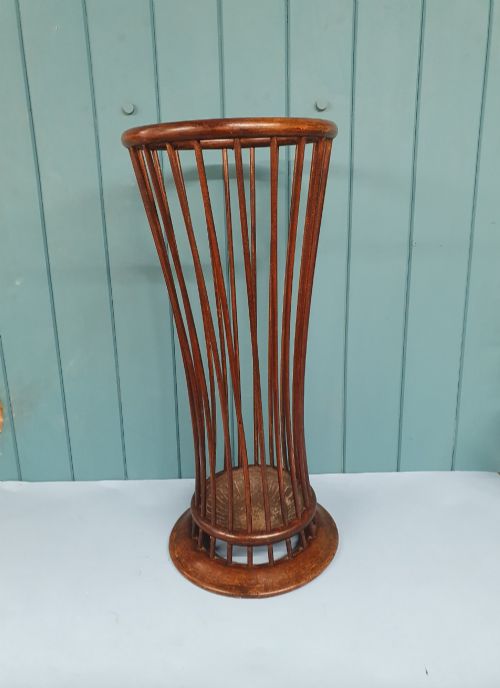
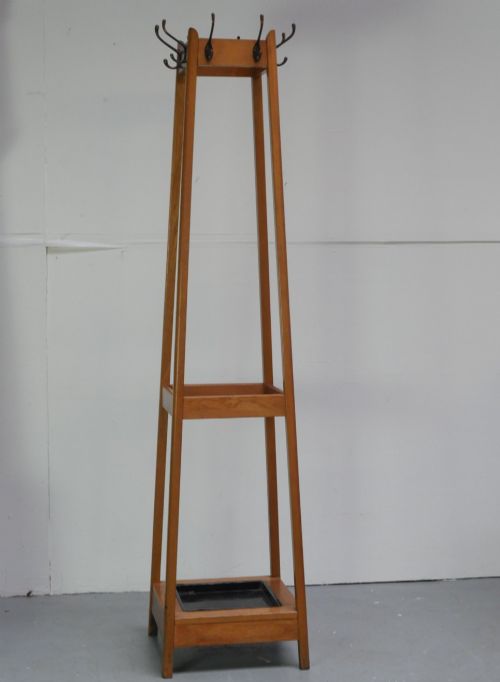
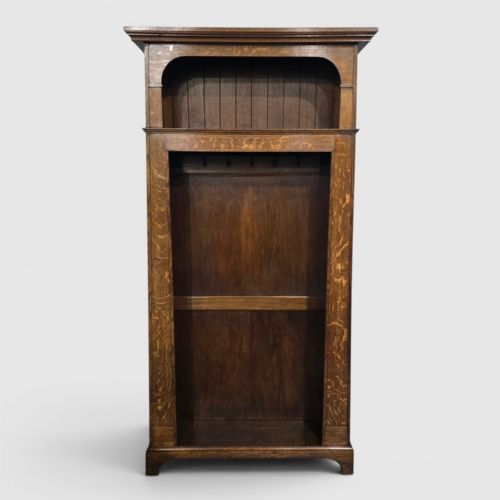
A hallway storage stand oak combines timber craftsmanship with practical entryway organisation, appearing most frequently in Edwardian and Victorian forms. These pieces include umbrella stands, stick stands, hall seats, coat stands, and hall robes fashioned from solid timber.
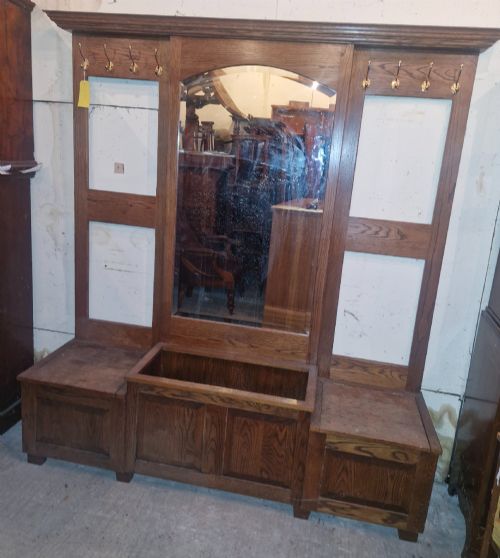
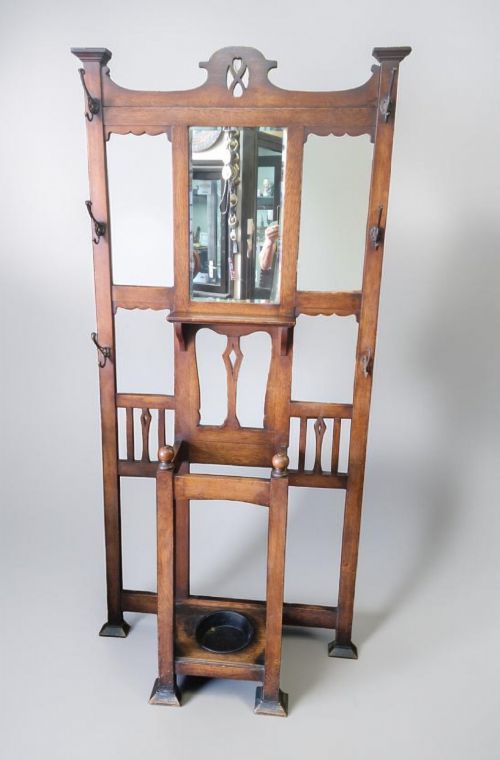
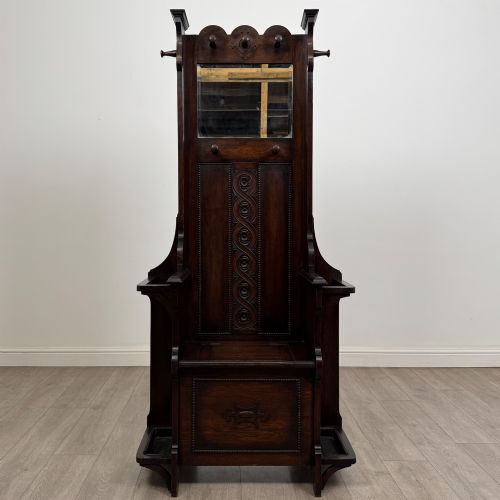
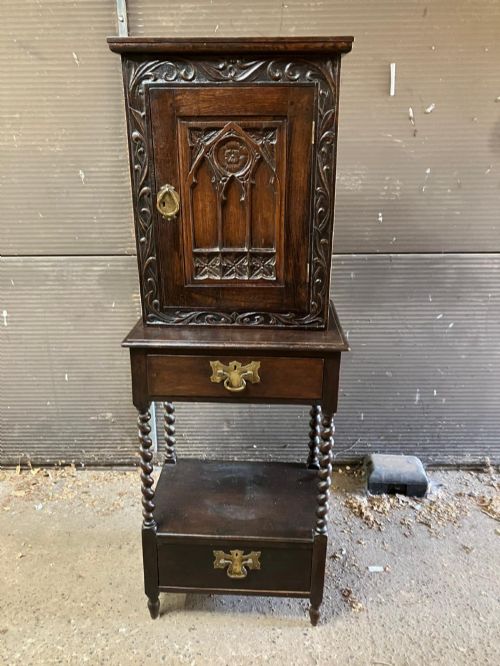
The selection ranges from compact umbrella holders to large multi-functional hall seat stands and carved hall cabinets. Pieces often incorporate metal drip trays, brass fittings, and mirrors alongside designated hooks for coats and hats.
Originating largely from the nineteenth and early twentieth centuries, these items reflect domestic functional needs of the period. Buyers encounter styles spanning Arts and Crafts, Art Nouveau, Gothic Revival, and Jacobean Revival.
Materials and construction
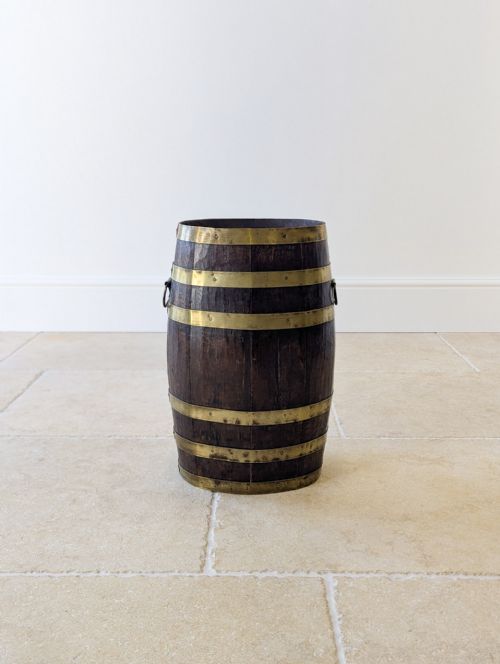
Construction relies heavily on solid oak, frequently paired with metal, brass, iron, copper, and glass elements. Coopered barrel designs utilise tight timber staves bound with brass or metal bands to hold walking sticks and umbrellas securely.
Carved decoration defines many pieces, particularly within Arts and Crafts and Victorian examples. Original metal drip trays and patent hardware often accompany the timber framework to manage moisture from wet umbrellas.
Several umbrella stands employ coopered barrel construction, bringing miniature tavern brewing techniques directly into the Victorian hallway.
Distinctions in construction and design
Quality shows in the integrity of the timber framing and the presence of original components such as brass drip trays, hooks, and mirrors. Coopered vessels demonstrate skill in the precise joining of curved staves.
Carved detailing and design attribution elevate certain items, particularly those reflecting specific movements or named workshops. The integration of multi-functional elements like integrated seats and cabinetry requires superior structural joinery.
Astrola·GW Evans·R.A. Lister
The Hallway Storage Stand Oak Glossary
- Coopered
- Construction using closely fitted wooden staves bound by metal hoops, commonly seen in cylindrical or oval umbrella barrels. This technique derives from traditional barrel-making.
- Hall Stand
- A composite entryway furnishing incorporating coat hooks, a mirror, and a tray or rack for umbrellas and sticks. Many examples also include a bench seat or small cabinet.
- Arts and Crafts
- A design movement favouring visible construction, honest materials, and handcrafted carved ornamentation. Pieces often display geometric forms and plain timber surfaces.
- Drip Tray
- A removable metal basin placed at the base of stick and umbrella stands to catch moisture. Original trays are typically formed from brass, copper, or galvanized iron.
Hallway Storage Stand Oak: Frequently Asked Questions
What fits in a hallway storage stand oak?
These pieces accommodate walking sticks, umbrellas, hats, and coats within designated hooks, rings, and vertical compartments. Many variants include integrated trays to catch water from wet weather gear.
Larger forms incorporate bench seating and enclosed storage compartments for additional hallway items.
How do I care for oak hall furniture?
Maintain the timber by dusting regularly and applying appropriate wax to preserve the finish of the oak. Protect the wood from excessive moisture by ensuring drip trays remain clean and dry.
Position the furniture away from direct heat sources to prevent the timber from splitting or warping over time.
Are original drip trays important?
Original metal drip trays contribute significantly to the authenticity and completeness of umbrella and stick stands. Brass, copper, or iron inserts matched to the piece confirm its period integrity.
Replacements function adequately for daily use, but original components remain preferable for collectors.
What periods do these stands cover?
The available pieces span from the nineteenth century through the early twentieth century, encompassing Victorian, Edwardian, and Art Deco eras. Construction dates frequently align with specific stylistic movements such as Arts and Crafts.
Design characteristics shift from ornate Victorian carving to the simpler, linear forms of the early twentieth century.