
Vintage Wooden Trestle Table
A vintage wooden trestle table offers robust utility and honest character, anchoring a room with enduring architectural presence.
Vintage Wooden Trestle Table
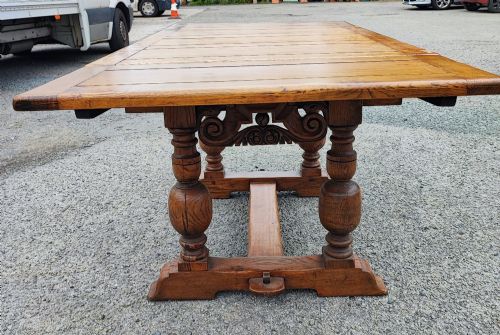
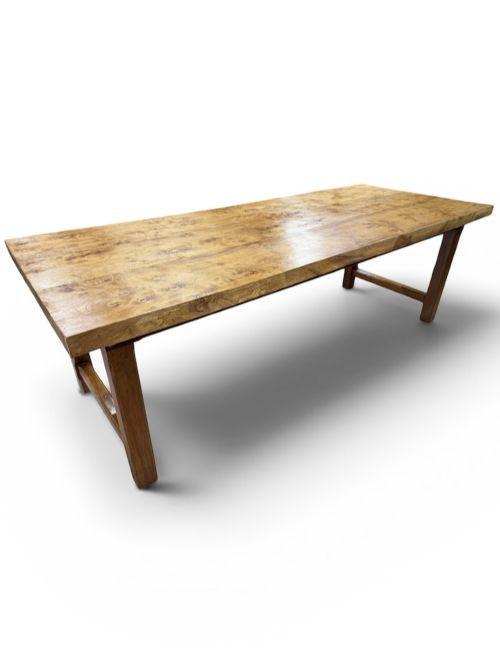
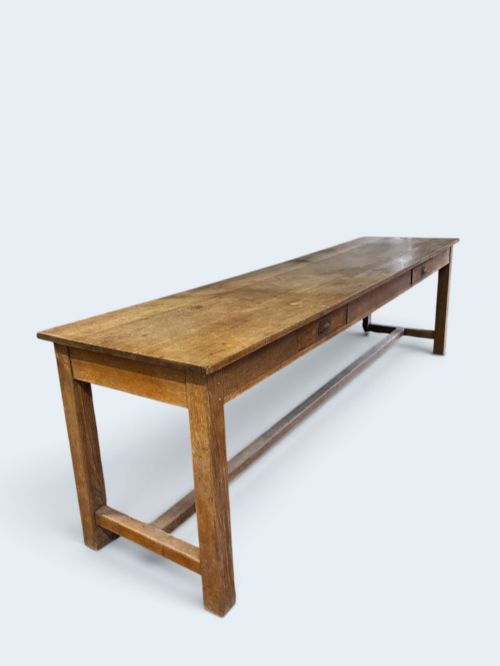
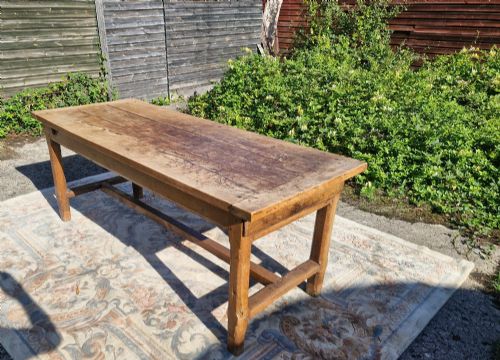
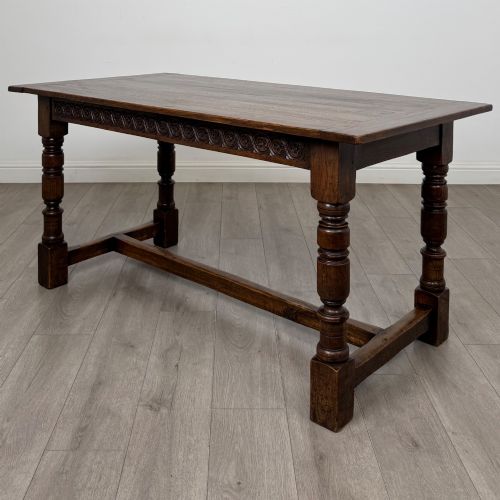
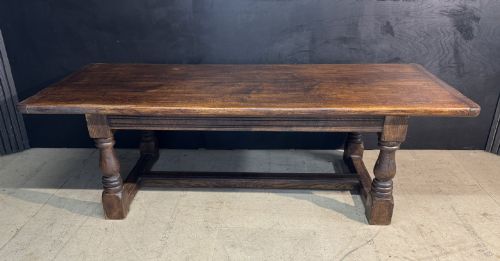
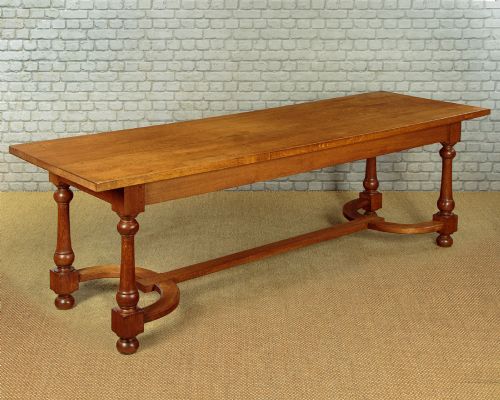
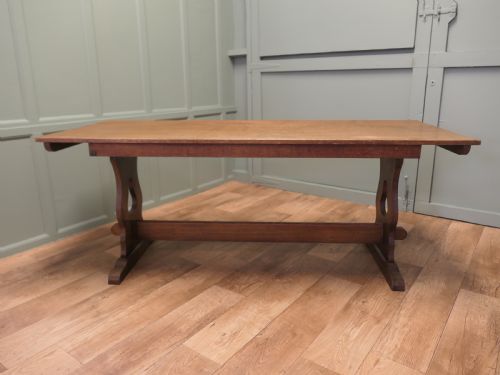
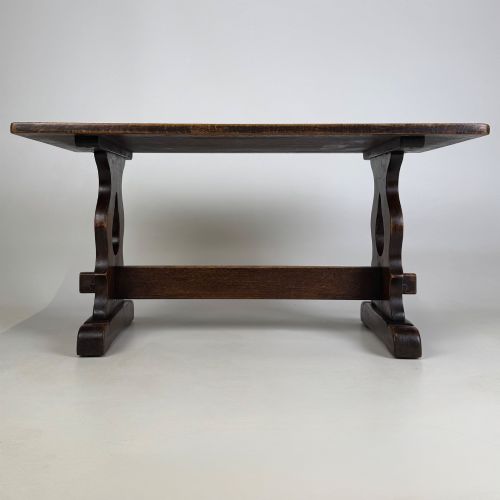
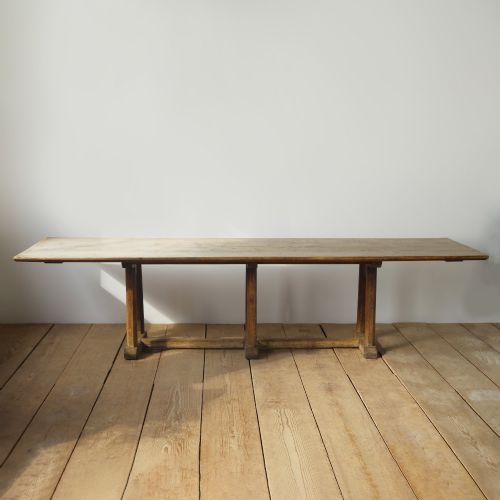
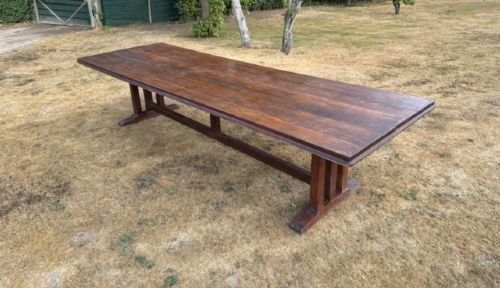
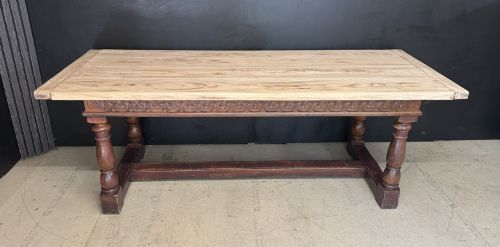
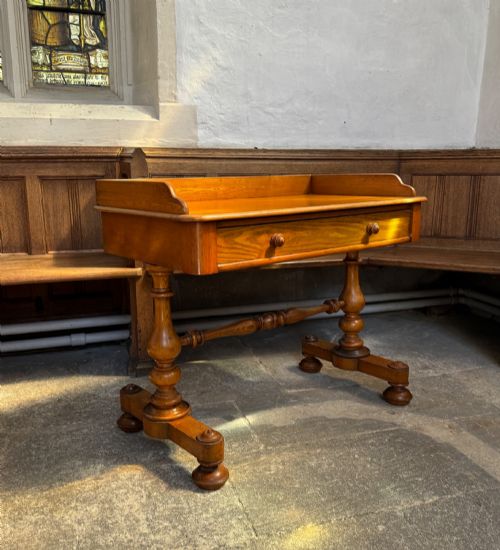
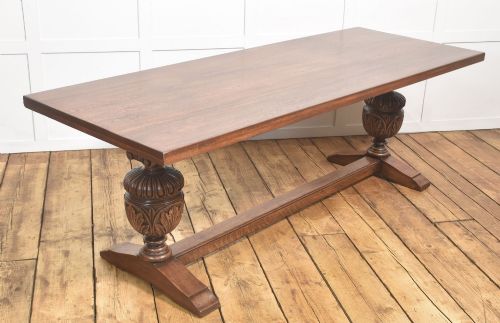
A vintage wooden trestle table is a substantial piece designed for communal dining or heavy daily use, featuring supporting upright ends connected by a horizontal stretcher. When you search for a vintage wooden trestle table, you are looking at sturdy forms derived from historic refectory and farmhouse traditions.
The versions you are most likely to meet on this page span from the 18th century through the Edwardian era and into the 1930s. These pieces often appear as oak refectory tables, rustic country dining boards, or simpler pine and elm kitchen tables.
Makers and carpenters built these tables to serve practical functions in institutions, public schools, and large domestic kitchens. Their enduring appeal lies in this utilitarian heritage, which provides ample legroom and unpretentious stability.
Materials and Construction
Joiners relied primarily on solid timbers such as oak, pine, mahogany, elm, and cherrywood to build these tables. Planks were selected for thickness and durability, frequently forming two-board tops or heavy boarded surfaces capable of enduring decades of heavy service.
Construction methods prioritised strength, utilising pegged mortise and tenon joints for the trestle ends and substantial stretchers to prevent lateral movement. Iron bracing or fixings appear occasionally to reinforce the wooden frames.
Surface preparation involved straightforward planing and finishing, allowing the natural grain of the wood to show. Over time, exposure to wax, oils, and daily use created rich patinas across the timber.
Assessing Quality and Character
The distinction between ordinary utility tables and superior examples rests in the selection of timber and the integrity of the joinery. Tables fashioned from quarter-sawn oak or old-growth pine with thick, unwarped top boards represent the higher end of the range.
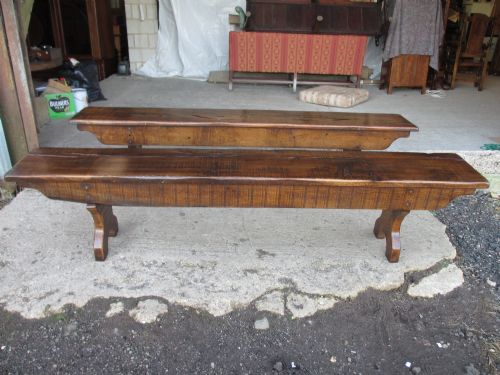
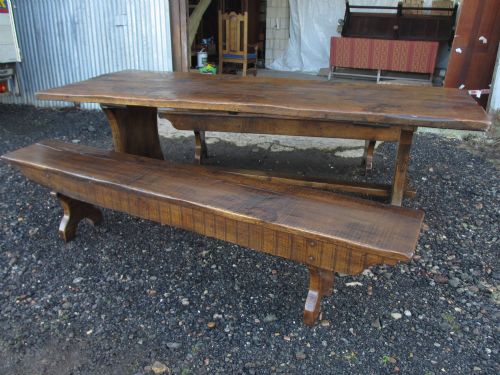
Proportion and execution of the trestle ends also determine quality. Finely shaped supports, pegged joints fitted without modern adhesives, and matching benches indicate thoughtful workshop production rather than hurried mass manufacture.
The Vintage Wooden Trestle Table Glossary
- Trestle
- A supporting framework consisting of a horizontal beam or stretcher fixed between two upright feet. This design allows maximum legroom along the length of the table.
- Refectory
- A long dining table traditionally used in monasteries or academic institutions. They were built large to accommodate many diners at once.
- Draw leaf
- An extension mechanism where two sliding leaves tuck beneath the main surface and pull out to lengthen the table. This ingenious system preserves the stability of the central trestle base.
- Quarter-sawn
- Timber cut radially from the growth rings, producing a stable board with distinctive figuring. Cabinetmakers favoured this cut for its resistance to warping.
- Stretcher
- A horizontal wooden rail connecting the legs or trestle bases to provide rigidity. It often doubles as a footrest on tavern and refectory tables.
Vintage Wooden Trestle Table: Frequently Asked Questions
What is a trestle table?
A trestle table is a long dining or work surface supported by two braced upright frames rather than four corner legs. This architectural arrangement offers exceptional stability and unobstructed seating along the entire length.
Historically utilised in monastic dining halls and large country kitchens, the design prioritises practical strength. The uprights are typically joined by a heavy central stretcher to prevent lateral sway.
How do I date an old wooden table?
Dating requires examining the tool marks, timber selection, and assembly methods used by the carpenter. Hand-planed surfaces, pegged joints, and older fastener types such as handmade nails point towards earlier periods.
Changes in style, from austere Jacobean revival forms to lighter Arts and Crafts designs, also help narrow down the decade of manufacture. Patina and wear patterns accumulated over generations offer further clues to age.
Are these tables suitable for daily dining?
These tables were originally built for heavy daily use in farmhouses, schools, and institutions, making them exceptionally durable for modern dining rooms. Their robust timber construction easily handles the demands of family meals.
Pairing a vintage board with sturdy benches or mismatched chairs creates a practical, welcoming arrangement. Regular waxing helps protect the historic surface from spills and daily wear.
How should I care for a vintage wooden top?
Maintaining a vintage wooden top requires simple, consistent care using natural beeswax or appropriate furniture oils. Avoid silicone-based polishes that can degrade the historic finish over time.
Using mats for hot dishes and wiping up moisture promptly preserves the patina of the timber. Letting the wood breathe and settle naturally in a room with stable humidity prevents the planks from splitting.