

Vintage Wooden Tea Tray
A vintage wooden tea tray delivers practical utility and tactile warmth, bringing period character and substantial timber grain directly to the table.
Vintage Wooden Tea Tray
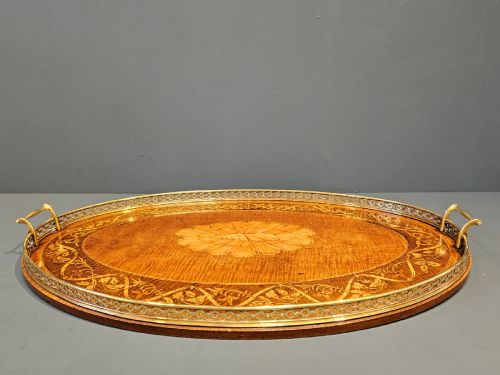
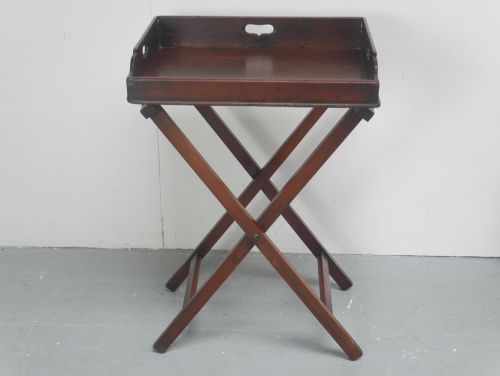
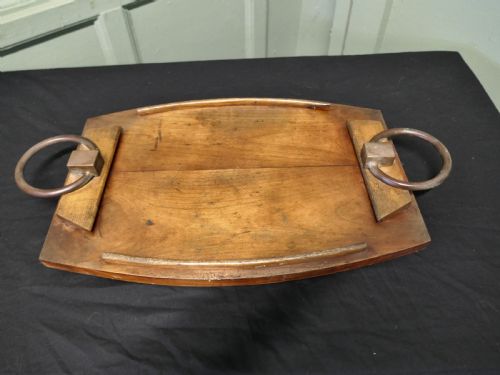
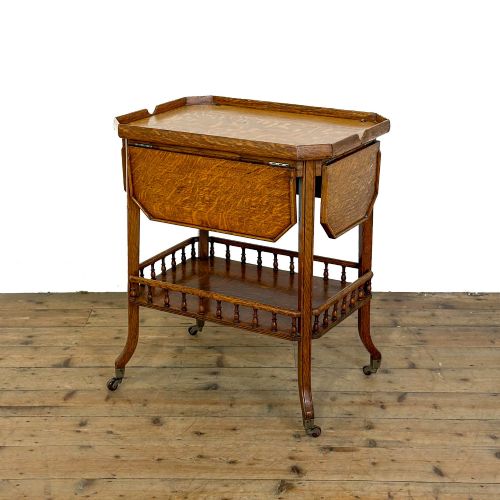
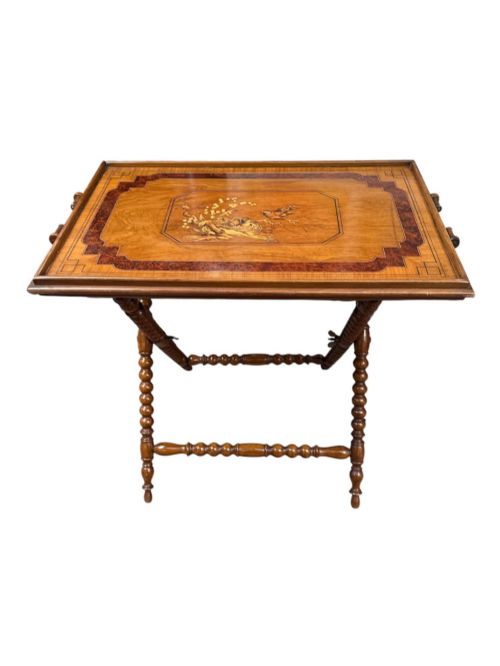
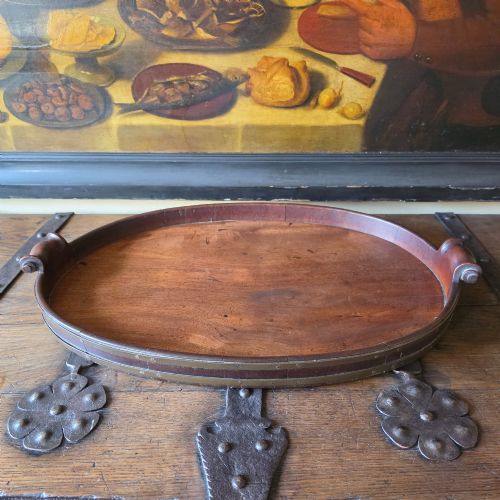
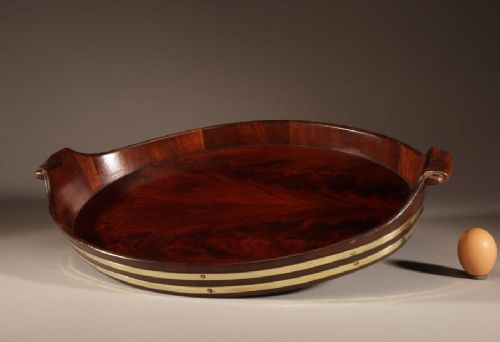
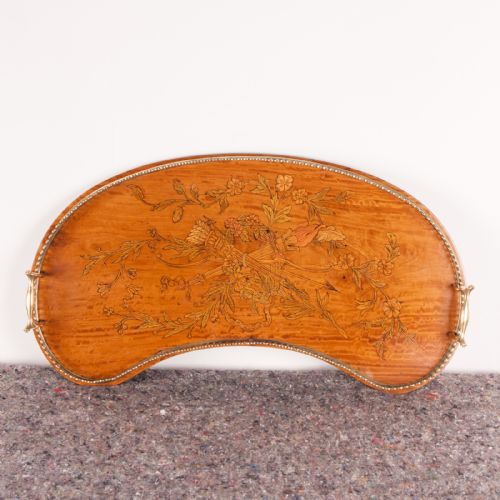
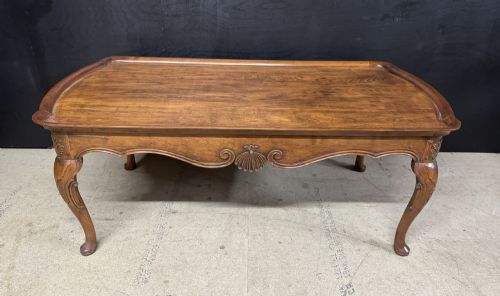
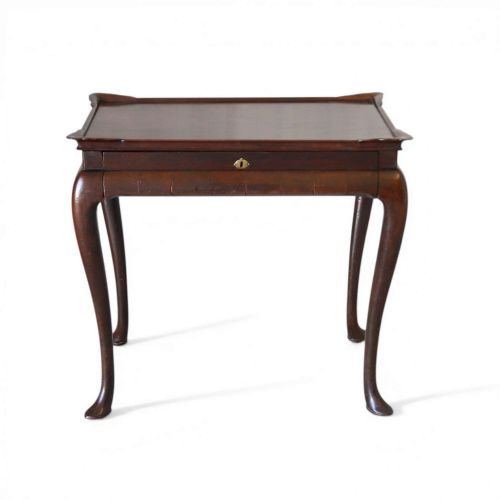
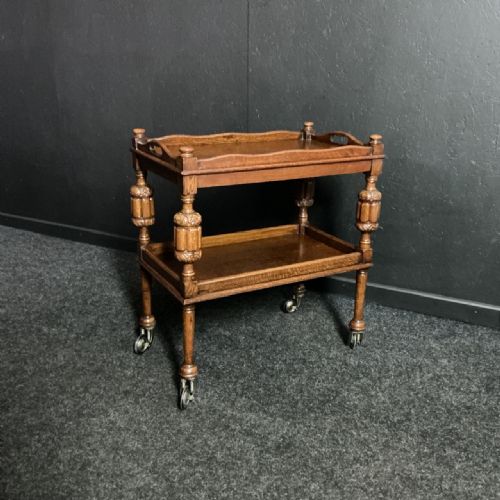
A vintage wooden tea tray comprises serving platters, butler trays on stands, and occasional tables with removable surfaces spanning the eighteenth century through to the interwar period. Buyers searching for a vintage wooden tea tray encounter diverse forms, including oval serving platters, kidney-shaped presentation boards, and drop-side tea trolleys.
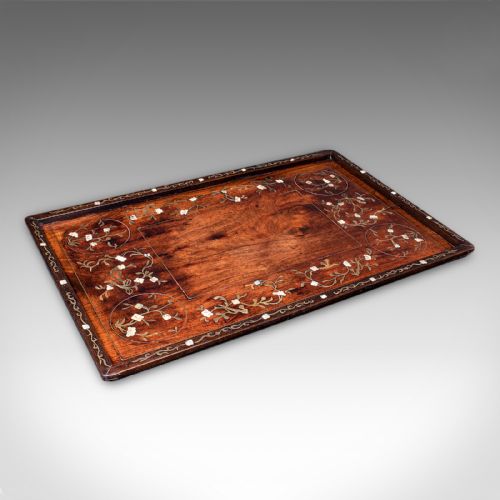
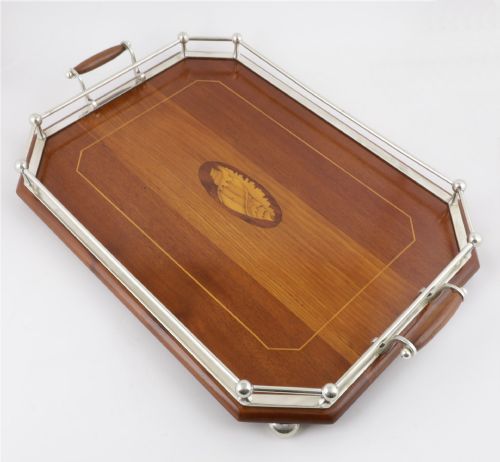
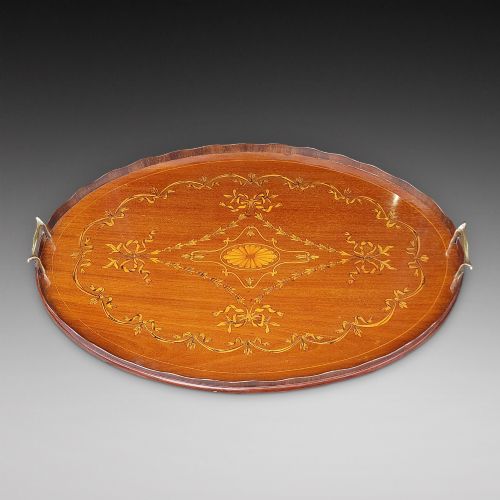
The selection ranges from Georgian mahogany silver tables to Edwardian marquetry pieces and Arts and Crafts elm ship trays. Walnut, oak, and satinwood dominate the offerings, frequently enhanced by brass handles, silver plate galleries, and intricate shell or floral inlay.
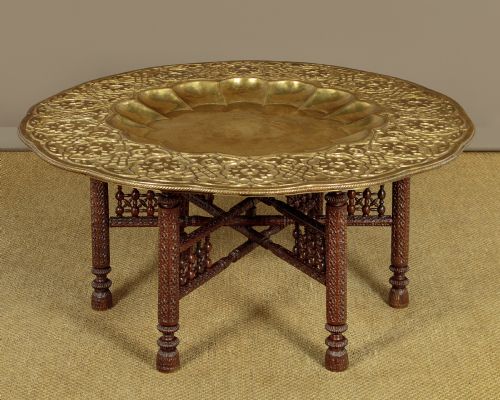
Regional variations appear alongside domestic British craftsmanship, with Anglo-Indian teak, Kashmiri walnut, and Sorrento ware marquetry representing international workshop traditions. Many items double as side tables or coffee tables when mounted on folding or fixed stands.
How they were made
Cabinetmakers utilised dense hardwoods such as mahogany, walnut, oak, and teak, shaping them into solid timber boards or applying decorative veneers like burr walnut, oyster veneer, and satinwood. Joinery techniques included coopered staves for oval vessels and precise dovetailing or mitring for gallery edges.
Marquetry and inlay required meticulous hand-cutting of contrasting woods and shell to create geometric or floral motifs across the surface. Metal components, including brass handles, galleries, and copper tops, were cast and fitted by hand to secure the wooden structures.
Listings feature periods spanning from the eighteenth century through to the 1930s, encompassing Georgian, Victorian, Edwardian, and Arts and Crafts aesthetics.
What varies in quality
The standard of a vintage wooden tea tray rests upon the precision of its timber selection, the crispness of its marquetry inlay, and the integrity of its structural joins. Superior examples display figured grains like burr walnut or satinwood paired with robust dovetailing and uncompromised gallery fittings.
Workshop execution dictates the longevity and visual impact of the piece, separating mass-produced items from finely handcrafted serving platters and trolley tables. The retention of original brass handles and untarnished silver plate galleries further distinguishes high-tier specimens.
Edwards and Roberts
The Vintage Wooden Tea Tray Glossary
- Marquetry
- Decorative veneer work arranged in pictorial or geometric patterns using various coloured woods. This technique adorns many Edwardian and nineteenth-century serving surfaces.
- Gallery
- A raised rim or border around the edge of a tray, often fashioned from pierced brass or silver plate. It prevents cups and teapots from sliding during transport.
- Coopered
- Constructed from narrow parallel staves of wood joined together with curved sides, much like a barrel. This method forms sturdy oval and round trays.
- Butler tray
- A portable wooden tray with hinged or fixed sides, designed to sit upon a folding stand. It served domestic staff for carrying and presenting afternoon refreshments.
- Oyster veneer
- Cross-cut sections of small branches or roots laid to resemble oyster shells, creating concentric circular patterns. It appears on select pieces from the turn of the twentieth century.
Vintage Wooden Tea Tray: Frequently Asked Questions
How do I date a wooden tea tray?
Dating relies on timber choices, construction methods, and stylistic motifs associated with specific periods like the Georgian, Victorian, or Edwardian eras. Examining the underside and handles often reveals period-specific manufacturing techniques.
Secondary clues include the presence of marquetry styles, such as Sheraton Revival motifs or Sorrento ware designs, which pinpoint manufacture to precise decades.
Are these trays suitable for daily use?
Many vintage wooden tea trays retain sturdy construction and functional handles, making them practical for serving drinks or displaying items. Protective finishes help guard against moisture and heat.
Gentle handling preserves delicate veneers, inlay work, and original brass or silver-plated galleries during everyday service.
How do I care for antique wood surfaces?
Maintaining vintage timber involves applying appropriate wax polishes to nourish the grain and prevent the wood from drying out. Avoiding prolonged exposure to direct sunlight and moisture protects the original polish and veneer.
Harsh chemical cleaners should be avoided in favour of soft cloths to preserve patination and inlaid details.