


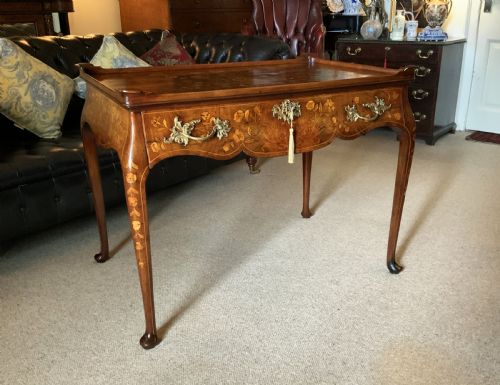
Antique Marquetry Tray
An antique marquetry tray brings intricate wood patterns and polished mahogany or satinwood surfaces to a serving table or tea service.
Antique Marquetry Tray
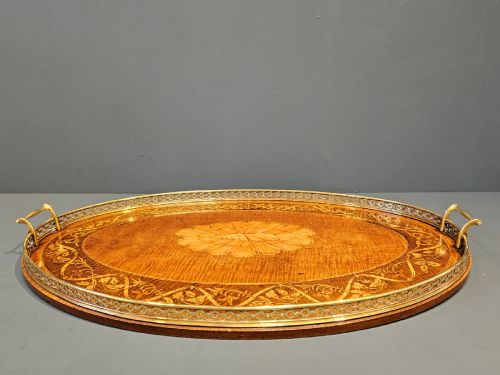
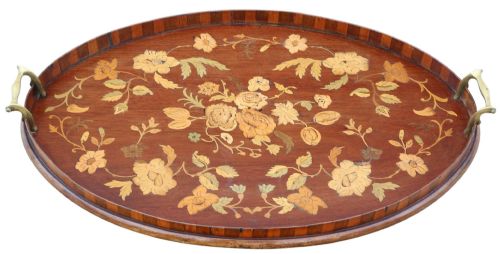
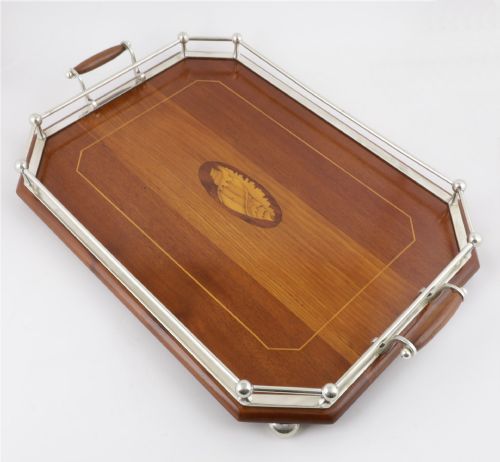
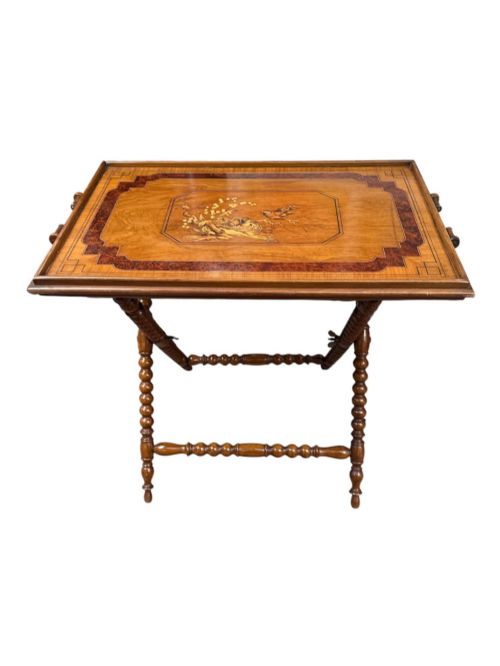
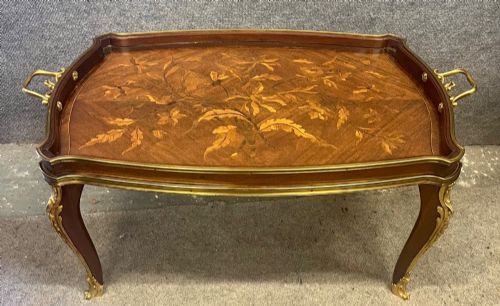
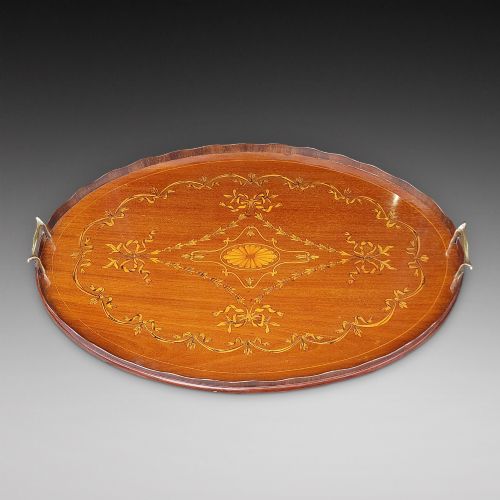
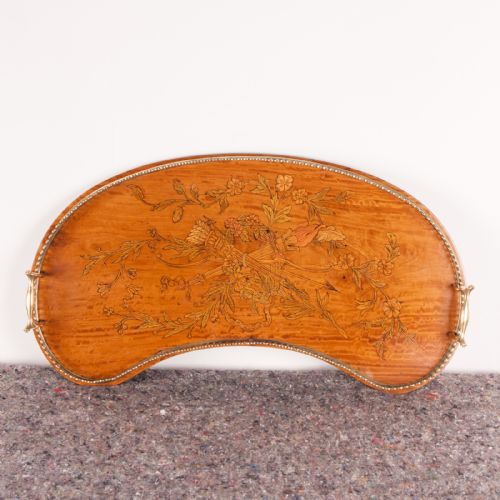
When you search for an antique marquetry tray, you encounter serving pieces and occasional table tops produced across the Victorian, Edwardian, and nineteenth-century periods. These objects combine utilitarian function with decorative wood inlay, appearing in forms such as oval tea trays, kidney-shaped platters, and butler's trays.
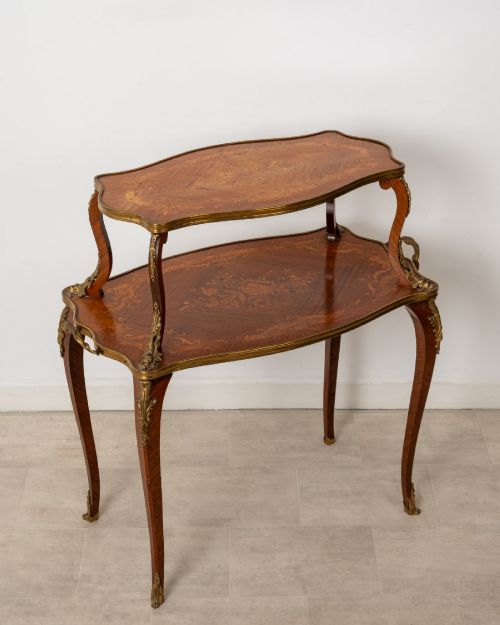
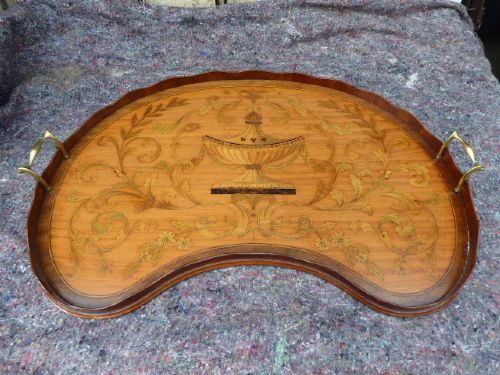
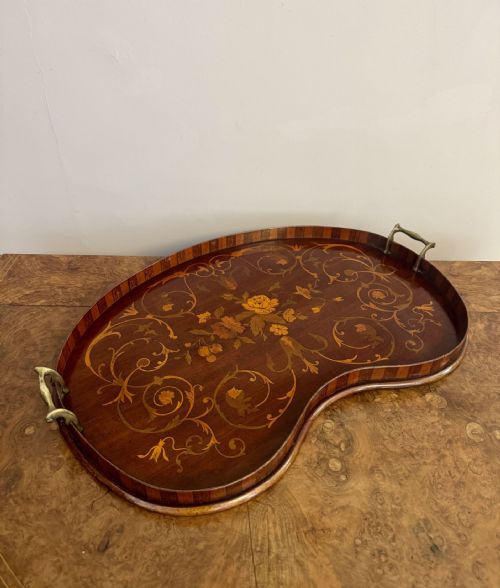
The pieces on this page span English mahogany models, French kingwood etagere tables, and Italian Sorrento ware. Oval and kidney shapes dominate the selection, often fitted with brass handles or silver-plated galleries designed for afternoon tea and entertaining.
Materials and construction
Cabinet makers utilised mahogany, satinwood, walnut, and kingwood as the primary bases for these trays, frequently incorporating boxwood and brass for detailed inlay work. Surfaces show fine contrasting wood veneers cut into floral, geometric, or pictorial motifs.
Many examples feature raised wooden rims or pierced brass galleries secured to the base, while others integrate into occasional tables, etageres, or stands to function as removable serving surfaces.
Listings feature trays spanning the eighteenth, nineteenth, and early twentieth centuries, constructed in mahogany, satinwood, walnut, and kingwood.
Assessing craftsmanship and execution
Hardware and mounts also dictate grade, with heavy cast or chased ormolu and solid silver plate marking out superior workshops from simpler domestic items.
Edwards and Roberts·Rupert Favell
The Antique Marquetry Tray Glossary
- Marquetry
- Decorative veneer work forming pictures or patterns by assembling small pieces of wood, shell, or ivory onto a structural base. This technique defines the surface ornamentation of the pieces gathered here.
- Satinwood
- A durable, lustrous hardwood yielding a pale yellow colour that takes a high polish. Makers utilised it extensively for contrasting borders and central panels.
- Etagere
- A piece of furniture with multiple tiers for displaying small objects or serving. Several listings combine this form with a removable tray top.
- Sorrento ware
- Woodwork decorated with micro-mosaic and marquetry, originating from the Italian town of Sorrento during the nineteenth century. These items often depict architectural scenes, figures, or floral arrangements in olivewood.
- Gallery
- A raised pierced border of wood or metal enclosing the edge of a tray to prevent items from sliding off. They appear in brass, silver plate, and carved timber.
Antique Marquetry Tray: Frequently Asked Questions
What were antique marquetry trays used for?
These items served primarily for carrying tea services, holding correspondence, or organising desk accessories in nineteenth-century drawing rooms. They functioned both as portable serving platters and as decorative tabletop surfaces.
Over time, many of these trays found permanent homes fixed atop folding stands or occasional tables to create display surfaces for domestic interiors.
How do I distinguish Edwardian trays from Victorian ones?
Victorian examples frequently showcase heavier mahogany bases with deep oval galleries and darker wood tones. Edwardian pieces often lean towards lighter satinwood grounds, kidney shapes, and Sheraton Revival motifs.
Construction methods and veneer choices also guide dating, with Edwardian items commonly reflecting neoclassical revivals and lighter decorative schemes.
Are these trays suitable for daily use?
While originally built for domestic hospitality, antique trays require careful handling due to their delicate wood veneers and historic polish. Displaying them on a side table or etagere protects the delicate marquetry from moisture and heavy wear.
Using them for light service during special occasions preserves the surface while keeping the object in its historical context.
What is the difference between marquetry and inlay?
Marquetry involves covering the entire surface of an object with an assembled veneer puzzle of various woods and materials to create a picture or pattern. Inlay strictly refers to inserting pieces of contrasting material into recessed cavities cut directly into a solid wooden base.
Many pieces described as inlaid actually employ comprehensive marquetry techniques across the entire tray surface.