
Vintage Wooden Specimen Chest
A vintage wooden specimen chest gathers small fragments and curiosities into ordered banks of drawers, offering the tactile satisfaction of a nineteenth-century study.
Vintage Wooden Specimen Chest
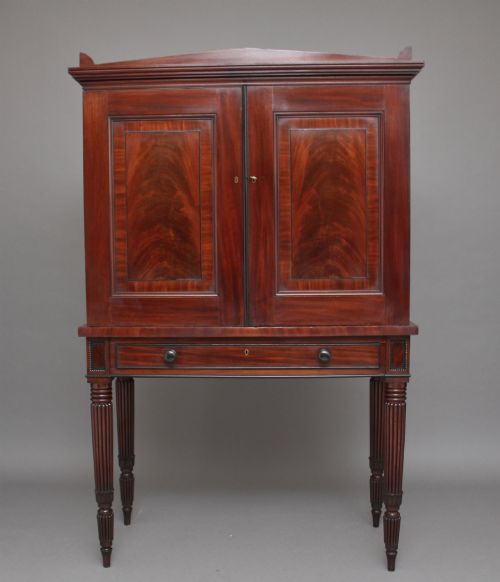
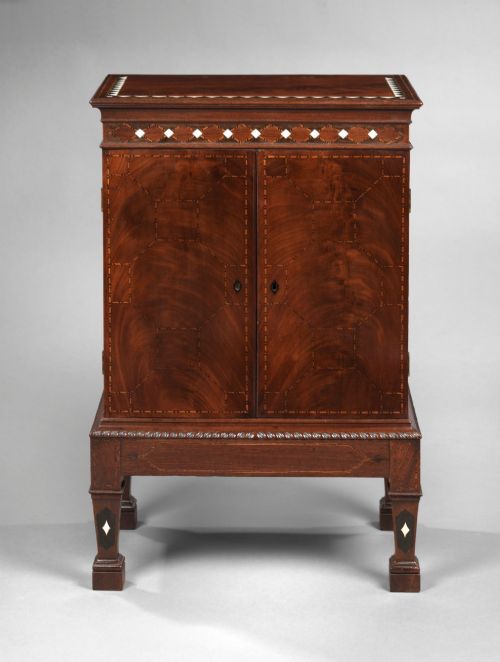
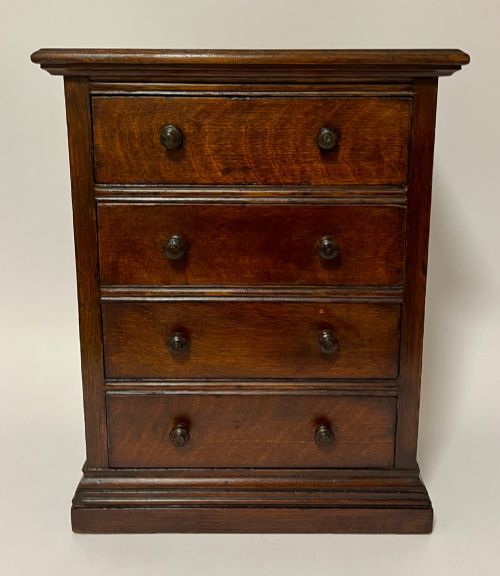
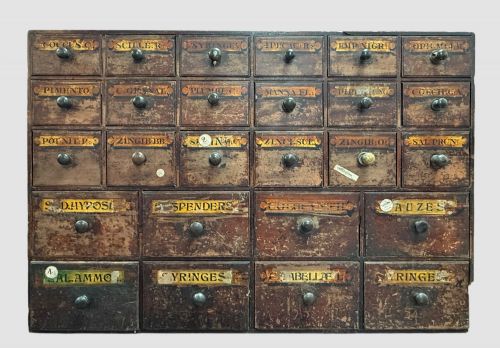
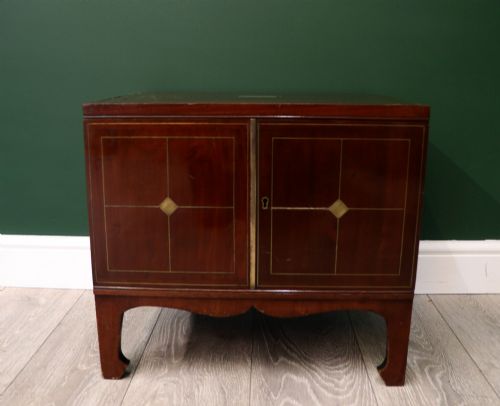
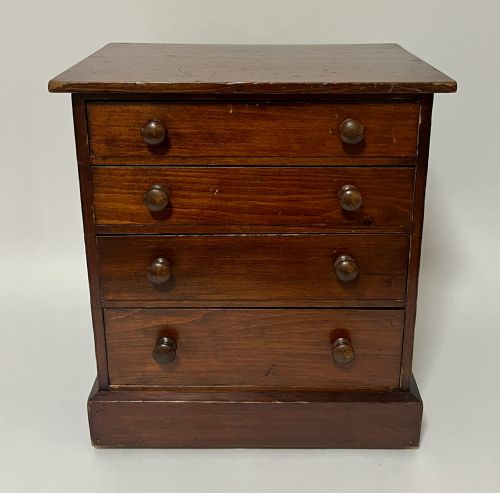
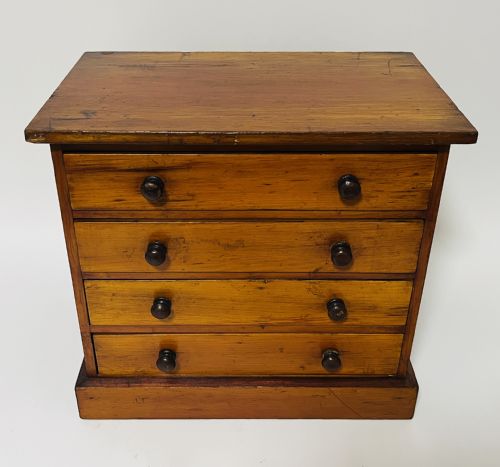
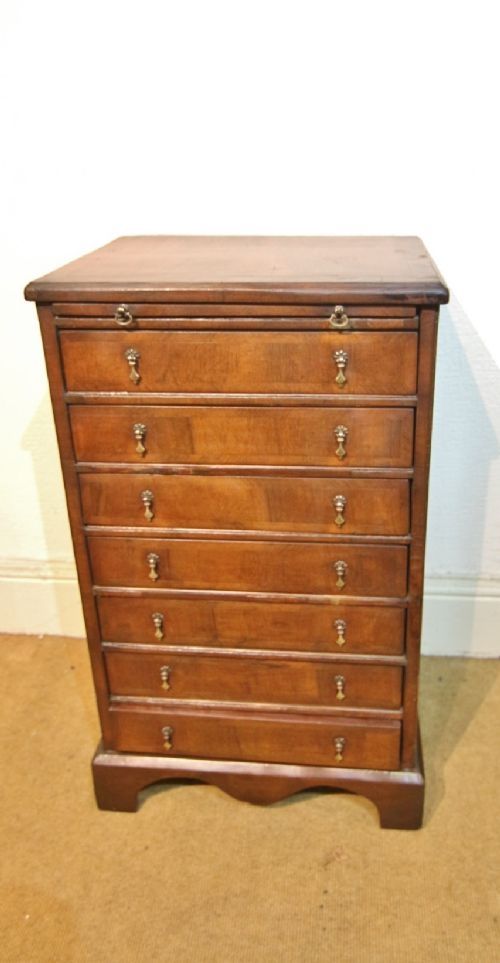
A vintage wooden specimen chest is a multi-drawer cabinet designed to organise small objects, geological samples, or medicinal items. The pieces on this page span the Georgian, Victorian, and Edwardian periods, stretching from the early nineteenth century into the 1920s.
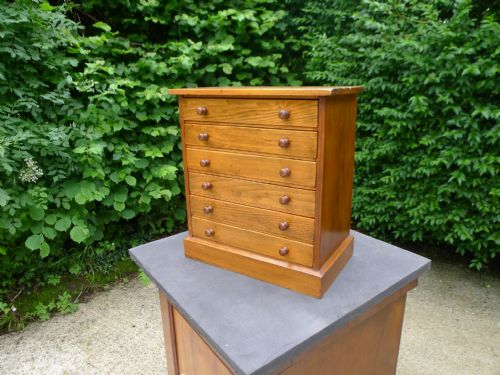
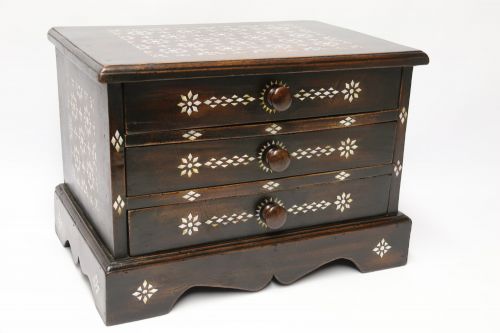
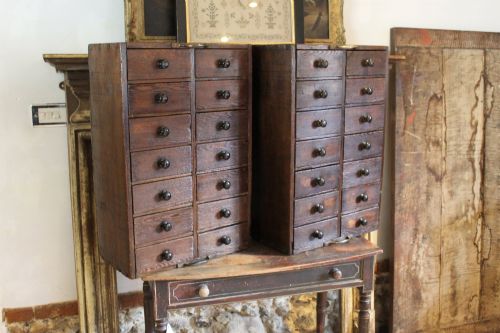
Most examples take the form of miniature chests of drawers, banks of small drawers, or tabletop cabinets. They appear in regional pine and deal alongside denser cabinet timbers like mahogany, walnut, and oak.
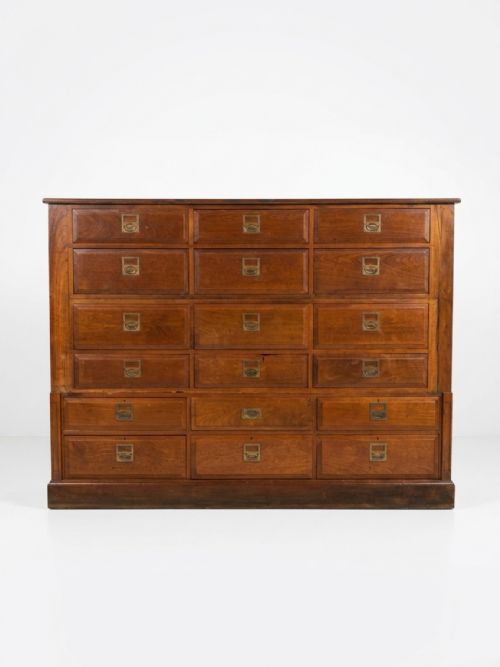
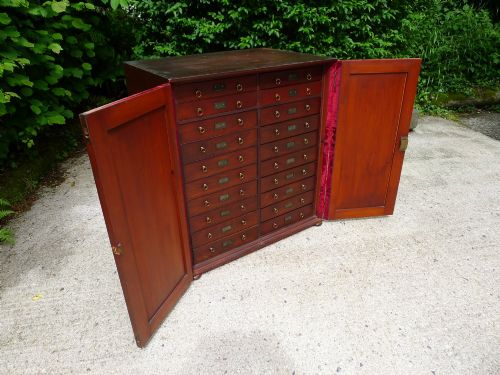
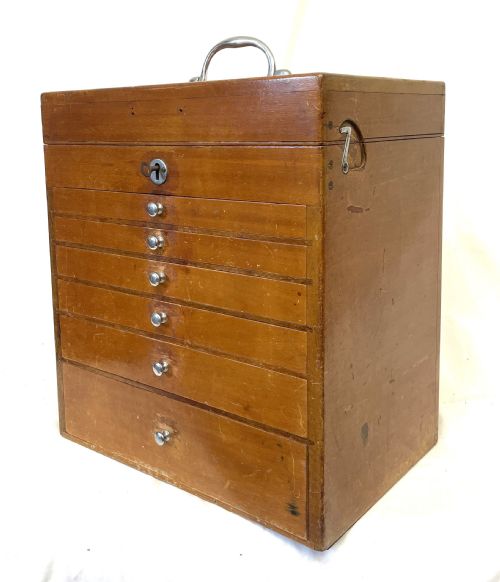
The layout typically involves numerous shallow drawers meant for classification, though some examples incorporate glass fronts or campaign-style brass fittings for portability.
Materials and construction methods
Makers utilised a range of dense hardwoods and more accessible softwoods, building bodies in mahogany, walnut, oak, teak, satinwood, pine, and deal. Drawer construction often reveals straightforward dovetail joints designed to withstand frequent opening and closing.
Hardware played a functional role, with brass drop handles, campaign inlays, and iron fixtures securing the small compartments. Surfaces were polished, stained, or left in natural timber depending on the workshop and intended use.
Assessing quality in multi-drawer cabinets
Quality rests in the precision of the drawer fit and the choice of primary timber. Dense hardwoods like mahogany or walnut with careful brass inlay or panel construction stand apart from simpler stained deal or pine workshop boxes.
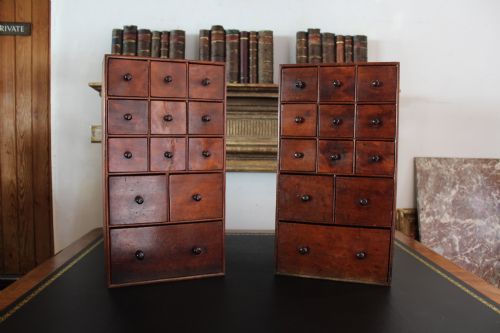
The complexity of the internal arrangement dictates the ambition of the piece, moving from simple banks of six drawers to large modular cabinets featuring twenty-five or forty compartments.
Luxmore's of Ilfracombe·D Napier and Sons·William John Burchall·Brady
The Vintage Wooden Specimen Chest Glossary
- Apothecary chest
- A multi-drawer cabinet originally used by chemists or homeopaths to store medicinal ingredients and small phials. These often feature numerous small labelled or unlabelled drawers.
- Campaign style
- Furniture constructed with inset brass handles and reinforced corners designed for easy transport on military campaigns or distant travel. This aesthetic appears on several compact storage pieces.
- Wellington chest
- A tall, narrow chest of drawers secured by a hinged vertical locking stile that fastens with a key. This form occasionally surfaces in miniature or child-size proportions.
- Deal
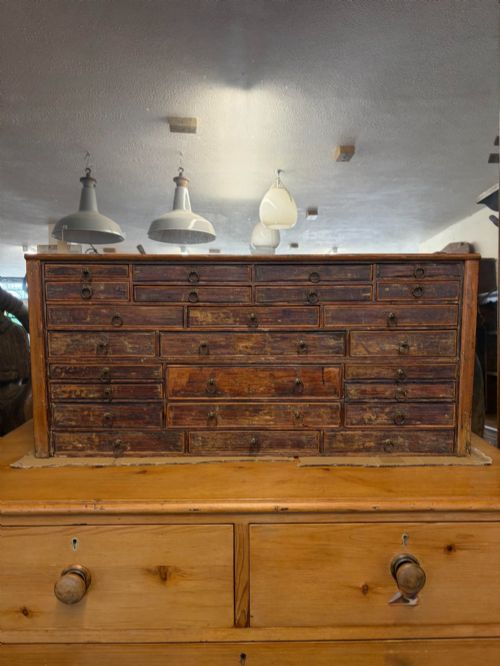
- A soft timber derived from fir or pine trees, commonly utilised for secondary framing and simpler nineteenth-century utility furniture. Stained deal provides the body for several tabletop cabinets on this page.
- Tabletop cabinet
- A miniature chest or storage case proportioned to sit upon a desk, counter, or table rather than stand independently on the floor.
Vintage Wooden Specimen Chest: Frequently Asked Questions
What were specimen chests originally used for?
These cabinets housed natural history specimens, geological samples, coins, or botanical collections. Naturalists and collectors used the shallow drawers to organise delicate items systematically.
Over time, chemists and doctors adopted similar multi-drawer configurations to store remedies, powders, and small medical equipment.
How do I date a wooden specimen chest?
Dating relies on timber selection, handle styles, and construction techniques such as hand-cut dovetails. Georgian and early nineteenth-century pieces often feature dense mahogany or walnut with simple brass pulls.
Later Victorian and Edwardian examples incorporate pine, deal, or machine-cut elements alongside diverse regional woods like teak, satinbirch, and palmwood.
Can I use these drawers for modern storage?
The shallow compartments suit the storage of small everyday items, craft supplies, jewellery, or stationery. Their compact footprint allows them to sit easily on desks, sideboards, or tabletops.
Care should be taken not to overload fragile nineteenth-century drawer bases with excessively heavy modern objects.
What is the difference between an apothecary chest and a collector cabinet?
Apothecary chests were built for practical medical use by pharmacists and chemists, frequently housing numerous small drawers for ingredients. Collector cabinets were tailored for private hobbies, displaying items behind glass or within specialised wooden trays.
Despite their different origins, both share the characteristic multi-drawer format seen across nineteenth-century workshop production.