
Vintage Wooden Horse
These vintage wooden horse pieces span centuries of craft, offering tactile charm for collectors of vernacular sculpture and rocking models.
Vintage Wooden Horse
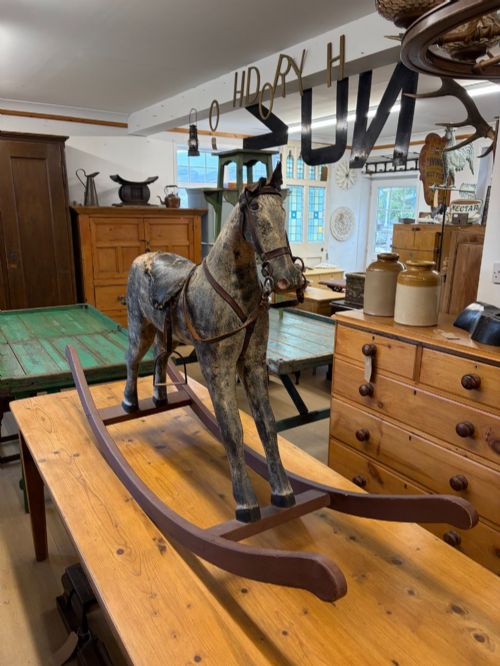
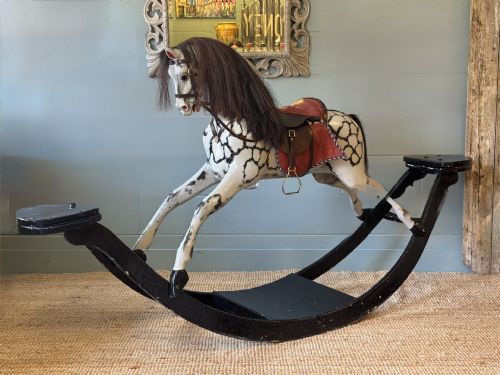
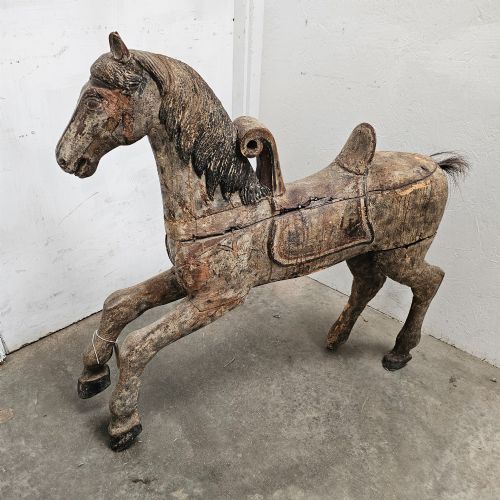
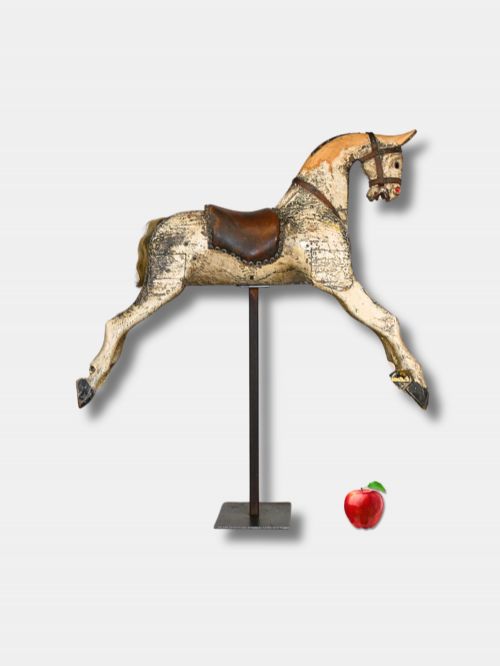
A vintage wooden horse typically takes the form of a rocking horse, a carved carousel figure, or a primitive sculpture created during the nineteenth and early twentieth centuries. These objects derive from vernacular folk art traditions and commercial makers alike, reflecting both domestic play and decorative display.
Rocking horses and carved figures dominate the selection, often retaining traces of early paint and original stands. Pieces range from large nursery items to smaller scale models and pull-along toys.
Origins stretch across Victorian and Edwardian periods, with styles encompassing English folk art and primitive workshop pieces. Buyers encounter various utilitarian forms alongside decorative carvings.
Materials and construction methods
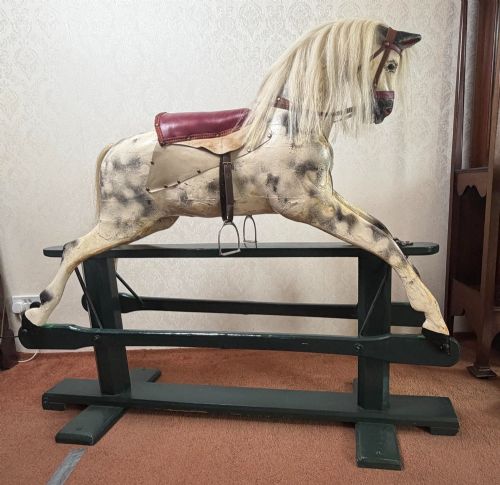
Makers utilised solid timbers such as pine, mahogany, and walnut, often shaping bodies by hand with chisels and drawknives. Surfaces received coats of oil paint or were left with exposed wood grain, depending on whether the piece served as a child's toy or a decorative sculpture.
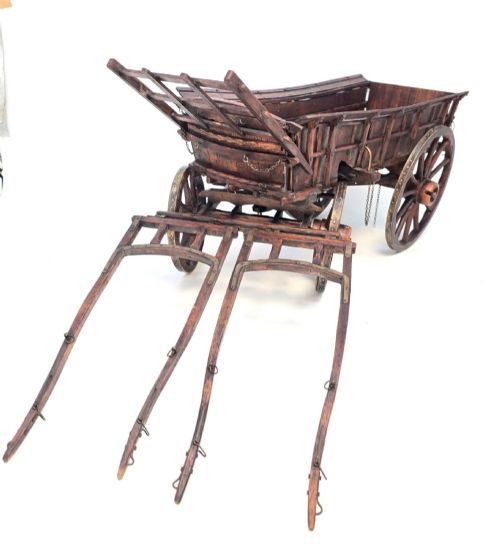
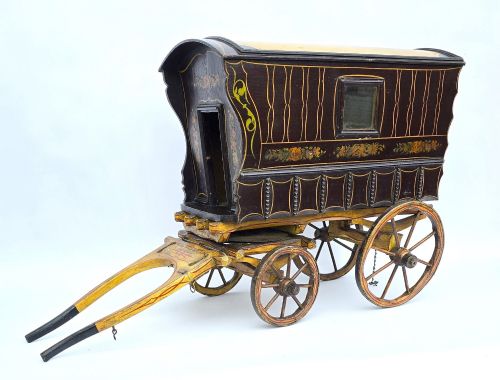
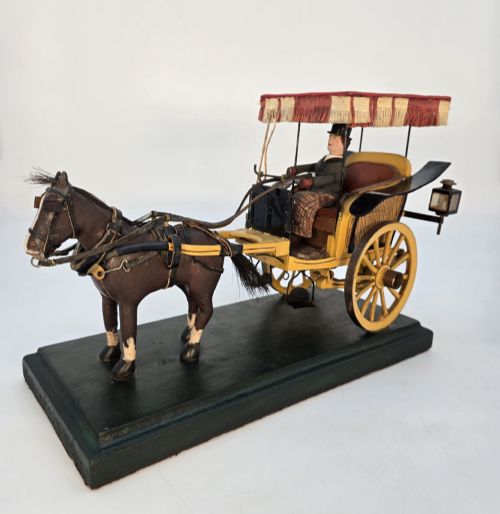
Larger rocking examples incorporated metal brackets, leather tack, and genuine horsehair manes to withstand robust play. Smaller scale models relied on iron fixtures and detailed paintwork to capture realistic carriage and farm equipment details.
Several wooden horses retain their original glass eyes, fixed with a steady gaze that has watched nurseries change for over a century.
Assessing quality in carved wood
Quality rests on the vitality of the carving and the survival of original surface finishes rather than mere age. Expressive anatomical modeling and untouched original paint elevate a piece significantly above utilitarian workshop output.
The integrity of the construction, from stable rocking stands to securely pegged joints, separates master carvers from naive makers. Original leather tack, glass eyes, and horsehair mane additions further distinguish superior examples.
G & J Lines of London·F.H.Ayres·Collinson·R.D. Roberts
The Vintage Wooden Horse Glossary
- Folk art
- Objects created by self-taught or traditional artisans outside academic traditions. These items emphasise function and naive charm over strict anatomical accuracy.
- Rocking horse
- A carved wooden equine figure mounted on bow rockers or safety stands for children to ride. They date predominantly from the Victorian era onward.
- Carousel horse
- A decorative carved figure designed for fairground merry-go-rounds. These pieces often feature dynamic poses and elaborate harness details.
- Primitive
- A descriptive term for rustic items made with basic tools and direct techniques. This style values simplicity and direct expression.
- Vernacular
- Everyday items built by local craftsmen to serve practical purposes. These pieces reflect regional materials and traditional construction methods.
Vintage Wooden Horse: Frequently Asked Questions
How do I date a wooden horse?
Dating relies on construction methods, tool marks, and paint layers visible on the timber. Nineteenth-century examples often display hand-wrought iron nails and early lead-based paints.
Later twentieth-century pieces incorporate machine-sawn components and modern adhesives. Examining the wear patterns on the rocker feet or base also helps establish age.
Were these toys or decorative items?
Many large pieces began life as children's toys, evident from the robust construction and harness wear. Smaller sculptures and carousel figures served primarily as decorative or commercial objects.
Purchasers should look at scale and mounting to determine original intent.
How should I clean original paint?
Dust gently with a soft dry brush to remove surface debris without disturbing fragile layers. Avoid liquid cleaners or solvents that might strip historic pigment.
Consult a professional conservator if the painted surface shows flaking or instability.
What wood types are most common?
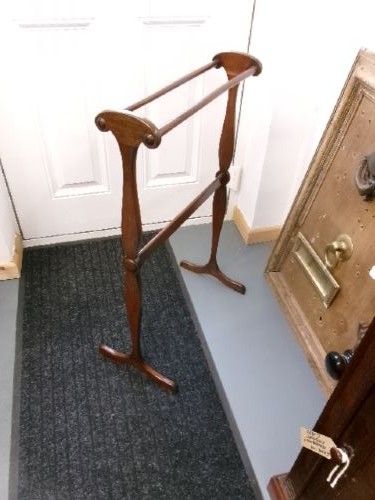
Pine appears frequently in large rocking horses and naive sculptures due to its workability. Hardwoods like mahogany and walnut also occur in refined carvings and related furniture pieces.
Makers selected timbers based on availability and the structural demands of the object.