


Painted Horse Toy
A painted horse toy brings tactile warmth to a room, offering tactile charm through carved wood and aged pigments.
Painted Horse Toy
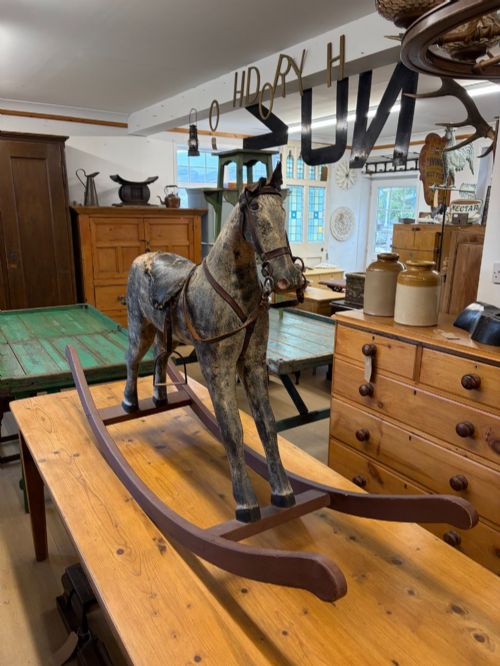
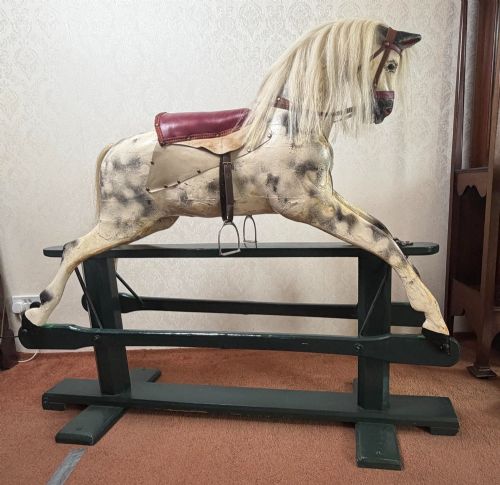
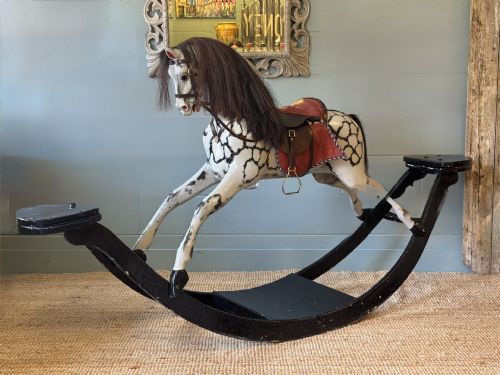
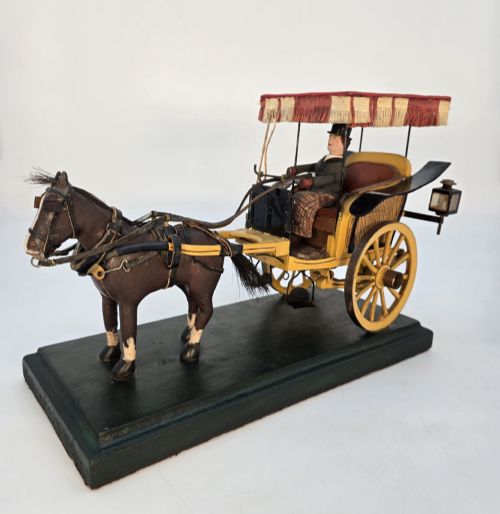
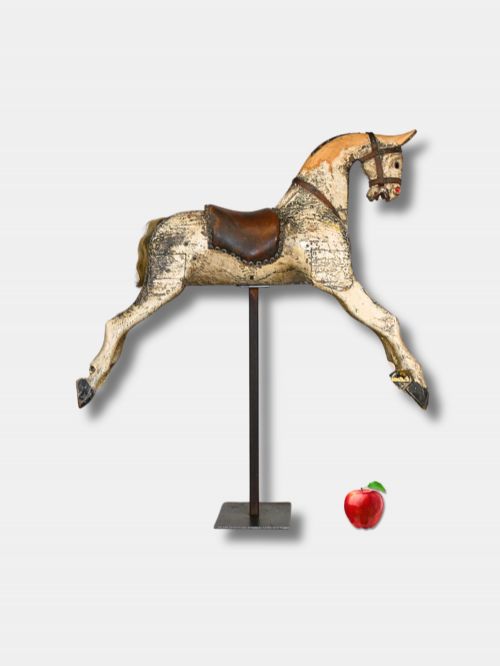
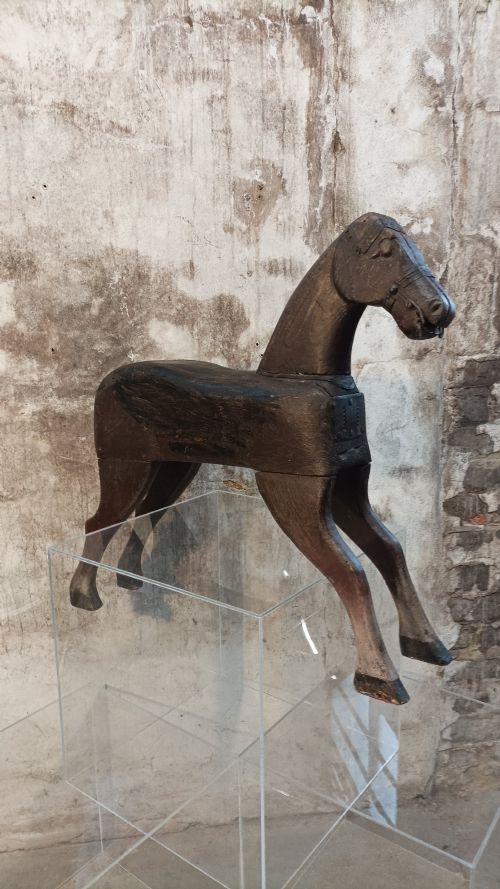
A painted horse toy encompasses carved wooden rocking horses and folk art sculptures originating from the nineteenth and twentieth centuries. These pieces emerge in styles ranging from Victorian to folk art, capturing domestic history through children's playthings.
Makers such as G and J Lines, F.H. Ayres, Lines Bros, and Collinsons produced substantial toys that survived generations of play. Alongside commercial workshop production, folk art examples display independent regional character across British, American, and Spanish origins.
Materials and construction methods
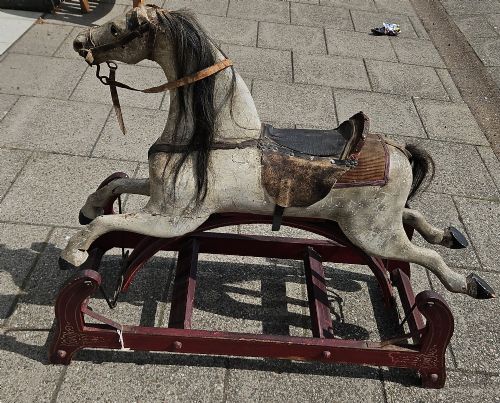
Makers utilised carved wood and pine as the structural base, shaping bodies and rockers with hand tools and machinery. Iron and metal components provided mechanical support for rocking actions and internal brackets.
Surface finishes relied on layered paint, often featuring dapple patterns or original historic pigments. Details incorporated leather bridles and horsehair manes and tails to complete the realistic appearance of the animal.
Some horses carry the proud scars of past gallops, retaining playworn coats from nurseries long quiet.
Distinctions in craftsmanship and preservation
The top of the range is distinguished by the survival of original paint surfaces and maker marks, such as stamps from established firms like G and J Lines or F.H. Ayres. Finely carved anatomical details and robust original rockers elevate a piece above standard workshop production.
Lower tiers typically involve heavier playwear, overpainting, or replaced components that obscure the original hand of the maker. Naive folk art pieces vary based on the expressive quality of the carving rather than adherence to strict anatomical proportions.
G and J Lines·F.H. Ayres·Lines Bros·Collinsons
The Painted Horse Toy Glossary
- Folk art
- Objects created by self-taught artists or traditional craftsmen without formal academic training. These items emphasise naive charm and regional character over strict naturalism.
- Dapple
- A spotted or mottled pattern painted onto the coat of a horse toy. This finish mimics the grey coat coloration common in traditional rocking horses.
- Rockers
- The curved pieces of wood attached to the base of a toy horse that allow it to swing back and forth. They may be floor-standing arches or part of a safety stand framework.
- Original paint
- The initial surface coating applied during manufacture, preserved without later overpainting. Collectors prize this condition for its historical authenticity.
- Primitive
- An early or basic style of construction lacking refined finishing techniques. This term describes rustic items made with simple tools and direct methods.
Painted Horse Toy: Frequently Asked Questions
What is folk art in toy horses?
Folk art toy horses are naive, hand-carved sculptures created outside major commercial factory systems. They exhibit unique regional characteristics and individual maker interpretations rather than standardised workshop output.
These models often lack maker marks but offer expressive forms and original historic paint surfaces.
How should I care for an antique painted horse?
Care involves keeping the wooden object in a stable environment away from direct sunlight and excessive humidity fluctuations. This prevents the wood from splitting and protects fragile historic paint layers.
Gentle dusting with a dry cloth is sufficient for maintenance, avoiding harsh cleaning agents that damage original finishes.
Did makers sign these wooden toys?
Certain workshop pieces bear maker stamps, plaques, or signatures from prominent firms like G and J Lines or F.H. Ayres. These marks usually appear on the safety stand or under the belly of the horse.
Many folk art pieces and smaller toys remain unsigned by their makers.