

Vintage Wooden Drop Leaf Table
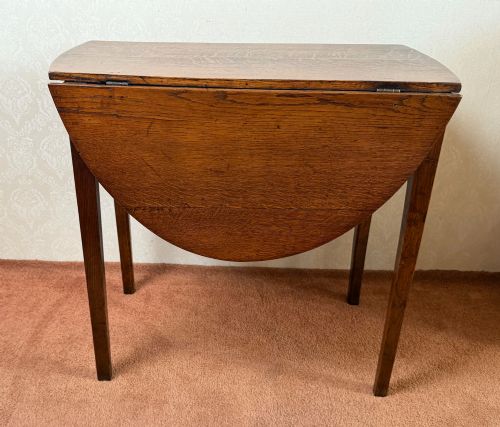
These vintage wooden drop leaf table examples offer folding space that tucks neatly away when the meal or task ends.
Vintage Wooden Drop Leaf Table
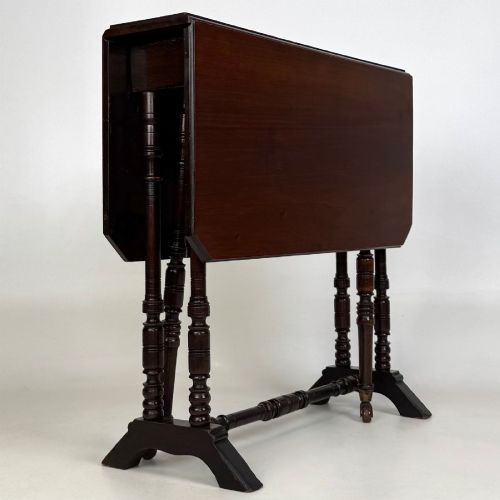
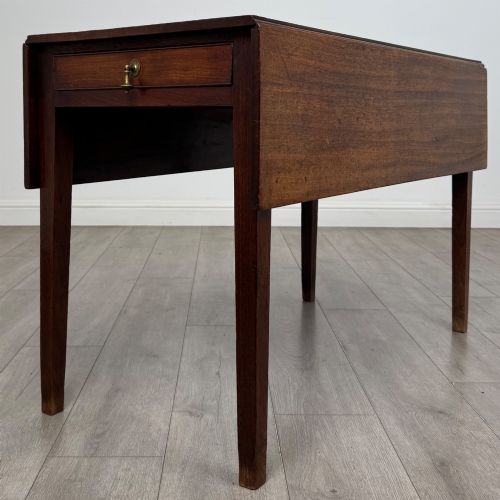
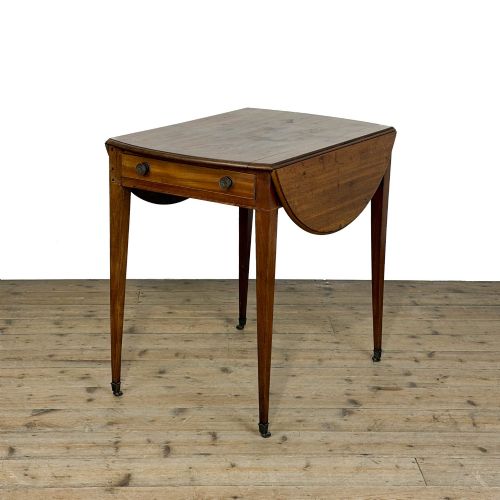
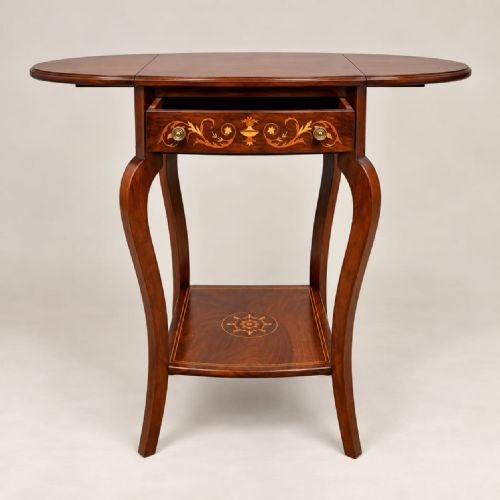
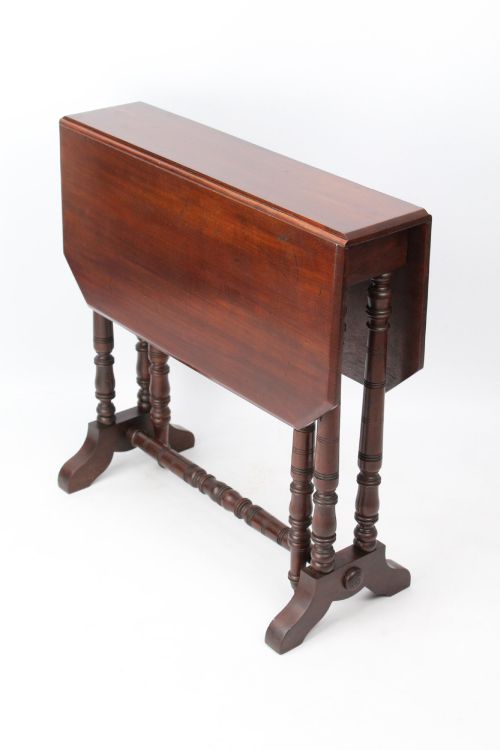
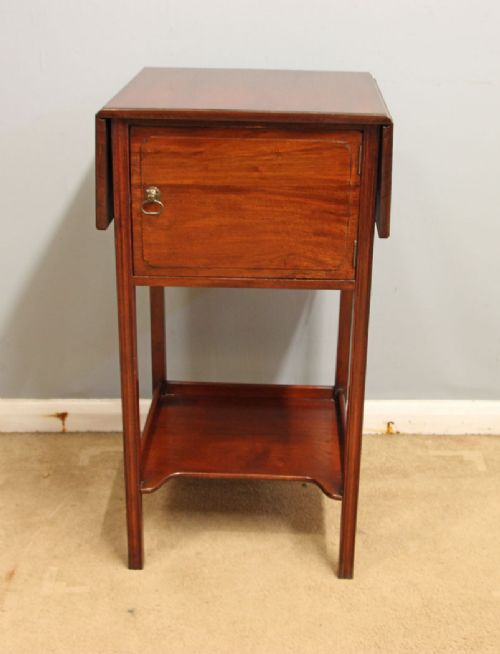
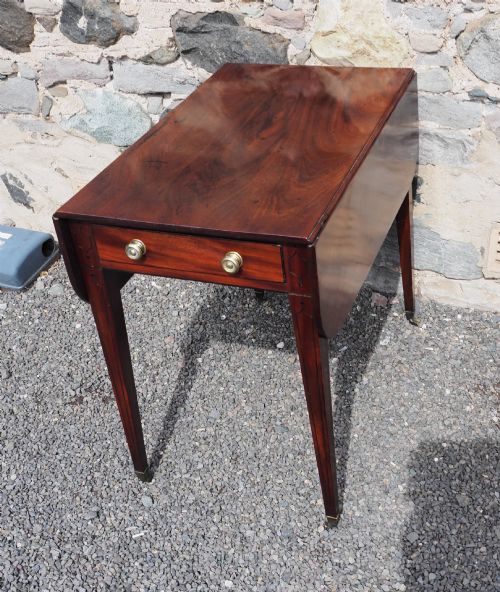
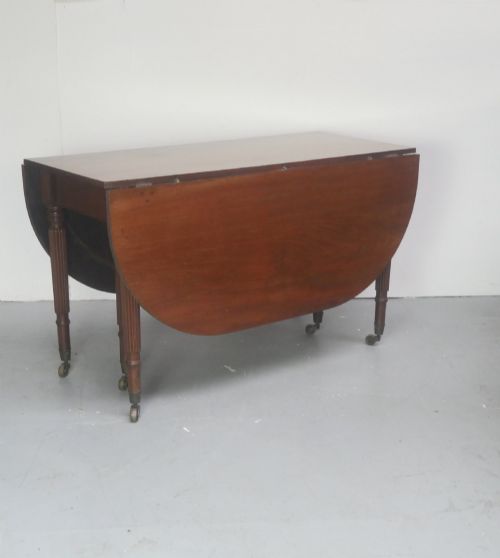
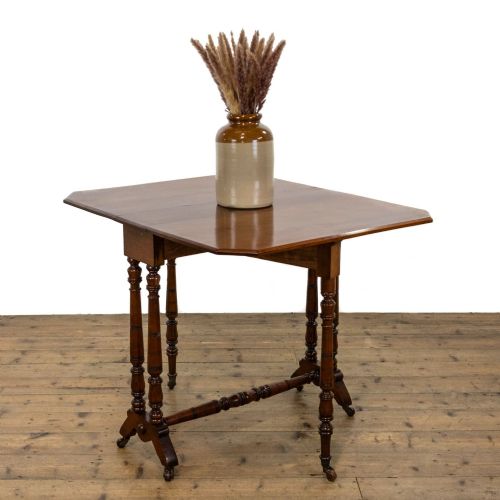
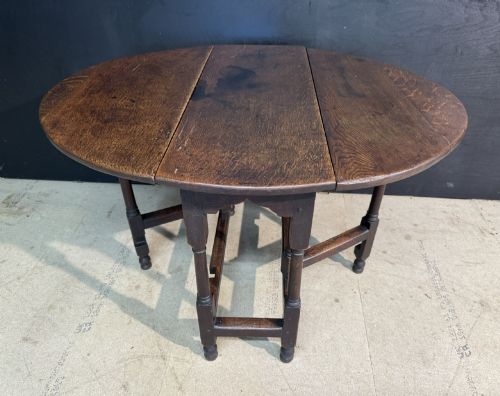
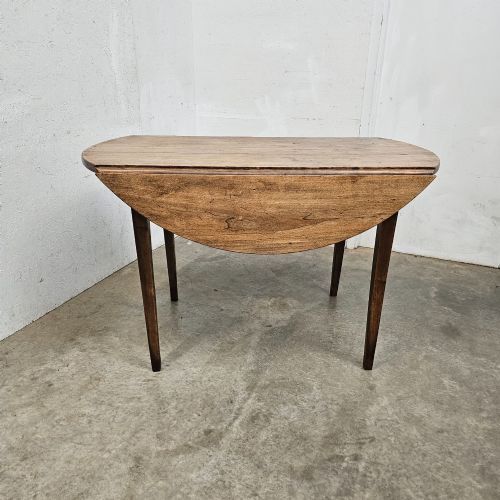
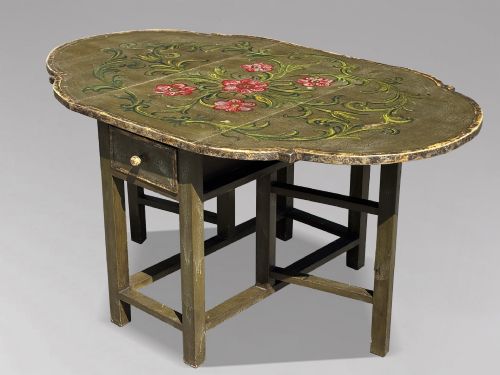
A vintage wooden drop leaf table brings versatile folding architecture into modern rooms, drawing from centuries of British and European cabinetmaking. You encounter formats ranging from compact Sutherland tables and Pembroke tables to substantial gateleg dining surfaces.
The material record spans centuries from the seventeen-hundreds through the Edwardian era and the nineteen-twenties, incorporating periods such as Georgian, Victorian, and Regency. Mahogany, oak, and walnut dominate the selection, often accompanied by smaller examples in fruitwood, rosewood, and pine.
Dining tables, side tables, occasional pieces, and kitchen preparation tables make up the core of what appears here. These pieces served diverse domestic functions, from formal tea service and library work to cottage dining and bedside storage.
Materials and construction
Cabinetmakers relied on solid timber and rich veneers like mahogany, walnut, and satinwood, supported by structural elements in oak and pine. Brass fittings frequently secure hinges, castors, and drawer pulls, while ceramic and iron details appear on specific utilitarian forms.
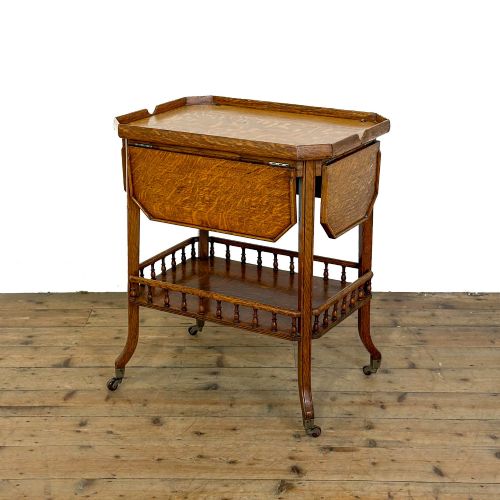
Hinged flaps and folding gatelegs or swing brackets provide the defining mechanical action of these pieces. Joinery traditions emphasise stability under load, allowing hinged leaves to lock flat when extended and hang plumb when dropped.
Periods represented across the inventory include the seventeenth, eighteenth, nineteenth, and early twentieth centuries.
Assessing quality
The grade of timber figure and the precision of the hinge mechanics determine the distinction between ordinary utility items and exceptional cabinetwork. Highly figured mahogany, burr walnut, and delicate string inlay elevate a piece beyond standard construction.
Structural integrity rests on the smooth movement of the drop leaves and the tightness of the gateleg joints. Superior examples maintain alignment across the top leaves without excessive play in the pivoting supports.
The Vintage Wooden Drop Leaf Table Glossary
- Drop leaf table
- A table with a fixed centre section and hinged flaps that fold down at the sides. These flaps are supported by swing legs or brackets when raised.
- Gateleg table
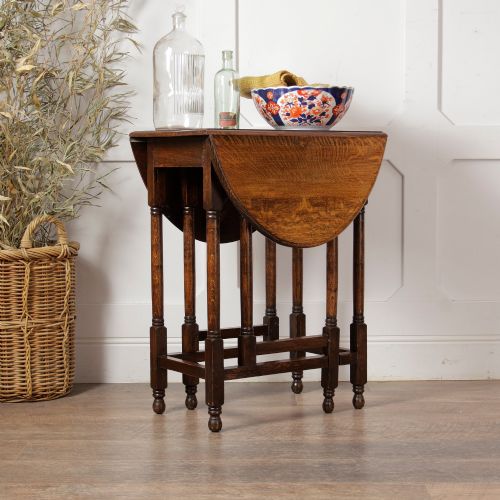
- A table with legs hinged to swing outward like a gate, providing direct support for the drop leaves when opened. This design distributes weight evenly across the extended surface.
- Pembroke table
- A small rectangular table with two hinged drop leaves on opposite sides, typically featuring one or two small drawers. It gained popularity during the eighteenth century for breakfast and writing.
- Sutherland table
- A narrow table featuring exceptionally slender drop leaves that fold down almost vertically. Named after the Duchess of Sutherland, this compact form maximises floor space when closed.
- Figured wood
- Timber exhibiting natural decorative patterns such as flames, curls, or burrs within the grain. Cabinetmakers select these boards for high-status surfaces.
Vintage Wooden Drop Leaf Table: Frequently Asked Questions
How do I support the drop leaves safely?
Most drop leaves rely on swinging gatelegs, wooden pivoting brackets, or sliding arms beneath the top. Swing the support fully outward until it locks vertically beneath the centre of the leaf before placing any weight upon it.
Avoid leaning heavily on the unsupported outer edges of a raised flap. The hinges and support arms are engineered to distribute downward loads through the frame rather than take lateral strain.
What rooms suit a drop leaf table best?
Compact spaces benefit enormously from drop leaf designs because the surface area scales down to a narrow footprint when not in use. Kitchens, hallways, and smaller sitting rooms accommodate gateleg and Pembroke tables without crowding the floor.
Dining rooms and libraries also utilise larger drop leaf or Pembroke formats to adjust seating capacity on demand. The ability to fold one or both sides down provides flexible layout options for varied daily activities.
How do I distinguish Regency from Victorian pieces?
Regency pieces often display restrained neoclassical lines, reeded legs, and architectural proportions influenced by ancient classical design. Mahogany and rosewood frequently feature subtle brass inlay rather than heavy carving.
Victorian furniture tends toward heavier proportions, darker finishes, and more robust turned or carved supports. Walnut and mahogany remain common, but the decorative vocabulary shifts toward bolder turned profiles and applied mouldings.
Can these tables be used for everyday dining?
Sturdy gateleg and dining configurations are built to handle regular daily use, provided the joints and hinges remain sound. Solid oak and mahogany structures tolerate everyday domestic activity quite well.
Lighter occasional pieces and delicate Pembroke tables require more care to protect antique veneers and fine polish from heat and moisture. Using placemats and coasters preserves the historical surface finish during meals.