



Vintage Wooden Counter Stools
These vintage wooden counter stools bring utilitarian character to modern kitchens, offering sturdy seating built from honest materials.
Vintage Wooden Counter Stools
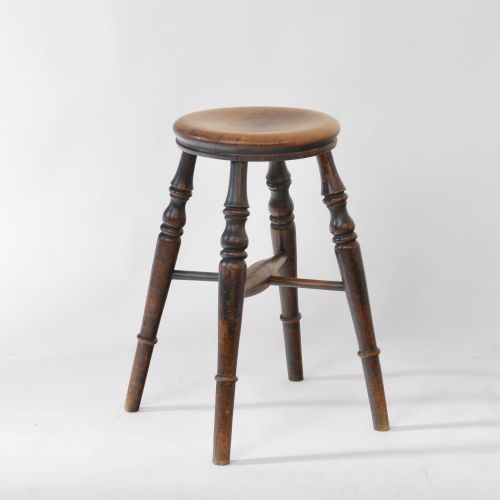
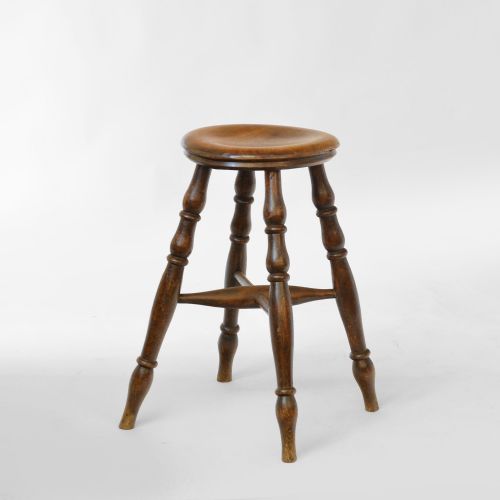
Vintage wooden counter stools encompass seating designed for high tables, bars, and work spaces, drawing from 19th-century utility and early 20th-century commerce. When searching for vintage wooden counter stools, buyers encounter pieces intended originally for pubs, taverns, clerk's offices, and farmhouses.
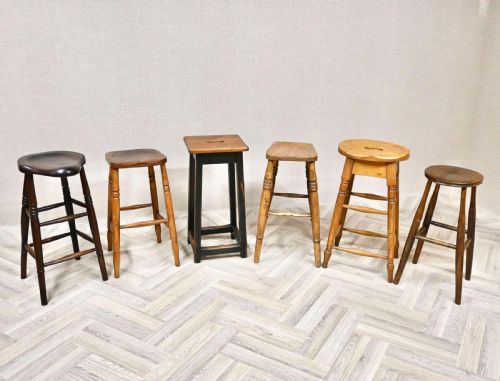
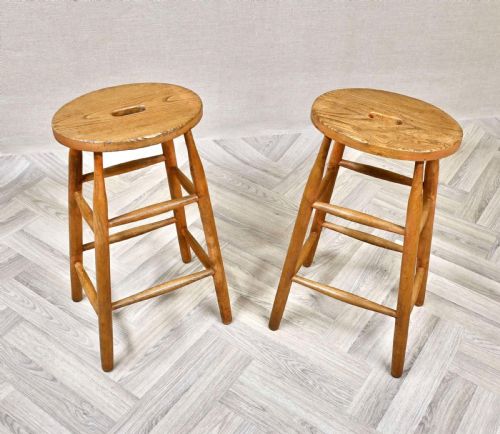
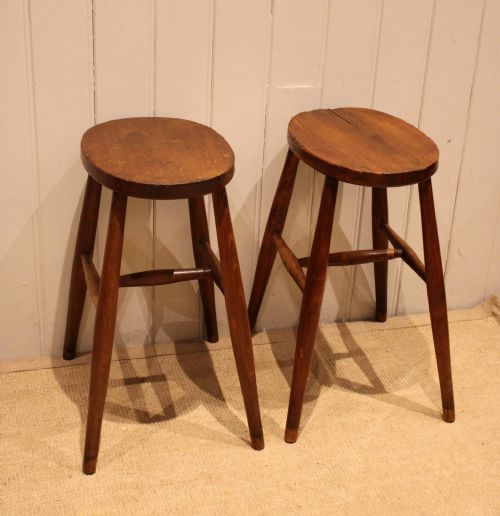
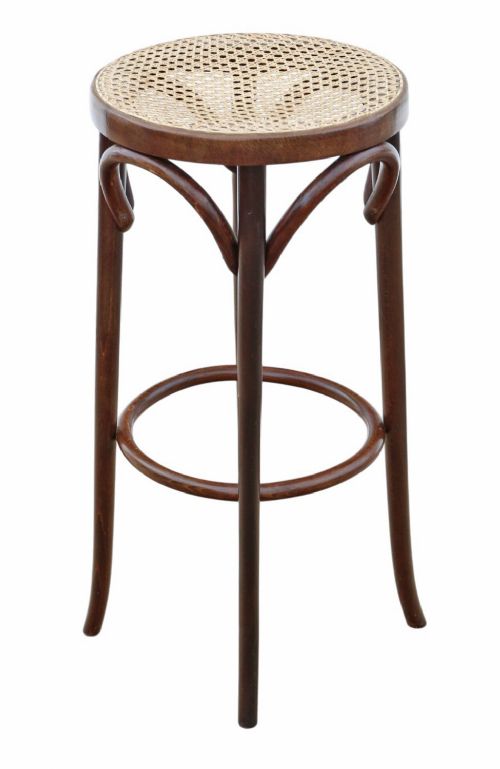
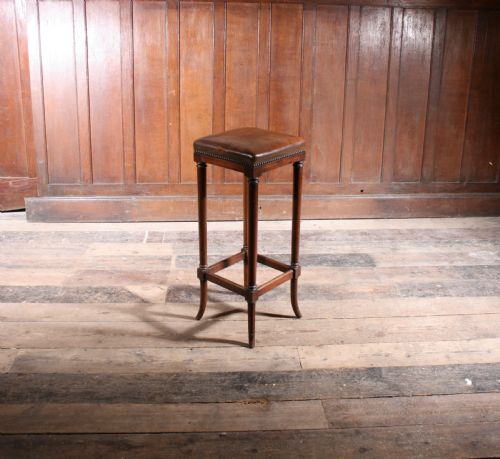
The selection on this page leans heavily towards nineteenth-century origins in elm, sycamore, and beech, alongside later twentieth-century kitchen and bar variations. Forms range from simple dished tops on turned legs to bentwood and upholstered designs from the art deco period.
Many examples reflect specific historical trades, such as tavern seating and laboratory stools, giving them a distinct silhouette defined by practical necessity rather than decorative excess.
What varies in quality
Quality rests primarily in the selection of timber and the integrity of the original construction. Dense hardwoods like wild elm or sycamore demonstrate superior resilience compared to softer utility woods.
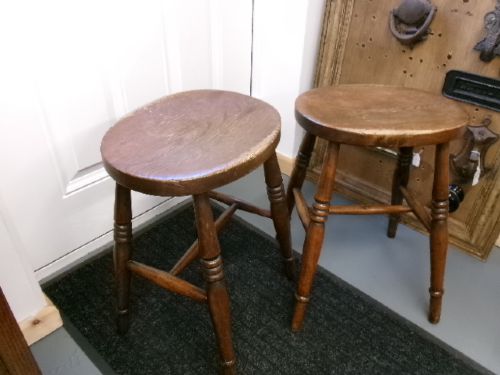
The nuance of the turning on the legs and the depth of the dishing on the seat separate standard workshop production from finer examples. Subtle details in the joinery reveal the hand of a more accomplished maker.
Patina accumulated through decades of genuine service distinguishes period surfaces from later alterations, with uniform wear reflecting a consistent history of use.
The selection includes various native hardwoods, featuring elm, beech, oak, and sycamore alongside upholstered leather and bentwood examples.
The Vintage Wooden Counter Stools Glossary
- Bentwood
- Wood that has been shaped by heating it in steam, allowing makers to create curved structural elements. This technique gained widespread popularity in the nineteenth and early twentieth centuries for lightweight seating.
- Dished top
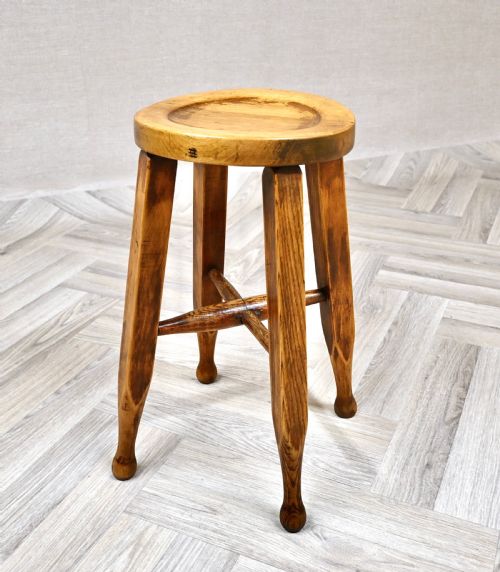
- A wooden seat surface hollowed into a shallow concave shape to fit the body. This traditional method provided ergonomic comfort before padded upholstery became standard on high seating.
- Clerk's stool
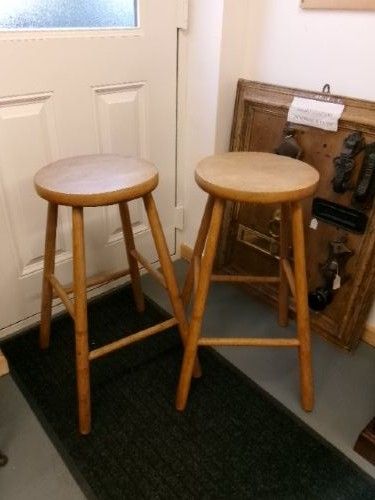
- A tall wooden seat traditionally utilised in offices and counting houses to accommodate high writing desks. They often feature simple turned legs and a narrow circular seat.
- Pub stool
- A robust high stool built for taverns and public houses, designed to withstand heavy patronage. These pieces frequently employ sturdy elm or beech with reinforced stretchers.
- Rush seat
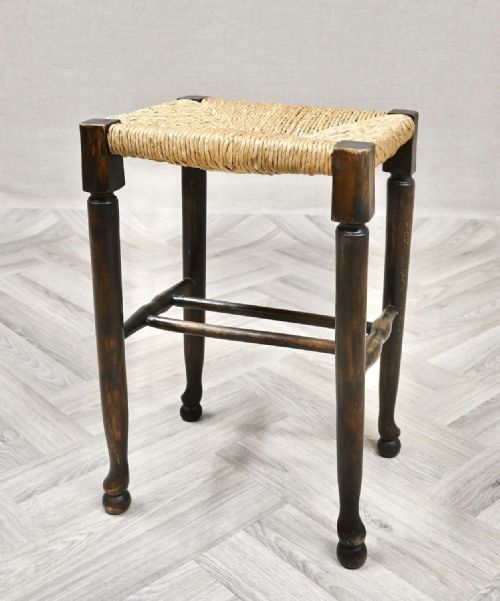
- A woven seating surface made from dried marsh grasses twisted into cords. This traditional craft appears on country and farmhouse seating for a resilient finish.
Vintage Wooden Counter Stools: Frequently Asked Questions
How do I clean vintage wooden stools?
Maintain wooden surfaces by dusting regularly with a dry cloth and occasionally applying natural beeswax to nourish the timber. Avoid harsh chemical cleaners that strip the historic finish and dry out the grain.
Protect leather or rush elements by keeping them away from direct heat sources and moisture. Gentle conditioning preserves the suppleness of older leather without altering its natural patina.
Are these stools suitable for modern kitchen islands?
These pieces fit naturally beneath modern kitchen counters and islands, adding warmth and historical texture to contemporary spaces. Their compact footprint makes them practical for everyday dining and social gatherings.
Check the seat height carefully against your counter dimensions before purchasing, as historic seating heights can vary significantly from standard contemporary measurements.
How can I tell a nineteenth-century stool from a later one?
Nineteenth-century examples typically display hand-turned components, pegged joinery, and deep patination acquired through generations of use. Tool marks and timber shrinkage offer reliable clues to an older date of manufacture.
Twentieth-century pieces often utilise standardised factory production methods, machine turning, or distinct period styling such as art deco curves and modern adhesives.