
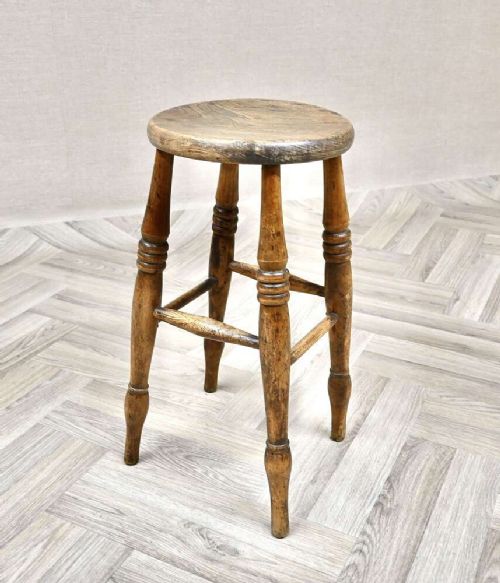
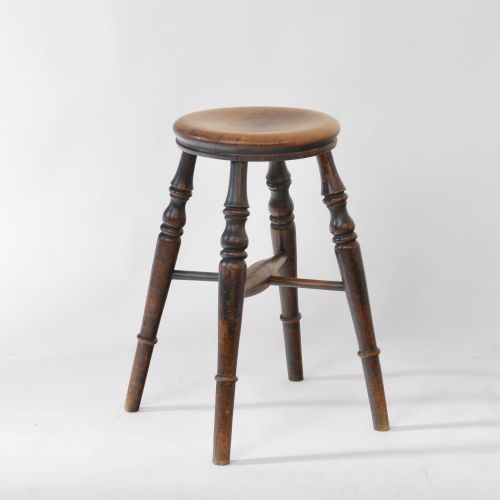
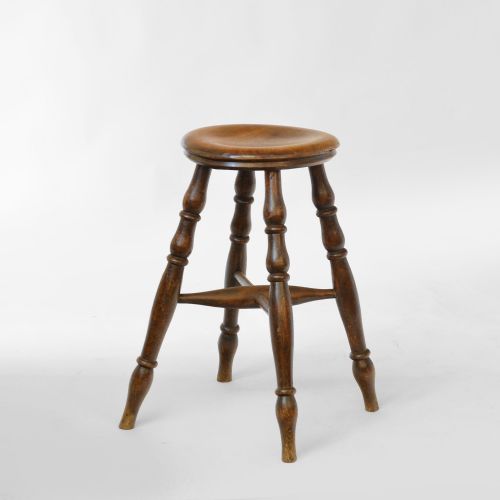
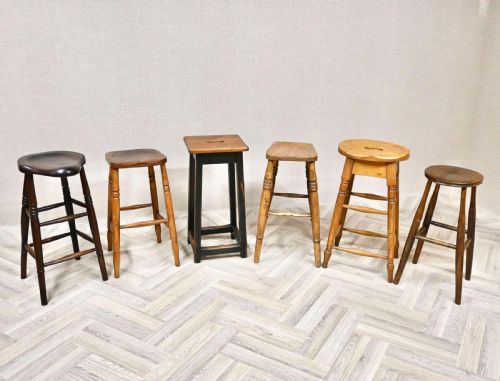
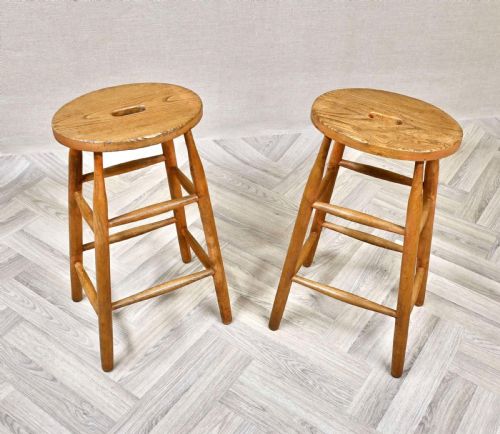
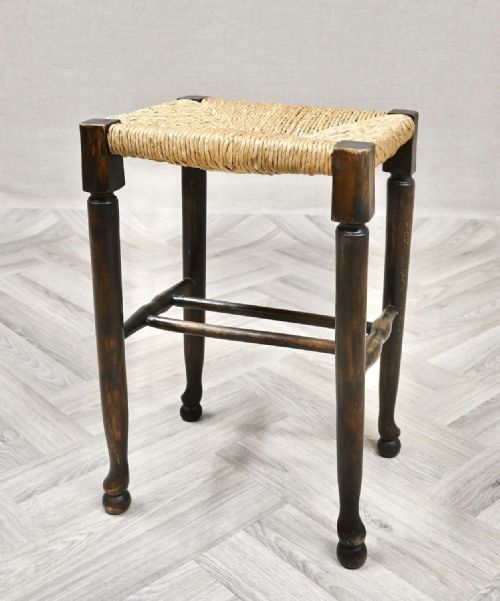
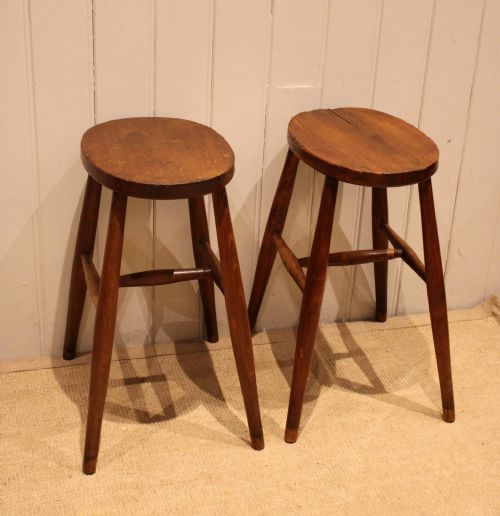


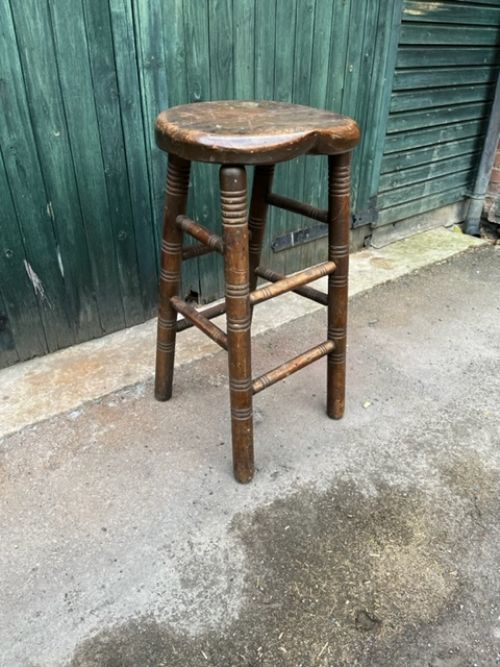

Rustic Tall Wooden Seats
Rustic tall wooden seats are sturdy high stools built for utilitarian use, offering practical elevation and characterful aged timber.
Rustic Tall Wooden Seats
Rustic tall wooden seats encompass functional high stools designed for public houses, domestic kitchens, and clerks' workspaces. Buyers searching for rustic tall wooden seats will encounter pieces primarily from the nineteenth century alongside early twentieth-century examples.
How they were made
These high stools are constructed from solid native timbers including beech, elm, pine, oak, sycamore, birchwood, and hardwood. Cabinet makers and rural joiners utilised traditional turning and joinery techniques to shape spindles, legs, and seats.
Materials such as rush appear for seating surfaces, while solid wood tops show the natural grain of wild elm or sycamore. Staining was occasionally applied to beech frames in later twentieth-century iterations.
Listings feature eighteenth and nineteenth-century periods alongside early twentieth-century dates, utilising elm, beech, pine, and sycamore.
What varies in quality
Quality in these high stools rests upon the choice of timber and the integrity of the original construction. Dense hardwoods like elm and sycamore provide superior durability compared to softer woods.
The harmony of turned elements and the retention of original surface patination distinguish finer vernacular examples from standard utility seating.
The Rustic Tall Wooden Seats Glossary
- Vernacular
- Everyday objects made by local craftsmen for practical use rather than high-style design. These pieces reflect regional traditions and readily available materials.
- Turned
- Wood shaped on a lathe to create cylindrical or spindle-like components such as legs and stretchers. This technique ensures structural rigidity in high seating.
- Patina
- The surface sheen and colour acquired by timber through age, handling, and use over many decades. It serves as an indicator of authenticity.
- Clerk's stool
- A tall seat traditionally used at a high desk in offices or counting houses. They often feature narrow proportions and footrests for prolonged sitting.
Rustic Tall Wooden Seats: Frequently Asked Questions
What are rustic tall wooden seats?
Rustic tall wooden seats are elevated stools originally utilised in public houses, kitchens, and workplaces during the nineteenth and early twentieth centuries.
They combine practical height with solid timber construction, reflecting traditional country craftsmanship.
How were these tall stools used?
These pieces served practical functions at bars, tall tavern tables, and high clerk desks where elevated seating was necessary.
Their sturdy builds allowed them to withstand heavy daily use in busy commercial and domestic environments.
How do I live with high wooden stools?
High wooden stools function well as breakfast bar seating, occasional perches in kitchens, or display surfaces in living spaces.
Their compact footprints make them adaptable for smaller rooms while adding historical character.
How do I identify nineteenth-century examples?
Nineteenth-century tall stools typically exhibit hand-turned wooden components, pegged joints, and timber varieties such as solid elm or sycamore.
Wear patterns and surface patination further indicate their age and period of origin.