
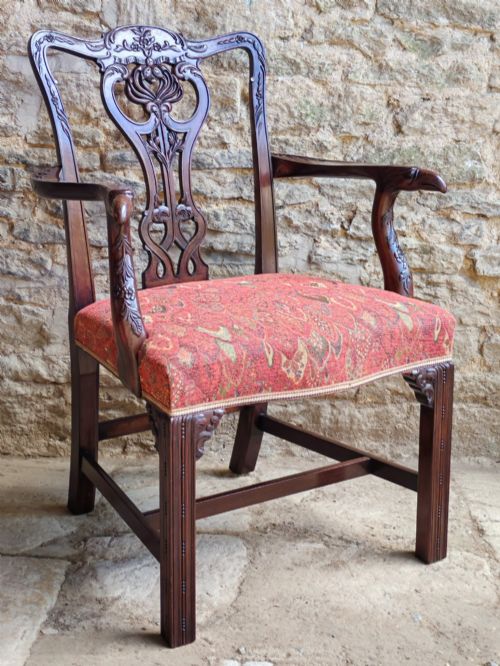
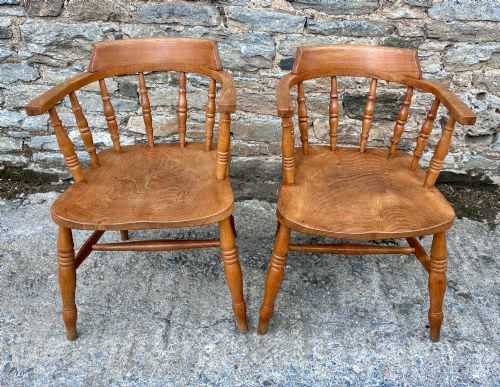
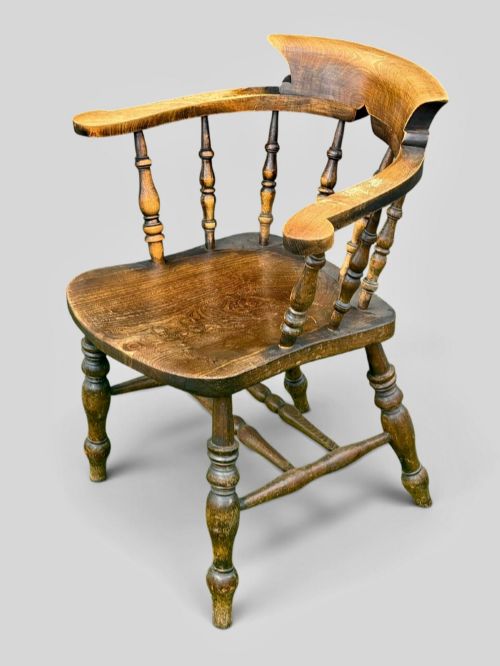
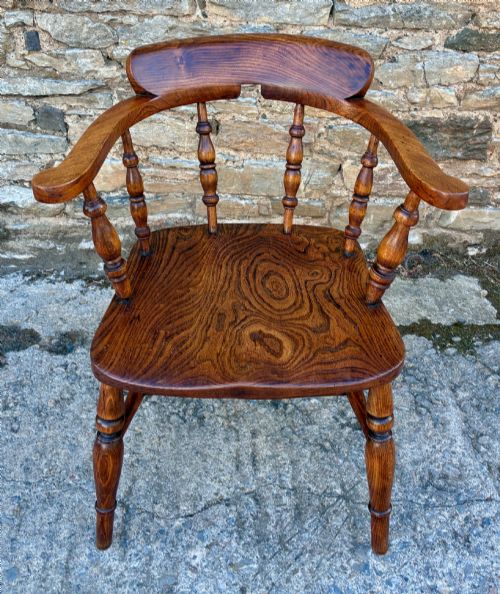
Vintage Wooden Captain Chair
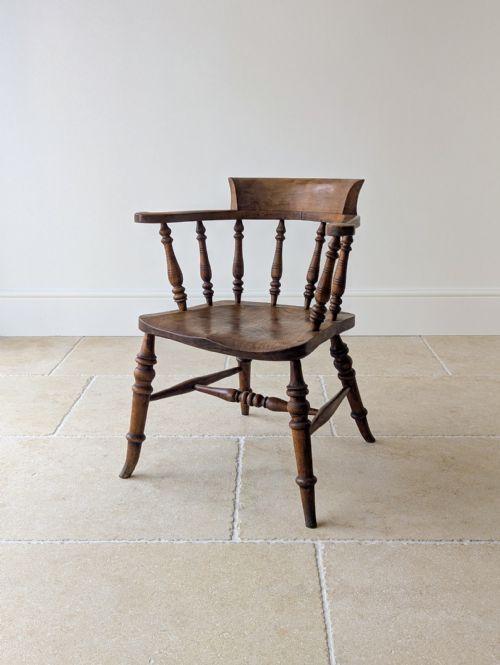
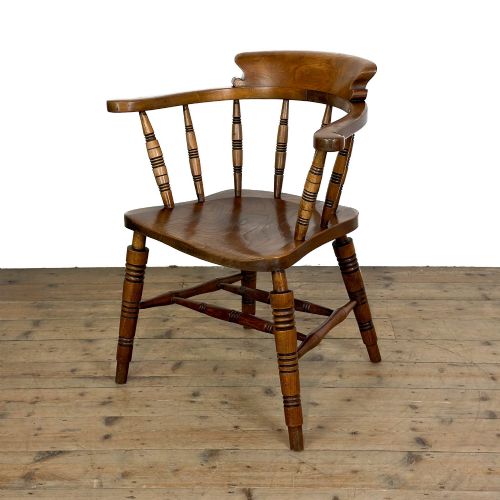
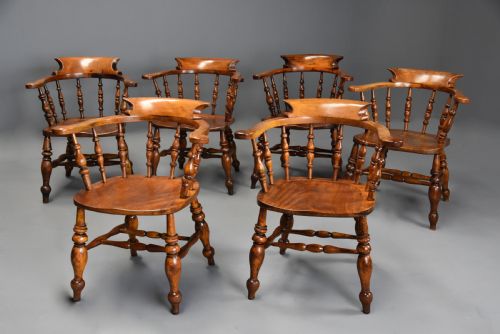
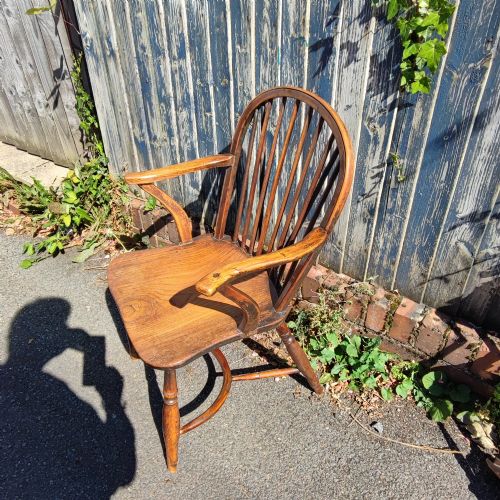
A vintage wooden captain chair offers robust country seating, combining traditional Windsor forms with sturdy armrests for everyday comfort.
Identifying the vintage wooden captain chair
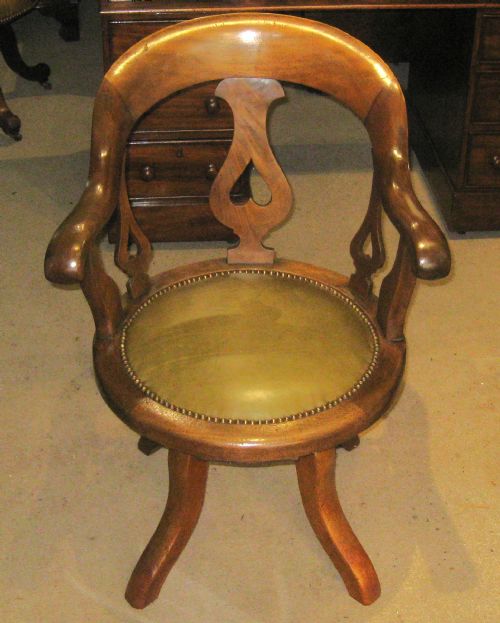
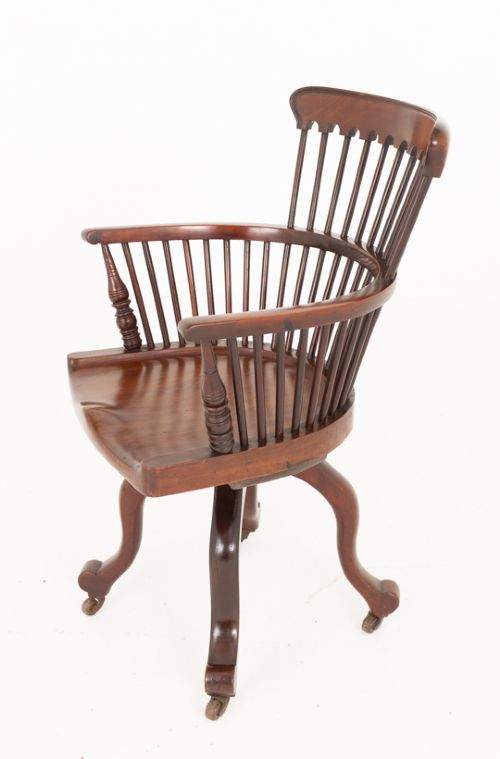
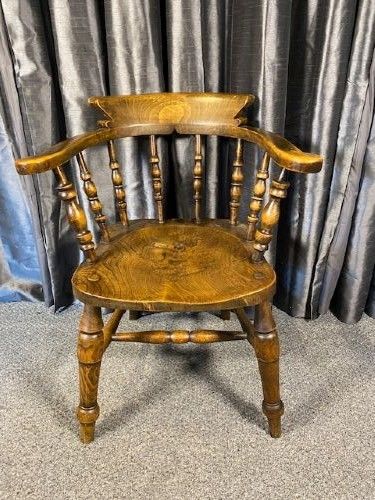
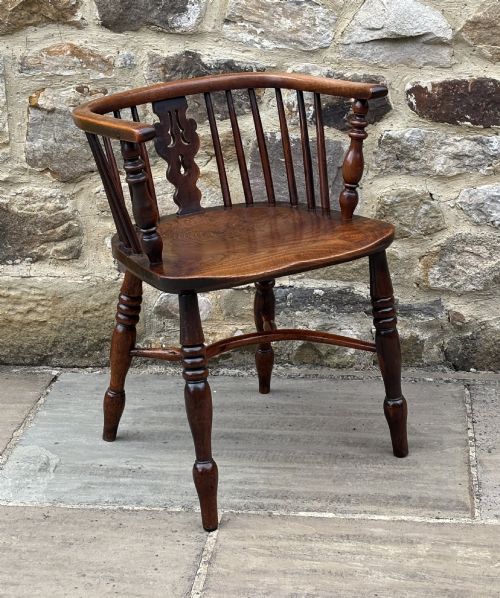
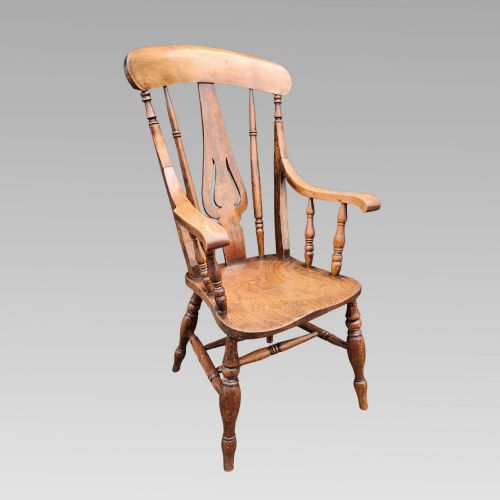
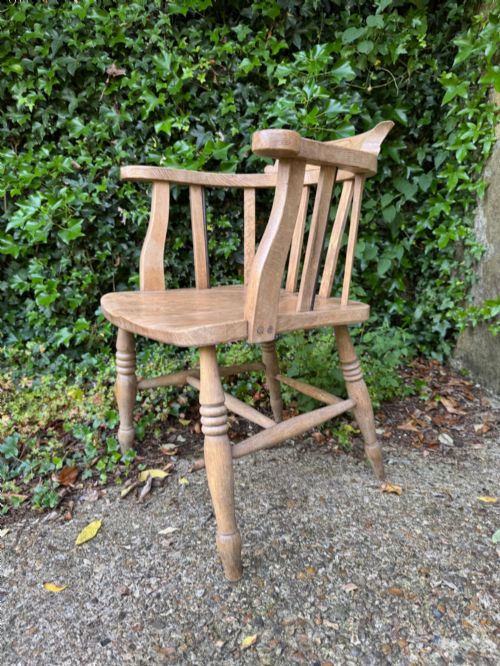
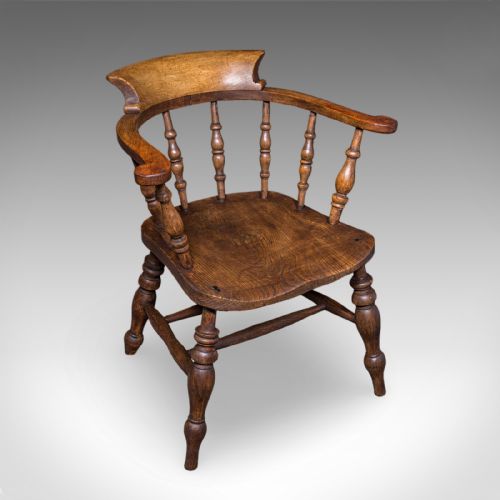
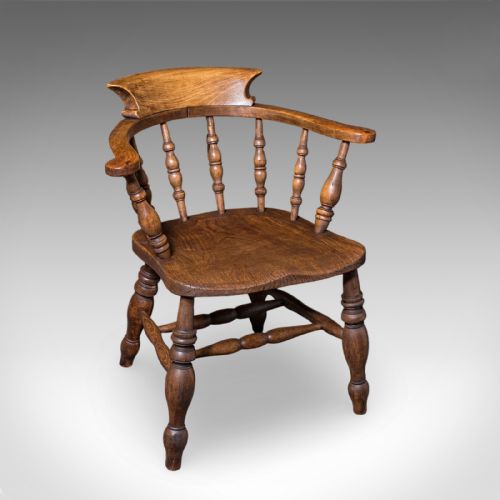
The vintage wooden captain chair typically manifests as a traditional Windsor armchair, built with a distinctive combination of woods and sturdy arm supports. Buyers search for these pieces to anchor a rustic interior with functional seating that carries historical character.
The selections available here range across the nineteenth century, including Victorian examples and regional country vernacular pieces. Forms vary from low back profiles to high backs, reflecting distinct provincial English and Scottish traditions.
Materials and construction
These armchairs rely on a mix of native timbers, specifically combining elm seats with yew, ash, or yew wood for the spindles, frames, and bentwood components. Cabinetmakers selected these specific woods for their contrasting grain patterns and structural resilience.
Traditional bodgers and regional makers turned spindle legs and shaped solid wooden seats, wedging or pinning components together to withstand decades of heavy use in domestic or institutional settings.
Retail Price Guide 2026
Typical UK retail prices for vintage wooden captain chair, calculated from the Sellingantiques database of over a million retail prices indexed since 2003. This retail price guide relies exclusively on Sellingantiques data; no external sources or auction records are used, so the figures do not describe the wider market.
The listings span the nineteenth century, featuring Victorian eras and regional English and Scottish country vernacular traditions.
Distinguishing quality
Quality in these armchairs rests upon the selection of timber and the harmony of the combined woods, such as strongly figured yew matched to a deep elm seat. Master makers achieved superior fluidity in the bentwood arm bows and balanced proportions in the spindle turnings.
Regional execution dictates the character of each piece, where provincial workshops demonstrated varying degrees of confidence in carving, steam-bending, and structural joinery.
Rockley Maker·John Shadford
The Vintage Wooden Captain Chair Glossary
- Windsor chair
- A wooden chair built with a heavy solid wooden seat into which the legs and back spindles are directly inserted. This construction method defines the majority of the seating found in this category.
- Broad arm
- A widened, flattened wooden armrest integrated into the chair design to provide a writing surface or extra comfort. These expansive arms require careful shaping from a single timber plank or solid joined sections.
- Low back
- A chair profile where the top rail sits lower than a traditional high-backed design, often featuring a continuous curved arm rail. This form allows for easier movement in domestic spaces.
- Vernacular
- Objects designed and built by local craftsmen using regional traditions and readily available materials rather than following metropolitan academic styles. These pieces tell the story of localized furniture making.
- Bodger
- A traditional woodturner who worked in the woods to produce chair legs and spindles for urban and rural workshops. Their specialised green woodworking skills formed the foundation of Windsor chair production.
Frequently Asked Questions
What is a vintage wooden captain chair?
A vintage wooden captain chair is a sturdy Windsor-style armchair featuring a solid wooden seat and supporting armrests. These pieces stem from nineteenth-century country traditions.
They serve as practical seating options that bring rustic warmth and historical craftsmanship into modern living spaces and studies.
How were these wooden armchairs built?
Craftsmen constructed these chairs by boring holes directly into solid elm seats to secure turned legs and back spindles. They utilised steam-bending techniques to shape yew or ash into continuous arm bows.
This construction method ensured immense structural strength, allowing the chairs to endure heavy daily use across generations without losing their stability.
Which woods appear in these chairs?
Makers combined multiple native timbers within a single chair, most commonly pairing elm for the seat with yew, ash, or yew wood for the upper components. Elm provided a tough, split-resistant base for the carved saddle.
Contrasting woods like yew brought rich grain patterns and flexibility to the spindles and bentwood arms, enhancing both appearance and durability.
How do regional styles differ?
Regional styles vary according to the local traditions of English and Scottish workshops, influencing back heights, arm thicknesses, and spindle turning profiles. Nottinghamshire and Scottish vernacular pieces each display distinct local preferences in their construction.
These variations help identify where a chair was made, as provincial makers adapted standard Windsor forms to suit local timber availability and workshop practices.